The Role of the Dirt Separator in Modern HVAC Systems
In modern commercial heating and cooling systems, the dirt separator serves as the primary line of defence against circulating particulates. As systems incorporate high-efficiency variable speed pumps and narrow-pass heat exchangers, the tolerance for suspended solids has decreased significantly. A dirt separator works by reducing the flow velocity of the primary water, allowing heavier particles to settle by gravity into a collection chamber. This process is essential for meeting the water quality parameters established by BSRIA BG20 and BG50, which highlight the detrimental impact of magnetite and debris on system performance. Failing to specify a high-quality unit can lead to increased energy consumption as sediment layers act as insulation on heat transfer surfaces, forcing the boilers or chillers to work harder.
Engineering consultants must understand that traditional strainers are often insufficient for the fine particulates found in large-scale closed-loop systems. While a strainer might catch larger debris, a dedicated dirt separator utilizes internal coalescing media to trap much smaller particles that would otherwise remain in suspension. This is particularly important during the initial commissioning phase of a project, where construction debris and flash rust are common. By integrating a vertical or horizontal separator at the point of lowest velocity, usually on the return pipework before the heat source, engineers provide a continuous cleaning mechanism. This proactive approach reduces the volume of solid matter reaching sensitive components, thereby extending their service life and ensuring that the initial capital expenditure on major plant items is protected against premature failure.
From a commercial perspective, the installation of a dirt separator is a low-cost insurance policy for the entire HVAC infrastructure. When mechanical engineers specify these units, they are not just complying with best practices; they are reducing the long-term operational costs for facilities managers. Systems that operate with clean water require less frequent chemical dosing and fewer invasive maintenance procedures. Furthermore, cleaner water improves the accuracy of flow meters and temperature sensors, leading to more reliable sensor data for the building management system. UKGP provides a range of solutions designed to thrive in these demanding environments, ensuring that every project meets the rigorous standards expected by BSRIA and CIBSE guidelines while maintaining optimal hydraulic balance across the network for years to come.
- Protects high-efficiency commercial boilers from magnetite accumulation
- Reduces pressure drops associated with clogged heat exchangers
- Maintains water quality in accordance with BSRIA BG50
- Decreases frequency of chemical cleaning and system flushing
- Enhances the performance of variable speed circulator pumps
Technical Criteria for Selecting a Dirt Separator
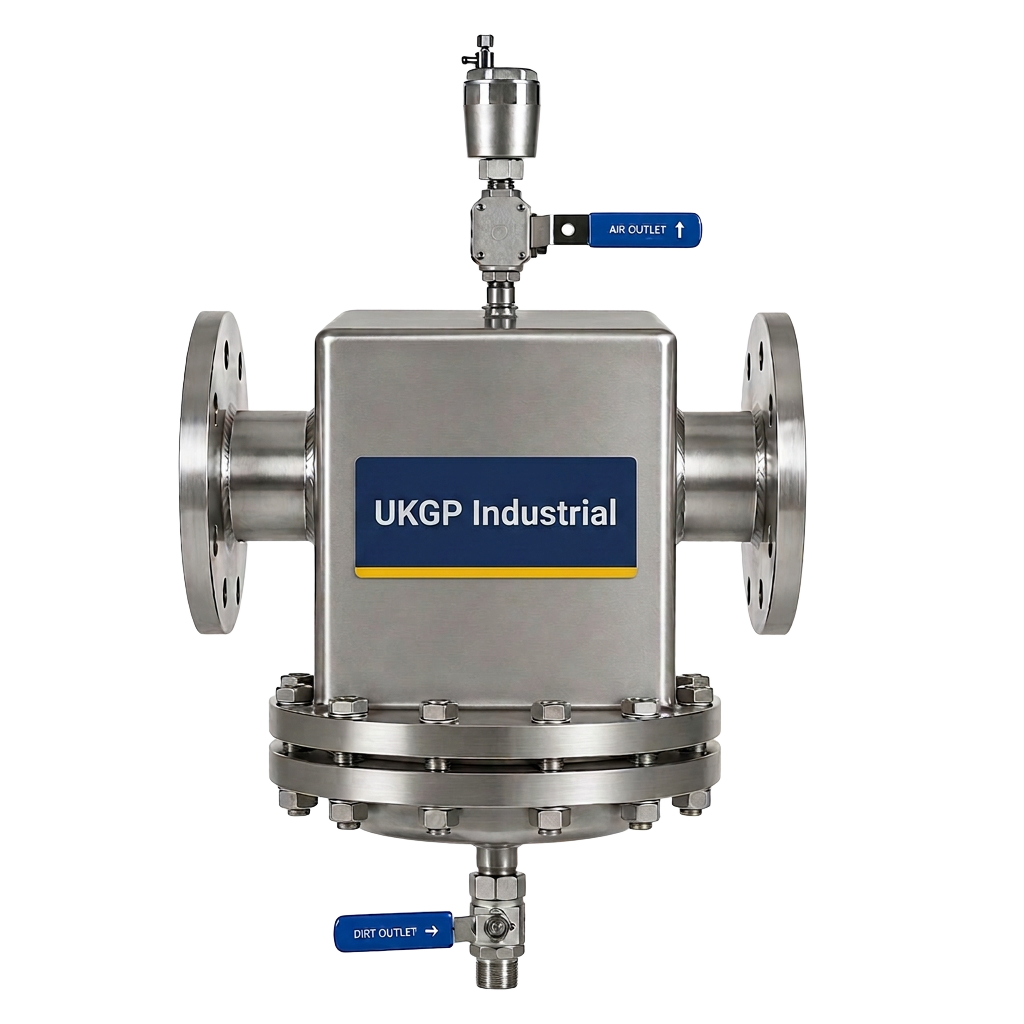
Selecting the correct dirt separator involves more than just matching the pipe size. Engineers must calculate the maximum water flow rate and ensure the selected unit can handle the peak load without creating an excessive pressure drop. A correctly sized dirt separator should ideally be selected based on flow velocity, ensuring it stays within the range where the internal media can effectively trap debris. Most commercial units are designed for flanged connections (PN16 or PN10) to facilitate easy installation and removal within rigid pipework. Materials of construction also play a vital role; high-grade carbon steel or stainless steel bodies are standard for commercial applications to ensure durability under fluctuating pressures and temperatures commonly found in plant rooms.
Another critical feature to consider is the incorporation of magnetic filtration. A modern dirt separator should not rely on gravity alone. By including a powerful removable magnetic catch, the unit can capture fine black iron oxide (magnetite) that is too small for standard mechanical filtration. This is vital in systems with older radiators or steel pipework where corrosion is more likely. The ease of maintenance must also be evaluated. A unit with a large collection chamber and a dedicated blow-down valve allows for the removal of captured sediment without the need to isolate or drain the entire system. This 'maintenance-friendly' design is highly valued by facilities managers who must minimise downtime in critical buildings like hospitals or data centres.
Finally, the specification should include an isolation kit and high-quality blow-down valves to ensure safe operation. When you specify a UKGP dirt separator, you are opting for a combined coalescing media and magnetic catch design, which offers superior performance over simple baffle-style units. Our range covers DN25 to DN300 sizes with flanged connections, making them suitable for everything from light commercial buildings to massive district heating schemes. All units are pressure tested and come with a 2-year warranty, providing the peace of mind that consultants require when putting their name to a project. Ensuring the separator is compatible with glycol mixes and standard corrosion inhibitors is also essential for long-term reliability in various UK climatic conditions.
- Sized based on flow rate (m3/h) rather than just nominal pipe diameter
- Magnetic catch integration for efficient magnetite removal
- High-grade steel body construction with PN16 flanged connections
- Large sediment chamber to reduce maintenance frequency
- Equipped with a high-flow blow-down valve for easy cleaning
Installation Best Practices and Hydraulic Positioning
The effectiveness of a dirt separator is heavily influenced by its position within the hydraulic circuit. To achieve maximum debris capture, the unit should be installed on the return line, just before the primary heat exchangers or boilers. This location ensures that the water is at its lowest velocity and temperature before entering the heat source, which is the most vulnerable component in the system. For chilled water systems, the separator should be placed before the chiller. Correct positioning prevents sediment from settling inside the boiler’s narrow waterways or the chiller’s evaporator, where it could cause hot spots or reduced heat transfer efficiency. Engineers must ensure there is sufficient clearance below the unit to allow for a bucket or hose connection during blow-down procedures.
When installing a flanged dirt separator, the use of high-quality gaskets and correct bolt tensioning is essential to prevent leaks, especially in systems subject to thermal expansion. It is also recommended to install the unit in a bypass arrangement if possible, though most commercial units are designed for full-flow installation to ensure 100% of the water is processed. If the system suffers from significant expansion and contraction, the dirt separator should be used in conjunction with high-quality expansion bellows to manage mechanical stresses on the flanged joints. This holistic approach to plant room design ensures that neither the filtration components nor the pipework are subject to unnecessary fatigue during the heating and cooling cycles throughout the year.
During the commissioning phase, it is vital to check the dirt separator frequently. In the first few weeks of operation following a BSRIA BG29 pre-commissioning clean, the amount of debris collected can be substantial. The magnetic catch should be pulled and the blow-down valve opened until the water runs clear. This initial intensive maintenance ensures that any residual flux, metal shavings, or pipe scale is permanently removed from the system. For professionals looking to protect their installations, requesting a quote for a UKGP dirt separator ensures you receive a unit built to withstand the rigours of commercial service, complete with our robust 2-year warranty and PN16 flanged reliability across our entire DN25 to DN300 range.
- Install on the return line to protect the primary heat source
- Ensure adequate clearance for maintenance and sediment disposal
- Verify compatibility with expansion bellows to mitigate thermal stress
- Perform frequent blow-downs during the first month of operation
- Utilise the magnetic insert to clear fine metallic particulates
Compliance with BSRIA BG50 and Water Quality Standards
Adhering to BSRIA BG50 standards for water treatment in closed heating and cooling systems is a mandatory requirement for many UK commercial contracts. These standards place a heavy emphasis on the control of suspended solids and the prevention of corrosion. A high-performance dirt separator is the primary hardware solution for achieving these water quality targets. By continuously removing particulate matter, the separator prevents the abrasive 'sand-blasting' effect of debris on pipe walls and seals. This directly supports the chemical treatment regime, as inhibitors work more effectively on clean surfaces rather than trying to penetrate layers of silt and sludge. Without these mechanical measures, chemical dosing alone is often insufficient to prevent pitting and microbial-induced corrosion (MIC).
BS 8552 provides further guidance on the sampling and monitoring of water within these systems. When a dirt separator is functioning correctly, water samples taken from across the system should show consistently low levels of turbidity and iron. If levels remain high, it may indicate that the existing separator is undersized or that the magnetic insert is saturated and requires cleaning. Specifiers should always verify that the dirt separator they select is capable of removing particles down to 5-10 microns, as this is the range where the most damaging fine magnetite exists. Failure to control these fines can lead to 'magnetic mud' buildup in control valves, leading to sticking and poor temperature regulation throughout the building.
In addition to mechanical filtration, modern plant rooms often benefit from integrated monitoring. High-quality pH sensors and transmitters can be used alongside the dirt separator to provide a complete picture of system health. While the separator handles physical debris, sensors monitor the chemical balance, alerting facilities managers to sudden changes that might indicate a leak or a failure in the dosing system. This combined strategy of mechanical and chemical management is the gold standard for UK commercial buildings. By choosing a UKGP dirt separator, you are choosing a component designed to integrate seamlessly into these high-standard environments, meeting the DN25-DN300 flanged requirements of any commercial specification with ease and long-term durability.
- Supports compliance with BSRIA BG50 water quality guidelines
- Enhances the efficacy of corrosion inhibitors and biocides
- Meets the rigorous particulate removal standards of BS 8552
- Prevents abrasive wear on control valves and pump seals
- Reduction in 'magnetic mud' through high-strength magnetic catches
Energy Efficiency and Long-Term Cost Savings
The commercial case for a high-specification dirt separator is built on energy efficiency. Magnetite and scale act as potent insulators; even a thin layer on a heat exchanger can reduce thermal transfer efficiency by up to 10-15%. In a large commercial building, this translates to thousands of pounds in wasted energy costs annually. By ensuring that the system water remains clear, the dirt separator allows the heat source to operate at its peak efficiency. This is particularly relevant in the context of the UK’s drive toward Net Zero, where every per cent of efficiency gained in the plant room contributes to a lower carbon footprint. A clean system also reduces the pumping head required, saving further electricity at the circulators.
Maintenance costs are also significantly lower in systems equipped with a dirt separator. Instead of expensive and disruptive system power-flushes, maintenance becomes a simple task of opening a blow-down valve for a few seconds during routine inspections. This ‘online’ cleaning capability means the building remains occupied and functional without the need for temporary shutdowns. When calculating the Total Cost of Ownership (TCO) for an HVAC installation, the inclusion of a magnetic dirt separator significantly reduces the lifecycle costs by preventing emergency repairs and ensuring that components like low loss headers and dosing pots remain free of sludge. It is a one-time capital investment that pays back through reduced operational expenditure.
Whether you are working on a new build or a boiler room retrofit, the dirt separator is an indispensable component. At UKGP, we understand the pressures of procurement and the need for reliable, off-the-shelf solutions that meet strict engineering specifications. Our units range from DN25 up to DN300, featuring robust flanged connections and optional isolation kits for even simpler maintenance. We encourage M&E contractors and procurement leads to request a quote for our magnetic dirt separators to see how our PN16 rated, 2-year warranted units can improve their next project’s efficiency. Investing in quality filtration today prevents the headaches of system failure tomorrow, ensuring that the legacy of your engineering work is one of reliability and sustainable performance.
- Significantly lowers annual energy bills by maintaining heat transfer
- Minimises system downtime through continuous debris removal
- Protects expensive assets like low loss headers and plate heat exchangers
- Durable construction ensures a long service life beyond the 2-year warranty
- Supports UK sustainability and Net Zero building initiatives
Advanced Magnetite Capture Techniques
One of the most significant developments in dirt separator technology is the enhancement of magnetic capture. Magnetite, a black, metallic oxide, is the most common cause of component failure in UK heating systems. Because it is magnetic, it is attracted to the electromagnetic fields of high-efficiency pump motors, where it can cause blockages and burn-outs. A high-quality dirt separator must feature an externally accessible magnetic rod. This allows the collected magnetite to be released into the collection chamber without opening the main body of the unit. This 'dry' magnet design ensures that maintenance is quick, clean, and does not expose the operator to system water. This feature is a must-have for any modern commercial specification.
The coalescing media inside the dirt separator also plays a dual role. While its primary function is to slow the water and trap dirt, it often helps in the removal of micro-bubbles (air) from the system. By breaking the surface tension of the water, the media allows small air bubbles to coalesce into larger ones that rise to the top of the unit for venting. While a dedicated air and dirt separator is often preferred, the dirt-focused unit still provides significant hydraulic benefits by reducing the overall atmospheric content of the water. This further reduces the risk of oxidative corrosion, working in tandem with the physical dirt removal to provide a comprehensive protection strategy for the entire pipework network.
For engineers drafting specifications, it is important to include a requirement for both mechanical and magnetic filtration within a single housing. This reduces the number of joints in the pipework and simplifies the plant room layout. UKGP’s flanged dirt separators are designed with this multi-stage filtration in mind, offering a compact yet highly effective solution for commercial installers. With sizes ranging from DN25 to DN300, we can accommodate the flow requirements of any commercial or industrial system. By insisting on a 2-year warranty and PN10/16 rating, specifiers ensure they are receiving a product that has been manufactured to the highest standards. Contact our technical team today to discuss how our solutions fit your BSRIA-compliant design and to request a tailored quote for your project.
- External magnetic rod for mess-free maintenance and cleaning
- High-surface-area coalescing media for micro-bubble and debris capture
- Robust PN16 flanged design for high-pressure commercial circuits
- Compact footprint suitable for modern, space-constrained plant rooms
- Compatible with a wide range of system temperatures and pressures
Frequently asked questions
What is the best location for a dirt separator in a commercial system?
- A dirt separator should be installed on the return pipework, as close as possible to the boiler or chiller. This ensures that debris is removed before it enters the heat source, where the narrowest waterways and highest temperatures are found, preventing damage to the most critical and expensive components.
How often should a commercial dirt separator be cleaned?
- During the first few weeks after commissioning, the unit should be blown down weekly. Once the system has stabilised, a monthly or quarterly check is usually sufficient. The magnetic insert should be cleaned during these intervals to ensure continued high-efficiency capture of magnetite.
Can a dirt separator handle glycol-based cooling systems?
- Yes, UKGP dirt separators are designed to be compatible with standard glycol mixes and commercial chemical inhibitors. The materials used in our DN25 to DN300 flanged units are resistant to the chemicals typically used in both heating and chilled water networks.
Does a dirt separator replace the need for a strainer?
- While a dirt separator is much more effective at removing fine particles and magnetite, some engineers still use coarse strainers to catch very large debris. However, in many modern systems, a high-quality dirt separator with coalescing media is considered the primary and often sufficient mechanical filtration solution.
What flange ratings are available for UKGP units?
- Our commercial dirt separators are typically supplied with PN16 or PN10 flanged connections as standard, making them suitable for the majority of UK commercial plant room pressures. They are available in sizes ranging from DN25 up to DN300 to suit a variety of pipework specifications.