The Role of a Compressed Air Oil Separator in Plant Rooms
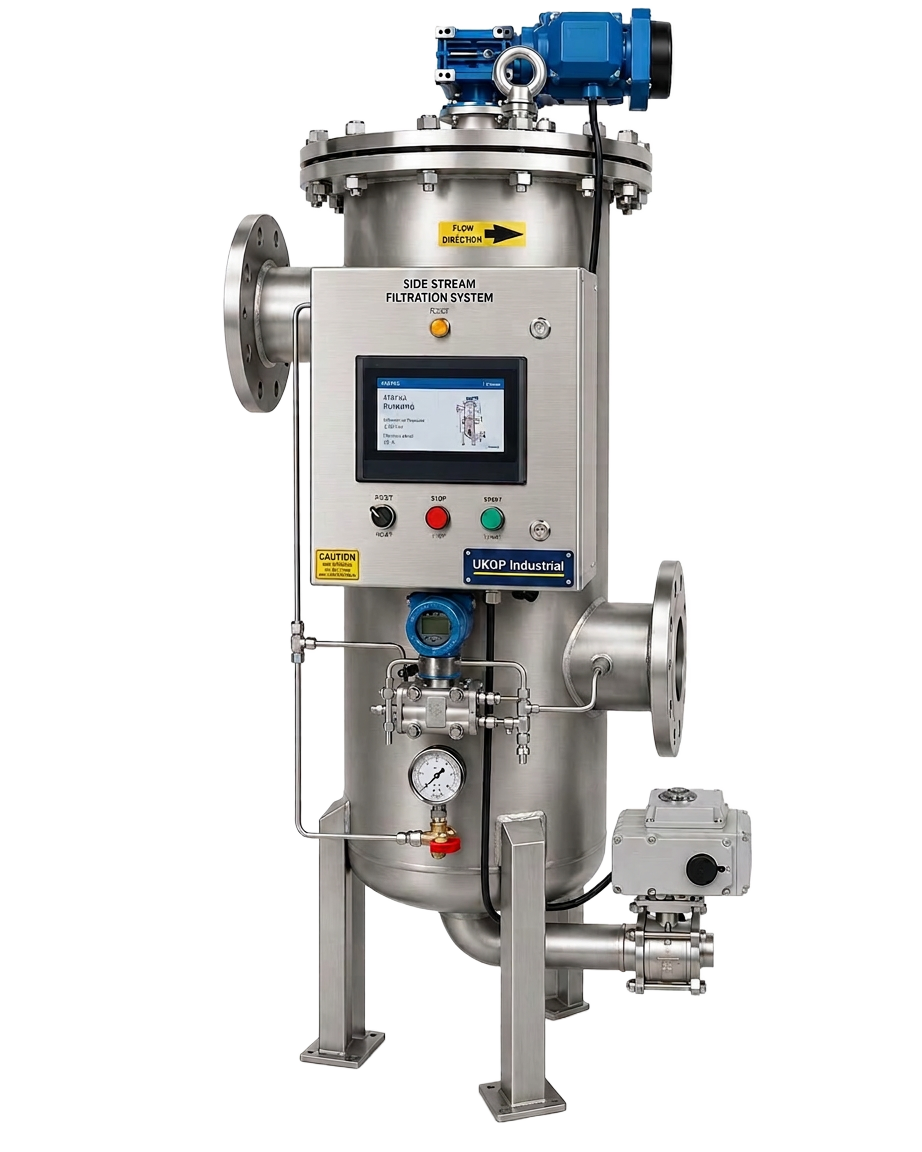
In modern commercial plant rooms, the presence of oil in compressed air lines can lead to catastrophic failure of pneumatic actuators and control valves. A dedicated compressed air oil separator works by utilising multi-stage filtration or coalescing media to remove lubricating oil and aerosols from the air stream. This process is vital for UK facilities management teams who must adhere to stringent air quality standards, ensuring that compressed air used for building automation or tool operation is free from moisture and oil mist. Without a robust separator, oil can emulsify, leading to corrosive buildup within the pipework that eventually compromises the entire system design life.
From a technical perspective, the separation process relies on the physical properties of the oil droplets within the air stream. As air passes through the compressed air oil separator, the velocity changes, and the droplets hit the internal media, merging until they are heavy enough to fall into a collection sump. This mechanism is critical for preventing the 'fouling' of heat exchangers and other thermal transfer surfaces. For UK consultants, verifying the efficiency rating of these units against British Standards is a non-negotiable step during the procurement phase to ensure long-term operational reliability and reduced maintenance intervals for the end-user.
UKGP Industrial provides technically superior solutions that integrate seamlessly into complex plant-room layouts. When choosing a compressed air oil separator, engineers must account for the peak flow rates and maximum operating pressures of the system. Selecting an undersized unit leads to excessive pressure drops, which forces compressors to work harder and increases energy consumption across the site. Conversely, an oversized unit may not provide the necessary velocity for effective coalescing. Our technical team works alongside M&E contractors to ensure every specification meets the load profile of the building, providing a balance of performance and commercial value that supports ISO 14001 environmental goals.
- Eliminates lubricant carry-over to protect sensitive pneumatic instruments
- Reduces pressure drop across the distribution network to save energy
- Assists in meeting ISO 8573-1 air quality classes for industrial use
- Prevents the formation of acidic sludge in distribution pipework
Technical Sizing for a Compressed Air Oil Separator
Accurate sizing of a compressed air oil separator is a calculation that factors in volume flow, temperature, and pressure. Most UK industrial systems operate at a standard 7 to 10 bar, but the separator must be rated for the maximum possible pressure of the compressor to comply with the Pressure Equipment Directive (PED). When calculating the sizing for your compressed air oil separator, the primary metric is the Free Air Delivery (FAD) measured in cubic metres per hour or litres per second. If the separator is too small for the FAD, the air velocity will be too high, stripping oil back off the filters and sending it downstream in a process known as 're-entrainment'.
Temperature also plays a pivotal role in the efficiency of the coalescing process. High temperatures can cause oil to vapourise, making it much harder for a traditional compressed air oil separator to capture. Specialist cooling or after-cooling stages may be required before the air enters the filtration block. For FM leads and plant engineers, monitoring the temperature differential across the separator can provide early warning signs of filter saturation. A properly sized and maintained unit will show a consistent, low-pressure drop throughout its service life, ensuring that the energy cost of producing air remains as low as possible for the facility owner.
For those managing combined hydronic and pneumatic systems, it is often necessary to look at holistic separation. While the compressed air oil separator handles the gas phase, mechanical dirt and air within the heating or cooling water loops require separate attention to meet BSRIA BG50 requirements. UKGP Industrial offers a combined approach to system cleanliness, ensuring that both your air lines and your water-filled circuits are free from contaminants that cause erosion or blockages. We recommend looking for units with flanged connections for easier installation and maintenance, specifically those that offer a clear path for servicing without requiring the complete removal of the valve body.
- Calculate sizing based on maximum Free Air Delivery (FAD)
- Ensure pressure ratings meet PED requirements for the specific site
- Monitor temperature to prevent oil vapour bypass
- Opt for flanged units for easier maintenance in tight plant rooms
BSRIA BG29 and BG50 Compliance in UK Systems
In the UK building services sector, compliance with BSRIA BG29 (Pre-commission cleaning of pipework) and BG50 (Water treatment for closed heating and cooling systems) serves as the benchmark for system longevity. While these guidelines focus on water, the principles of removing contaminants via a compressed air oil separator or similar mechanical device are identical. Removing impurities early prevents the degradation of modern high-efficiency plant equipment. Many leading commercial boiler manufacturers and heat pump suppliers now mandate the installation of high-quality separators to uphold warranty conditions, as even small amounts of debris or oil can foul heat exchanger plates and reduce thermal efficiency significantly.
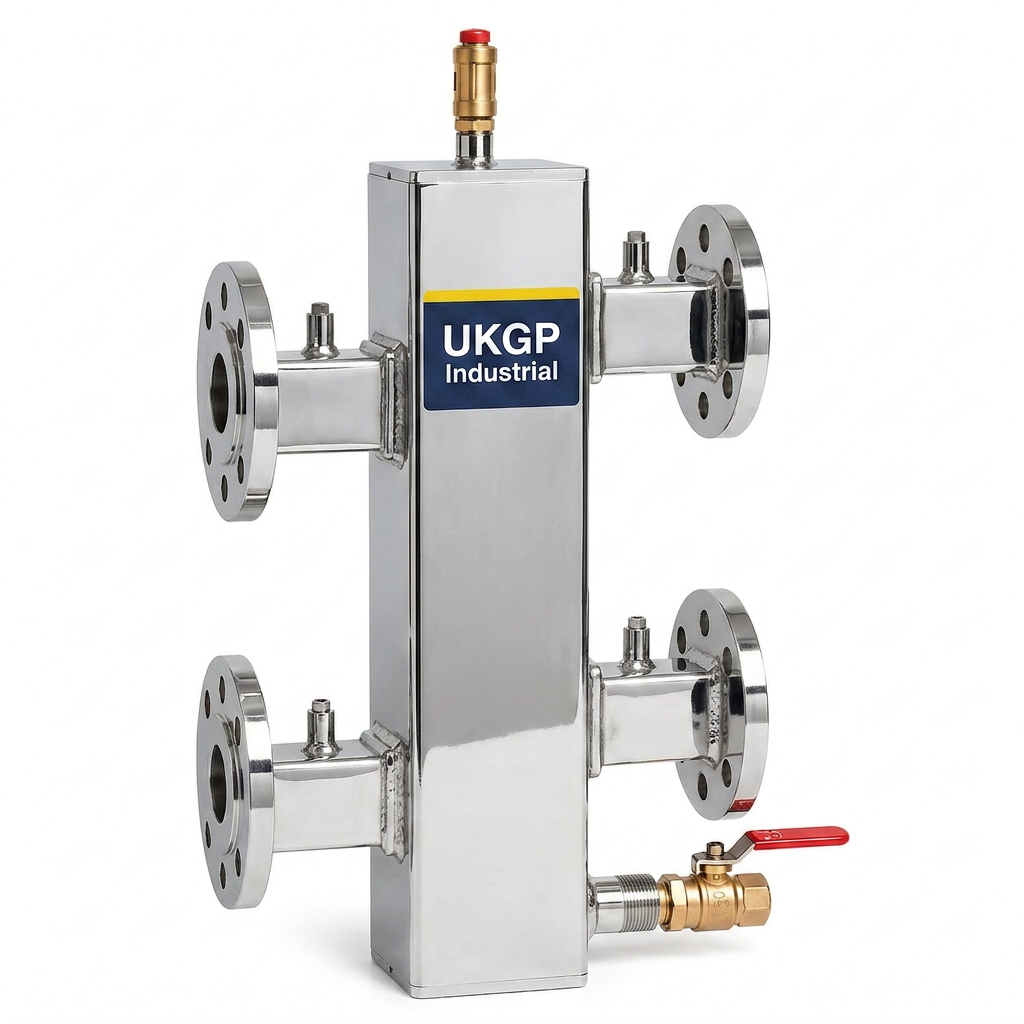
Using a compressed air oil separator in tandem with water-side filtration ensures that every aspect of the project's HVAC and process infrastructure is protected. For instance, in a plant room where air is used to actuate large flanged valves on a low loss header, the air must be dry and oil-free to prevent the valve seals from perishing. UKGP Industrial understands these interdependencies, which is why our product range is designed to work in synergy. By installing a robust separator, M&E contractors can handover a system with confidence, knowing that they have mitigated the risks of premature failure and avoided the costly remedial works associated with system contamination.
Maintaining the integrity of closed-loop systems requires a proactive approach to filtration. If a compressed air oil separator is neglected, the resultant oil carry-over can mix with moisture to form a corrosive 'mayonnaise' that clogs nozzles and air-tools. This is a common cause of downtime in UK manufacturing facilities. To prevent this, UKGP recommends a structured maintenance schedule including regular drainage of the separator sump. Our units are built for the rigours of the UK industrial market, featuring heavy-duty construction that resists the vibration and pressure fluctuations common in demanding plant room environments, ensuring the safety of all site personnel.
- Aligns with BSRIA guidelines for system cleanliness and longevity
- Protects warranties of major UK commercial boiler and heat pump OEMs
- Prevents corrosive sludge formation in pneumatic and hydraulic lines
- Essential for the protection of high-cost actuators and control valves
Installation Best Practices for Separation Equipment
Proper placement of the compressed air oil separator is as important as the sizing itself. Ideally, the separator should be installed in a location where the air has had time to cool slightly, but before the air enters the main distribution header. This allows for maximum coalescing efficiency. When installing the unit, contractors should ensure there is adequate clearance for filter changes and that the auto-drain or manual drain valve is easily accessible. At UKGP Industrial, we provide flanged units ranging from DN25 to DN300, ensuring compatibility with a wide range of industrial pipe schedules, primarily in PN10 and PN16 configurations to suit standard UK specifications.
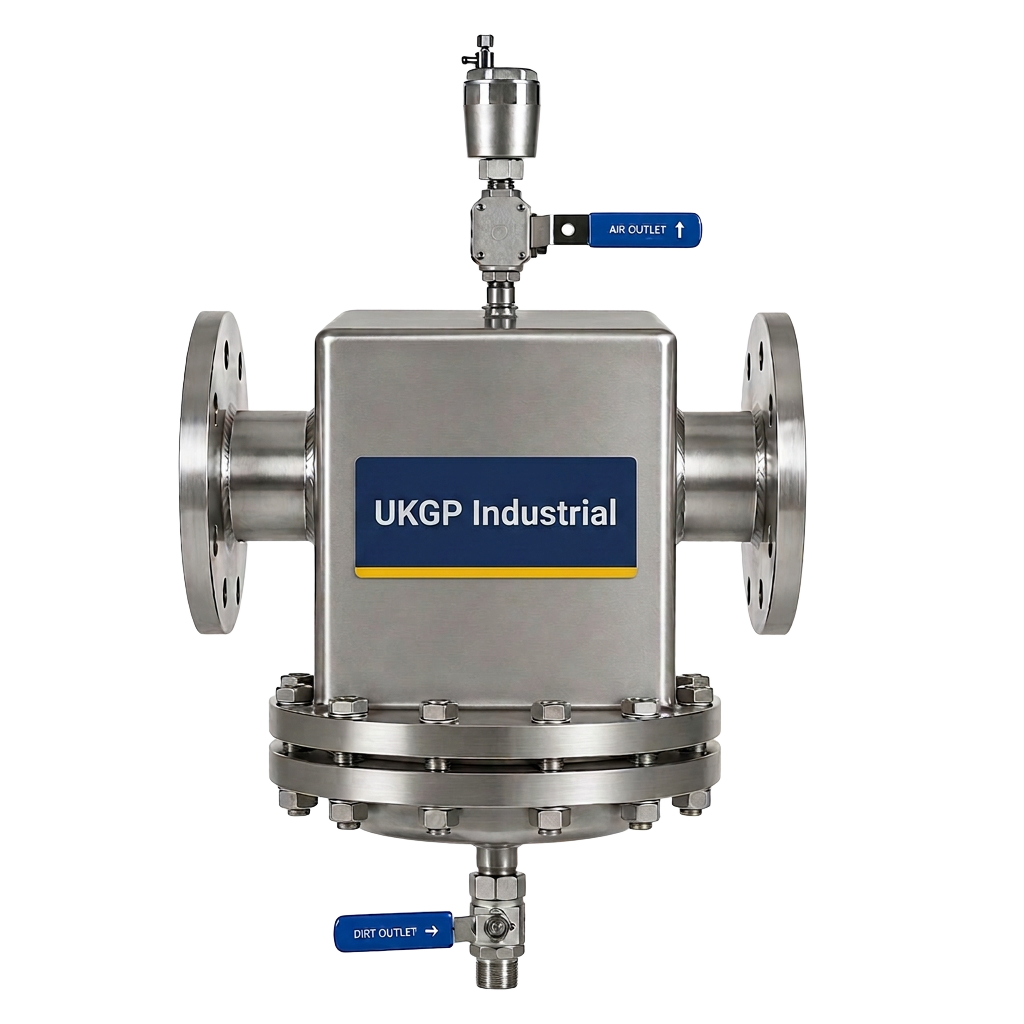
Beyond the compressed air oil separator, plant-room engineers must consider the impact of magnetic contaminants in water-based circuits. For heating and chilled water systems, we advocate for the use of a combined separator that uses both coalescing media and a magnetic catch. This dual-action approach removes both non-magnetic debris and magnetite particles that can damage circulator pumps. Our UKGP air and dirt separator is a prime example of this technology, offered with an isolation kit and a 2-year warranty to provide peace of mind to procurement leads. Integrating these products simplifies the commissioning process and ensures the system operates at peak thermodynamic efficiency.
When procuring for large-scale projects, look for suppliers who offer a comprehensive kit of parts. A high-quality separator should include an isolation kit to allow for servicing without draining the entire system. This is particularly relevant for 24/7 industrial operations where downtime is measured in lost revenue. By choosing a UKGP air and dirt separator, you are investing in a product that combines robust DN-rated flanges with a high-strength magnetic field and efficient media, providing a total solution for plant room protection. Always verify the manufacturer's pressure-temperature curves before installation to ensure the equipment is suited to the specific thermal loads of your building.
- Locate separators after cooling stages for maximum oil extraction
- Ensure PN16 or PN10 flange compatibility with existing pipework
- Utilise isolation kits to facilitate maintenance without system shutdowns
- Verify clearance requirements for internal element removal or cleaning
Enhancing Efficiency with High-Grade Separation Media
The internal media of a compressed air oil separator is the engine of the device. High-grade borosilicate micro-glass or similar coalescing materials are used to trap particles as small as 0.01 microns. This level of filtration is essential for high-tech industries, including pharmaceuticals and food production, where oil-free air is a critical requirement. For the general UK industrial market, using a standard compressed air oil separator helps to extend the life of downstream filters and dryers by removing the bulk of the oil burden early in the air treatment chain. This prevents the primary desiccants from becoming 'poisoned' by oil, which would otherwise require an expensive media replacement.
In water-carrying systems, the equivalent efficiency is achieved through the use of stainless steel media that creates a low-velocity zone. This allows air bubbles to rise and dirt particles to settle. Just as the compressed air oil separator is vital for pneumatics, the air and dirt separator is vital for the longevity of a plate heat exchanger. By removing air, you prevent oxygen-based corrosion, and by removing dirt, you prevent the erosion of the delicate stainless steel plates. UKGP provides professional-grade components that assist in maintaining the chemical balance required by BS 8552, ensuring that your water quality remains within the parameters specified by your site chemist.
For plant room engineers, the focus should always be on reducing the Total Cost of Ownership (TCO). A cheap compressed air oil separator may have a lower initial price point but can cause higher energy bills due to pressure drops and more frequent part replacements. UKGP focuses on commercial-grade durability, using materials that withstand the aggressive environments found in Surrey and across the UK's industrial heartlands. Our 2-year warranty on separation products is a testament to our confidence in their build quality. When you request a quote for our DN25-DN300 flanged separators, you are choosing a product designed to perform reliably under the constant cycling of industrial plant operation.
- High-performance media captures particles down to sub-micron levels
- Extends the life of downstream desiccant dryers and fine filters
- Reduces pressure drop to lower site-wide electricity consumption
- Constructed from durable materials for demanding industrial applications
Procurement and Lifecycle Support for UK Engineers
Selecting the right partner for your compressed air oil separator is about more than just a single purchase; it is about technical support and availability. UKGP Industrial maintains a significant stock of air and dirt separators, dosing pots, and expansion bellows to support fast-track M&E projects. When specifyng a compressed air oil separator, ask for detailed data sheets that include pressure drop curves at various flow rates. This transparency allows consultants to accurately model the system's performance using software like Revit or Hepak, ensuring that the 'as-built' performance matches the design intent and meets all relevant CIBSE guidelines for industrial building services.
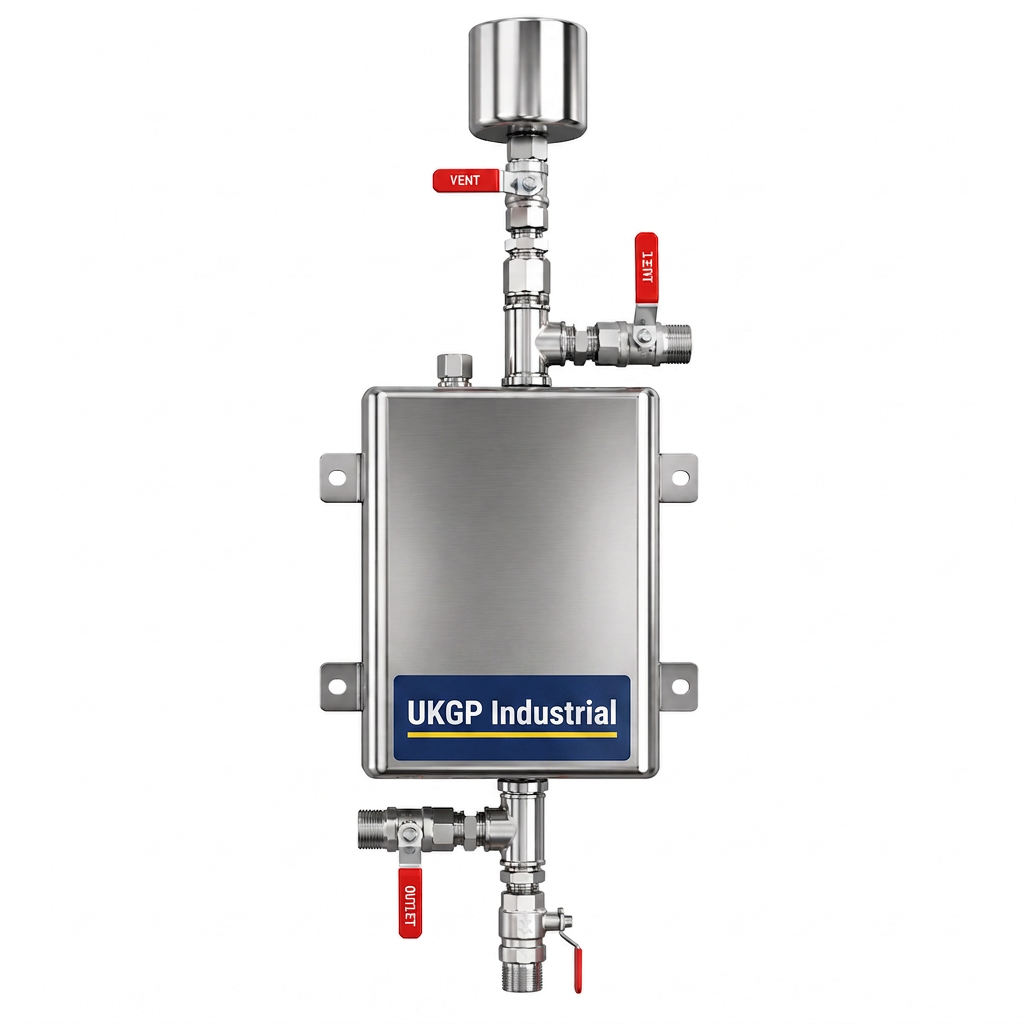
Post-installation, the focus shifts to monitoring and maintenance. We recommend that every compressed air oil separator is fitted with a differential pressure gauge to visually indicate when the internal media is becoming restricted. For water systems, similar attention must be paid to the pH levels and chemical concentration. Our range of pH sensors and transmitters, along with chemical dosing pots, allows for a comprehensive approach to system health. By integrating these tools, FMs can move from reactive to predictive maintenance, identifying issues with oil carry-over or water quality before they lead to expensive plant failure or unplanned site shutdowns.
To discuss your specific project requirements or to request a quote for a DN25-DN300 flanged air and dirt separator with a magnetic catch and isolation kit, contact the UKGP Industrial team today. Our Surrey-based technical experts are ready to assist with sizing, selection, and compliance advice to ensure your plant room exceeds the standards set by BSRIA and BS EN 14917. Whether you are replacing a failed unit or designing a new process loop, our 2-year warranty and commitment to quality make us the preferred choice for UK building services consultants and contractors who demand the best in fluid and air separation technology.
- Access technical data for accurate system modelling and CIBSE compliance
- Utilise differential pressure monitoring for predictive maintenance
- Integrate with pH sensors and dosing pots for total system health
- Fast-track delivery available for time-sensitive M&E installations
Frequently asked questions
How often should I change the filter in a compressed air oil separator?
- Typically, the internal element of a compressed air oil separator should be replaced every 4,000 to 6,000 operating hours, or when the differential pressure reaches approximately 0.5 bar. This ensures optimal air quality and prevents excessive energy loss through pressure drops.
Can I use a compressed air oil separator for water removal?
- While a compressed air oil separator is designed to coalesce oil aerosols, it will often remove some bulk moisture. However, for dedicated water removal, a water separator or a desiccant dryer should be used in conjunction with the oil separator to meet professional air quality standards.
What is the difference between a standard filter and a coalescing separator?
- A standard filter often relies on a simple mesh to trap particles, whereas a compressed air oil separator uses specialized coalescing media to force tiny oil droplets to merge into larger ones. This process is far more effective at removing aerosols and oil mist from the air stream.
Are UKGP separators compliant with UK pressure regulations?
- Yes, all UKGP Industrial separation equipment, including our air and dirt separators and compressed air oil separator solutions, are designed and manufactured to comply with the relevant UK Pressure Equipment (Safety) Regulations and are rated for PN10/16 flanged connections as standard.
What flange sizes are available for your separators?
- We offer a comprehensive range of flanged separators from DN25 up to DN300. This ensures that whether you are working on a small commercial plant room or a large-scale industrial site, we have a correctly sized unit to match your pipework and flow requirements.