Understanding the role of the cleanvent air dirt separator
In modern commercial plant rooms, the presence of entrained air and particulate matter poses a significant threat to efficiency. A cleanvent air dirt separator acts as a multi-functional guardian for the primary circuit, ensuring that dissolved gases and solid debris are removed before they can cause damage to sensitive components like heat exchangers or pumps. By slowing the water flow within a specifically designed internal chamber, these units allow air bubbles to rise and be vented, while heavier particles settle at the bottom. This process is essential for maintaining the thermal conductivity of the system fluid, as air is a notorious insulator that creates cold spots and localized overheating. For the facility manager, this translates to fewer emergency call-outs and a more predictable maintenance schedule over the building's lifecycle.
The technical design of a cleanvent air dirt separator typically involves a wide-body construction which facilitates a significant reduction in velocity. This velocity drop is critical; without it, microbubbles remain entrained in the high-speed flow, eventually collecting in radiators or heat emitters. Furthermore, the integration of internal coalescing media provides a vast surface area that encourages air to latch and rise. When selecting these units, engineers must look for robust build quality and a design that minimizes pressure drop, ensuring that the pump head is not unnecessarily taxed. This careful balance of physical filtration and aerodynamic design is what distinguishes a commercial-grade separator from standard domestic variants found in lower-output residential settings.
From a commercial perspective, the installation of a cleanvent air dirt separator is a proactive measure against oxygen-based corrosion. In a closed-loop system, any ingress of oxygen leads to the formation of iron oxide, or magnetite, which is highly abrasive. By removing air at the highest point of temperature and lowest point of pressure—typically near the boiler or chiller—the separator effectively de-aerates the system. This directly aligns with the best practices outlined in CIBSE Guide M regarding the operation and maintenance of building services. When you specify a UKGP unit, you are investing in a proven technology designed to handle the rigorous demands of UK commercial plant rooms, backed by local expertise and stock availability for fast project turnaround.
- Reduces oxygen concentration to prevent internal corrosion and pitting.
- Improves heat transfer efficiency by removing insulating air pockets.
- Protects high-value components like circulating pumps and control valves.
- Minimises system noise and gurgling associated with air locks.
BSRIA BG29 and BG50 compliance for commercial systems
Compliance with BSRIA BG29 (Pre-commission cleaning of pipework systems) and BG50 (Water treatment for closed heating and cooling systems) is a non-negotiable requirement for professional M&E installations. A cleanvent air dirt separator plays a pivotal role in achieving these standards by providing a continuous mechanism for capturing debris post-commissioning. While initial flushes remove bulk construction waste, the ongoing generation of corrosion by-products requires a permanent solution. The BSRIA guidelines emphasise that water quality must be maintained throughout the system's life to prevent the accumulation of sludge, which can lead to blockages and reduced flow rates. A well-placed separator ensures that even the smallest particles are captured before they can settle in stagnant areas of the pipework.
For the commissioning engineer, documenting the presence of a cleanvent air dirt separator is often a key step in the handover process. These units assist in reaching the required cleanliness levels more rapidly during the fill-and-vent stage, as they streamline the removal of trapped air that can otherwise take weeks to purge. BS 8552 provides the framework for sampling and monitoring water quality, and the data often shows that systems equipped with high-performance combined separators maintain lower turbidity levels. By integrating such a device, contractors can significantly reduce the risk of non-conformance during independent water analysis tests. This protects the contractor's liability and ensures the end-user receives a system that is efficient from day one.
The financial implications of neglecting water quality are severe, often leading to the voiding of warranties from major UK commercial boiler OEMs. Most high-efficiency boiler manufacturers specify strict water quality parameters that must be met for the heat exchanger warranty to remain valid. Utilizing a cleanvent air dirt separator integrated with a magnetic catch provides the dual-action protection these manufacturers demand. It is not merely about meeting a baseline statutory requirement; it is about protecting the capital expenditure of the client. As consultants design more complex, low-temperature systems like heat pump arrays, the importance of fluid clarity becomes even more pronounced, making the choice of separator a critical design decision in the modern UK landscape.
- Assists in meeting BSRIA BG29 standards for pre-commissioning cleanliness.
- Supports BG50 by providing long-term debris and air management.
- Ensures compliance with commercial boiler warranty water quality specifications.
- Reduces the frequency and cost of chemical cleaning and water sampling.
The impact of magnetic filtration in dirt separation
While traditional gravity-based separation is effective for sand and non-metallic grit, it often fails to capture fine magnetite particles. This is why a modern cleanvent air dirt separator should be specified with an integrated magnetic catch. Magnetite is a metallic byproduct of corrosion that is common in older black iron systems but also occurs in new systems as oxygen reacts with metal surfaces. These particles are often smaller than 10 microns, allowing them to pass through standard strainers or mesh filters. However, a high-power neodymium magnet positioned within the separator’s flow path can pull these particles out of suspension and hold them securely until they are manually purged during routine maintenance.
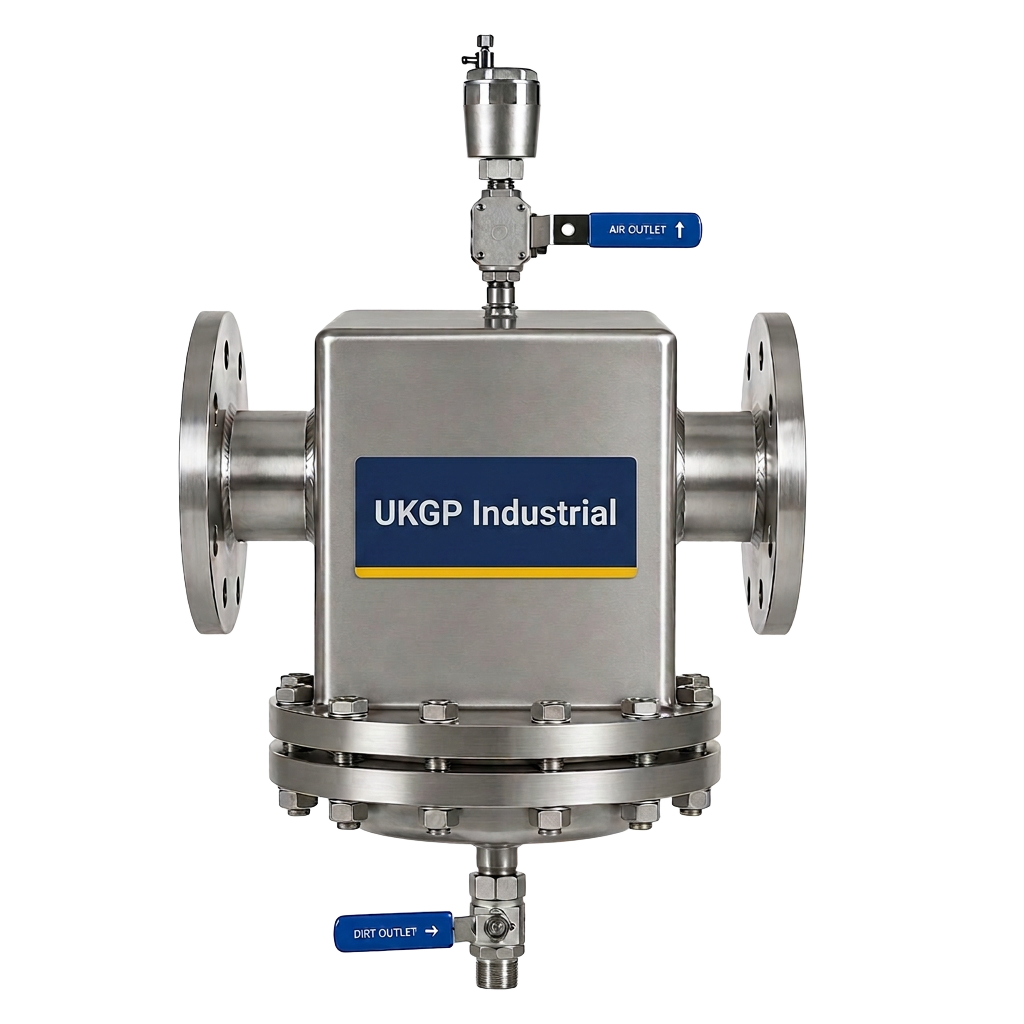
The UKGP range of air and dirt separators features a combined coalescing media and magnetic catch, designed for DN25 to DN300 pipework. This design ensures that both metallic and non-metallic contaminants are addressed in a single, compact unit. The removable magnet sleeve allows for easy cleaning; the operator simply removes the magnet to drop the collected debris into the collection chamber, which is then flushed via a blow-down valve. This maintenance-friendly approach is highly valued by facilities managers who need to minimize downtime. Furthermore, the inclusion of an isolation kit simplifies the servicing process, allowing for quick blow-down procedures without the need to drain significant sections of the primary circuit.
Specifying a cleanvent air dirt separator with DN50 to DN300 flanged connections (PN10 or PN16 rated) allows for seamless integration into large-scale plant rooms. These units are built to withstand the pressures and temperatures of commercial environments, providing a 2-year warranty that reflects their industrial-grade construction. When procurement leads compare the cost of a combined separator against the cost of replacing a seized pump or a fouled heat exchanger, the return on investment is immediate. The magnetic element is particularly vital in protecting the permanent magnet motors found in modern high-efficiency pumps, which are prone to attracting and clogging with metallic sludge if the system water is not properly filtered.
- Captures sub-micron magnetite particles that bypass traditional mesh strainers.
- Removable magnetic sleeve allows for debris removal without system shutdown.
- Protects high-efficiency variable speed pumps from metallic sludge buildup.
- Available in PN10 and PN16 flanged options for commercial pipework.
Integration with other plant room components
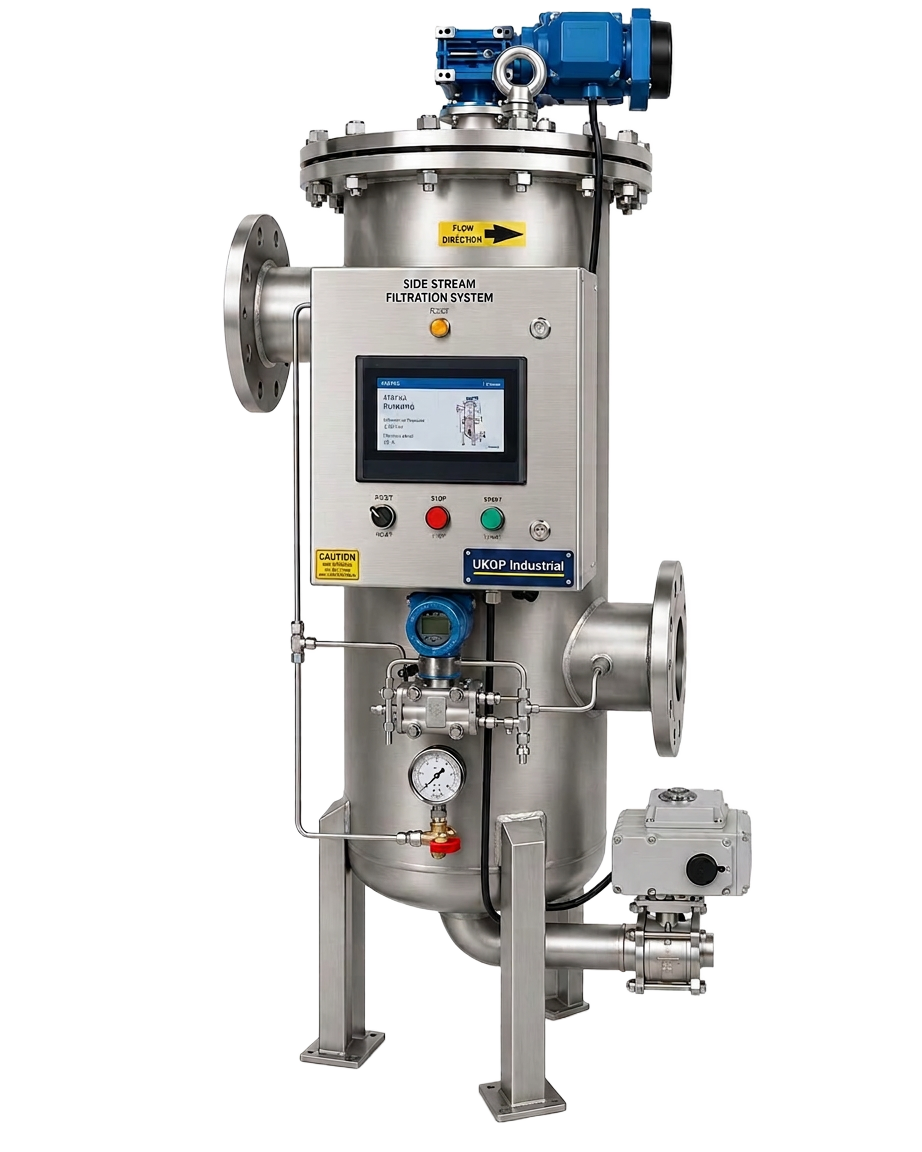
The effectiveness of a cleanvent air dirt separator is amplified when it is part of a holistic water quality strategy. In many commercial setups, the separator is installed in tandem with side stream filtration skids. While the air and dirt separator handles the total flow, the side stream filter provides even finer filtration for the smallest suspended solids. This combination is particularly useful in large volume systems where total flow filtration is not always feasible or cost-effective. By coordinating these components, an engineer can ensure that the water moving through the boilers or chillers is as close to demineralized purity as possible, significantly extending the life of the entire HVAC infrastructure.
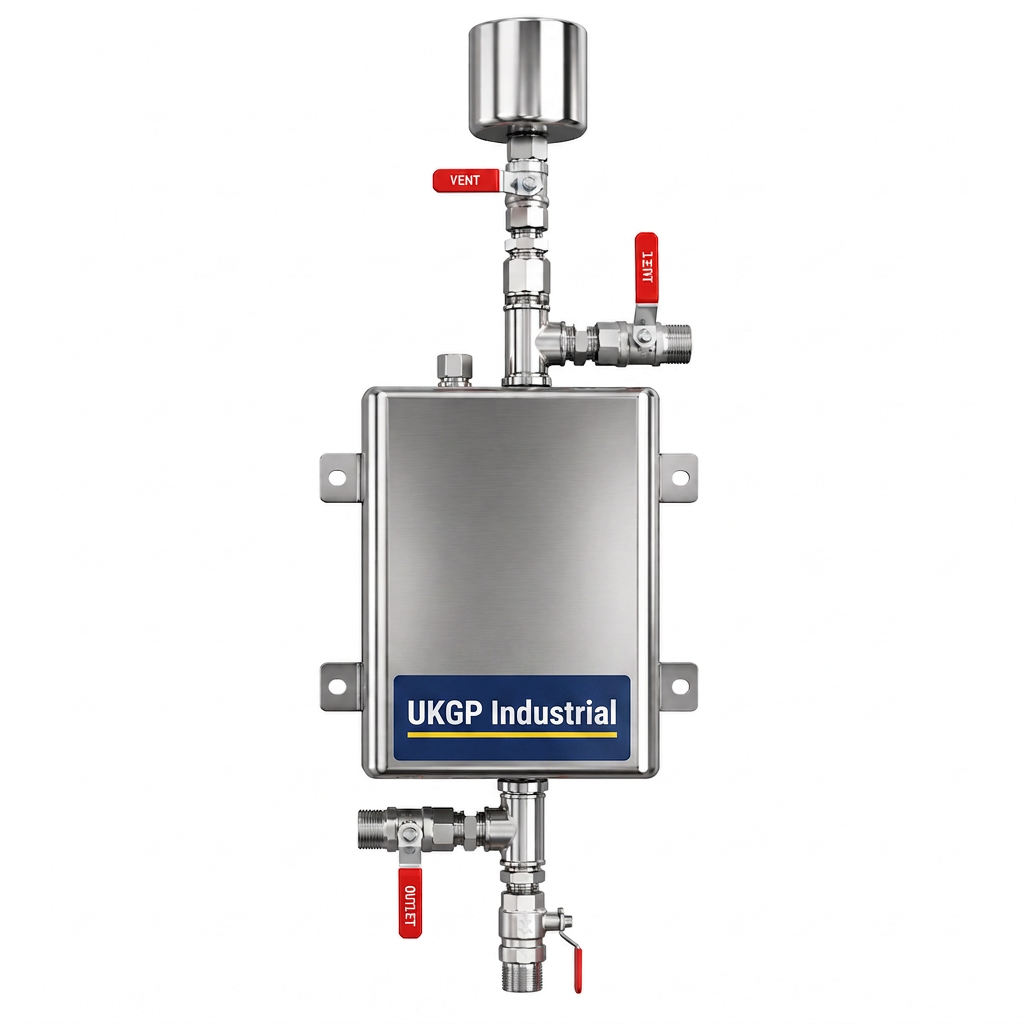
Expansion bellows and dosing pots are also relevant to the installation of a cleanvent air dirt separator. Thermal expansion can cause movement in the pipework that leads to air ingress at joints if not managed by proper bellows. Meanwhile, a chemical dosing pot allows for the introduction of inhibitors that work alongside the separator to prevent corrosion in the first place. If the separator is the 'filter,' the dosing pot is the 'medicine.' It is vital that these components are sized correctly relative to the total system volume. UKGP provides technical support to ensure that every chosen component, from the separator to the expansion vessel, is matched to the specific flow rates and pressure requirements of the project.
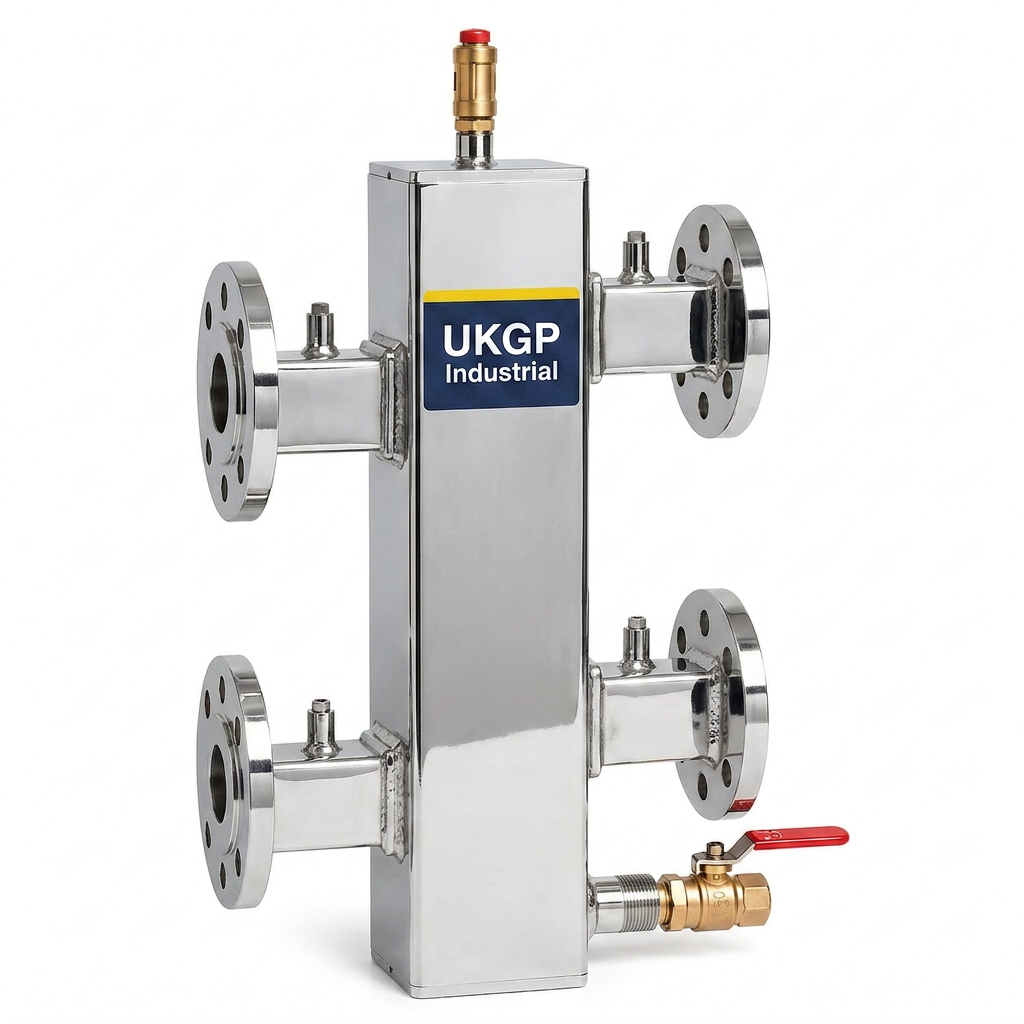
Furthermore, in systems where multiple heat sources are used, such as bivalent systems with boilers and heat pumps, the use of low loss headers is common. A cleanvent air dirt separator is often placed on the primary return to protect the main heat source, or on the common flow to ensure microbubbles are removed before reaching the distribution circuits. Understanding the pressure drops across these devices is crucial for accurate pump sizing. Our technical team can provide detailed pressure drop curves for all models from DN25 up to DN300, ensuring your design calculations are robust and your system operates precisely as intended during peak loads.
- Pairs with side stream filtration for comprehensive water quality management.
- Works alongside dosing pots for optimal chemical inhibitor distribution.
- Essential for protecting modern low loss headers and 3-way mixing valves.
- Available with full technical data for accurate pressure drop calculations.
Installation and maintenance best practices
Correct placement of the cleanvent air dirt separator is the most critical factor in its performance. For air removal, the physics dictate that the unit should be installed at the point of highest temperature and lowest pressure. In a heating system, this is typically on the flow pipe exiting the boiler. However, for dirt removal, many engineers prefer the return leg to capture debris before it enters the heat source. In many commercial applications, a dual-unit approach or a specifically designed combined unit is positioned to prioritize the most sensitive equipment. It is also important to ensure sufficient clearance above and below the unit for the removal of the air vent and the cleaning of the magnetic catch.
Maintenance should be scheduled in line with the building's SFG20 requirements. For a cleanvent air dirt separator, this usually involves a monthly blow-down of the collection chamber to remove accumulated sludge. Because UKGP units come with an isolation kit, this task is straightforward and safe for on-site staff. During the annual service, the magnetic sleeve should be removed and cleaned to ensure the flux density of the magnets remains high enough to attract new particles. If the water quality is found to be degrading during these checks, it serves as an early warning sign that the chemical levels or the pressurisation system may need investigation before a more serious failure occurs.
When purchasing these units, procurement leads should prioritize suppliers who offer a comprehensive warranty and technical support. A 2-year warranty on a cleanvent air dirt separator provides peace of mind that the unit is manufactured to last in industrial environments. UKGP units are constructed with heavy-duty materials and flanged connections (DN25-DN300) to meet the demands of British engineering standards. Requesting a quote for a combined unit that includes both coalescing media and a magnetic catch is the most cost-effective way to tick multiple boxes in a building's water quality specification. Our team is ready to assist with sizing and selection to ensure your project stays on schedule.
- Install at high-temperature, low-pressure points for maximum de-aeration.
- Ensure easy access for magnetic sleeve cleaning and chamber purging.
- Follow SFG20 guidelines for routine maintenance and water visual checks.
- Utilise the included isolation kit to simplify and speed up servicing.
Technical specifications and selection criteria
Selecting the right cleanvent air dirt separator requires more than just matching the pipe size. Engineers must evaluate the maximum flow rate (m/s) to ensure that the velocity through the unit allows for efficient separation. Generally, a velocity of less than 1.5 m/s is recommended for optimal air bubble release. If the system flow exceeds this, a larger unit size with reducers may be necessary to achieve the desired effect. The UKGP range covers a broad spectrum of flow requirements, ensuring that whether you are working on a small commercial office or a large industrial plant room, there is a DN-rated flanged unit that fits the mechanical footprint and hydraulic profile of the system.
Pressure rating is another vital consideration, especially in high-rise buildings where the static head can be significant. Standard units are often rated for PN10, but PN16 options are essential for many modern commercial designs. The cleanvent air dirt separator from UKGP is available in both ratings to suit various project specifications. Additionally, the materials used in the body and the coalescing media must be compatible with any additives in the system fluid, such as glycol or corrosion inhibitors. Our separators are designed to be resilient against standard HVAC chemicals, ensuring a long service life with minimal degradation of the internal components or the magnetic core.
Finally, the footprint of the separator can be a constraint in refurbished plant rooms with limited space. A combined unit is highly advantageous here, as it replaces the need for separate air vents and strainers, saving significant face-to-face pipework distance. By choosing a UKGP air and dirt separator (DN25-DN300, flanged, PN10/16) with an integrated isolation kit, you are opting for a streamlined installation process. To get started on your next design or to receive specialized pricing for your project, contact our Surrey-based technical sales team today for a formal quote. We can provide full CAD blocks and Revit files to assist in the early stages of plant room layout and 3D modelling.
- Available in PN10 and PN16 pressure ratings for various building heights.
- Sizes ranging from DN25 to DN300 to match commercial pipe diameters.
- Optimised for flow velocities that maximize air and dirt capture rates.
- Compact combined design ideal for space-constrained plant room refits.
Frequently asked questions
What is the primary benefit of a cleanvent air dirt separator?
- The primary benefit is the simultaneous removal of microbubbles and particulates from HVAC systems, which prevents corrosion, improves heat transfer efficiency, and protects boilers and pumps from damage.
How often should a cleanvent air dirt separator be serviced?
- Ideally, the collection chamber should be blown down monthly, and the magnetic sleeve should be cleaned annually, or more frequently in systems with known water quality issues.
Is the magnetic catch essential in a cleanvent air dirt separator?
- Yes, especially in systems with steel pipework or radiators. The magnetic catch is the only effective way to capture fine magnetite (sludge) that standard filters miss.
Are UKGP separators compliant with BSRIA requirements?
- Yes, they are designed to help installers and facility managers meet the water quality standards set out in BSRIA BG29 and BG50.
What sizes are available for the UKGP air and dirt separator?
- We stock units from DN25 up to DN300, featuring flanged PN10 or PN16 connections to suit commercial applications.