Technical Role of the Boss Air Dirt Separator in Modern HVAC
In modern high-efficiency commercial heating and chilled water systems, the presence of microbubbles and suspended solids is a primary cause of operational degradation. A boss air dirt separator serves a dual purpose by utilising internal coalescing media to capture and release entrained air while simultaneously slowing the flow velocity to allow particulate matter to settle. This mechanical process is vital for protecting high-value assets like plate heat exchangers and high-efficiency pumps, which are increasingly sensitive to debris. Incorporating a boss air dirt separator into the primary circuit ensures that the system remains closer to its design efficiency for a longer duration, reducing the frequency of reactive call-outs for air locks or blockage issues.
System designers often specify these units because they address both dissolved gases and magnetite in a single installation footprint. In large-scale plant rooms, space is often at a premium, and the ability of a boss air dirt separator to provide comprehensive protection without needing multiple separate vessels is a major advantage. Furthermore, the integration of magnetic filtration within these separators has become a standard requirement to combat the magnetite sludge that inevitably forms in steel-heavy distribution networks. Without these protections, heat transfer rates can drop by over 10% in just a few months, leading to significantly higher energy bills for facilities managers and building owners.
When consulting BSRIA BG50 guidelines, it is clear that managing water chemistry alone is insufficient for closed-loop stability. Mechanical removal of contaminants through a boss air dirt separator is recommended to assist chemical dosing strategies. By removing the physical precursors to corrosion, the chemical inhibitors remain active for longer, providing a more stable environment for the system. This proactive approach to debris management is why UKGP recommends units with standard flanged PN16 connections, ensuring they integrate seamlessly into UK plant room specifications alongside other essential components like our own low loss headers and expansion vessels.
- Implements coalescing media to remove microbubbles efficiently
- Reduces the risk of cavitation in circulating pumps
- Supports compliance with BSRIA BG29 pre-commissioning cleaning
- Minimises the risk of oxygen-pitted corrosion in distribution pipework
- Aids in maintaining design flow rates across primary circuits
Optimising Water Quality with High-Performance Air and Dirt Removal
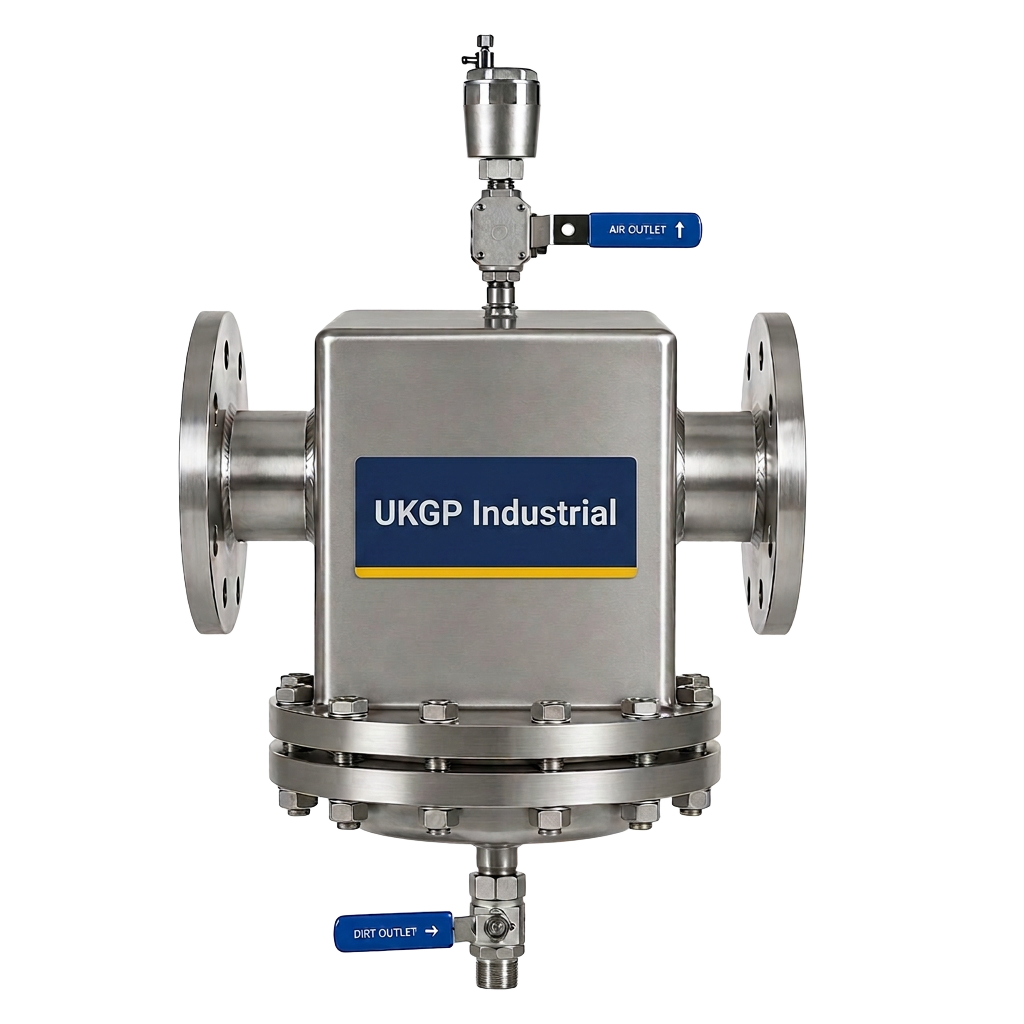
Effective air and dirt removal is not just about equipment longevity; it is about performance consistency. A high-specification air and dirt separator should feature a combined coalescing media and a powerful magnetic catch to tackle both non-metallic debris and black iron oxide. UKGP provides solutions that mirror the high-quality benchmarks set by a boss air dirt separator, specifically our range of separators from DN25 up to DN300. These units feature PN10/16 flanged connections and come equipped with an isolation kit, making them the preferred choice for M&E contractors who demand reliability and ease of installation in demanding commercial environments.
For plant room engineers, the ease of maintenance is a critical factor when choosing between various brands. While a boss air dirt separator provides excellent initial results, it must be serviced to remain effective. Our UKGP units are designed for straightforward blow-down via the integrated valve, ensuring that captured magnetite can be flushed from the system without a full shutdown. This maintenance-friendly design is essential for meeting the operational standards required by FM teams in hospitals, schools, and vertical residential developments where downtime is not an option. Our 2-year warranty provides further peace of mind regarding the build quality of our coalescing media and vessel integrity.
The physics of these devices relies on the 'Henrys Law' principle, where the reduction in pressure and temperature allows gas bubbles to escape the liquid. A boss air dirt separator positioned at the point of lowest solubility—typically the hottest part of the system on the flow side—will be most effective at deaeration. Simultaneously, the magnetic element targets the highly abrasive magnetite particles that can damage the internal seals and bearings of circulating pumps. By procuring a UKGP air and dirt separator for your next project, you ensuring a robust, high-capacity solution that meets the same rigorous standards as the best equipment on the market.
- Available in sizes DN25-DN300 to suit any commercial pipework scale
- Features combined coalescing media and magnetic catch for 2-in-1 protection
- Includes isolation kits as standard to simplify future maintenance cycles
- Supplied with a 2-year warranty for commercial peace of mind
- Compatible with PN10 and PN16 flanged system connections
Integration with Low Loss Headers and Primary Circuits
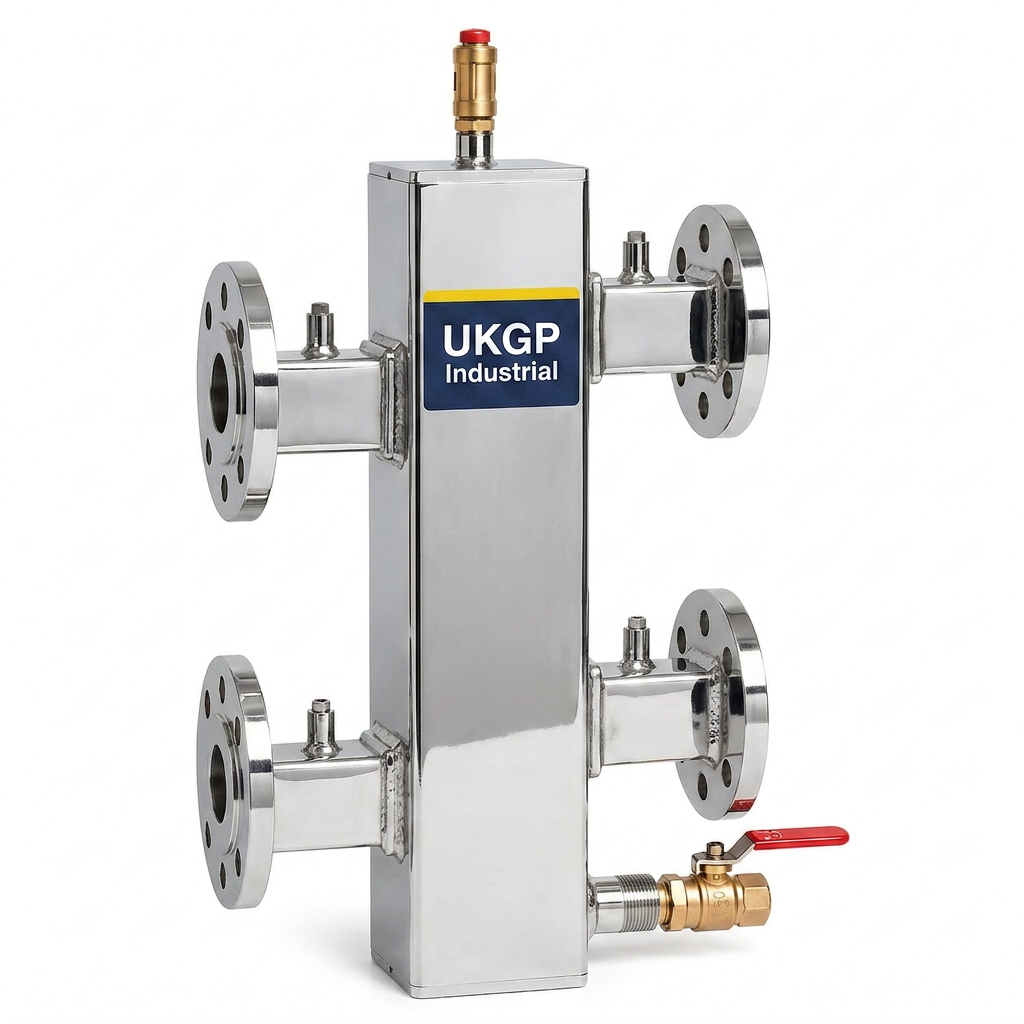
In many commercial boiler rooms, the separation of the primary and secondary circuits is achieved using a low loss header. It is common practice to install a boss air dirt separator upstream of the header to ensure that the water entering the distribution circuit is as clean as possible. This configuration protects the primary heat source from fouling while also ensuring that the secondary heating loops do not transport sludge to terminal units like radiators or fan coil units. When used together, these components form a comprehensive thermal and hydraulic management strategy that aligns with latest CIBSE best practices for heat network design.
Choosing UKGP for your low loss headers alongside your separator equipment ensures compatibility across the plant room. If you are currently specifying a boss air dirt separator, consider our range of fabricated headers which can be custom-sized to match the flow requirements of your specific project. This holistic approach to procurement reduces lead times and ensures that all components, from the air and dirt removal to the hydraulic separation, are built to the same professional standard. Our technical team can advise on the correct sizing of both the separator and the header to ensure that velocities are kept low enough for efficient particulate settling.
Furthermore, ensuring the volumetric flow does not exceed the capacity of the separator is vital. A boss air dirt separator that is undersized will suffer from bypass, where the high velocity prevents the coalescing media from capturing microbubbles effectively. This is why we stock a wide breadth of sizes, ensuring that whether you are working on a small local plant room or a massive district heating scheme, the degree of separation remains consistently high. Request a quote for our DN-rated separators today to ensure your system design exceeds the expectations of your end client.
- Improves hydraulic balance when paired with low loss headers
- Prevents debris accumulation in secondary distribution loops
- Reduces pressure drops across sensitive heat exchangers
- Allows for more accurate temperature control in primary circuits
- Supports the long-term integrity of terminal units and zone valves
Compliance with BSRIA BG29 and BG50 Standards
Compliance with industry standards like BSRIA BG29/2021 for pre-commissioning cleaning and BG50/2021 for water treatment in closed systems is a non-negotiable for modern building services consultants. A boss air dirt separator plays a pivotal role in the 'continuous cleaning' phase described in these documents. During the initial weeks of operation, even a correctly flushed system will experience a surge in suspended solids. A permanent separator with a magnetic catch is the best defence against this phenomenon, trapping particles that chemical cleaning might miss. This proactive debris management is often a prerequisite for manufacturer warranties on major UK commercial boiler brands.
Failure to install a competent boss air dirt separator often leads to the degradation of the system's chemical inhibitor. Magnetite acts as a catalyst for further corrosion, creating a cyclical problem that can eventually lead to the perforation of radiator panels or the blockage of narrow heat exchanger channels. By ensuring that magnetic sludge is physically removed from the loop, the chemical treatment can perform its role of protecting the metal surfaces rather than fighting existing contaminants. This synergy between mechanical separation and chemical dosing is the foundation of a healthy commercial HVAC system and is advocated by leading UK water treatment specialists.
At UKGP, we understand that technical compliance is just as important as hardware performance. That is why our separators are manufactured to the highest standards, ensuring that when an FM lead or procurement manager selects our equipment as an alternative to a boss air dirt separator, they are receiving a product that meets or exceeds all UK regulatory requirements. Our units are robustly constructed and pressure tested to ensure they handle the rigours of commercial operation, including the thermal cycling common in high-capacity heating networks. Always check that your separator is rated for the correct pressure, typically PN10 or PN16, before installation.
- Essential for meeting BG29 pre-commissioning cleaning protocols
- Facilitates the ongoing water quality monitoring mandated by BG50
- Protects chemical inhibitors from being depleted by high magnetite levels
- Provides a physical sample point for water quality testing via the drain
- Helps satisfy warranty conditions for leading commercial boiler OEMs
Installation and Maintenance Best Practices
Correct placement of the boss air dirt separator is critical for its success. For heating systems, the unit should be installed on the flow pipe, where the water is at its hottest. This is because air is less soluble in hot water, making it easier for the coalescing media to strip the microbubbles from the flow. In chilled water systems, the separator should be on the return line, before the chiller, to protect the evaporator from debris. Regardless of the application, installing the unit with the provided isolation kit is a must. This allows for the internal magnets to be cleaned or the vessel to be inspected without having to drain the entire system, saving significant time and cost for FM teams.
Regular maintenance of a boss air dirt separator typically involves a periodic 'blow-down' of the drain valve. For systems with a high magnetic catch, the magnet should be retracted from its dry pocket before the valve is opened; this releases the captured magnetite so it can be flushed out by the system pressure. This simple 5-minute task can prevent the accumulation of sludge that would otherwise restrict flow or eventually bypass the filter. For contractors, providing a clear maintenance schedule to the end-user is a vital part of the handover process, ensuring the system remains efficient throughout its life cycle.
If you are upgrading an older plant room, replacing a simple Y-strainer with a modern boss air dirt separator can result in immediate improvements in heat delivery. Y-strainers are often too coarse to capture fine magnetite and can easily become blocked, causing high pressure drops. In contrast, our separators allow for the capture of both large debris and microscopic particles without significantly impacting flow or pump power consumption. Contact UKGP today to discuss how our flanged separators can be retrofitted into your existing installations to improve reliability and reduce the need for repeat chemical cleaning or power flushing.
- Install on the flow side for heating to maximise deaeration
- Install on the return side for chilled water to protect the chiller
- Ensure dry-pocket magnets are cleaned regularly for maximum catch
- Always use isolation valves to facilitate servicing without system drain-down
- Verify that the flanged connection matches the system PN rating
The Commerical Case for Advanced Separation Technology
From a procurement perspective, the decision to invest in a boss air dirt separator is often driven by the desire to reduce Total Cost of Ownership (TCO). While the initial capital expenditure may be higher than a basic strainer, the savings in energy, chemical costs, and avoided emergency repairs make it a commercially sound investment. Reduced air in the system translates to quieter operation—a key requirement in residential and office environments—and prevents the 'cold spots' in radiators that lead to tenant complaints and inefficient heating cycles. Furthermore, a clean system requires less pump energy to move water, directly contributing to a lower carbon footprint for the building.
In the competitive landscape of UK commercial construction, contractors who specify reliable alternatives like the UKGP range of separators often find they have fewer post-handover issues. Our units, ranging from DN25 up to DN300, are built to withstand the pressures of commercial use and provide a degree of filtration that simply cannot be matched by older technologies. Whether you are looking for a boss air dirt separator or a custom-fabricated solution, our team in Surrey is ready to provide the technical submittals and competitive pricing required to win and deliver successful projects. Our stock levels in the UK ensure that we can meet the tight deadlines typical of modern construction schedules.
Ultimately, the goal of any plant room engineer is to create a 'fit and forget' system that operates flawlessly for decades. By utilising a boss air dirt separator alongside high-quality chemical dosing pots and expansion bellows, you are building a resilient infrastructure. At UKGP, we pride ourselves on being a single-source supplier for these critical components. We invite you to explore our full range of air and dirt separators, which come as standard with flanged PN10/16 connections and a comprehensive 2-year warranty, providing the same level of protection and reliability you expect from the industry's leading brands.
- Reduces TCO by lowering maintenance and energy costs
- Eliminates noise issues caused by air in the distribution network
- Improves tenant satisfaction by ensuring consistent heat delivery
- Offers a high-return investment through extended asset lifespan
- Simplifies procurement via a UK-based technical manufacturer
Frequently asked questions
What is the difference between a standard strainer and a Boss air dirt separator?
- A standard Y-strainer only removes large debris via a mesh, whereas a boss air dirt separator uses coalescing media to remove microbubbles and a magnetic catch to remove fine magnetite sludge, providing much more comprehensive protection.
Where is the best place to install a separator in a commercial heating system?
- For heating applications, it should be installed on the flow pipework after the boiler but before any pumps or valves, as this is where air is least soluble and easiest to remove.
Does a boss air dirt separator require regular chemical cleaning?
- While the separator physically removes debris, it should be used in conjunction with chemical inhibitors as per BSRIA BG50 to prevent new corrosion from forming on metal surfaces.
Are UKGP separators compatible with PN16 systems?
- Yes, our air and dirt separators are available with both PN10 and PN16 flanged connections as standard, making them suitable for most commercial and industrial HVAC specifications in the UK.
Why is a magnetic catch necessary in an air and dirt separator?
- Magnetite is a non-metallic, magnetic byproduct of corrosion that is extremely abrasive. Standard mechanical separation often misses these fine particles, so a magnetic catch is essential to protect pump seals and heat exchangers.