The Role of an Air Separator Heating System in BSRIA BG50
In the UK commercial sector, adherence to BSRIA BG50 'Water Treatment for Closed Heating and Cooling Systems' is the benchmark for operational excellence. An air separator heating system plays a pivotal role in this framework by removing the primary driver of metallic corrosion: oxygen. When air is trapped within a closed-loop system, it facilitates the formation of magnetite and iron oxides, which eventually settle as sludge. By installing a dedicated air separator heating system at the point of lowest solubility—typically the hottest point of the flow—engineers can strip gaseous content before it reacts with system components. This proactive approach to water quality management is significantly more cost-effective than reactive chemical dosing alone.
Consultants must recognise that simple automatic air vents (AAVs) are insufficient for the micro-bubbles common in modern high-velocity pumped systems. An industrial-grade air separator heating system utilizes coalescing media to slow the fluid velocity, allowing micro-bubbles to merge and rise to a venting chamber. This process is essential for protecting expensive commercial boilers and heat exchangers from dry firing and localised overheating. Without this level of protection, commissioning engineers often struggle to meet the strict dissolved oxygen limits outlined in BS 8552, leading to failed handovers and costly remediation work on new-build flagship projects across Surrey and London.
Furthermore, the integration of an air separator heating system supports the overall thermal efficiency of the building. Air is a poor conductor of heat and acts as an insulator when trapped in terminal units like radiators or fan coil units. By ensuring the system remains air-free, M&E contractors can guarantee that the design temperature delta (ΔT) is achieved, reducing the load on secondary pumps and primary heat sources. This is a critical consideration for facility managers looking to lower carbon footprints and operational expenditure in line with corporate ESG targets. A robust deaeration strategy is therefore a fundamental pillar of modern HVAC system design and long-term asset protection.
- Ensures compliance with BSRIA BG50 water quality parameters
- Reduces dissolved oxygen levels to prevent internal pitting corrosion
- Minimises noisy operation and air locks in high-rise distributions
- Protects high-efficiency heat exchangers and circulating pumps
- Improves heat transfer efficiency across terminal units
Technical Selection for Air and Dirt Separators
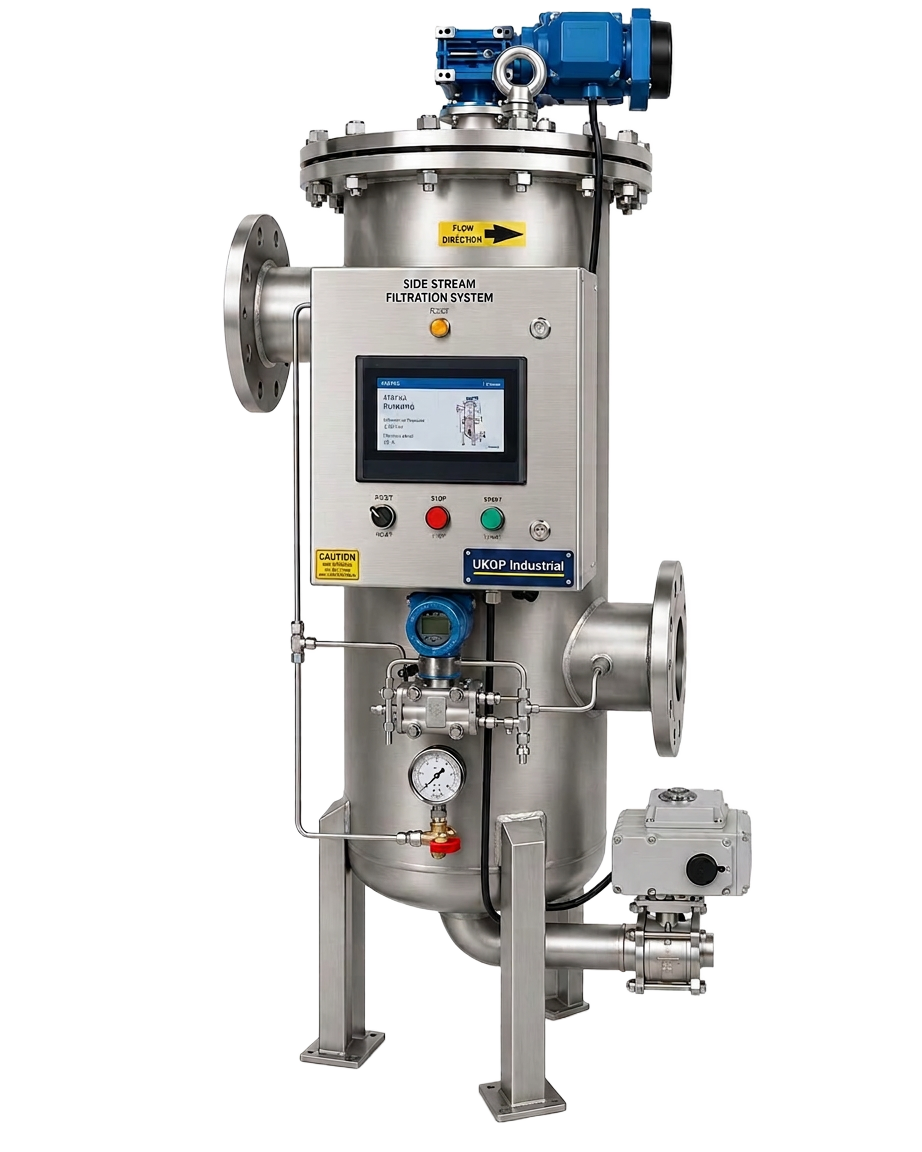
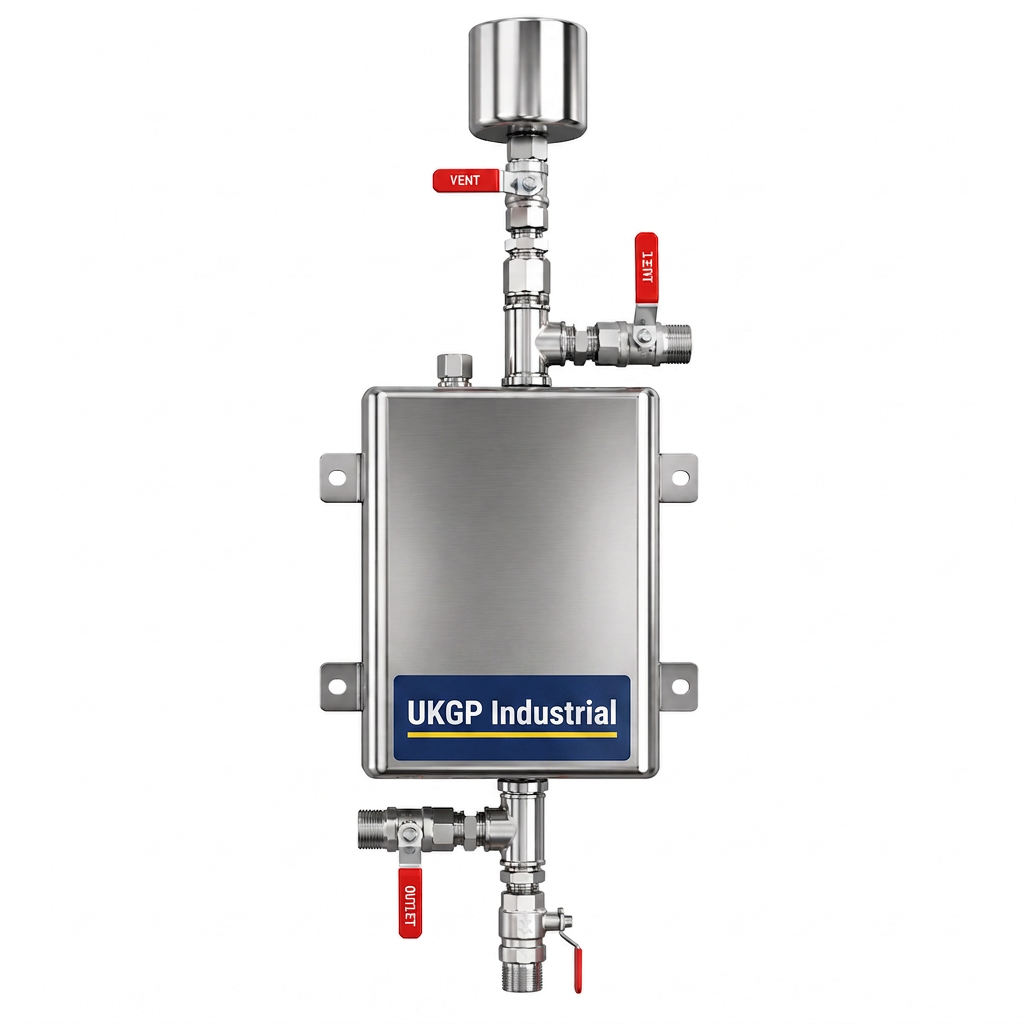
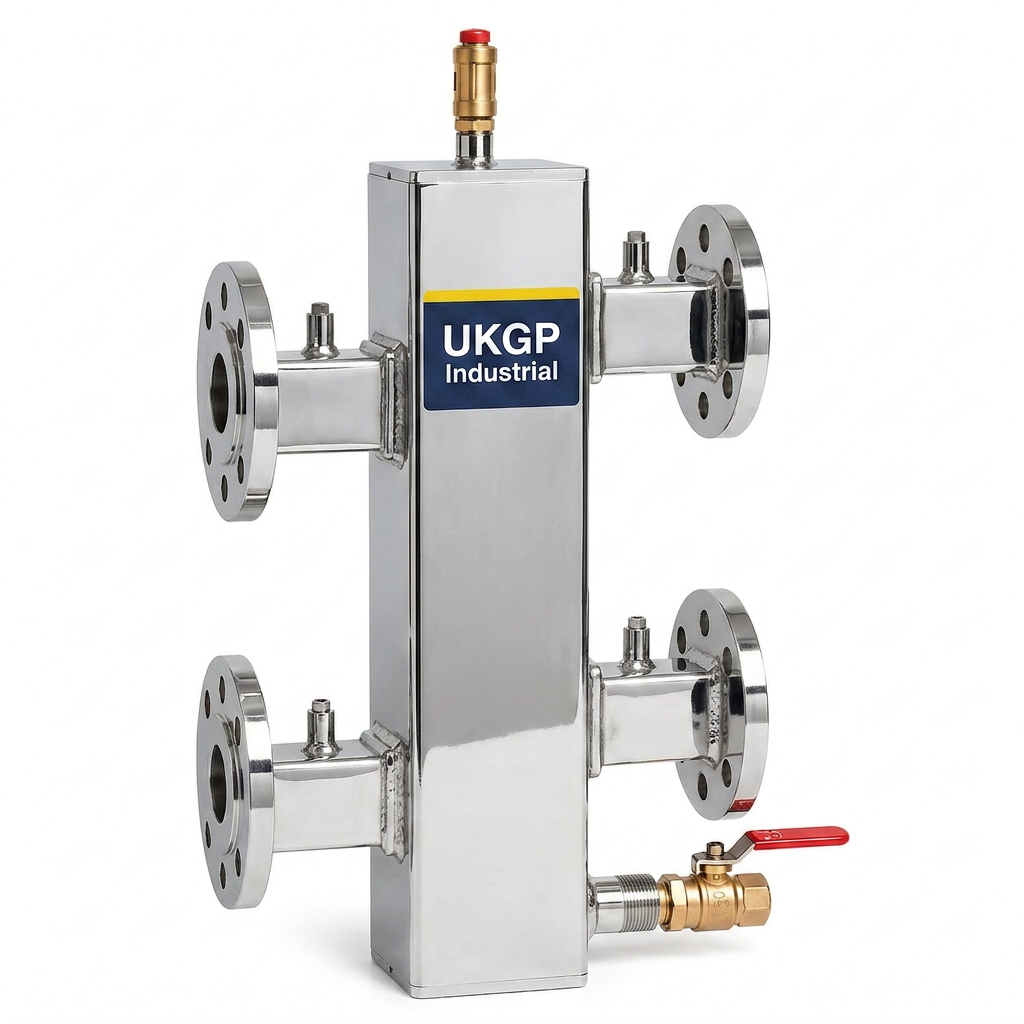
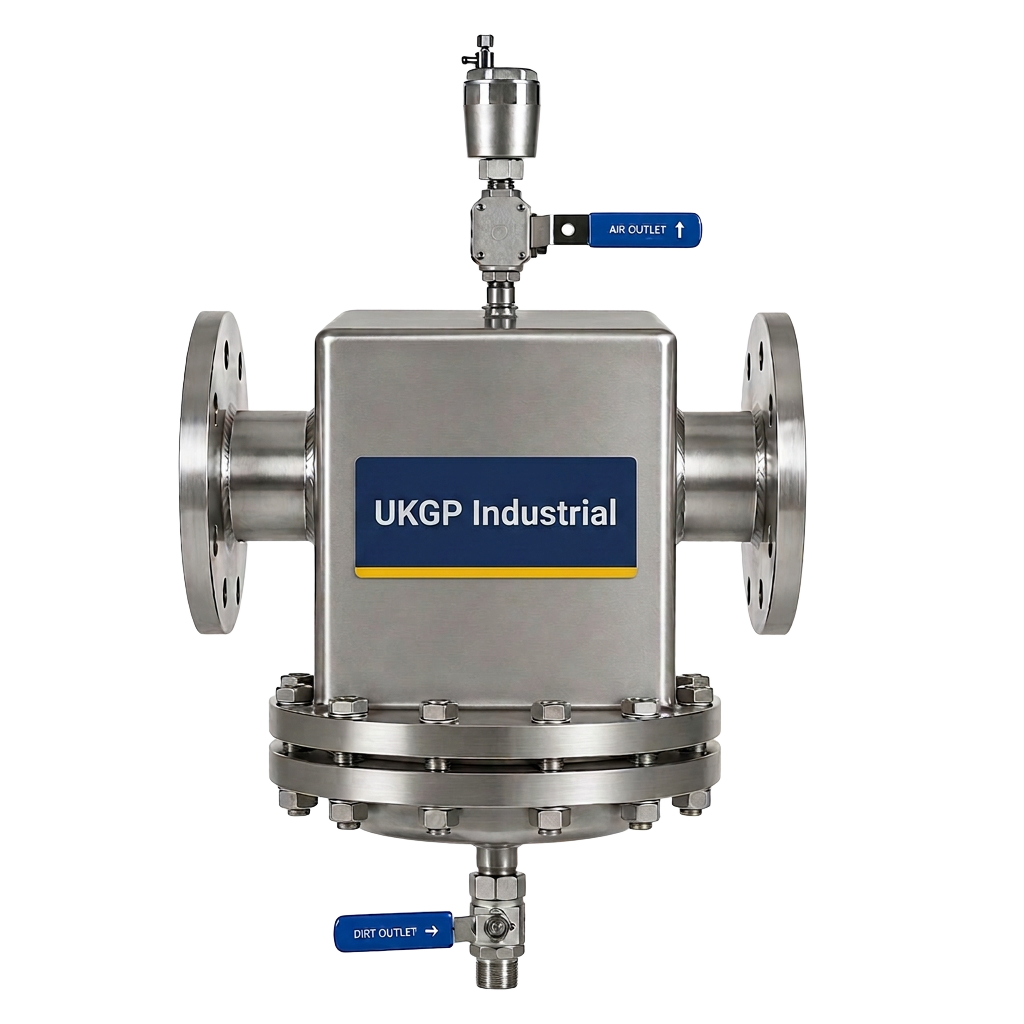
Selecting the correct equipment requires a dual-focus on both air and particulate removal. While a standalone air separator heating system is effective for gas management, a combined unit offers a comprehensive solution for UK plant rooms. UKGP provide high-specification air and dirt separators featuring combined coalescing media and a powerful magnetic catch to capture both non-magnetic debris and magnetite. These units are available from DN25 up to DN300, ensuring they can handle the high flow rates of large-scale commercial district heating schemes or industrial process loops. Our units come flanged to PN10/16 standards, facilitating straightforward installation in rigid pipework configurations common in M&E projects.
The removal of magnetite is particularly crucial when working with leading commercial boiler manufacturers who specify strict water quality standards to maintain warranties. By utilizing our air and dirt separators, which feature an integrated magnetic sleeve, engineers can capture the finest black iron oxide particles that traditional mesh filters miss. Every UKGP unit includes a full isolation kit and is backed by a 2-year warranty, providing procurement leads with the confidence that they are investing in UK-engineered reliability. Whether you are retrofitting a plant room in a Surrey school or designing a new energy centre, these separators are essential for achieving the clean water conditions mandated by BSRIA BG29 pre-commission cleaning standards.
Pressure drop is a critical metric when incorporating an air separator heating system into several secondary circuits. UKGP units are designed with low-pressure-drop internal geometries to ensure that pump head requirements are not unnecessarily inflated. We recommend installing the separator on the flow side of the boiler, where the water is at its hottest and the pressure is at its lowest relative to the pump discharge, as this optimizes the release of dissolved air. Contact our technical team today for a quote on our DN25-DN300 flanged units to ensure your next project benefits from the highest grade of air and dirt separation technology available in the UK market.
- Combined coalescing media and magnetic catch for maximum filtration
- Available in DN25 to DN300 sizes with PN10/PN16 flanged connections
- Includes a 2-year warranty and full isolation kit for easy maintenance
- Low pressure drop design to maintain system hydraulic balance
- Ideal for compliance with BSRIA BG29 and BG50 standards
Impact of Air on Heat Exchanger Performance
The interaction between an air separator heating system and plate heat exchangers is a critical design nexus. In many commercial buildings, plate heat exchangers (PHEs) provide hydraulic separation between primary and secondary circuits. If air is allowed to enter the narrow channels of a PHE, it creates air pockets that drastically reduce the effective heat transfer surface area. This results in the primary heat source running longer and hotter to satisfy the secondary load, wasting energy and increasing thermal stress on the equipment. Effective deaeration ensures that the fluid-to-plate contact remains total, maintaining the high turbulence required for efficient thermal exchange.
Beyond thermal loss, the presence of air in the vicinity of heat exchangers accelerates electrolytic corrosion. When different metals are present in a system, such as copper pipework and steel heat exchanger plates, air acts as the oxidant that drives the galvanic process. An air separator heating system removes this threat by maintaining a passive environment. For engineers specifying high-performance plate heat exchangers, it is standard practice to install air separation and dirt filtration upstream. This prevents the small passages within the plates from becoming blocked by the silt and magnetite that inevitably form in aerated, poorly treated water systems.
UKGP offers a range of plate heat exchangers that pair perfectly with our filtration products. By combining a high-efficiency PHE with a robust air separator, contractors can deliver a system that meets the most demanding BSRIA guidelines. Specifiers should always ensure that both components are sized for the peak flow conditions of the system to prevent bypassing or excessive velocity through the separator media. Maintaining these clean, air-free conditions is the single most effective way to extend the service interval of the heat exchanger and prevent the need for costly chemical cleaning or plate replacement of plate packs later in the building's lifecycle.
- Prevents air-binding within narrow plate heat exchanger channels
- Reduces galvanic corrosion risks in multi-metal HVAC systems
- Maintains design heat transfer coefficients (U-values)
- Reduces primary energy consumption by optimising ΔT
- Pairs with UKGP plate heat exchangers for a total plant solution
Protecting Expansion Bellows and Pipework Sanity
The presence of air in a heating system doesn't only cause corrosion; it also creates mechanical issues within the distribution network. Hammering, surging, and excessive vibration are often the result of air pockets moving through the system at high velocity. This mechanical stress can be particularly damaging to expansion bellows and flexible compensators. An air separator heating system mitigates these risks by ensuring a steady, single-phase fluid flow. When air is eliminated, the hydraulic shocks associated with 'slug flow' are removed, which protects the integrity of BS EN 14917 compliant expansion joints and prevents premature fatigue of welded joints throughout the riser and lateral distributions.
For M&E contractors, the time spent manually venting radiators and high points during commissioning is a significant labor cost. A correctly positioned air separator heating system automates this process, significantly speeding up the handover phase. In large-scale developments, this can equate to days of saved labor. By following the best practice of installing the separator near the point of highest temperature and lowest pressure, you ensure that the system is 'self-healing' regarding air ingress. This is especially important in systems with high static heads where gravity vents at the top of the building may not always function correctly due to system pressure variations.
Furthermore, the cumulative effect of air-induced vibration can lead to the loosening of pipe supports and hangers over time. Facility managers frequently report that buildings equipped with a high-quality air separator heating system suffer from far fewer leaks and mechanical failures. Investing in a flanged UKGP air and dirt separator at the outset is an insurance policy against these long-term structural issues. It ensures that the expansion movements calculated during the design phase are not compromised by unpredictable hydraulic forces caused by trapped gases. Reducing these mechanical stressors is essential for any building aiming for a 25-plus year lifecycle without major plant room overhauls.
- Eliminates hydraulic shock and vibration in pipework
- Protects expansion bellows from premature fatigue and failure
- Automates the degassing process during system commissioning
- Reduces the need for manual venting in high-rise distributions
- Complies with BS EN 14917 guidelines for expansion management
Maintenance Protocols for Deaeration Equipment
While an air separator heating system is largely automated, it must be included in the annual plant room maintenance schedule to ensure continued efficacy. The venting mechanism, typically located at the top of the unit, can sometimes become fouled by debris or mineral deposits if the water treatment regime is not strictly monitored. Engineers should check for any signs of leakage from the air vent and ensure that the internal coalescing media has not become overly burdened with sludge. This is where combined air and dirt separators excel, as they allow for the blow-down of collected dirt through a bottom valve, which also helps maintain the flow dynamics needed for air separation.
As part of a BSRIA BG50 compliant maintenance program, water samples should be taken regularly to check for dissolved oxygen and suspended solids. If these levels begin to creep up, it may be an indication that the air separator heating system is being bypassed or that the system has developed a leak, introducing fresh, oxygenated water. UKGP’s separators come with a full isolation kit, making it simple for engineers to inspect the unit without draining the entire system. This ease of maintenance is a key reason why Surrey-based M&E firms prefer our flanged DN25-DN300 range, as it reduces the man-hours required for annual site visits and ensures maximum plant uptime.
The 2-year warranty provided by UKGP covers the structural and mechanical integrity of our separators, but proactive care is what ensures they last for decades. During maintenance, the magnetic sleeve should be cleaned to remove accumulated magnetite. This secondary function of our air and dirt separators is vital for protecting modern variable speed pumps, which are highly susceptible to magnetic particles. By keeping the air separator heating system in peak condition, you are simultaneously protecting every other component in the plant room, from dosing pots to sensitive pH sensors and transmitters. A clean system is a reliable system, and it all starts with effective air and dirt removal.
- Routine blow-down of dirt valve prevents media fouling
- Annual inspection of air vent mechanism is required
- Magnetic sleeve cleaning protects variable speed pumps
- Isolation kits allow for 'no-drain' maintenance procedures
- Supports long-term water quality monitoring for BS 8552
Specifications and Procurement for Commercial Projects
When it comes to procurement, selecting an air separator heating system based solely on pipe size can be a costly mistake. Our technical team works with consultants to size units based on actual flow rates (m³/h) and velocity, ensuring the coalescing media operates within its optimal window. UKGP stock a comprehensive range of units from DN25 for smaller commercial applications to DN300 for heavy industrial and district heating projects. All our flanged units are manufactured to withstand PN10 or PN16 pressure ratings, making them suitable for the majority of UK commercial plant rooms. Our focus on quality ensures that every unit delivered to site meets the rigorous standards expected by Tier 1 contractors.
For projects requiring urgent turnaround, UKGP maintains a robust stock of air and dirt separators at our Surrey-based warehouse. We understand that delay in equipment delivery can stall an entire commissioning sequence. Along with our air separator heating system units, we provide all necessary technical documentation and CAD blocks to assist with Revit modeling and plant room layout design. This support helps ensure that the separator is placed in the hydraulically optimal position, far enough away from pump discharges to avoid turbulence but close enough to the heat source to capture air at high temperatures. Reliability and technical support are the hallmarks of our service to the UK building services industry.
To future-proof your heating system, always specify a unit with a 2-year warranty and a magnetic catch. As commercial boiler designs continue to evolve with thinner heat exchanger walls and tighter water ways, the tolerance for air and dirt is practically zero. An air separator heating system is the primary defense against the systemic failures that lead to expensive insurance claims and litigation. Contact UKGP today for a competitive quote on our air and dirt separator range. Whether you need a DN50 unit for a retail refurb or a DN200 flanged separator for a new hospital wing, we have the technical expertise and inventory to support your procurement needs.
- Sizing based on flow velocity rather than just pipe diameter
- Expert technical support for Revit/BIM integration
- Stocked in the UK for rapid delivery to site
- Robust PN10/PN16 flanged construction for industrial use
- Essential for protecting modern low-water-content boilers
Frequently asked questions
Where is the best location for an air separator heating system?
- The optimal location for an air separator heating system is on the main flow pipework, immediately after the boiler or heat source but before the circulating pumps. This is typically the point of highest temperature and lowest pressure (relative to the pump), which is where air is least soluble and most easily removed from the water.
What is the difference between an air vent and an air separator?
- An air vent only removes free air trapped at high points. An air separator heating system uses internal coalescing media to actively strip micro-bubbles and dissolved oxygen from the moving fluid. Standard vents cannot remove the tiny bubbles that cause the most damage in high-velocity commercial systems.
Does BSRIA BG50 require the use of an air separator?
- While BSRIA BG50 doesn't name a specific brand, it mandates strict controls on dissolved oxygen and suspended solids to prevent corrosion. In practice, achieving these water quality targets without a dedicated air separator heating system and magnetic dirt separator is nearly impossible in closed-loop commercial systems.
What maintenance do UKGP air and dirt separators need?
- Maintenance is straightforward: the dirt collection chamber should be flushed regularly via the blow-down valve, and the magnetic sleeve should be cleaned to remove magnetite. The air vent mechanism should be inspected annually for leaks or blockages to ensure the air separator heating system continues to degas effectively.
Are flanged connections better than threaded for these separators?
- For commercial and industrial systems (DN50 and above), flanged connections (PN10/16) are the industry standard. They provide a more secure, leak-proof seal and allow for much easier removal or replacement of the unit during long-term plant room upgrades compared to threaded joints.