The Role of an Air Separator For Central Heating in BSRIA Compliance
In modern commercial plant rooms, adherence to BSRIA BG50 and BG29 is non-negotiable for maintenance and warranty compliance. Oxygen ingress is the primary catalyst for internal corrosion, leading to the formation of magnetite which restricts flow and damages sensitive control valves. An air separator for central heating serves as the first line of defence by removing entrained air before it can settle in heat exchangers or cooling coils. By utilising internal coalescing media, these units force microbubbles to merge and rise to the venting chamber, effectively stripping the medium of destructive gases. For M&E contractors, this ensures that the pre-commissioning cleaning process is more effective and that the long-term chemical dosage remains stable.
When specifying an air separator for central heating for large-scale developments, engineers must account for the Henry's Law principle, where the solubility of air in water decreases as temperature rises. Consequently, placing the deaerator at the hottest point in the system, typically the flow pipework immediately after the boiler or heat source, maximises the bubble release rate. Failure to manage this leads to increased noise, inaccurate sensor readings, and reduced caloric output. In high-rise applications, the pressure drop across the separator must be carefully balanced to avoid compromising pump head calculations, making the selection of low-resistance flanged units critical for energy-efficient operation across the entire heating season.
Furthermore, an air separator for central heating is not merely an optional accessory but a fundamental component in protecting the capital investment of major UK commercial boiler OEMs. Without adequate deaeration, heat transfer surfaces suffer from localized hotspots and pitting, which can void manufacturer warranties and lead to premature catastrophic failure. Using a combined unit that addresses both air and magnetic dirt further enhances the protective envelope around the plant. This proactive approach to water treatment and gas removal drastically reduces the frequency of maintenance call-outs and ensures that the facility management team can meet their performance KPIs without the constant need for manual venting of radiators or manifolds.
- Facilitates compliance with BSRIA BG50 water quality management protocols.
- Reduces the risk of pump cavitation and premature impeller wear.
- Prevents the formation of magnetite through effective oxygen removal.
- Improves system heat transfer efficiency and lowers carbon footprints.
Technical Specifications for Commercial Air and Dirt Management
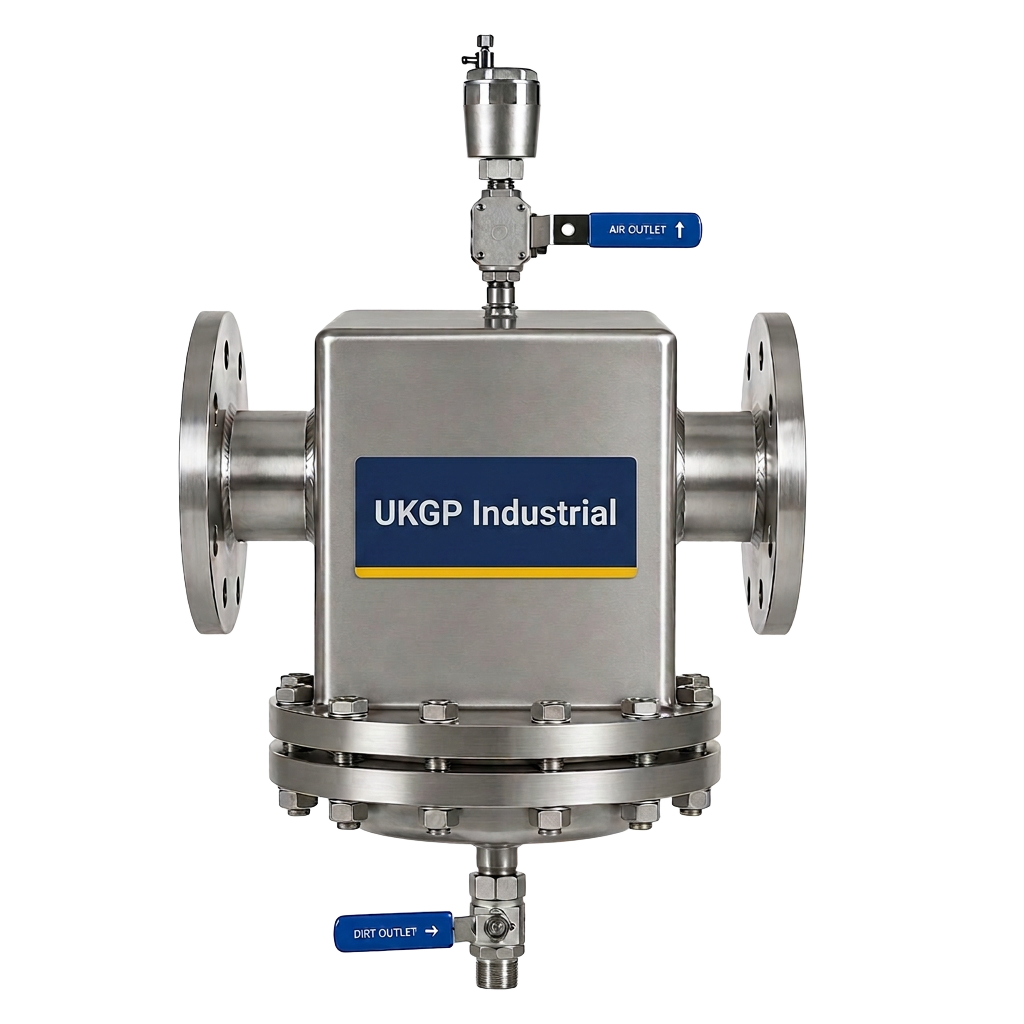
Transitioning from basic air vents to a dedicated air separator for central heating requires a focus on robust mechanical design. Commercial systems with heavy pipework, ranging from DN25 to DN300, demand units that can handle significant flow velocities while maintaining high capture rates for both air and particulate matter. Our combined units at UKGP feature high-efficiency coalescing media and a powerful magnetic catch to address the full spectrum of contaminants. This dual-action approach is essential because even minor air pockets can shield surfaces from chemical inhibitors, allowing localised corrosion to proceed unchecked. Procurement leads should prioritise PN10/16 rated flanged connections to ensure compatibility with standard UK commercial plant room pipework specifications.
Durability is another key factor when selecting an air separator for central heating for a long-term project. The inclusion of an isolation kit allows for easier servicing of the automatic air vent without requiring a full system drain-down, which is a major benefit for site engineers. Reliability is further guaranteed through a 2-year warranty on our units, providing peace of mind for both contractors and end-users. When assessing different models, consider the internal volume and the surface area of the coalescing media, as these directly correlate to the unit's ability to break the surface tension of microbubbles. These technical nuances often represent the difference between a system that requires constant intervention and one that operates silently and efficiently for years.
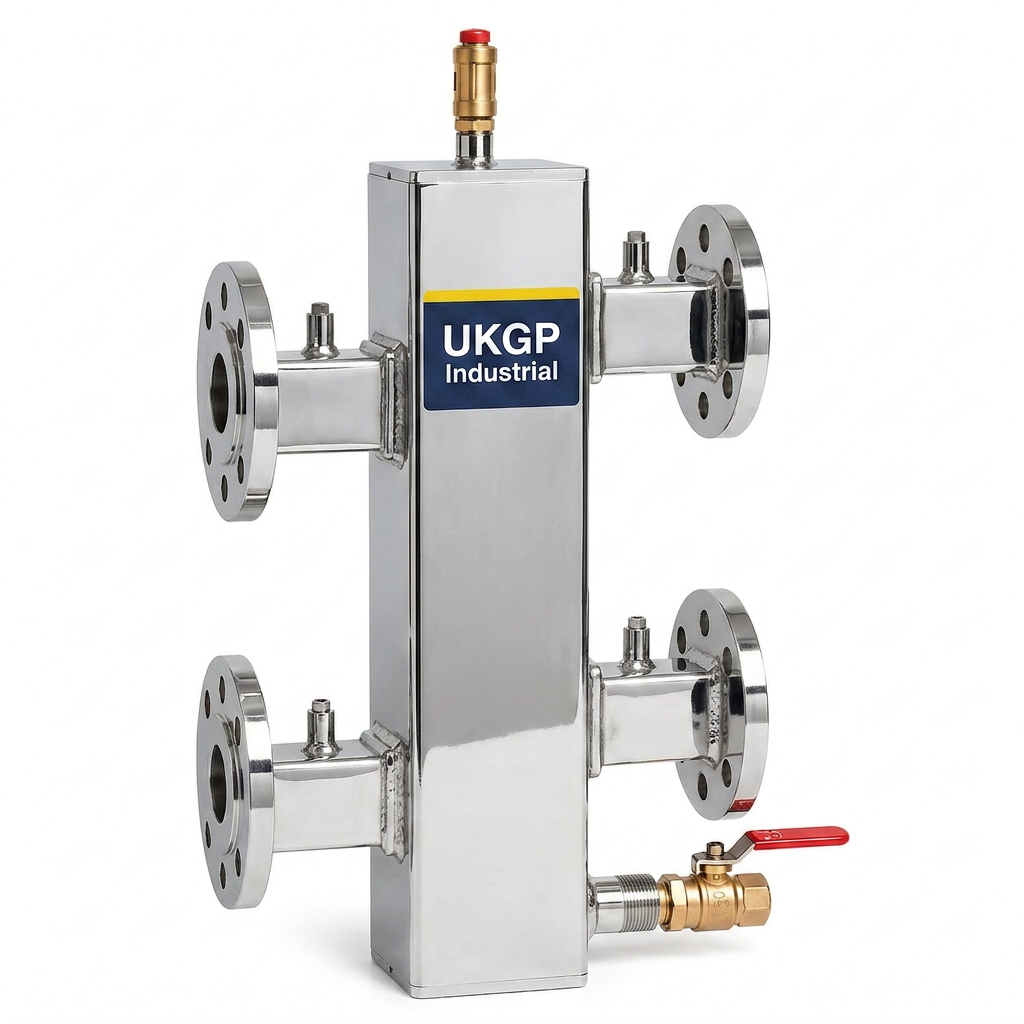
For those managing complex builds, UKGP offers an air separator for central heating that integrates seamlessly with our wider product range, including low loss headers and expansion bellows. These units are designed to withstand the thermal stresses of modern heating cycles while maintaining a low pressure drop. By choosing a flanged DN unit with a combined magnetic catch, you are addressing two of the most common failure points in commercial HVAC systems simultaneously. We encourage consultants to request a technical submittal or quote for our DN25-DN300 separators to see how they can be integrated into their next schematic design for maximum plant room resilience.
- Available in DN25 to DN300 sizes to suit any commercial pipework scale.
- Standard PN10/16 flanged connections for secure, leak-free installation.
- Includes integrated magnetic catch to trap both metallic and non-metallic debris.
- 2-year warranty as standard to ensure long-term operational security.
Integrating Deaeration with Chemical Dosing Pots
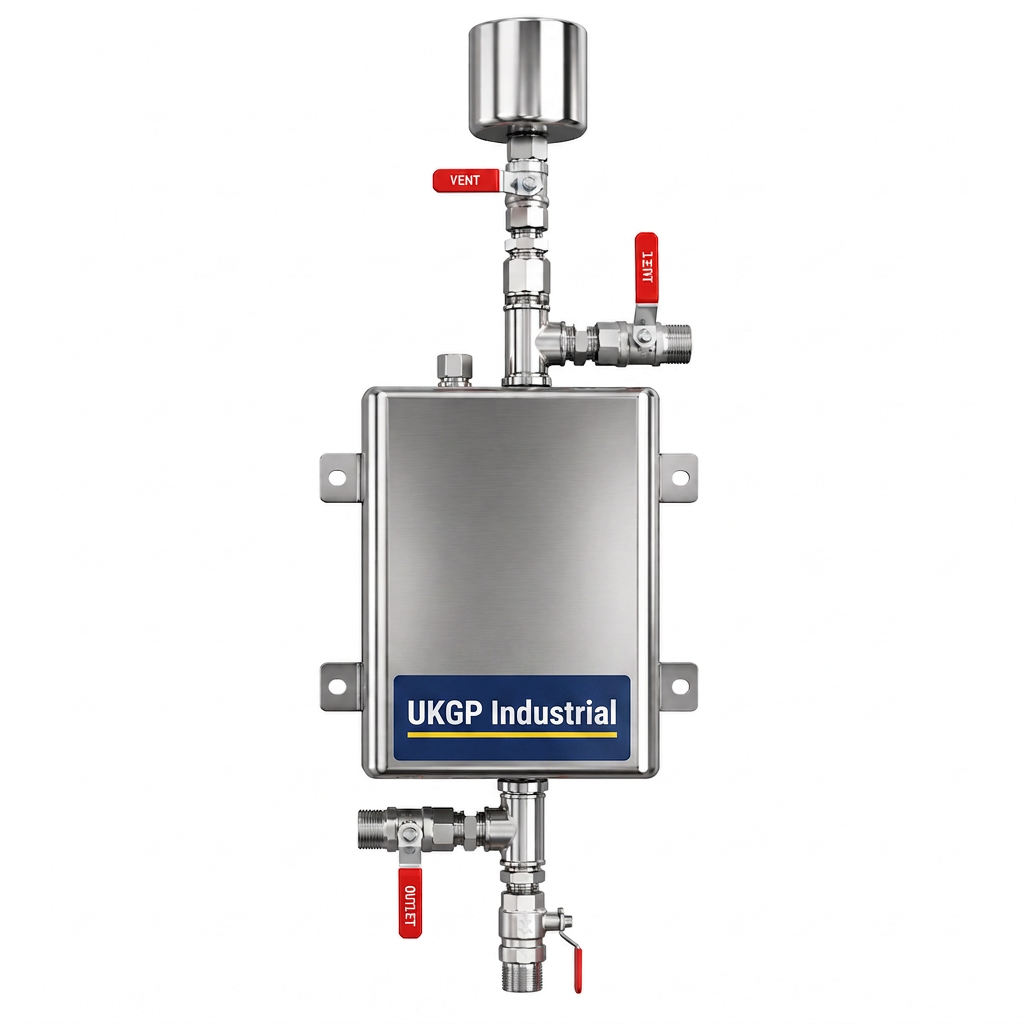
While an air separator for central heating is vital for removing gases, it must work in tandem with a robust chemical treatment regime. This is where the installation of chemical dosing pots becomes essential. These pots allow for the safe and controlled introduction of inhibitors and biocides into the closed-loop system, as recommended by CIBSE guidelines. When the air separator effectively removes oxygen, the chemicals can form a more stable protective layer on the internal surfaces of the pipework and heat exchangers. This synergy between mechanical deaeration and chemical protection is the hallmark of a professionally designed plant room, ensuring the longevity of the entire installation and the efficiency of the heat delivery.
Using an air separator for central heating without proper chemical dosing is akin to treating the symptoms rather than the cause of system degradation. Mechanical removal of air stops the immediate oxidation process, but inhibitors are still required to manage the pH levels and prevent biological growth, especially in low-temperature systems like underfloor heating. At UKGP, we provide both high-grade dosing pots and air/dirt separation solutions to ensure contractors have access to a complete water treatment package. This integrated approach simplifies procurement and ensures that all components are rated for the same pressure and temperature ranges, reducing the risk of site-side compatibility issues during the commissioning phase.
In many retrofit scenarios, the addition of both a dosing pot and an air separator for central heating can revitalise an aging system that has been plagued by air locks and sludge. By stripping out the existing air and introducing fresh inhibitors, the thermal performance of the system can be restored to near-design levels. This is particularly important for local authorities and facilities managers looking to reduce energy expenditure without a full boiler replacement. Our technical team is available to advise on the most effective placement of these components within your specific hydronic circuit to ensure maximum efficacy and ease of maintenance for the life of the building.
- Enhances the effectiveness of corrosion inhibitors and system biocides.
- Simplifies the introduction of water treatment chemicals via dosing pots.
- Complies with CIBSE and BS 8552 monitoring and maintenance standards.
- Provides a comprehensive solution for both mechanical and chemical protection.
Placement and Installation Mastery
The effectiveness of an air separator for central heating is heavily dependent on its placement within the system. As previously mentioned, the point of highest temperature and lowest pressure is the ideal location for deaeration. In a typical boiler plant room, this is on the primary flow pipework, before any pumps or primary-to-secondary interfaces. If the unit is placed in the return, it will only capture air that has already travelled through the system, potentially causing damage along the way. Furthermore, ensuring that there is adequate clearance for the removal of the magnetic rod and the operation of the blow-down valve is a key consideration for M&E contractors who are working within tight plant room footprints.
Proper installation of the air separator for central heating also involves setting up the isolation kit correctly. This allows the automatic air vent to be isolated for inspection or replacement without needing to shut down the entire heating plant. For larger DN series units, the weight of the separator must be accounted for in the pipework support strategy, ensuring that no undue stress is placed on the flanged joints. Our UKGP units are designed with the installer in mind, featuring robust lifting eyes and clear flow direction indicators to prevent errors during the rapid pace of a site build. These small details contribute to a faster commissioning process and a more reliable end result for the client.
Moreover, contractors should ensure that the blow-down pipework from the air separator for central heating is routed to a suitable tundish or drain. This allows for the regular purging of captured dirt and sludge during routine maintenance inspections. By making the maintenance process as simple as possible, facility managers are more likely to perform the necessary tasks to keep the system running at peak efficiency. When you specify a UKGP combined air and dirt separator, you are selecting a product that has been engineered to meet the practical demands of the UK construction industry, from the ease of flanged PN10/16 connection to the durability of the internal coalescing media.
- Position at the highest temperature point for maximum deaeration.
- Ensure easy access to the magnetic catch and blow-down valve.
- Use the isolation kit to enable maintenance without system downtime.
- Route purge lines to a visible tundish for monitoring sludge discharge.
Impact on Energy Efficiency and Sustainability
Sustainability is a driving force in modern building design, and the selection of an air separator for central heating plays a significant role in achieving low-carbon targets. Air acts as an insulator; when it gathers on heat transfer surfaces, it significantly reduces the efficiency of the heat exchanger. This forces the boilers or heat pumps to run for longer and at higher temperatures to reach the desired set-point, increasing both fuel consumption and carbon emissions. By maintaining a gas-free medium, the heat transfer coefficient remains high, allowing the system to operate exactly as the designers intended. This is especially critical in condensing boiler applications where return temperatures must be kept low to maximise latent heat recovery.
Furthermore, an air separator for central heating reduces the total cost of ownership by extending the lifespan of expensive system components. Pumps that are not subjected to cavitation-induced vibration last longer and consume less electricity. Control valves that remain free from magnetite debris do not stick or leak, ensuring that hydraulic balance is maintained throughout the building. For procurement leads, the initial investment in a high-quality UKGP air and dirt separator is quickly offset by the reduction in emergency repair costs and the lowering of monthly energy bills. It is a commercially sensible choice that aligns with the long-term ESG goals of modern property developers and facility owners.
Finally, the reduction in chemical waste is a notable environmental benefit. A system that is properly deaerated by an air separator for central heating requires fewer chemical top-ups, as the inhibitors are not being depleted by constant oxidation reactions. This reduces the chemical load on the environment and simplifies the water quality management tasks for the FM team. Whether you are working on a new-build hospital, a commercial office block, or a large residential district heating scheme, the inclusion of a UKGP DN series separator is a vital step toward a sustainable and resilient HVAC infrastructure. Request a quote today to find out how our PN10/16 flanged separators can be integrated into your next sustainable plant room project.
- Lowers energy consumption by maintaining high heat transfer rates.
- Extends the operational life of boilers, heat pumps, and circulators.
- Reduces the carbon footprint of the building through improved efficiency.
- Minimises the environmental impact of water treatment chemicals.
Technical Support and Procurement for M&E Projects
Navigating the complexities of plant room design requires more than just high-quality products; it requires expert technical support. At UKGP, we understand the pressures faced by M&E contractors and consultants to deliver projects on time and within budget. When you specify our air separator for central heating, you gain access to our engineering expertise to ensure the unit is correctly sized and specified for your flow rates and pressure requirements. We hold significant stock of flanged units from DN25 up to DN300, ensuring that even on fast-track projects, we can meet your delivery schedules without compromising on quality. Our goal is to be a reliable partner in the supply chain, providing the technical submittals needed for rapid approval.
Procuring an air separator for central heating through UKGP also ensures that you are getting a product designed specifically for the UK market. Our units are built to withstand the rigorous demands of commercial applications and are compatible with all major UK commercial boiler brands. We offer competitive lead times and clear pricing, allow procurement leads to manage their budgets effectively. Each unit comes with a 2-year warranty, demonstrating our confidence in the build quality and performance of our coalescing media and magnetic catch technology. We invite you to contact us to discuss your specific project requirements and receive a tailored quotation that reflects the scale and technical needs of your installation.
Beyond the air separator for central heating, UKGP offers a comprehensive suite of plant room essentials, from plate heat exchangers to pH sensors. This allows for a streamlined procurement process, where you can source all your secondary system protection and control components from a single, Surrey-based manufacturer. This not only reduces logistical complexity but also ensures that all components have a consistent level of quality and support. Whether you need a single DN50 separator or a complete skid-mounted solution for a large industrial site, our team is ready to assist. Invest in the best for your plant room and ensure the long-term success of your HVAC strategy with UKGP.
- Direct access to technical submittals and expert sizing advice.
- Extensive UK stock of flanged DN units for fast delivery.
- Competitive commercial pricing for large-scale M&E projects.
- Comprehensive support for the full range of plant room components.
Frequently asked questions
Why is an air separator for central heating better than a standard auto-vent?
- A standard automatic air vent can only remove free air that has already reached a high point. An air separator for central heating uses internal coalescing media to actively pull microbubbles out of the flowing water, which would otherwise remain dissolved and cause corrosion or noise in other parts of the system.
What size air separator for central heating do I need for my project?
- Sizing is based on the pipe diameter and the flow rate of the system. UKGP provides units from DN25 up to DN300. It is vital to select a size that matches your flow velocity to ensure the coalescing media can effectively strip the air without causing excessive pressure drop.
How often does the magnetic catch on the separator need cleaning?
- For a new system, we recommend checking the magnetic catch after the first few weeks of operation. For established systems, it should be part of the annual maintenance schedule. The UKGP unit includes a blow-down valve to make this process quick and easy.
Does an air separator for central heating help with BSRIA BG50 compliance?
- Yes, BSRIA BG50 emphasises the importance of removing dissolved oxygen and suspended solids to prevent corrosion. An air separator is a key mechanical component in achieving the water quality levels required by these industry standards.
What is the warranty period on UKGP air and dirt separators?
- All of our commercial air and dirt separators come with a 2-year warranty as standard, covering the integrity of the vessel and the performance of the internal components under normal operating conditions.