Understanding Air Separator Technology and Deaeration
In a pressurised hydronic system, air exists in several forms: visible trapped pockets, entrained micro-bubbles, and dissolved gases. A standard air vent may handle larger pockets, but an industrial-grade air separator is required to tackle the micro-bubbles that form at high-temperature points or low-pressure zones. These bubbles are notoriously difficult to remove because they travel at high velocities within the fluid stream, often bypassing traditional vents. By utilizing internal coalescing media, the separator creates a low-velocity zone where bubbles collide, grow, and rise to an automatic air release valve. This process is vital for ensuring that heat transfer remains consistent across plate heat exchangers and commercial boiler heat engines.
The physics of an air separator relies heavily on Henry's Law, which states that the amount of dissolved gas in a liquid is proportional to its partial pressure. As water is heated in a commercial plant room, the solubility of gases decreases, causing oxygen and nitrogen to come out of solution. Without an effective separation strategy, this liberated air becomes a catalyst for oxidation, leading to the formation of magnetite. For FM teams, the presence of air is often indicated by noisy pipework or cold spots in radiators. Installing a high-quality separator at the hottest point of the system—usually the flow pipework after the heat source—is the industry-recognised method for maintaining a gas-free system.
UK commercial HVAC designs must account for the increasing complexity of variable flow systems and low-temperature heating regimes. In these environments, even small amounts of trapped air can significantly disrupt the balancing of the circuit and lead to premature failure of circulation pumps. By specifying a dedicated air separator, M&E contractors can ensure that the initial commissioning process is faster and more reliable. This proactive approach reduces the need for repeated site visits to bleed air from high points, saving both time and labour costs during the critical handover phase of a project, and ensuring the system operates exactly as the design intent suggested.
- Utilises coalescing media to capture and merge microscopic air bubbles.
- Facilitates compliance with BSRIA BG50 water quality management.
- Reduces system noise and prevents air-locked terminal units.
- Protects expensive downstream components like pumps and sensors.
Combined Protection with an Air and Dirt Separator
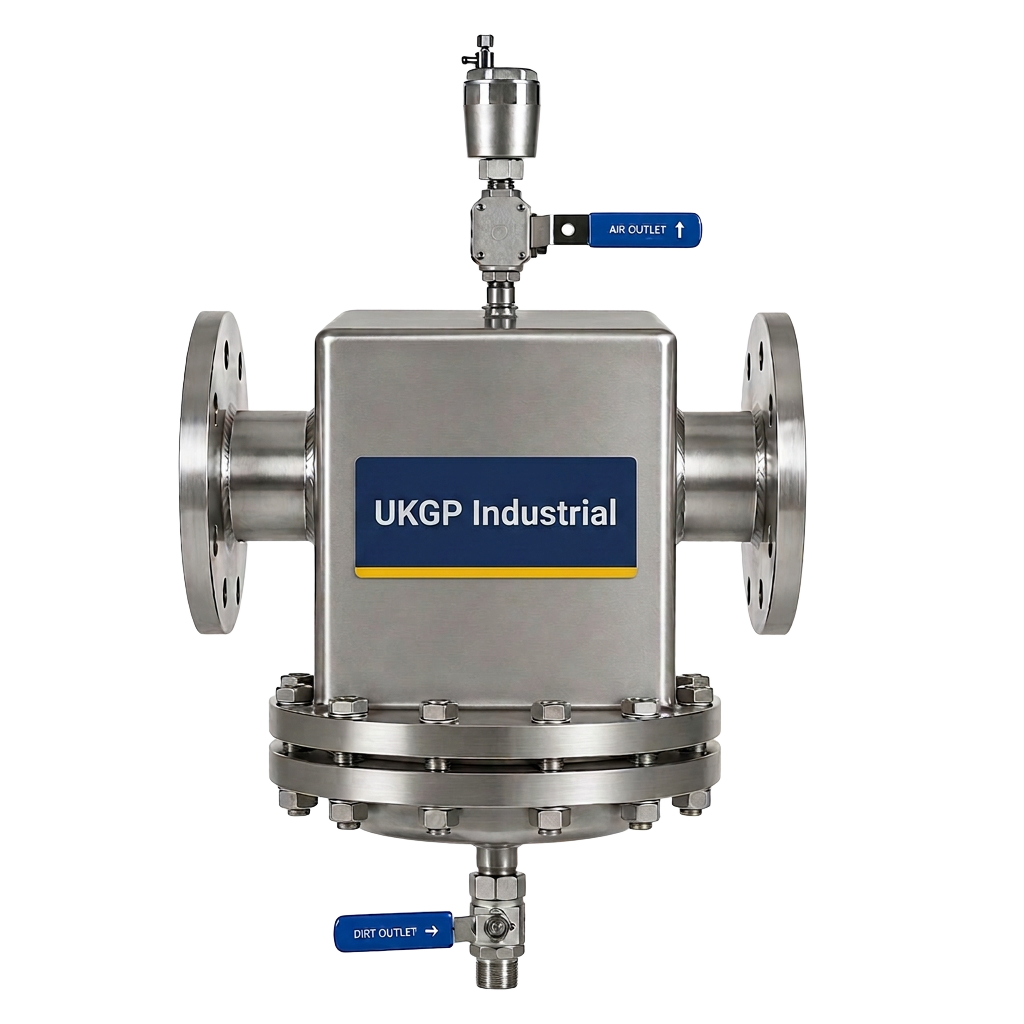
While air removal is critical, modern plant rooms frequently face the dual challenge of gas accumulation and suspended solids such as magnetite. UKGP provides a combined solution that integrates the functions of an air separator with a high-capacity dirt removal chamber. This dual-action unit uses a stainless steel coalescing mesh to facilitate air release while simultaneously allowing heavy particles to settle in a quiet zone at the base of the vessel. For procurement leads searching for value, a combined unit reduces the total footprint required in the plant room and simplifies the installation process by reducing the number of flanged connections needed in the primary pipework loop.
Our UKGP air and dirt separator is engineered for UK commercial specifications, featuring a magnetic catch as standard to capture fine ferrous particles that standard strainers often miss. These units are available from DN25 up to DN300, providing coverage for everything from small plant rooms to large-scale district heating schemes. Each unit is flanged PN10 or PN16 and comes with a full isolation kit to facilitate easy maintenance. With a 2-year warranty and a design that minimises pressure drop, these separators represent a commercially aware choice for contractors who need to balance performance with long-term reliability and ease of servicing for the end-user facilities manager.
Integrating a combined air separator and dirt filter is often a requirement from major UK commercial boiler OEMs to maintain heat exchanger warranties. Without this level of protection, the risk of sludge buildup in high-efficiency heat exchangers increases dramatically, leading to reduced thermal transfer and potential cracks in the heat engine. When you choose a UKGP separator, you are investing in a product designed to withstand the rigours of commercial operation. We encourage building services engineers to contact our Surrey-based technical team for a quote, ensuring your next project benefits from the highest standards of hydronic filtration and deaeration technology available on the UK market.
- Combined coalescing media and magnetic catch for maximum debris removal.
- Available in sizes DN25 to DN300 with flanged PN10/16 connections.
- Supplied with a full isolation kit for simple annual maintenance.
- Backed by a 2-year warranty for peace of mind in commercial builds.
The Impact of Air on Heat Exchanger Efficiency
Proper deaeration through a permanent air separator is essential for protecting plate heat exchangers from the devastating effects of oxygen-rich water. When oxygen enters the primary or secondary circuit, it reacts with ferrous components to form iron oxide. This sludge eventually migrates to the heat exchanger plates, where it creates a thermal barrier that forces the system to burn more fuel to achieve the same temperature setpoint. By removing the oxygen at the source, an air separator prevents this oxidation cycle, maintaining the turbulent flow and high heat-transfer coefficients that modern stainless steel or titanium plates are designed to provide.
In systems where a plate heat exchanger separates a primary boiler circuit from a secondary building load, the presence of air on either side of the plates can lead to significant pressure fluctuations. These fluctuations can trigger safety valves or cause expansion bellows to work harder than necessary, leading to fatigue. Ensuring that a high-efficiency air separator is installed on both the primary and secondary loops is the only way to guarantee the hydraulic stability of the entire system. This is particularly important in retrofit projects where the secondary pipework may be older and more prone to air ingress through micro-leaks or ageing valves.
Building services consultants often specify UKGP plate heat exchangers alongside our deaeration products because they understand that fluid quality is the single most important factor in component longevity. A clean, deaerated system experiences fewer breakdowns and maintains its operational efficiency for decades rather than years. Whether you are designing a domestic hot water interface or a large-scale heating substation, the combination of efficient heat exchange and robust air separation should be at the forefront of your plant room layout. Contact UKGP today for technical datasheets and CAD blocks to assist in your next commercial system design and procurement process.
- Prevents the formation of insulating sludge on heat exchanger plates.
- Maintains design flow rates and reduces pumping energy consumption.
- Minimises the risk of oxygen-pitting corrosion in stainless steel components.
- Ensures long-term hydraulic stability across the primary/secondary interface.
Compliance with BSRIA BG29 and BG50 Standards
The British Building Services Research and Information Association (BSRIA) provides clear guidance on the importance of an air separator in modern hydronic circles. BG29, which focuses on the pre-commission cleaning of pipework systems, and BG50, which covers water treatment for closed heating and cooling systems, both emphasise the need for effective air and dirt removal. An air separator is not just a luxury; it is a foundational component for achieving the water quality targets set out in these industry-standard documents. Failure to adhere to these guidelines can lead to significant legal and financial liabilities if the system fails prematurely due to corrosion or blockages.
Professional engineers must recognise that chemical dosing alone is insufficient for water quality management. While chemical dosing pots are used to introduce inhibitors, these chemicals cannot function effectively if the system is constantly being re-oxygenated. A correctly sized air separator removes the physical cause of corrosion, allowing the chemical inhibitors to create a stable protective layer on the internal surfaces of the pipework. This holistic approach to system health is what separates a high-quality M&E installation from a lower-standard alternative. It demonstrates a commitment to the long-term operational health of the building and reduced lifecycle costs for the client.
During the commissioning phase, the air separator should be monitored closely to ensure it is discharging gases effectively. BSRIA guidelines suggest that water should be tested for dissolved oxygen levels, and the presence of a functioning deaerator makes achieving these targets much simpler. For FMs, the presence of a high-quality separator with an isolation kit means that maintenance can be performed without draining down large sections of the system, keeping the building operational and reducing the volume of treated water that must be discharged. This aligns with modern sustainability goals by reducing water waste and chemical consumption over the lifespan of the commercial plant room.
- Essential for achieving BSRIA BG50 water quality compliance.
- Supports chemical inhibitors by removing reactive oxygen from the system.
- Reduces the frequency of costly system drain-downs and chemical re-dosing.
- Provides a verifiable method for maintaining system health under CIBSE guidelines.
Correct Positioning and Installation for Your Air Separator
To maximise the effectiveness of an air separator, its location within the plant room is paramount. In heating systems, the solubility of air is lowest at the highest temperature and lowest pressure. Therefore, the separator should be installed on the main flow pipework immediately after the boilers or heat exchangers but before the first branch. This ensures that the water is at its peak temperature, where micro-bubbles are most likely to be in a released state and easily captured by the coalescing media. Installing the unit on the return leg, while common for dirt-only filters, significantly reduces the deaeration efficiency of a dedicated air separator.
For chilled water systems, the logic is reversed. Solubility is lowest at the highest temperature point of the circuit, which is typically the return line before the chiller. By understanding these thermodynamic principles, M&E contractors can ensure that the air separator performs at its maximum capability. It is also vital to ensure that there is sufficient straight pipework before and after the unit, as per the manufacturer's instructions, to avoid turbulent flow conditions that could interfere with the coalescing process. Following these installation best practices is the key to preventing future service calls related to air-bound pumps or noisy terminal units.
When installing a UKGP air separator, ensure that the automatic air vent is accessible for inspection. While our units are designed for low maintenance, the air release mechanism should be checked periodically as part of the facility's preventative maintenance schedule. Our separators are supplied with flanged connections and an isolation kit to make this process as seamless as possible for plant room engineers. If you are uncertain about the sizing or placement of a separator for a specific project, our Surrey-based technical support team is available to review your schematics and provide expert recommendations to ensure your system design meets all UK regulatory and performance standards.
- Install at the point of highest temperature and lowest pressure.
- Maintain straight pipe runs to ensure laminar flow into the separator.
- Ensure the automatic air vent remains accessible for annual inspections.
- Use flanged PN16 connections for robust integration into commercial risers.
The Commercial Case for Superior Air Separation
From a procurement perspective, the cost of a high-quality air separator is negligible compared to the cost of replacing a commercial boiler heat exchanger or a failing circulator pump. In the competitive UK M&E sector, providing a robust solution that reduces future warranty claims is a significant advantage. A UKGP air separator not only protects the equipment but also ensures that the system operates at its peak efficiency from day one. This leads to lower energy bills for the end-user and a smaller carbon footprint for the building, which is increasingly important in the era of Net Zero targets and ESOS reporting requirements.
Furthermore, an air-free system is a quiet system. In commercial environments such as hospitals, hotels, or offices, the absence of 'radiator knocking' or 'pump hum' is a key metric of occupant comfort. By eliminating the root cause of these acoustic issues, contractors can avoid the costly and frustrating process of diagnosing noise complaints after the building has been occupied. High-performance air separation is an investment in the reputation of the contractor and the satisfaction of the client. With UKGP's reliable lead times and technical backing, sourcing the correct separator for your project has never been more straightforward or more effective.
In summary, the air separator is a critical component that bridges the gap between basic plumbing and professional hydronic engineering. By adhering to BSRIA BG50 and BS EN 14917 where applicable, and selecting products that feature combined coalescing and magnetic technology, you ensure the longevity of the entire HVAC asset. We invite you to explore the UKGP range of air and dirt separators, which offer DN25-DN300 sizing, PN10/16 flanged options, and the peace of mind of a 2-year warranty. Contact us for a competitive quote today and ensure your next plant room project is equipped with the very best in UK-supplied hydronic protection technology.
- Reduces lifecycle costs by preventing premature component failure.
- Enhances occupant comfort by eliminating hydronic system noise.
- Supports Net Zero goals by maintaining optimal heat transfer efficiency.
- Provides a professional-grade solution for prestigious commercial contracts.
Frequently asked questions
Where is the best place to install an air separator?
- In a heating system, the air separator should be installed at the point of highest temperature and lowest pressure, which is usually on the flow pipework immediately following the heat source. For chilled water systems, it is best placed on the return header before the chiller.
What is the difference between a standard air vent and an air separator?
- A standard air vent only removes large pockets of trapped air at high points. An air separator uses internal coalescing media to remove microscopic bubbles and dissolved gases that are entrained in the water flow, providing much more comprehensive system protection.
Why is magnetite a problem in commercial heating systems?
- Magnetite is a black iron oxide sludge that forms when oxygen reacts with ferrous metals in the system. It is highly abrasive and can damage pump seals, block heat exchanger channels, and settle in control valves, leading to system failure and inefficiency.
Do UKGP air separators include a warranty?
- Yes, our combined air and dirt separators come with a 2-year warranty as standard. They are designed for the demanding environment of UK commercial plant rooms, featuring robust flanged connections and a high-performance magnetic catch.
Does a separator help with BSRIA BG50 compliance?
- Absolutely. BSRIA BG50 guidelines for water treatment in closed systems specifically recommend the use of high-efficiency deaerators and dirt separators to maintain water quality and prevent the corrosive effects of dissolved oxygen.