Understanding the Role of an Air Line Water Separator
In modern low-water-content commercial systems, the presence of micro-bubbles and suspended particulate matter creates a persistent threat to thermal efficiency and component integrity. An air line water separator serves as the primary line of defence by utilising coalescing media to force micro-bubbles to merge and rise, while simultaneously capturing heavy magnetite and circulating debris. When these contaminants are left to circulate, they contribute to accelerated erosion and corrosion, often manifesting as cold spots in radiators or blocked control valves. By integrating an air line water separator into the primary return or flow path, M&E contractors can significantly reduce the risk of oxidisation and maintain the design performance of the heat source.
The impact of poor water quality is well-documented in BSRIA BG50, which highlights how entrained air promotes the growth of aerobic bacteria and the formation of sludge. A robust air line water separator prevents these issues by facilitating continuous de-aeration, which is essential for maintaining the oxygen-lean environment required for long-term system stability. Beyond gas removal, modern units are equipped with high-strength magnetic rods to catch fine metallic particles that standard mesh filters often miss. This dual-action approach ensures that the circulating fluid remains within the chemical parameters specified by major UK commercial boiler OEMs, protecting the manufacturer's warranty and reducing the likelihood of catastrophic component failure during peak demand periods.
From a commercial perspective, the installation of an air line water separator is an investment in lifecycle cost reduction. Facility Managers frequently report lower maintenance overheads and fewer emergency call-outs once effective air and dirt separation is achieved. Furthermore, the reduction in air pockets within the system leads to quieter operation and more consistent heat delivery, which is a critical KPI for high-occupancy buildings such as hospitals, schools, and commercial offices. By following a rigorous selection process, procurement leads can ensure they specify a unit that matches the specific flow rates and pressure drops of their unique plant room configuration, avoiding the common pitfalls of over or under-sizing which can lead to inefficient separation.
- Continuous removal of micro-bubbles using internal coalescing media
- Magnetic filtration to capture sub-micron magnetite particles
- Reduction in system noise and improved heat transfer efficiency
- Alignment with BSRIA BG50 water quality management protocols
Technical Sizing for Commercial Systems
Correct sizing of an air line water separator requires a precise understanding of the system's design flow rate, usually measured in litres per second or cubic metres per hour. It is a common misconception that the separator should simply match the pipe size of the circuit; however, over-sizing can lead to insufficient velocity for effective dirt separation, while under-sizing causes excessive pressure drop and may starve the pumps. Consultants must consult the manufacturer's pressure drop curves to ensure that the chosen unit operates within the 'sweet spot' for coalescing efficiency. Typically, a velocity of between 1.0 m/s and 1.5 m/s across the separator’s internal media provides the optimal balance between air release and debris settlement.
When specifying for large-scale projects, flanged connections ranging from DN25 up to DN300 are standard, allowing for seamless integration into heavy-duty pipework. The pressure rating is another critical variable, with PN10 and PN16 being the most prevalent requirements in UK commercial plant rooms. An air line water separator must be robust enough to handle the static head of the building plus any dynamic pressure fluctuations. For high-rise developments, ensuring the separator is rated for the correct pressure class is a non-negotiable safety and compliance requirement. It is also beneficial to consider units that include an isolation kit to facilitate easier maintenance and cleaning of the internal magnetic rod without needing to drain the entire system.
Strategic placement of the air line water separator is as vital as sizing. For air removal, the physics of Henry’s Law dictates that the separator should be installed at the point of lowest pressure and highest temperature, which is typically on the flow pipe after the boiler or heat source. Conversely, for optimal dirt capture, placement on the common return pipe before the primary pumps and heat exchangers prevents debris from entering sensitive equipment. For many UK plant rooms, a combined unit placed in the common flow or return offers a pragmatic solution. Ensuring the unit is easily accessible for the FM team is essential, as the effectiveness of the magnetic catch depends on regular blow-down and inspection during annual service intervals.
- Assess peak design flow rates rather than just pipe diameters
- Standardise on PN16 flanged units for high-pressure commercial circuits
- Verify pressure drop metrics to maintain pump efficiency
- Consider DN25 to DN300 sizing for various system capacities
Compliance with BSRIA and BS 8552
Adherence to BSRIA BG29/2021 and BG50/2021 is the gold standard for UK water treatment and system maintenance. These documents emphasise that mechanical filtration and de-aeration are just as important as chemical dosing. Utilizing a high-performance air line water separator ensures that the physical contaminants are removed before they can react with chemicals or settle in low-flow areas. BS 8552 profiling of system water often reveals high levels of suspended solids in systems lacking adequate separation; by installing a combined coalescing and magnetic unit, these levels can be kept within the recommended limits of <30mg/l of suspended solids, thereby preventing the premature degradation of control valves and sensors.
Quality assurance in procurement is further bolstered by selecting products that meet BS EN standards relevant to pressure vessel construction. A UKGP air line water separator, for instance, is manufactured to withstand the rigours of industrial environments, providing peace of mind for specifyers focused on long-term liability. When contractors present their O&M manuals to clients, documented proof of high-grade air and dirt separation is often a prerequisite for project handover in the M&E sector. This evidence demonstrates a proactive approach to preventing system failure and ensures that the building operates at its theoretical efficiency from day one, reducing the carbon footprint and energy expenditure of the facility.
Furthermore, modern air line water separator units often feature integral isolation valves and blow-down points, which simplifies the sampling process required for BSRIA compliance. Regular water testing can become a streamlined part of the FM schedule when the hardware is designed with maintenance in mind. If the system water remains clear and free of magnetite, the heat exchangers can operate at maximum thermal transfer, directly impacting the seasonal efficiency of the entire plant. For those tasked with procurement for public sector or large commercial projects, choosing a UK-supplied unit with a 2-year warranty and a proven track record in UKGP installations ensures both performance and commercial security.
- Support BSRIA BG29 pre-commissioning cleaning protocols
- Maintain suspended solids below BS 8552 thresholds
- Improve seasonal efficiency (SEER) through better thermal contact
- Simplify water sampling and maintenance procedures for FMs
Maintenance Protocols for Magnetic Separators
The inclusion of a magnetic catch within the air line water separator significantly enhances the removal of ferrous debris, which is the primary component of sludge in older steel-piped systems. However, the magnetic rod must be cleaned periodically to remain effective. In a busy plant room environment, the ease of this process can dictate whether it actually gets done. A well-designed unit allows the magnet to be withdrawn or isolated, allowing the captured magnetite to drop into the collection chamber for easy flushing via a drain valve. This 'blow-down' procedure takes minutes but can prevent thousands of pounds in damage to circulating pumps and heat meter sensors, which are notoriously sensitive to magnetic interference.
During the first few months of a new system's operation, or following a major retrofit, the air line water separator should be checked more frequently. This 'settling-in' period often releases significant amounts of jointing compounds, solder, and mill scale. By clearing these initially, the long-term chemical treatment regimen has a much higher chance of success, as the inhibitors are not being depleted by reacting with high volumes of sludge. Engineers should look for units that offer a DN capacity that allows for easy debris accumulation without restricting flow, ensuring that even under high load, the system's hydraulic balance is not compromised by a full dirt chamber.
For FMs, the presence of a transparent discharge or a reliable isolation kit makes the maintenance of an air line water separator a predictable task. It is recommended to log every blow-down event to track the volume of debris being captured; a sudden increase can act as an early warning sign of internal corrosion issues elsewhere in the building. By prioritising a unit with a 2-year warranty and high-grade flanged PN10/16 construction, stakeholders are assured that the hardware is built to survive the high-demand cycles typical of UK district heating or commercial cooling systems. Reach out to the UKGP technical team today for a quote on our robust DN25 to DN300 range.
- Implement a monthly blow-down schedule during the first quarter
- Extract magnetic rods without draining the entire circuit
- Monitor debris levels to identify systemic corrosion trends
- Utilise isolation kits for safer, faster maintenance intervals
Integrating Separators with Other Plant Components
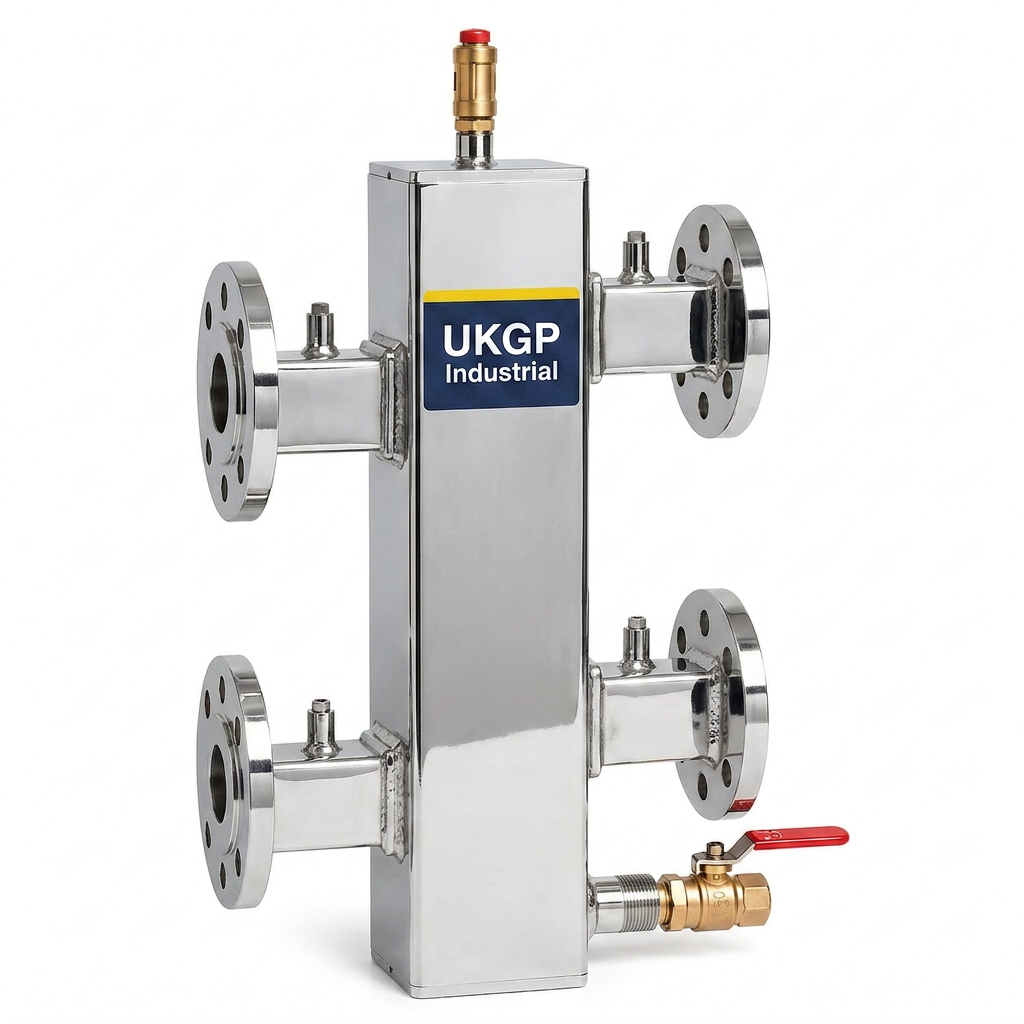
While an air line water separator is a cornerstone of water quality, it works most effectively as part of a holistic system of skids and headers. For instance, in systems with primary and secondary circuits, the separator is often positioned near the low loss header to ensure that the fluid entering the secondary pumps is as clean and air-free as possible. This integration prevents the loss of head and ensures that the variable speed pumps can modulate effectively without struggling against air-locked zones or debris-clogged impellers. When sourcing components, procurement leads often find value in a single-source supplier who can provide the separator alongside matching dosing pots and filtration skids.
In chilled water applications, the air line water separator must be correctly insulated to prevent condensation, which can lead to corrosion of the separator body itself over time. High-quality manufacturers provide units that are compatible with standard insulation jackets, ensuring that the thermal integrity of the cooling circuit is maintained. The removal of air is especially critical in chilled systems to prevent the development of anaerobic bacteria and to maintain the specific heat capacity of the glycol/water mix. By ensuring the air line water separator is sized for the increased viscosity of glycol mixtures, engineers can avoid the common error of under-sizing for chilled water requirements.
Finally, for large-scale boiler replacements, an air line water separator protects the new, high-efficiency boilers from the legacy sludge often found in older pipework. Most leading UK commercial boiler OEMs now mandate the installation of a magnetic dirt separator as a condition of their warranty. By selecting a UKGP unit that covers the DN25 to DN300 range, contractors can standardise their installations across a variety of project sizes, knowing that the PN10/16 flanged connections and combined coalescing media will meet the stringent demands of modern building services. This strategic approach ensures that every plant room delivered is efficient, compliant, and easy to maintain for the end-user.
- Position separators near low loss headers for hydraulic stability
- Ensure compatibility with glycol-based cooling systems
- Protect new boiler warranties from legacy system debris
- Standardise across DN ranges for consistent site delivery
Why Specify the UKGP Air Line Water Separator?
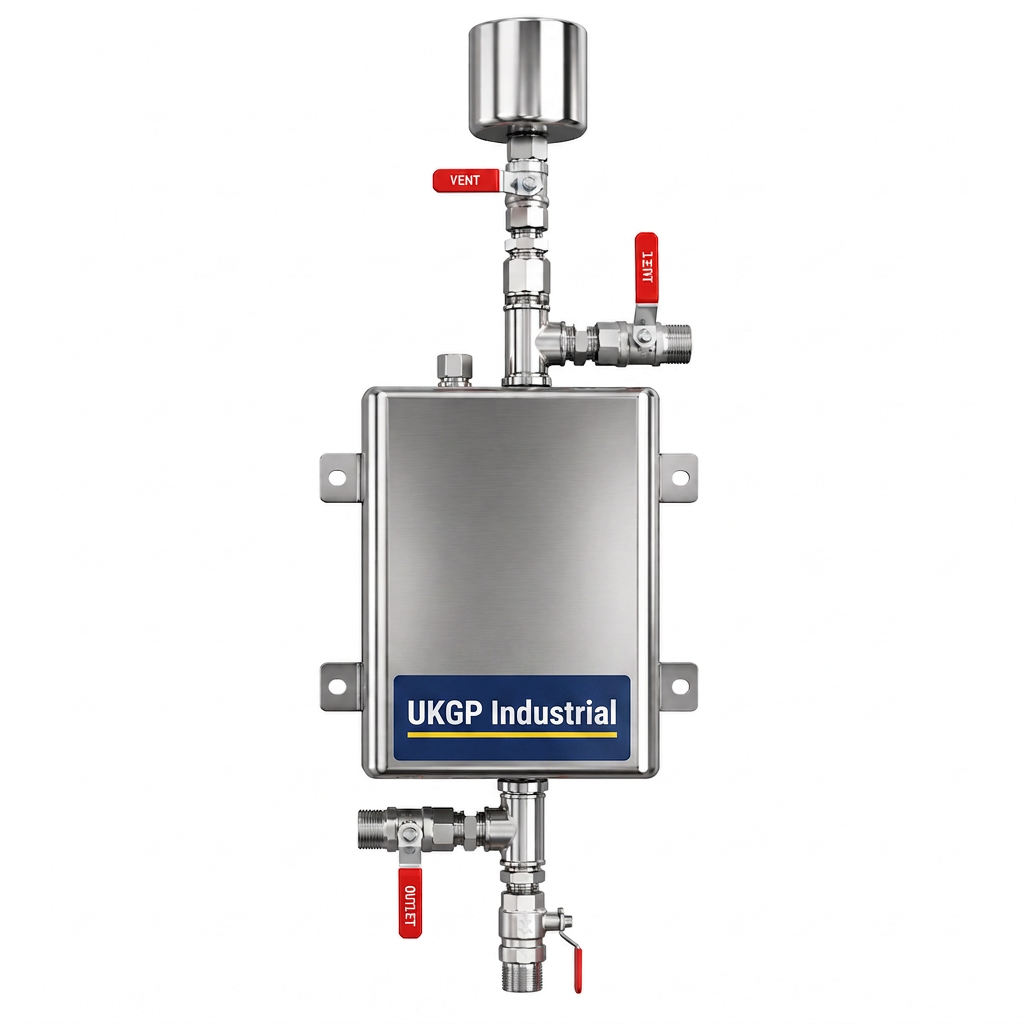
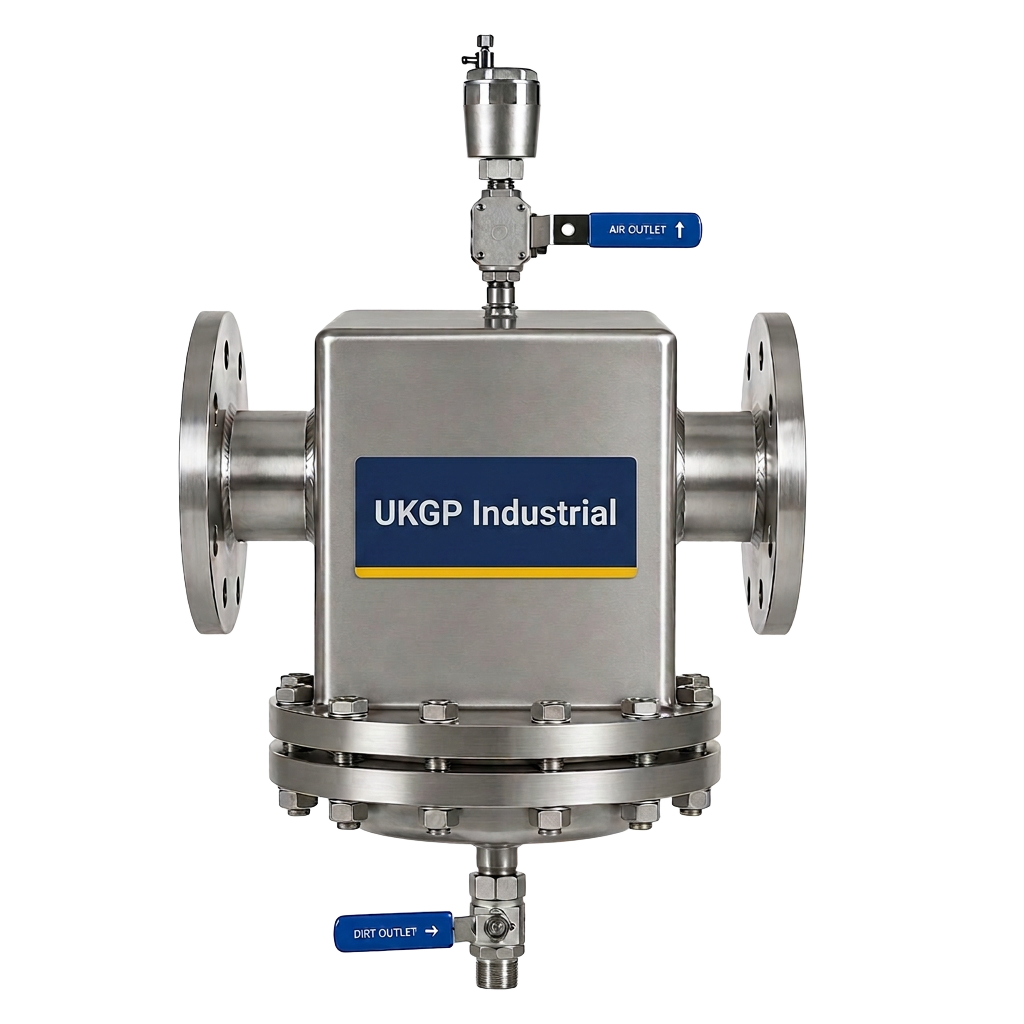
Selecting the right air line water separator is more than a technical necessity; it is a commercial decision that affects the long-term viability of an HVAC installation. UKGP offers a combined coalescing media and magnetic catch solution that is specifically engineered for the demands of UK plant rooms. Our units are available from DN25 through to DN300, ensuring we can support everything from small commercial units to large-scale district heating schemes. With flanged PN10/16 connections as standard and an included isolation kit for the magnetic rod, our design prioritises the ease of installation and the simplicity of ongoing maintenance for the facility management team.
Our air line water separator is designed to exceed the expectations of BSRIA BG50, providing a high-capacity collection chamber that reduces the frequency of manual intervention. The robust construction and 2-year warranty provide the reliability that M&E contractors and consultants require when signing off on high-value projects. When you choose a UKGP product, you are choosing a partner with deep expertise in Surrey-based manufacturing and supply, capable of providing technical support and rapid lead times for critical project deadlines. Whether you are dealing with a recurring air problem or proactive debris management, our separators deliver the performance needed to stabilise your system.
We invite building services consultants and procurement leads to request a quote for our range of air and dirt separators. Our technical team is available to help you cross-reference flow rates and pressure drops to ensure the optimal air line water separator is selected for your specific application. By integrating our combined media and magnetic catch technology, you are investing in the protection of your boilers, pumps, and heat exchangers, ensuring they deliver their maximum design life. Experience the difference that high-quality, Surrey-supplied hardware can make in your next mechanical project by contacting UKGP for pricing and technical data sheets.
- Combined coalescing media and magnetic catch for 2-in-1 protection
- Available in a wide range of sizes from DN25 up to DN300
- Includes isolation kit for easy, no-drain maintenance
- Backed by a comprehensive 2-year warranty for peace of mind
Frequently asked questions
Where is the best place to install an air line water separator?
- For maximum air removal, the air line water separator should be installed at the hottest point in the system, typically on the flow pipe after the heat source. For dirt removal, the return pipe before the primary pumps is preferred. A combined unit is often placed in the common flow to capture micro-bubbles as they are released by heat.
How often should I clean the magnetic catch in my separator?
- Following BSRIA BG50 guidelines, we recommend checking the magnetic catch weekly during the first month of system operation. For established systems, a quarterly blow-down is typically sufficient, though high-debris systems may require more frequent attention to maintain optimal flow.
What is the difference between PN10 and PN16 air line water separators?
- PN stands for Pressure Nominal and refers to the pressure rating in bar. A PN10 unit is rated for 10 bar, while a PN16 unit is rated for 16 bar. Most commercial UK plant rooms standardise on PN16 to provide a higher safety margin for buildings with significant static head or high-pressure pumps.
Can an air line water separator help with BSRIA BG29 compliance?
- Absolutely. An air line water separator is essential during the final stages of pre-commissioning cleaning (BG29) and during ongoing operation (BG50) to ensure suspended solids and magnetite levels are kept within the required limits, protecting the system from corrosion and blockages.
What sizes are available for the UKGP air and dirt separator range?
- We supply flanged units ranging from DN25 up to DN300, covering most commercial and industrial application requirements. This allows for precise matching to system pipework and flow rates, ensuring efficient separation without excessive pressure drop.