The Engineering Necessity of a 28mm Air Separator
In modern commercial plant rooms, entrained air is the silent enemy of efficiency. When water is heated, dissolved gases are released in the form of microbubbles, which tend to accumulate in areas of low flow or collect within heat exchangers. A 28mm air separator acts as a critical intervention point, utilizing internal coalescing media to force these bubbles to surface and escape through an automatic air vent. Without this specific mechanical separation, oxygen levels remain high, directly contributing to aerobic corrosion and the rapid degradation of carbon steel components and expensive commercial boiler heat exchangers. M&E contractors must ensure that these units are specified at the point of lowest solubility—typically the hottest part of the system—to maximize gas extraction rates and protect the integrity of the entire circuit.
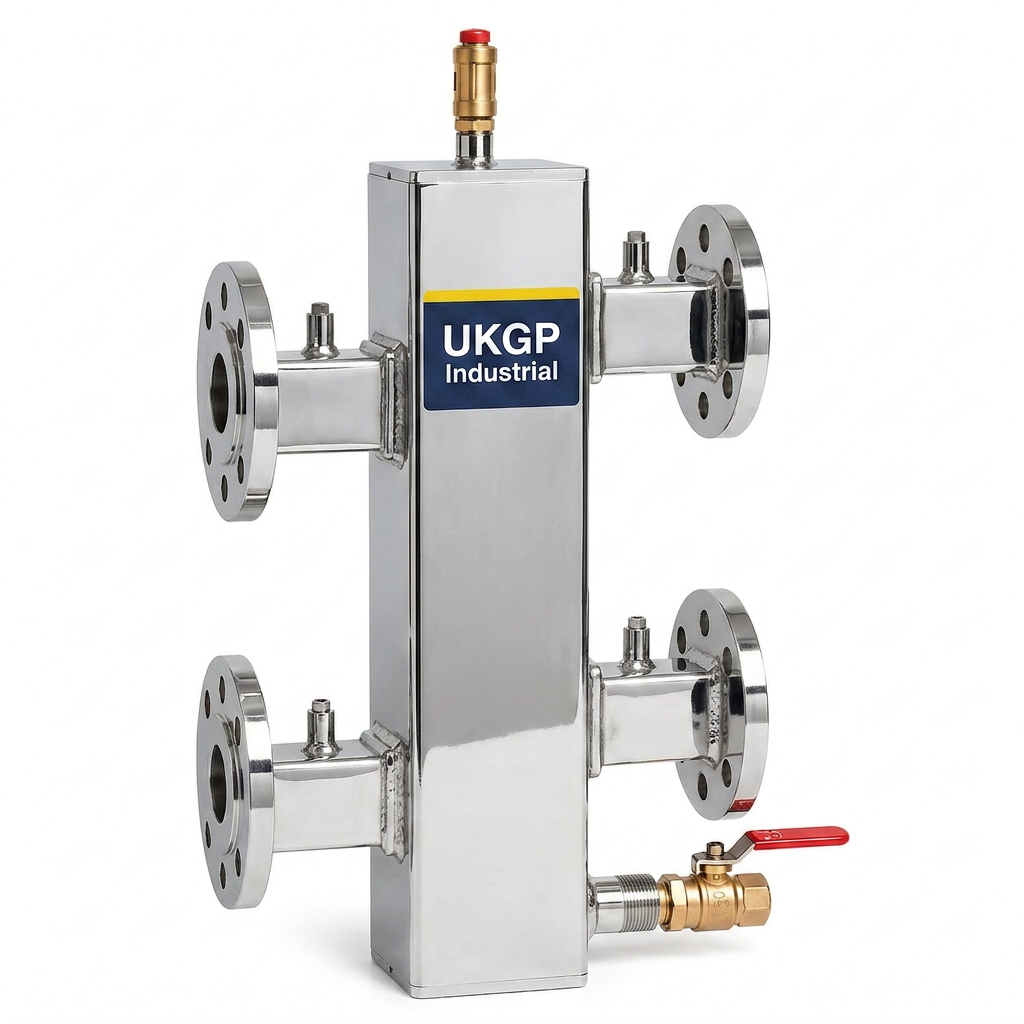
Choosing a professional-grade 28mm air separator ensures that your installation meets the thermal performance criteria required by building services consultants. Air is a primary insulator; if it remains trapped within a plate heat exchanger or a low loss header, the heat transfer coefficient drops significantly, forcing pumps to work harder and increasing energy consumption across the site. By integrating a dedicated separator, you facilitate a more laminar flow profile and reduce the risk of air-locks in terminal units like fan coil units or radiators. This proactive approach to air management is not merely about maintenance reduction but is a fundamental requirement for achieving the designed EPC rating of the building, ensuring that operational costs remain within the projected margins for facility managers and property owners.
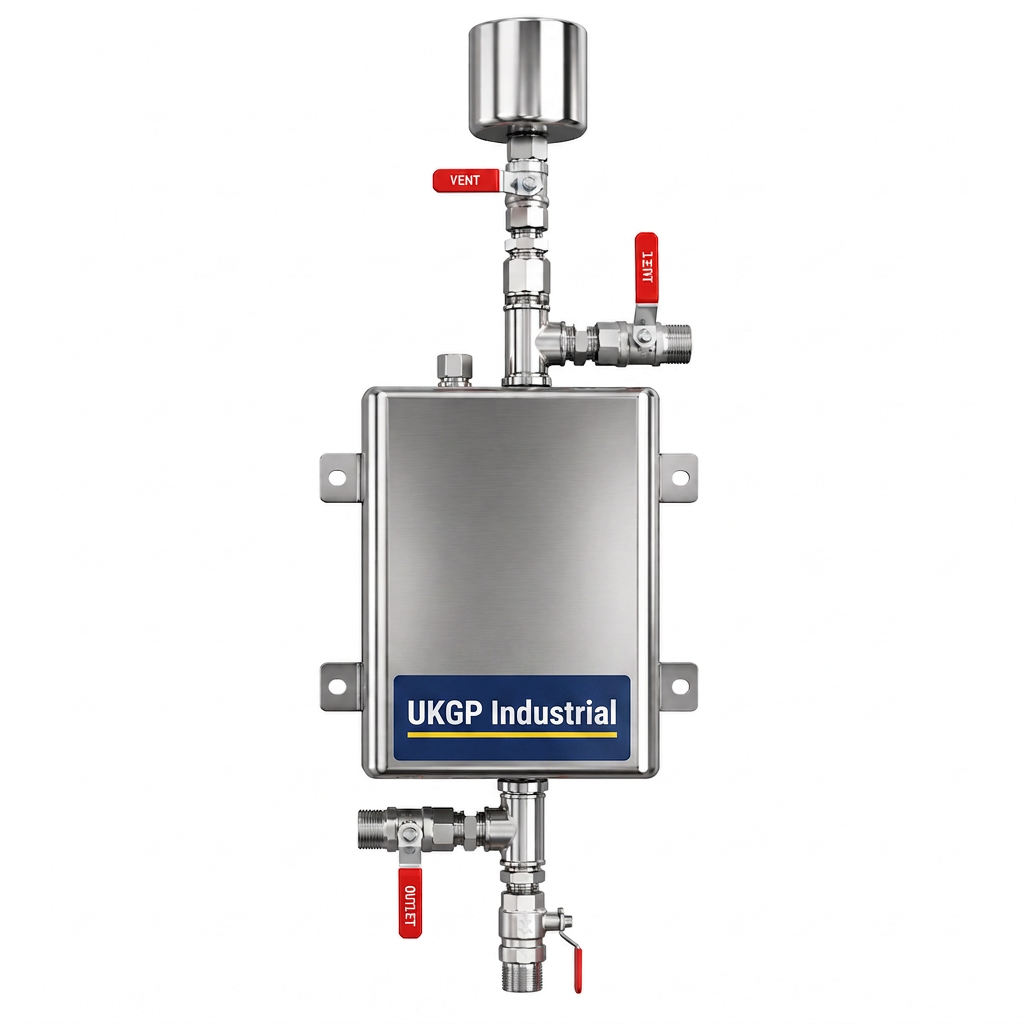
From a compliance perspective, the presence of an effective 28mm air separator aligns with the recommendations found in BSRIA BG29 and BG50. These documents highlight that air presence is a precursor to many water quality issues, including the formation of magnetite. By stripping air from the system, you maintain the chemical balance and ensure that dosing pots can distribute corrosion inhibitors more effectively. At UKGP Industrial, we understand that commercial engineers need robust, reliable hardware that can withstand the rigours of continuous operation. Our solutions are designed to integrate seamlessly into secondary circuits where precision air removal is paramount for protecting sensitive components such as pH sensors and transmitters or high-efficiency variable speed pumps that are highly susceptible to cavitation damage caused by entrained gas.
- Reduces oxygen-induced corrosion in carbon steel pipework
- Improves heat transfer efficiency across plate heat exchangers
- Minimizes noise and cavitation in circulating pumps
- Facilitates compliance with BSRIA BG50 water quality standards
Technical Specifications for Commercial Air and Dirt Removal
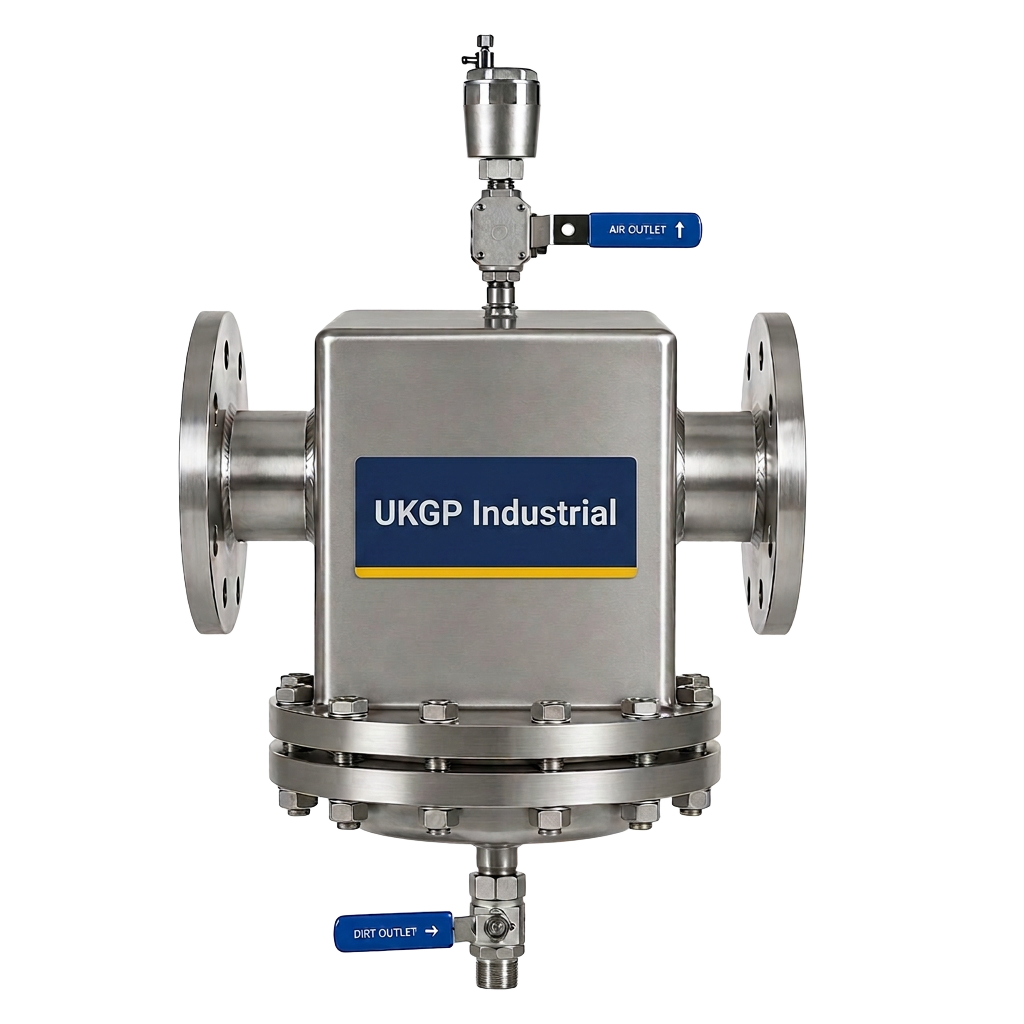
While a standard 28mm air separator is ideal for smaller commercial branches or secondary loops, larger primary circuits often require a combined solution. The UKGP air and dirt separator is engineered for larger volumes, featuring combined coalescing media and a powerful magnetic catch to address both gaseous and solid contamination simultaneously. Available in sizes from DN25 up to DN300, these units are flanged to PN10/16 standards and come complete with a full isolation kit for simplified maintenance. By capturing both microbubbles and magnetite, these units provide a comprehensive safeguard for leading commercial boiler OEMs and heat pump systems. The 2-year warranty provides additional peace of mind for procurement leads who require components that are built to last in demanding industrial environments.
Integrating a combined unit rather than a simple 28mm air separator on the main return allows for the capture of larger debris that could otherwise foul expansion bellows or block low loss headers. The internal stainless steel coalescing media creates the necessary turbulence to release bubbles while providing a quiet zone where dirt particles can settle at the bottom of the vessel for easy blow-down. For engineers working on retrofit projects, the inclusion of a magnetic kit is vital for extracting the black iron oxide sludge that often plagues older systems. This dual-action approach ensures that the water remains clear and the system chemistry stays within the parameters defined by BS 8552, preventing the premature failure of high-cost plant room assets and ensuring long-term reliability.
When specifying filtration for a project, the physical dimensions and pressure ratings are non-negotiable. Our separators are designed to handle the high-pressure environments often found in multi-storey commercial developments, with flanged connections ensuring a leak-free installation under PN16 conditions. Whether you are protecting a bank of commercial boilers or a large-scale chiller plant, the UKGP range offers the versatility required for modern M&E designs. The inclusion of an isolation kit as standard simplifies the annual service requirements, allowing facility managers to flush the unit without draining the entire system. This focus on practical, engineer-led design ensures that UKGP Industrial remains the first choice for consultants and contractors across the Surrey region and the wider UK market.
- Combined coalescing media and magnetic catch for dual protection
- Available in DN25 to DN300 sizes with PN10/16 flanged connections
- Includes a full isolation kit for easy maintenance and blow-down
- Supported by a comprehensive 2-year manufacturer warranty
Installation Best Practices for the 28mm Air Separator
Correct placement of a 28mm air separator is critical to its operational success. In heating systems, the separator should be installed on the flow pipe, immediately after the boiler or heat source where the temperature is highest and the solubility of air is lowest. In chilled water systems, the opposite applies; the unit should be placed on the return leg. Failure to follow these positioning rules often results in 'buoyant air' bypassing the unit, leading to persistent air-locks and 'gurgling' pipes that trigger call-outs from frustrated tenants. This technical nuance is well-documented in CIBSE guides and is a staple of professional plant room design, ensuring that every kilowatt of energy produced is successfully delivered to the building's emitters without interference.
Contractors should also consider the flow velocity when sizing a 28mm air separator. While 28mm is a standard pipe size for many sub-circuits, if the flow rate exceeds 1.5 metres per second, the effectiveness of the coalescing media may be reduced. In such cases, stepping up to a larger body size while maintaining the 28mm connections can provide the lower velocity required for efficient bubble separation. It is also essential to ensure that there is sufficient clearance above the unit for the automatic air vent to be serviced or replaced if it becomes fouled by system debris. At UKGP Industrial, our technical team provides bespoke advice to ensure that the chosen separator is perfectly matched to the hydraulic demands of your specific project, avoiding common pitfalls in commissioning.
Maintenance is the final piece of the puzzle for any deaeration strategy. Even the most advanced 28mm air separator requires periodic inspection to ensure the air vent is free of scale and the internal media is not blinded by heavy sludge. During the initial commissioning phase, as outlined in BSRIA BG29, the air vent may need to be checked daily as the 'new' water releases its dissolved oxygen. Once the system has stabilized, this can be moved to a standard quarterly or bi-annual FM check. By keeping the deaerator in peak condition, you ensure that the system remains at atmospheric pressure in the expansion vessel and that the risk of 'pumping over' or drawing air back into the system through faulty seals is virtually eliminated, protecting your client's investment.
- Install at the point of highest temperature for maximum deaeration
- Ensure flow velocity does not exceed media capability
- Provide adequate clearance for automatic air vent maintenance
- Monitor vent operation closely during the BG29 flushing process
Protecting Secondary Equipment and Heat Exchangers
The role of a 28mm air separator extends beyond just removing bubbles; it is a fundamental component of the wider water treatment strategy. When air is removed, the efficacy of chemical dosing is significantly enhanced. In systems where a dosing pot is used to introduce inhibitors, the absence of air ensures that a protective film can form uniformly across the internal surfaces of the pipework and heat exchangers. This is particularly important for stainless steel plate heat exchangers, which can suffer from pitting corrosion if oxygen levels are allowed to fluctuate. By stabilizing the gaseous content of the water, you create a more predictable environment for the chemical additives to perform their function, leading to a cleaner, more efficient system that requires fewer chemical top-ups over time.
Furthermore, high-precision equipment like pH sensors and transmitters benefit immensely from an air-free environment. Air bubbles passing through sensor chambers can cause erratic readings and false alarms, leading to unnecessary maintenance interventions and potential system shutdowns. By ensuring a 28mm air separator is positioned upstream of any sensitive monitoring equipment, you provide a stable fluid state for accurate measurement. This is crucial for large-scale commercial sites where BMS integration relies on precise data for automated dosing or system health monitoring. The synergy between high-quality mechanical separation and accurate sensing is what differentiates a standard installation from a high-performance building services solution that meets modern efficiency benchmarks.
Finally, we must consider the impact on expansion bellows and other flexible piping components. Air and vacuum cycles can cause premature fatigue in bellows, leading to leaks and costly plant room repairs. A consistent deaeration strategy using a reliable 28mm air separator ensures that the system pressures remain stable, reducing the mechanical stress on these junctions. Whether you are a consultant designing a new district heating network or a contractor refurbishing a local school plant room, the inclusion of dedicated air separation is a non-negotiable standard. Contact UKGP Industrial today for a competitive quote on our full range of separators and to learn how we can support your next project with high-specification UK-manufactured components that are designed for the rigours of the British HVAC industry.
- Optimises the performance of chemical inhibitors from dosing pots
- Protects stainless steel plate heat exchangers from pitting
- Ensures stable readings for pH sensors and BMS transmitters
- Reduces mechanical fatigue on expansion bellows and joints
Commercial Benefits for Facility Managers and Contractors
For facility managers, the primary driver for installing a 28mm air separator is the reduction in lifetime operational costs. Air-related issues are responsible for a significant percentage of emergency call-outs in commercial buildings, from cold spots in offices to noisy pipework that disrupts tenants. By eliminating air at the source, you reduce the need for manual venting and the associated labour costs. Moreover, the improved thermal efficiency means lower fuel bills, as the boilers are not wasting energy heating and moving air. In an era of rising energy prices and strict ESG reporting, these small incremental gains in plant room performance contribute significantly to the overall sustainability goals of the business and the long-term health of the building's infrastructure.
For M&E contractors, specifying a UKGP 28mm air separator simplifies the commissioning process. Getting a system signed off under BSRIA standards can be a headache if air pockets persist; our high-efficiency coalescing media ensures that the system is stripped of air quickly, allowing for faster handover. Our units are designed for ease of installation, fitting perfectly into the standard 28mm copper or press-fit pipework commonly used in secondary plant loops. By choosing a reliable, UK-stocked product, you avoid the project delays often associated with imported components. We pride ourselves on offering practical technical support, helping you select the right isolation kits and accessories to ensure a professional finish that will stand up to any site inspection.
Long-term reliability is backed by our robust construction and 2-year warranty. We understand that procurement leads are under pressure to balance upfront costs with quality. While cheaper alternatives exist, they often lack the internal surface area required for true microbubble separation. A UKGP 28mm air separator represents a value-engineered solution that doesn't compromise on performance. It is a 'fit and forget' component that pays for itself through reduced maintenance and protected equipment life. To discuss bulk pricing for your next nationwide rollout or to get a specific submittal for a current tender, reach out to our Surrey-based sales team who can provide tailored quotes and technical data sheets for our entire air and dirt management range.
- Reduces emergency call-outs and manual venting labor
- Lowers energy bills by improving overall thermal efficiency
- Accelerates the commissioning process for faster project handover
- High-quality UK-stocked units prevent project delays
Compliance with BS EN 14917 and CIBSE Guidelines
Adhering to British and European standards is not optional for modern building services. The design and application of our deaeration products, including the 28mm air separator, are informed by the principles laid out in BS EN 14917 regarding pressure equipment and the general requirements of the Pressure Equipment Directive (PED). This ensures that every unit we supply is safe for use in pressurised commercial systems and is manufactured to a standard that consultants can confidently write into their specifications. By aligning our product performance with CIBSE Guide M and CP1, we ensure that our hardware supports the overarching goal of creating resilient, maintainable, and low-carbon heating networks across the United Kingdom.
The relationship between air removal and water quality as defined in BS 8552 cannot be overstated. High oxygen levels lead to the formation of hematite and magnetite, which are the leading causes of modern ultra-high efficiency boiler failures. By utilizing a 28mm air separator to keep oxygen concentrations at an absolute minimum, you are directly extending the life of the plant. This is particularly relevant when working with major commercial boiler OEMs who often specify strict water quality limits as a condition of their own warranties. Providing a documented air removal strategy using UKGP products helps protect the contractor from liability while ensuring the end-user receives a system that operates exactly as intended by the design engineers.
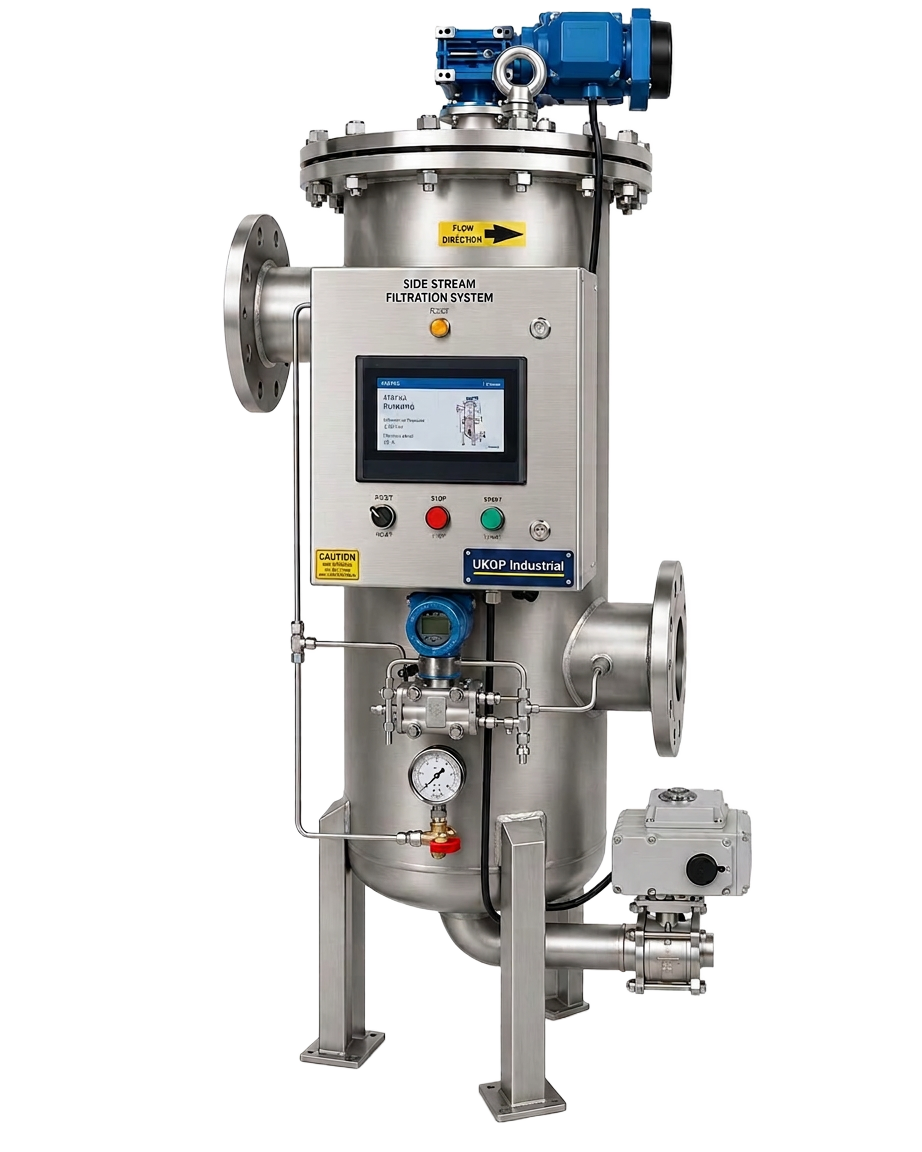
In conclusion, the 28mm air separator is a small but vital component of any successful commercial HVAC design. Its ability to remove microbubbles and protect the system from the ravages of corrosion makes it an essential investment for any new build or refurbishment project. At UKGP Industrial, we are committed to providing the UK market with high-performance, commercially viable solutions for air and dirt separation, side-stream filtration, and heat transfer. Contact us today to request a quote or to speak with one of our technical experts about how we can help you achieve BSRIA BG50 compliance on your next project with our range of flanged and threaded separation solutions.
- Manufactured to meet PED and BS EN 14917 standards
- Supports boiler warranty compliance via superior water quality
- Essential for meeting the requirements of CIBSE Guide M
- Helps maintain the strict parameter limits defined in BS 8552
Frequently asked questions
Why is a 28mm air separator better than a standard air vent?
- A standard automatic air vent can only remove free air that has already collected at high points. A 28mm air separator uses internal coalescing media to actively 'scrub' microbubbles from the flow, removing entrained air before it can settle and cause corrosion or noise elsewhere in the system.
Where is the best place to install a 28mm air separator?
- For maximum efficiency, it should be installed at the point of lowest air solubility. In a heating system, this is on the flow pipe immediately after the heat source (hottest point). In a cooling system, it should be on the return pipe (hottest point) before the chiller.
Does a 28mm air separator also remove dirt and magnetite?
- A dedicated 28mm air separator is designed specifically for gas removal. For combined protection, UKGP Industrial offers air and dirt separators (DN25-DN300) which include both coalescing media for air and a magnetic catch for capturing magnetite and system debris.
Can a 28mm air separator help with noisy pipes in an office building?
- Yes. Most system noise ('water hammer' or 'rushing' sounds) is caused by trapped air bubbles. Installing a 28mm air separator removes these bubbles at the plant room source, leading to a much quieter and more comfortable environment for building occupants.
What maintenance is required for these units?
- A professional 28mm air separator usually requires an annual check of the automatic air vent mechanism and a visual inspection for leaks. If using a combined air and dirt model, the unit should be flushed periodically via the blow-down valve to remove captured sludge.