The Fundamental Role of Combined Separation
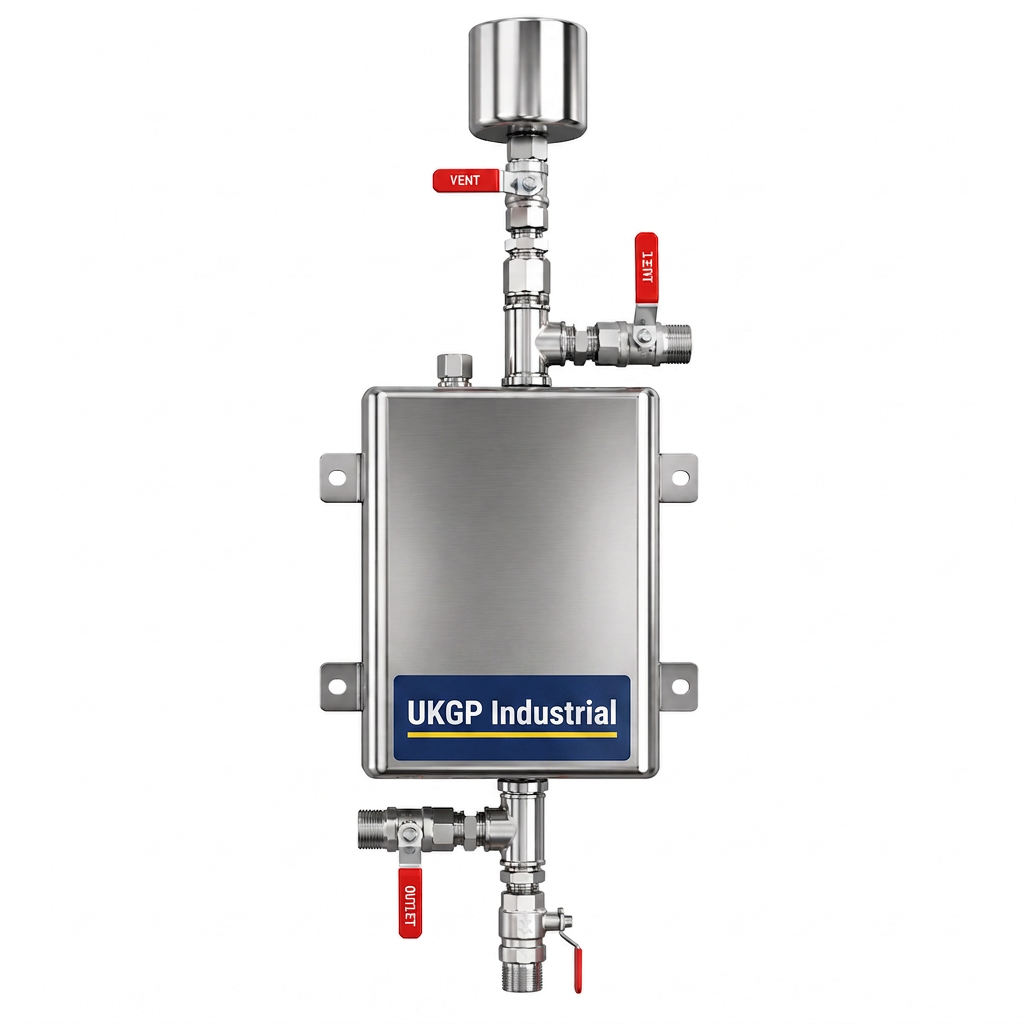
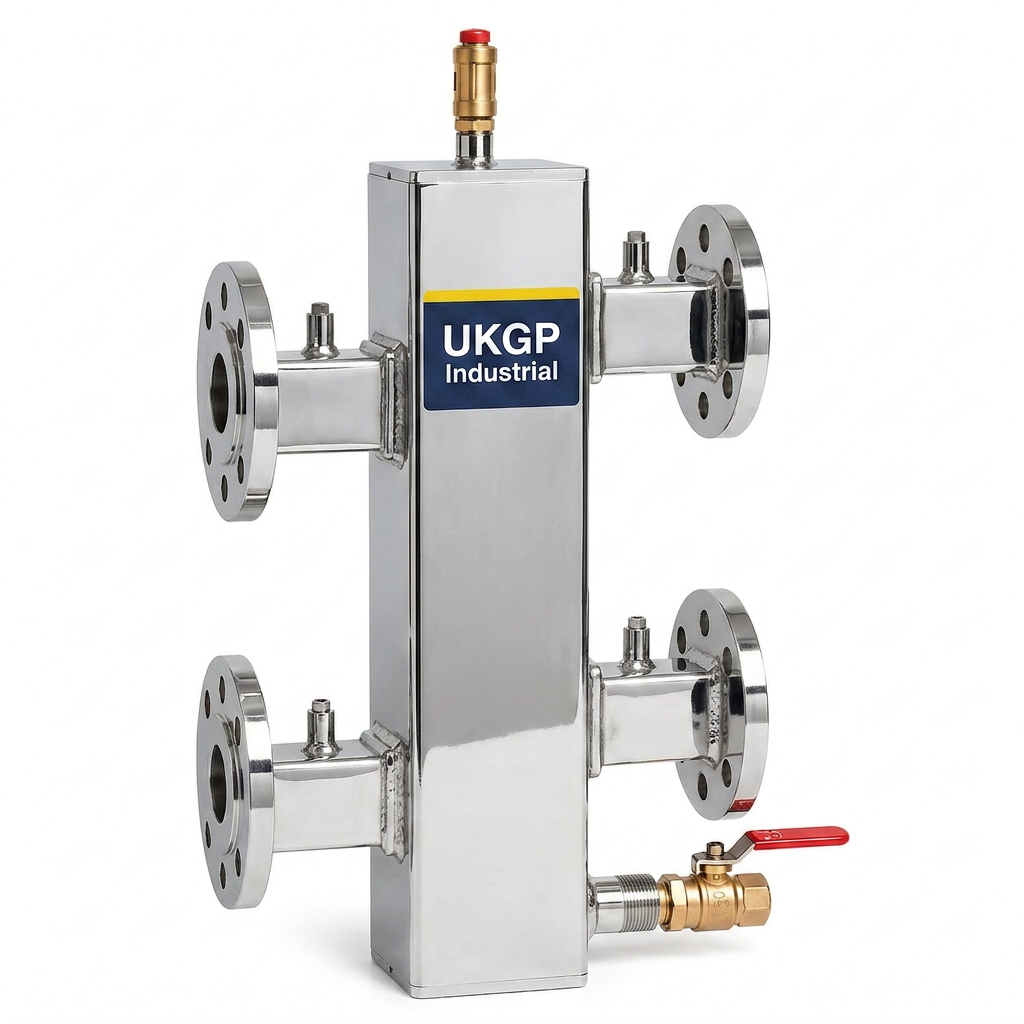
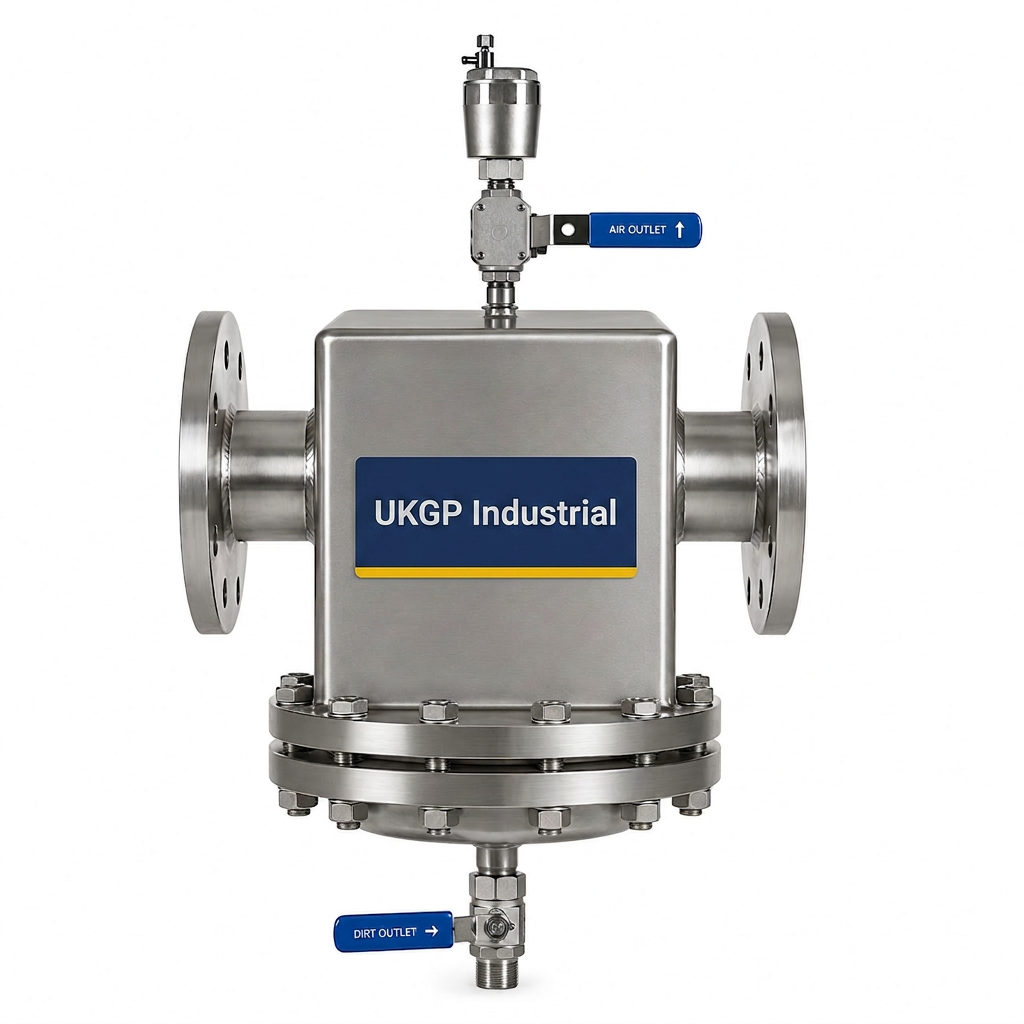
An air and dirt separator serves as the primary line of defence for modern HVAC systems. While traditional strainers can catch large copper swarf or welding slag, they are notoriously poor at capturing the fine magnetite and microbubbles that cause long-term mechanical degradation. A combined separator uses internal geometry—often featuring a pall ring pack or a helical mesh—to significantly reduce the velocity of the fluid, allowing gases to rise and solids to settle.
The 'air' component of the device focuses on the removal of microbubbles. These are bubbles so small they do not naturally rise against the flow of the water. If left in the system, they lead to noise, reduced heat transfer efficiency, and localised corrosion. The 'dirt' component addresses suspended solids, specifically magnetite (black iron oxide), which is the byproduct of internal corrosion. If not removed, magnetite accumulates in pump housings and control valves, leading to premature failure.
From a lifecycle perspective, the inclusion of a high-quality separator is not an optional luxury but a requirement for modern high-efficiency plant. Standard boilers now feature compact, small-orifice heat exchangers that are highly sensitive to fouling. By integrating air and dirt removal into a single unit, engineers can save plant room space while ensuring the hydraulic circuit remains clean and efficient.
- Removal of microbubbles from LTHW/CHW circuits.
- Separation of heavy sludge and magnetite.
- Reduction in oxygen-related corrosion rates.
- Protection of high-efficiency heat exchangers and VSD pumps.
Mechanical Principles and Deaeration Efficiency
The operation of an air and dirt separator is governed by fundamental physical laws, primarily Henry’s Law. This states that the amount of dissolved gas in a liquid is proportional to its partial pressure. In an LTHW system, as temperature rises or pressure decreases, gases come out of solution. The separator provides the ideal environment—a low-velocity zone—where these microbubbles can coalesce on the internal media surfaces. Once they grow large enough, their buoyancy overcomes the fluid's surface tension, and they rise to the automatic air vent (AAV) at the top of the vessel.
Simultaneously, the separator employs gravitational settling. As the water enters the larger diameter of the separator body, its velocity drops drastically. This allows particles with a higher density than water to fall into the lower collection chamber. This 'stagnation zone' is crucial; it ensures that debris is not re-entrained into the main flow. High-performance units often feature a bottom drain valve, allowing for the 'blowdown' of accumulated sludge while the system is under full pressure.
Modern UK building specs increasingly demand magnetic separation. Magnetite is paramagnetic, meaning it can be influenced by a magnetic field. Many air and dirt separators now include a magnetic sleeve or insert. This ensures that even the microscopic iron oxide particles, which might be too light to settle by gravity alone, are pulled from the flow and held in the collection chamber until the maintenance engineer clears the magnet and flushes the unit.
- Henry's Law of gas solubility.
- Coalescence within the media bed.
- Gravitational settling (Stokes' Law).
- Magnetite capture via neodymium magnets.
BSRIA BG29/21 and BG50 Compliance
In the UK, the design and maintenance of water systems are heavily influenced by BSRIA (Building Services Research and Information Association). BG29/21: Pre-commission Cleaning of Pipework Systems emphasises the need for effective dirt removal during the initial stages of a building's life. While the document focuses on chemical cleaning and flushing, it highlights that without permanent separation equipment, a system will rapidly return to a degraded state.
BSRIA BG50: Water Treatment for Closed Heating and Cooling Systems specifically addresses the ongoing water quality requirements. It notes that the presence of air is the primary driver of corrosion. Oxygen entering the system (through permeable membranes or micro-leaks) reacts with ferrous components to form magnetite. An air and dirt separator acts as a 'passive' water treatment device, constantly removing the ingredients for corrosion and the products of it.
Specifying a UKGP Industrial air and dirt separator is a recognised method for adhering to these guidelines. By ensuring that suspended solids and dissolved gases are managed, engineers can ensure that the water quality remains within the 'best practice' parameters defined by BSRIA, thereby lengthening the service life of the entire HVAC asset.
Sizing and Technical Specification
Sizing an air and dirt separator is not a matter of matching the pipe diameter, although this is a common mistake. Selection should always be based on the maximum flow rate (m³/h) at peak load. If the velocity through the separator is too high, the 'quiet zone' required for bubbles to rise and dirt to settle is compromised. Typically, a velocity of roughly 1.0 m/s within the vessel's internal cross-section is the target for optimal performance.
Pressure drop is another critical factor. Because the internal chamber of the separator is significantly larger than the connecting pipework, the pressure drop is usually very low compared to a traditional Y-strainer. However, as the internal media collects grime, the resistance can increase slightly. Consulting manufacturer pressure-loss charts is essential to ensure that the primary pump head calculations account for the separator's resistance at design flow.
Engineers must also consider the temperature and pressure ratings of the installation. In high-rise commercial buildings, static head pressures can easily exceed 6 bar, requiring PN16 or even PN25 rated vessels. Similarly, on biomass or high-temperature LTHW systems, the internal seals and the AAV mechanism must be rated for the operating temperature, often up to 110°C or higher.
- Main flow velocity should not exceed 1.5 m/s for copper or 3.0 m/s for steel.
- Standard units are typically PN10 or PN16 rated.
- Higher temperatures increase gas liberation.
- Flanged vs. Screwed connections.
Strategic Positioning in the Plant Room
Placement is the most common area of error in separator installation. To remove air effectively, the unit must be placed at the point of lowest gas solubility. According to Henry’s Law, this is where the temperature is highest and the pressure is lowest. In an LTHW circuit, this is the flow pipe immediately downstream of the boilers, but before the primary pumps if possible. Conversely, in a chilled water (CHW) circuit, the warmest water is the return from the building, so the separator should be installed on the return line.
For dirt removal, the priority is protecting sensitive components. This usually dictates a position on the return header, before the water enters the boilers or chillers. In many UK commercial plant rooms, these two 'ideal' locations for air and dirt removal conflict. The industry standard compromise is to install a combined unit on the primary flow to prioritise deaeration, as air is the catalyst for the corrosion that creates the dirt.
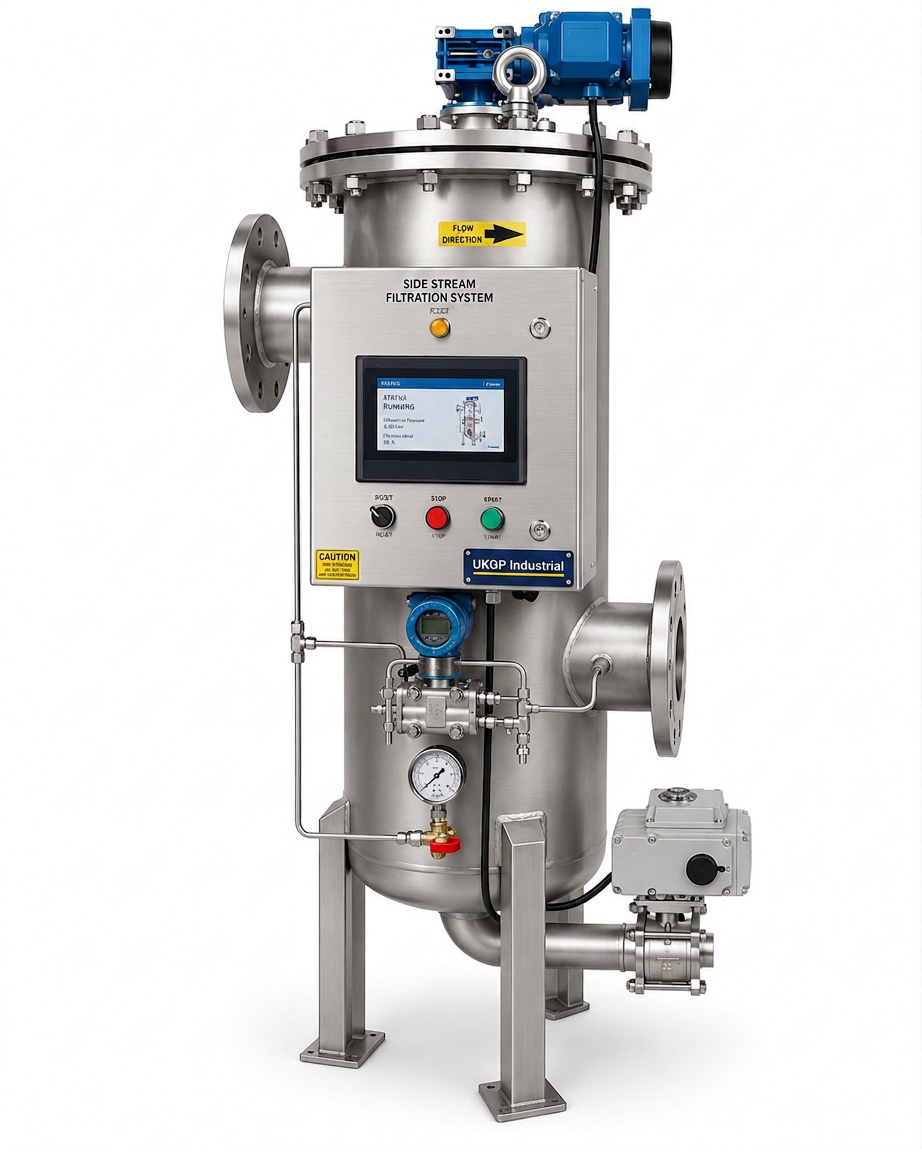
Where systems are particularly large or prone to heavy debris, engineers should consider pairing the main flow air and dirt separator with a side-stream filtration unit. While the main separator handles the bulk of the work, the side-stream filter provides high-intensity 'polishing' of the water, often capturing sub-micron particles that the passive separator might miss. This dual-strategy approach is the gold standard for long-term system stability.
The Impact of Entrained Air on System Performance
Air in an HVAC system is not merely a nuisance; it is a major energy thief. Air has significantly lower thermal conductivity than water. When microbubbles accumulate on the surfaces of heat exchangers or radiator panels, they act as an insulating layer. This forces the boilers to run for longer and at higher temperatures to achieve the desired setpoint, directly increasing carbon emissions and fuel costs.
Furthermore, entrained air is the leading cause of pump failure. When air bubbles enter the low-pressure zone of a pump impeller, they expand and then violently collapse. This process, known as cavitation, creates micro-jets of water that can pit steel and cast iron, eventually destroying the impeller. A dedicated air and dirt separator removes these bubbles before they can reach the pump's suctions.
Finally, we must consider the hydraulic balance. Air pockets can restrict flow in certain branches of a circuit, leading to 'cold spots' in a building. Facilities managers often compensate by increasing pump speeds, which only exacerbates the problem and leads to further energy waste. Removing air ensures the system behaves exactly as the design engineer intended.
- Reduced heat transfer in emitters (radiators/coils).
- Cavitation in pump impellers leading to pitting.
- Nuisance noise (pumping 'pebbles' sound).
- Inaccurate readings from ultrasonic flow meters.
Maintenance and Operational Longevity
Unlike complex vacuum degassers, mechanical air and dirt separators are relatively low-maintenance devices. However, they are not 'fit and forget.' The most critical maintenance task is the regular blowdown of the dirt collection chamber. This involves opening the valve at the base of the unit for several seconds to flush out accumulated sludge. This should be performed during routine plant room inspections, typically once every quarter, or more frequently during the first month of operation.
If the unit features a magnetic sleeve, this must be removed before flushing. The magnet holds the fine iron oxide particles against the internal wall or a dry pocket; by removing the magnet, the particles are released into the collection zone to be flushed away. Failure to do this will result in the magnetic trap becoming saturated, reducing its effectiveness and potentially allowing magnetite to escape back into the system.
The automatic air vent at the top of the unit also requires periodic inspection. In systems with poor water quality, the AAV seat can become fouled with debris, leading to 'weeping' or even a full leak. Most high-quality UKGP Industrial units feature a service valve under the AAV, allowing for cleaning or replacement without draining the entire system. Following these simple steps ensures the separator remains an effective barrier for decades.
- Quarterly blowdown of the collection chamber.
- Cleaning of the magnetic insert (if fitted).
- Inspection of the automatic air vent for leaks.
- Annual water quality testing to BS 8552.
Materials of Construction and Durability
The choice of materials for an air and dirt separator is dictated by both the fluid being handled and the environment of the plant room. For standard LTHW systems, carbon steel is the industry standard for larger vessels (DN50 and above). For chilled water systems, these units must be externally coated or insulated to prevent condensation-induced corrosion of the vessel body itself.
In environments where the fluid may be aggressive or where high-purity water is used, stainless steel separators are used. These are common in pharmaceutical or food processing applications. For smaller commercial installations (up to 2 inches), brass units are frequently specified due to their compact size and natural resistance to corrosion. Regardless of the outer shell, the internal separation media should ideally be made of stainless steel or high-grade synthetic materials to prevent decay.
Finally, the connection type should be chosen based on the pipework material. Flanged connections (conforming to BS EN 1092-1) are standard for steel pipework in UK plant rooms, providing a robust, leak-free joint that is easy to service. For smaller systems or copper circuits, screwed BSP connections are more common. Ensuring the separator matches the system's design life is crucial for a successful specification.
- Stainless steel for corrosive environments.
- Carbon steel for standard LTHW/CHW.
- Brass for smaller domestic or light commercial.
- Internal pall rings vs. helical mesh structures.
Frequently asked questions
Does an air and dirt separator replace the need for side-stream filtration?
- Strictly speaking, no. While high-performance separators remove the vast majority of circulating debris, BSRIA BG29/21 recommends side-stream filtration for larger systems to remove finer particles (down to 5 microns) and to facilitate easy monitoring of water quality without system downtime.
Can I install a separator on a bypass loop?
- Ideally, no. A separator should be installed at the lowest pressure and highest temperature point for air, and before sensitive plant for dirt. A bypass arrangement is only necessary if the separator is being used in conjunction with a side-stream loop, rather than the main flow.
What is the typical pressure drop across a separator?
- The pressure drop across a correctly sized UKGP Industrial air and dirt separator is typically negligible, often ranging between 1kPa and 5kPa depending on the flow rate. Engineers should consult the specific pressure drop curves for the selected vessel size.
Where is the best place to install a separator?
- On the suction side of the primary pumps (low pressure) and as close to the boiler flow as possible (high temperature). For CHW systems, they should be located in the return line before the chiller.
What is the difference between microbubble deaeration and vacuum degassing?
- Microbubble deaeration uses a pall-ring or spiral media to create a zone of 'stagnation' where bubbles collide and rise. Expansion degassing (vacuum degassers) uses a pressure drop to pull dissolved gases out of solution. Separators are continuous and passive; vacuum degassers are active and typically more expensive.