The Thermodynamic Principles of Gas Solubility
The primary function of an air separator is the removal of microbubbles—gases that have come out of solution due to changes in temperature and pressure. According to Henry’s Law, the solubility of gases in a liquid is proportional to the partial pressure of those gases above the liquid. In simpler terms, water at high temperatures and low pressures can hold significantly less dissolved air than cold, pressurised water. This chemical reality dictates the 'point of least solubility' as the ideal location for air removal.
In a standard LTHW circuit, this point is typically found on the flow pipework immediately downstream of the boiler or heat exchanger, but before the primary circulating pump. At this juncture, the water is at its maximum temperature. In chilled water (CHW) systems, the location strategy reverses logically; the warmest point is the return header before the chiller, where the fluid has absorbed the building's heat load. Incorrectly placing a separator on the return pipework of a boiler system will significantly reduce its effectiveness, as the cooler water can hold more gases in solution.
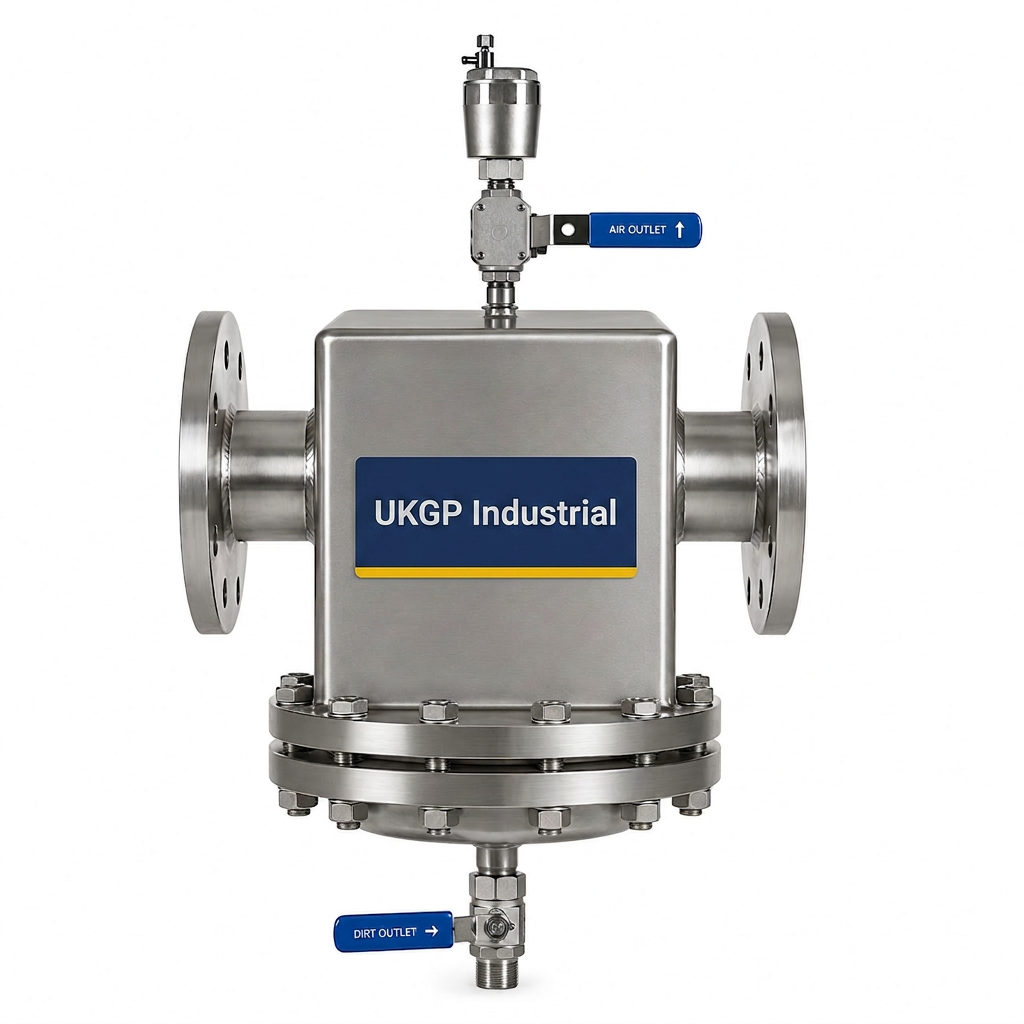
Beyond the microbubbles, the 'dirt' element of the separator relies on laminar flow and velocity reduction. UKGP Industrial separators utilise internal coalescence media to create areas of stagnation, allowing particles with a higher density than water to settle into the collection chamber. For these mechanical processes to work, the unit must be located where the system velocity is manageable and where the physical footprint allows for unimpeded gravitational settling.
- Enhanced thermal conductivity due to absence of insulating air/sludge layers.
- Reduction in pump cavitation and premature mechanical seal failure.
- Compliance with BSRIA BG29/21 pre-commissioning cleaning requirements.
- Protection of control valves and flow meters from abrasive particulates.
Strategic Placement in LTHW Heating Systems
For Low Temperature Hot Water (LTHW) systems, the combined air and dirt separator should be installed on the flow pipework. This is the point where the water is at its hottest, forcing air out of solution. Furthermore, the unit should ideally be positioned on the suction side of the primary pumps. By placing the separator before the pump, you protect the impeller from abrasive debris and benefit from the lowest pressure point in the system, which further encourages microbubble formation.
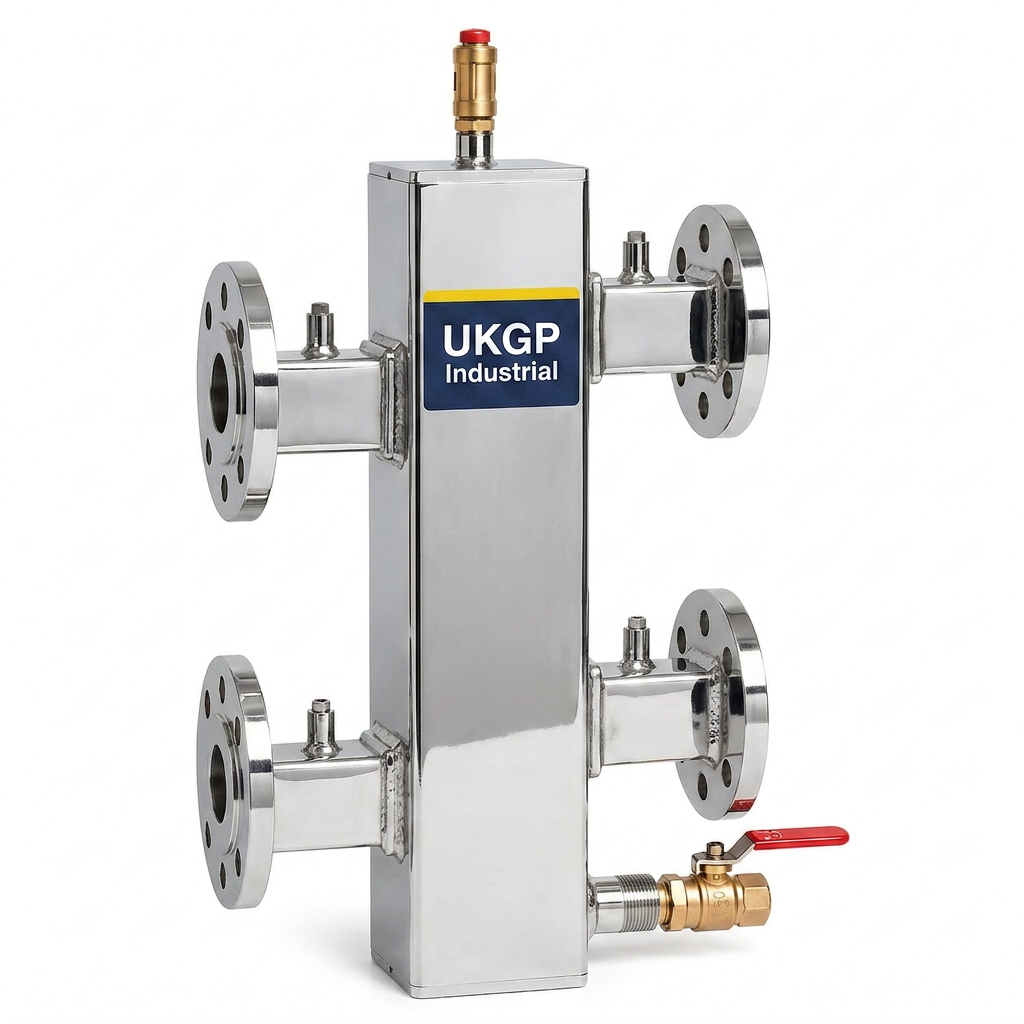
Designers must ensure that the separator is the first major component after the boiler or heat exchanger. If the system utilises a low-loss header (LLH) or a buffer vessel, the separator should be installed on the primary flow between the heat source and the header. This ensures that any air generated within the boiler is captured before it can distribute into the secondary circuits. In large-scale district heating or multi-boiler cascading systems, a single large-form separator on the common flow header is often more efficient than multiple smaller units on individual boiler branches.
Maintenance access is a frequently overlooked factor in UK plant room design. While the separator functions automatically for air venting, the dirt collection chamber requires manual blow-down. If a separator is installed at high level without an umbilical drain or permanent access platform, the accumulation of sludge will eventually bypass the internal scrubbers, rendering the unit a mere bypass vessel. Following BSRIA BG50 guidelines, the drainage point should be piped to a focal point where the effluent can be inspected for signs of systemic corrosion.
- Primary flow line: High temperature promotes air release.
- Suction side of the pump: Maintains the 'point of no pressure change'.
- Accessible height: Ensures maintenance teams can safely purge the unit.
Optimal Positioning in Chilled Water Circuits
In CHW systems, the logic of gas solubility dictates that the air separator be placed on the return pipework. This is contrary to heating systems because the return water is the 'warm' side of the circuit. As chilled water returns from the air handling units (AHUs) or fan coil units (FCUs), it has gained several degrees of temperature. This temperature rise, combined with the lower pressure typically found on the return side, makes it the opportunistic zone for air release.
Placing the separator on the return header also serves an essential primary function: debris protection for the chiller’s evaporator. Modern chillers, especially those utilizing high-efficiency brazed plate heat exchangers, have extremely narrow tolerances. A single influx of construction debris or dislodged magnetite can cause a significant pressure drop or, in the worst-case scenario, lead to plate rupture due to freezing if flow is restricted. Therefore, protecting the chiller inlet is a priority for the M&E contractor.
Consistent with LTHW design, the separator should be on the suction side of the pumps. If the system is a primary-secondary arrangement, the separator is best located on the common return before the primary pumps. This ensures the entire system volume is scrubbed of particulates before the fluid undergoes the mechanical stress of the chiller's cooling cycle. Proper insulation of the separator body is also critical in CHW applications to prevent heavy condensation and subsequent external corrosion of the vessel shell.
- Primary return line: Highest temperature point in the cooling cycle.
- Protection for the evaporator: Prevents fouling of narrow plate heat exchangers.
- Location relative to expansion: Must be coordinated with the 'Point of No Pressure Change'.
Frequently asked questions
Can an air and dirt separator replace a chemical dosing pot?
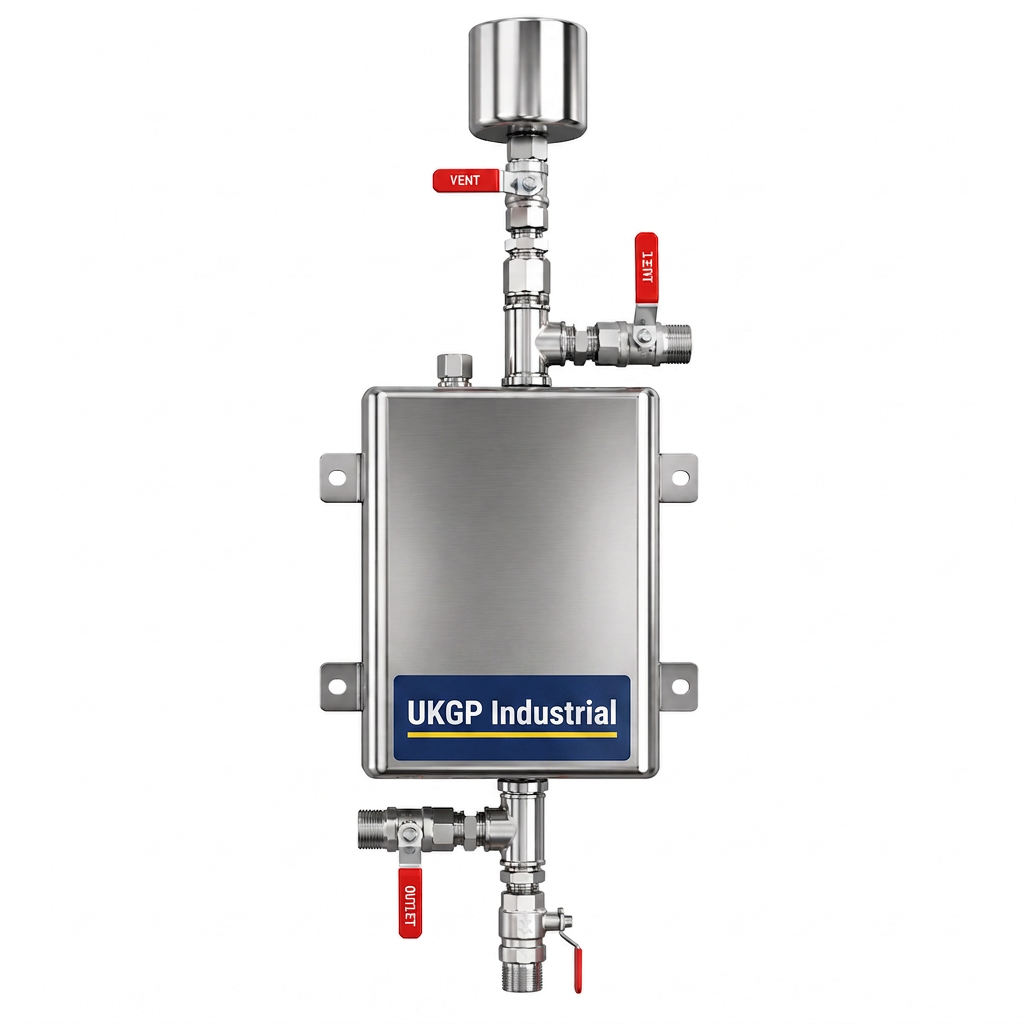
- No. While a separator manages bulk air and particulate, a dosing pot is essential for introducing chemical inhibitors to maintain the passivation layer on domestic steel pipework and prevent galvanic corrosion.
Is a full-flow separator sufficient for a high-volume industrial LTHW system?
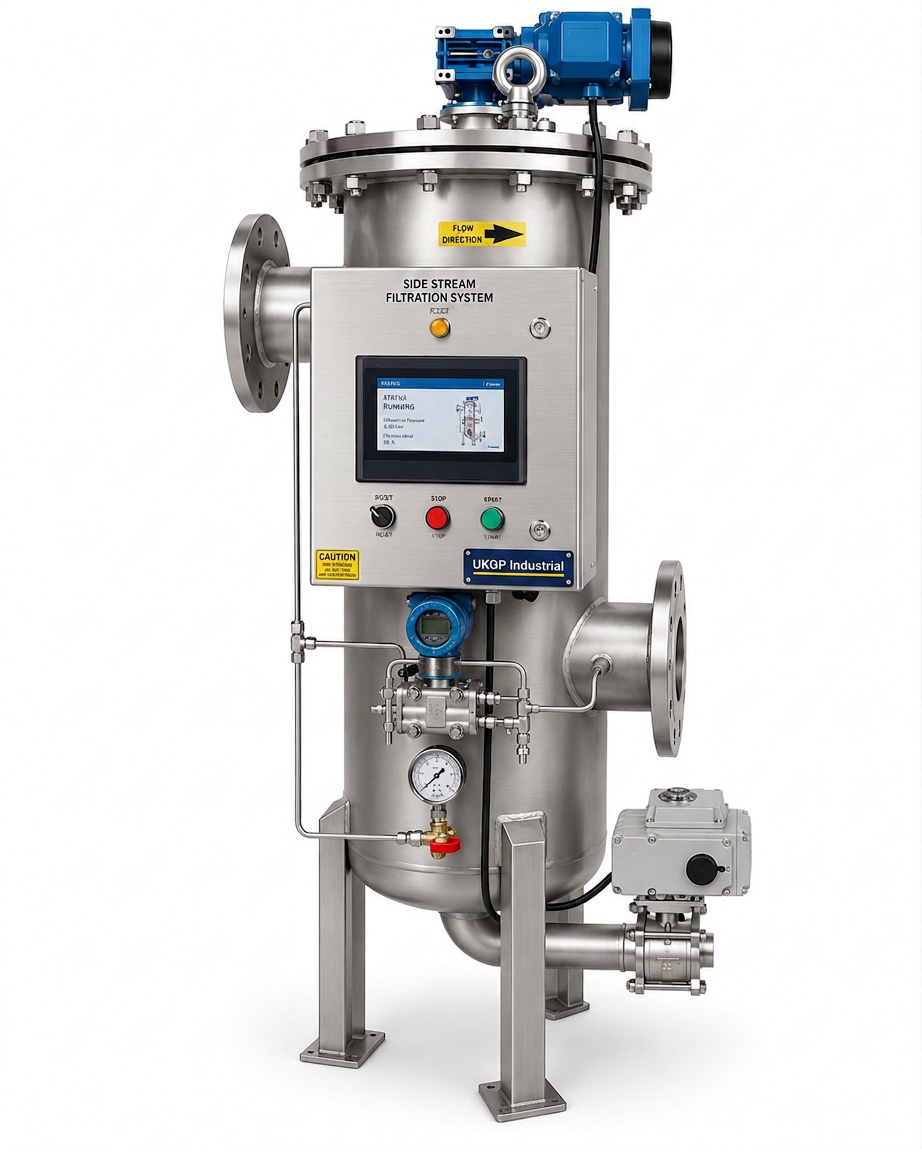
- No. A separator handles the full flow but focuses on microbubbles and medium-to-large debris. Side-stream filtration is designed for high-turnover removal of fine magnetite and non-magnetic sludge down to sub-micron levels.
What are the temperature and pressure limitations?
- Standard separators are usually rated for 110°C and 10 bar. For medium-pressure hot water (MPHW) or high-pressure systems, ensure the unit is manufactured to PED 2014/68/EU and specifically rated for the higher design pressure and temperature.
What is the recommended maintenance frequency?
- Dirt chambers should be flushed weekly during the first month of operation, then quarterly. Air vents should be checked for leakage or calcification annually. Magnet rods, if fitted, must be withdrawn and cleaned during planned shutdowns.