Mechanical Separation Principles: Air and Inert Solids
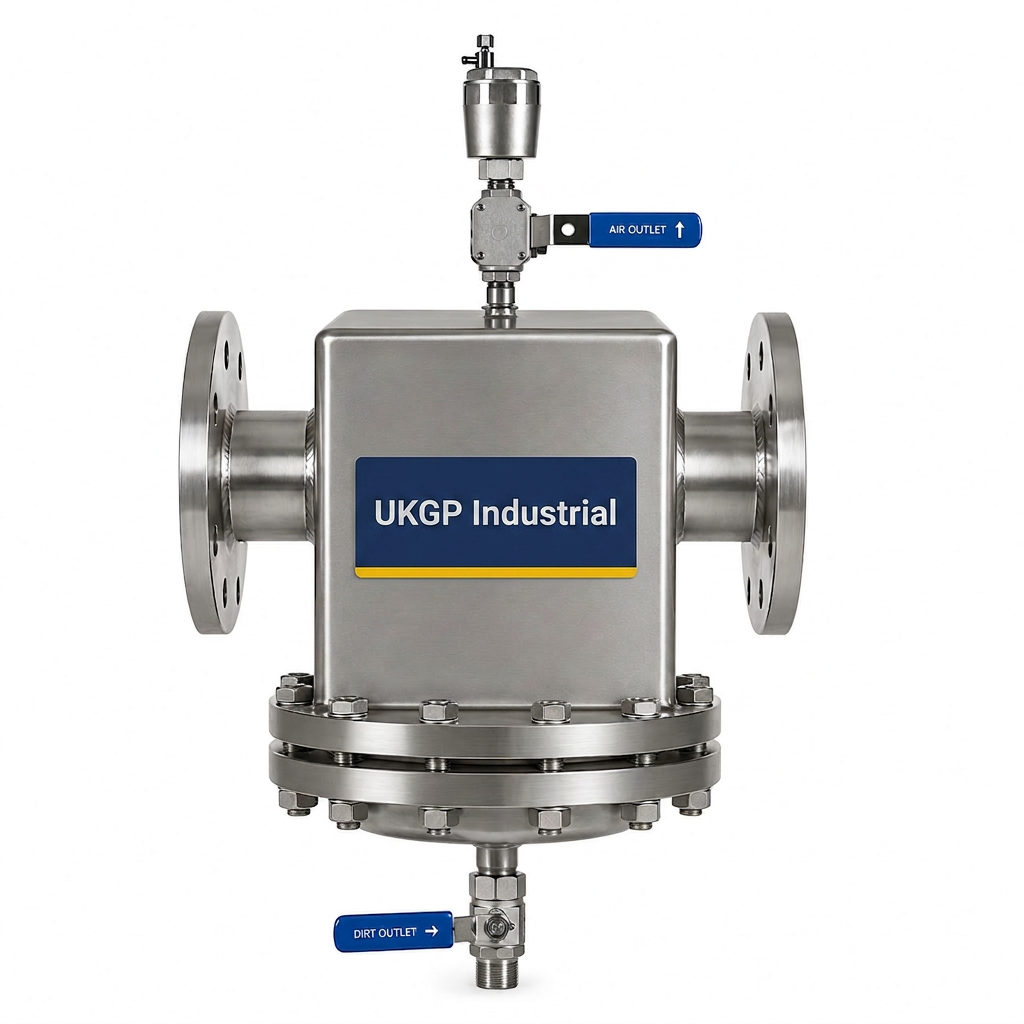
The efficacy of a combined separator relies on two distinct physical processes occurring within a single vessel. Firstly, for air removal, the unit utilises the principle of coalescence. As fluid enters the larger chamber of the separator, its velocity drops significantly. Internal media, such as stainless steel Pall rings or a structured mesh, create a turbulent-free zone where micro-bubbles collide and adhere to the surface area. These bubbles grow in size until their buoyancy overcomes the downward force of the flow, rising to the automatic air release valve (AAV) at the top of the unit.
Simultaneously, the reduction in velocity allows inert solid particles—those with a higher specific gravity than water—to settle out of the flow. In a standard DN100 pipe flowing at 1.5 m/s, the velocity within a properly sized separator may drop to below 0.5 m/s. This allows sand, weld slag, and non-ferrous debris to fall into the collection chamber at the base of the unit, isolated from the main flow path to prevent re-entrainment.
- Micro-bubble removal via coalescence (Pall rings or wire mesh).
- Gravitational settlement of non-magnetic debris.
- High-intensity magnetic capture of sub-micron magnetite.
- Reduced oxygen-induced corrosion (pitting).
Frequently asked questions
Where is the optimum location for a combined separator in an LTHW circuit?
- Standard practice is to install the unit on the main flow pipe in heating systems (highest temperature, lowest solubility of air) and on the return line in chilled water systems. For dirt removal exclusively, the return line is preferred to protect the heat generator.
Can a magnetic separator replace the need for BSRIA BG29/21 flushing?
- BSRIA BG29/21 and BG50 emphasise that while separators are excellent for ongoing maintenance, they do not replace the need for high-velocity system flushing and chemical cleaning during the pre-commissioning phase. They are 'ongoing protection' devices.
What is the typical pressure drop across a 100mm flanged separator?
- Pressure drop varies by flow rate and pipe size, but typically ranges between 1kPa and 5kPa at nominal flow. It is essential to refer to the manufacturer's Kv values during the hydraulic design stage to ensure pump head calculations are accurate.
How often should the magnetic rod be cleaned?
- In modern commercial systems, maintenance intervals are typically determined by the pressure differential or scheduled quarterly inspections. Magnetite should be flushed monthly during the first year of a new system's operation.