The Physics of Contamination in LTHW and CHW Systems
Water quality degradation in closed-loop systems is a two-fold process involving gaseous and particulate contamination. Air enters systems during initial filling, through permeable seals, or via micro-leaks in negative pressure zones. When oxygen remains in the system, it reacts with steel pipework to create magnetite (Fe3O4), a heavy, abrasive sludge that settles in low-velocity areas, such as heat exchangers and emitters. This sludge behaves as a semi-conductor, potentially causing galvanic corrosion and significantly reducing the thermal output of the system.
Dissolved gases also pose a significant threat to system longevity. As water temperature rises, the solubility of air decreases (Henry's Law), leading to the liberation of micro-bubbles. These bubbles act as an insulator on heat transfer surfaces and can lead to the 'pitting' of pump impellers through cavitation. Without effective deaeration, the circulating fluid becomes aggressive, leading to a perpetual cycle of corrosion and component failure.
The impact on modern plant is particularly severe. Modern UK plant rooms increasingly rely on Plate Heat Exchangers (PHEs) with narrow flow channels. Even minor particulate buildup can increase the pressure drop across a PHE beyond the design head of the secondary pumps, leading to reduced flow and system imbalance. To mitigate this, a holistic approach involving both bulk separation and fine filtration is required.
- Entrained air leading to localized 'hot spots' and pump cavitation.
- Micro-bubble formation reducing heat transfer coefficients.
- Oxidation of ferrous components resulting in magnetite (black sludge) formation.
- Erosion of valve seats and seals by suspended particulates.
Mechanics of Combined Air and Dirt Separators
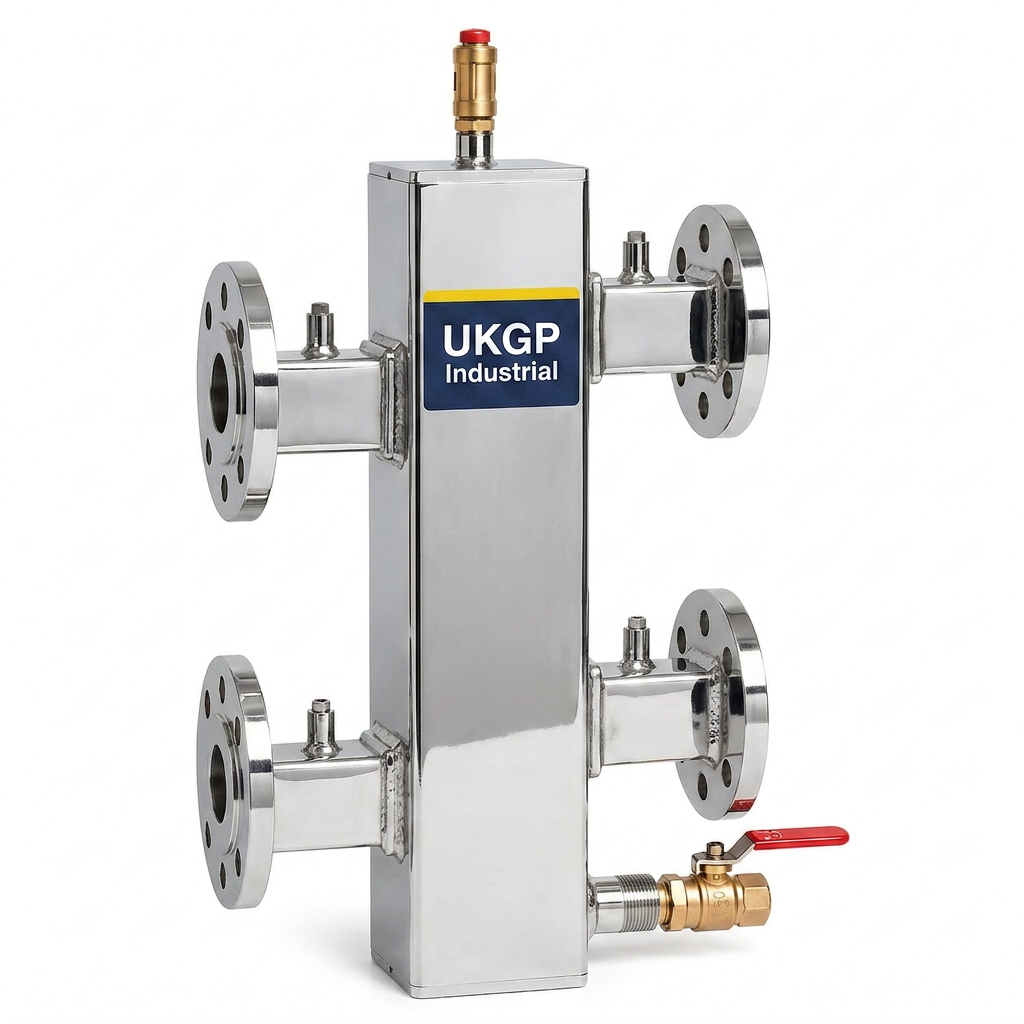
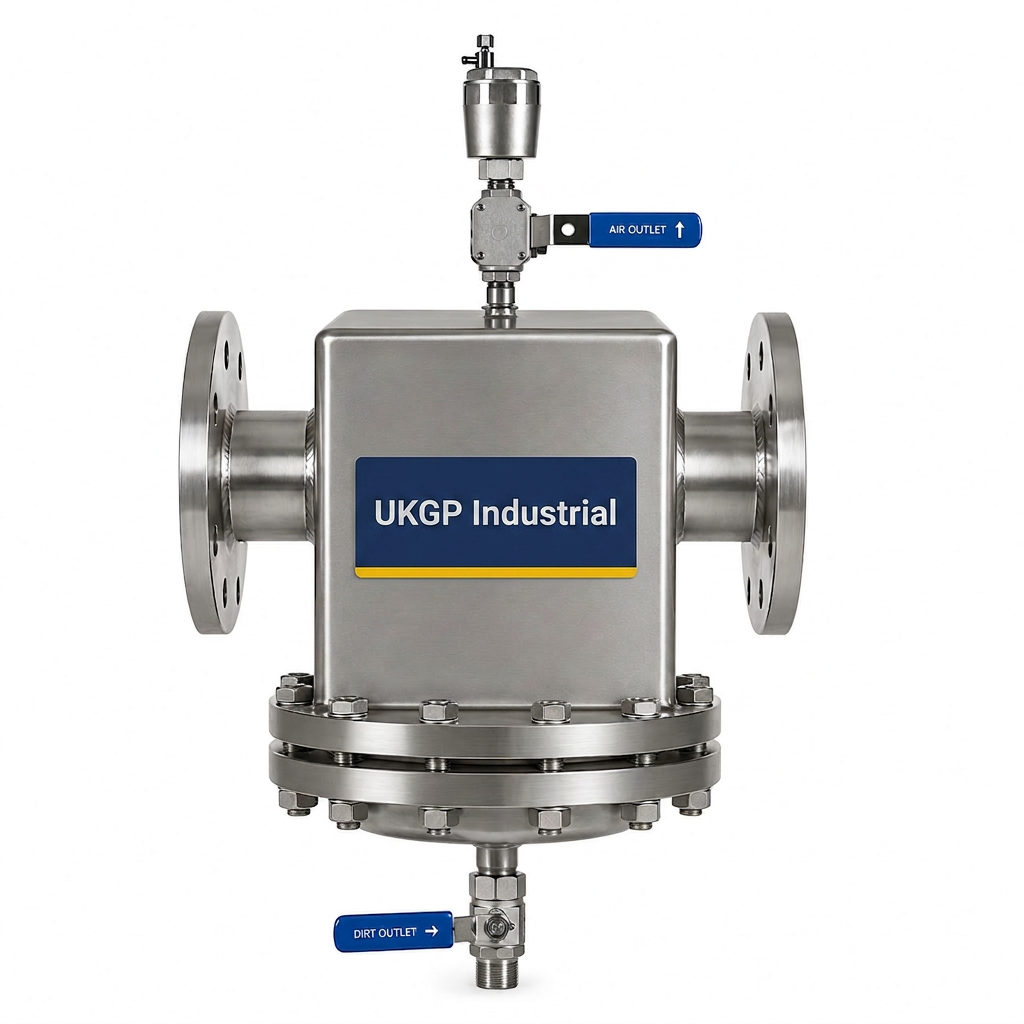
Combined air and dirt separators, such as those in the UKGP Industrial range, utilise a dual-action internal geometry. Typically, these units feature a stainless steel or copper internal pall-ring or wire-mesh structure designed to create a zone of 'quiet water.' As fluid enters the larger diameter vessel, the velocity drops significantly, allowing suspended solids to settle into the collection chamber at the base. Simultaneously, the internal media serves as a site for micro-bubbles to coalesce and rise to the automatic air release valve (AAV) at the top.
The primary advantage of the combined unit is its ability to treat the full flow of the system. By installing these on the main flow (for air removal) or the main return (for dirt removal), engineers ensure that 100% of the circulating water passes through the separation media. This is essential for the immediate capture of larger debris that could damage primary plant during the initial commissioning phases.
In the UK, many specifications now mandate that these separators are fitted with magnetic inserts. Magnetite particles are often too small to settle by gravity alone in high-velocity loops. By integrating powerful neodymium magnets within the separator body, even sub-micron ferrous particles are pulled from the flow and held in the dirt chamber until they are purged through the blowdown valve. While effective, this inline approach still has limits regarding the 'polishing' of the water, which is where side-stream filtration becomes essential.
- Horizontal or vertical installation options to suit pipework geometry.
- Low pressure drop (zeta value) to minimise parasitic pumping energy.
- Maintenance-friendly drain valves for rapid sludge removal.
- High-capacity deaeration chambers to facilitate the coalescence of micro-bubbles.
The Role of Side-Stream Filtration in System Longevity
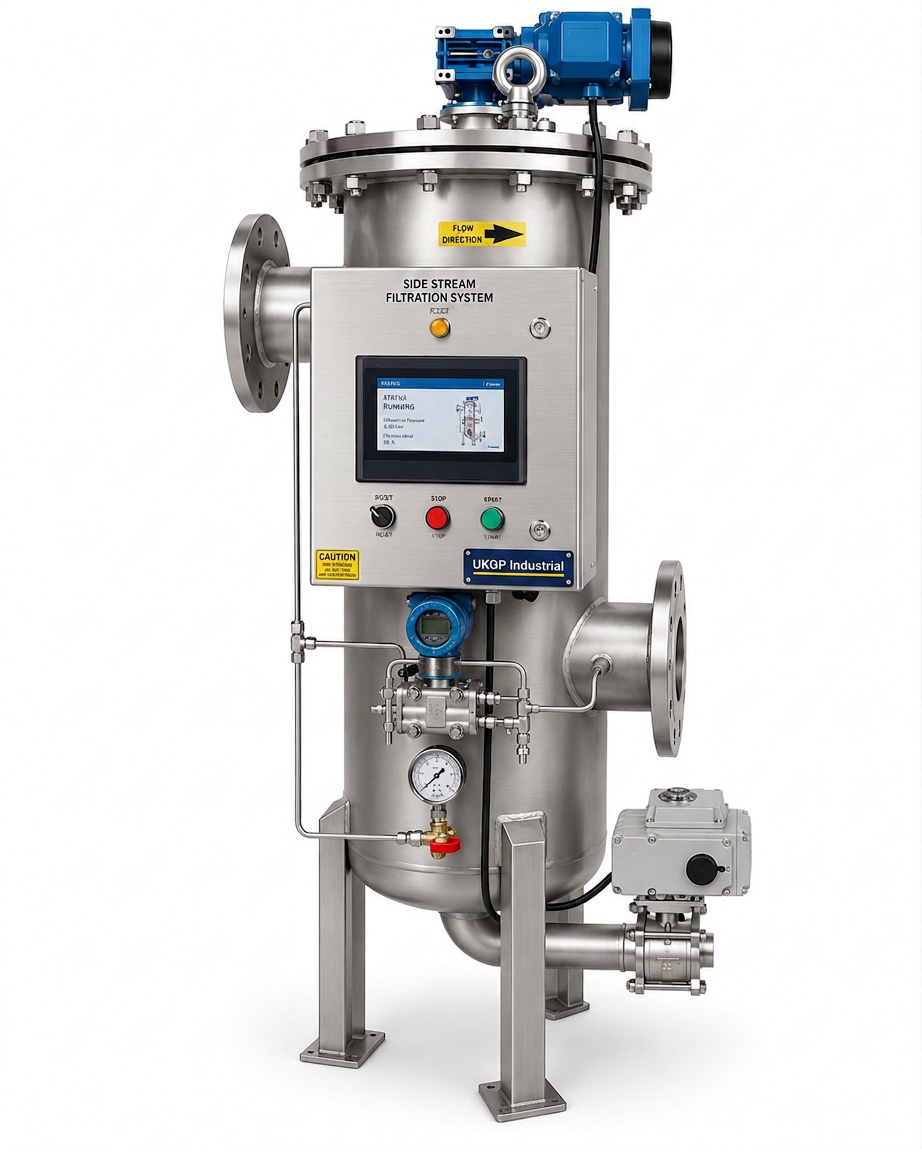
While inline separators handle the bulk of the debris, side-stream filtration (SSF) is designed for the continuous removal of fine suspended solids. BSRIA BG29/21 highlights that even after pre-commission cleaning and chemical flushing, modern systems continue to generate particulate matter during operation. A side-stream filter typically processes between 5% and 15% of the total circulating volume per hour, effectively 'polishing' the entire system volume several times per day.
The integration of SSF allows for much finer filtration than is possible with an inline unit. Inline separators are limited by the acceptable pressure drop across the main pipework; too fine a mesh would create an intolerable parasitic load on the primary pumps. Because an SSF unit operates on its own dedicated loop or a high-to-low pressure bypass, it can utilise cartridge filters or bag filters capable of capturing particles down to 1 micron.
Furthermore, SSF units provide a measurable indicator of system health. By monitoring the pressure differential across the filter media, facility managers can identify spikes in corrosion or debris movement. This proactive monitoring is a core requirement of BSRIA BG50, which shifts the focus from reactive chemical dosing to proactive water quality management. For a plant room to be considered 'low maintenance,' the combination of a bulk inline separator and a fine side-stream filter is the industry gold standard.
- Reduction of Total Suspended Solids (TSS) to levels below 10 microns.
- Continuous cleaning without requiring system shutdown.
- Easier monitoring of water quality through pressure differential gauges.
- Provision for bypass loops to allow for filter media changes.
Integrated System Design: Placement and Configuration
Strategic placement of these components is vital for maximum effectiveness. For air removal, the separator should be located at the point of lowest solubility—which in an LTHW system is the hottest point (the flow from the boiler) and the lowest pressure point (highest in the system). For dirt removal, the ideal location is the return pipework before the water enters the boiler or chiller, protecting the most expensive capital assets from debris.
The side-stream filtration unit is typically piped as a bypass across the primary return header. This allows the unit to utilise the pressure differential created by the primary pumps to drive flow through the filter media. In systems with low differential pressure, a dedicated booster pump within the SSF unit ensures a consistent flow rate, regardless of the main system's variable speed pump modulation.
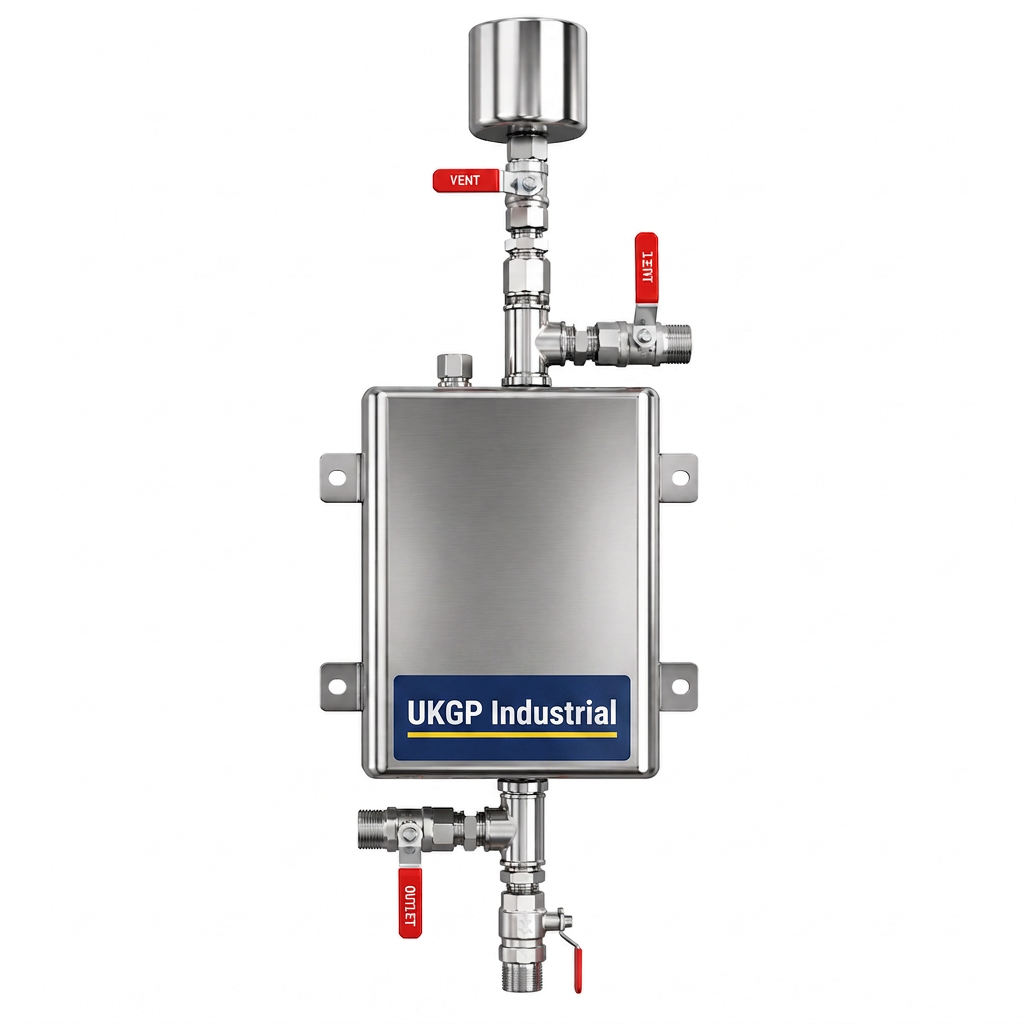
It is common practice in the UK to also include a chemical dosing pot in this arrangement. By placing the dosing pot in parallel with the side-stream filter, engineers can ensure that any corrosion inhibitors or biocides added to the system are thoroughly mixed into the 'clean' water being returned from the filter. This integrated approach ensures that the chemical treatment is effective and that the water remains within the conductivity and turbidity limits set by BSRIA standards.
- In-line separator: Primary flow, immediately downstream of boilers or upstream of chillers.
- Side-stream filter: Across the main headers or the primary pumping loop.
- Dosing pot: Upstream of the side-stream filter or on a secondary bypass.
BSRIA BG29/21 and BG50 Compliance Requirements
Compliance with BSRIA guidelines is often a warranty requirement for major boiler and chiller manufacturers. BG29/21 emphasizes the 'cleanliness' of the system at the point of handover. Using a high-capacity dirt separator during the flushing process significantly reduces the time required for chemical cleaning and ensures that debris is removed from the system rather than just being relocated to another part of the loop.
BG50 takes over once the system is operational, focusing on the long-term maintenance of water quality. It specifies that suspended solids must be kept to a minimum to prevent the erosion of pump impellers and the fouling of heat exchangers. The document specifically mentions the use of side-stream filtration as a primary method for maintaining water clarity in systems over 2,500 litres in volume.
Failure to adhere to these standards often results in increased energy consumption. Even a 0.5mm layer of magnetite on a heat exchanger surface can reduce thermal efficiency by up to 10%. By combining inline separation with side-stream polishing, engineers provide a robust solution that satisfies the stringent monitoring and maintenance requirements of BS 8552, ensuring the system remains efficient for its designed lifespan of 20-25 years.
- BG29/21: Pre-commission cleaning of pipework systems.
- BG50: Water treatment for closed heating and cooling systems.
- BS 8552: Sampling and monitoring of water levels.
Total Cost of Ownership and Efficiency Gains
When calculating the Total Cost of Ownership (TCO) for a commercial HVAC system, the initial capital expenditure for air and dirt separators and side-stream filtration is often recouped within the first two to three years of operation. The primary saving comes from energy efficiency; air-free water has a higher specific heat capacity and moves more efficiently through the system, while the removal of sludge prevents the 'clogging' that forces pumps to run at higher speeds to maintain flow.
Maintenance savings are also substantial. Without fine filtration, control valves often require frequent recalibration or replacement due to 'sticking' caused by fine particulates. In large-scale developments, such as hospitals or data centres, the cost of a system shutdown to replace a failing primary valve far outweighs the cost of installing a UKGP Industrial side-stream filtration unit at the construction phase.
Furthermore, the reduced reliance on aggressive chemical flushing is a significant environmental and financial benefit. High levels of suspended solids often lead FM teams to 'dump and refill' system water—a process that is not only wasteful but also introduces fresh oxygen into the system, restarting the corrosion cycle. Effective filtration maintains water quality indefinitely, reducing the volume of chemicals required and the associated disposal costs.
- Lower energy consumption through reduced pump head and improved heat transfer.
- Reduced frequency of plant failure and 'call-outs.'
- Extended lifespan of control valves and primary heat sources.
- Lower chemical treatment costs through more effective sediment removal.
Commissioning and Periodic Maintenance Protocols
The effectiveness of any separation and filtration strategy depends on a rigourous maintenance schedule. During the initial commissioning phase, the inline dirt separator should be 'blown down' at least once per week. This involves opening the drain valve at the base of the unit for 5-10 seconds while the system is under pressure, allowing the collected sludge to be ejected into a suitable container or drain.
Side-stream filters require monitoring of their pressure gauges. A clean filter will show a specific pressure drop (e.g., 0.2 bar). As the media becomes blinded with fine particulates, this pressure drop will increase. Once the differential reaches the manufacturer’s limit (typically 0.8 to 1.0 bar), the filter media must be replaced or cleaned. In systems with high levels of initial contamination, these changes may be frequent in the first few weeks but should settle down to a quarterly or bi-annual requirement.
Finally, it is essential to ensure that the deaeration function is working correctly. AAVs on top of separators should be checked for signs of weeping or blockage from minerals. If the system is consistently 'noisy' or pumps are cavitating, it is an indicator that either the separator is poorly positioned or the air removal capacity is being overwhelmed by air ingress elsewhere in the system. Accurate record-keeping of these maintenance tasks is a requirement for BG50 compliance.
- Weekly blowdown of inline separators during the first month.
- Monthly pressure differential checks on side-stream filters.
- Annual chemical analysis of system water to check inhibitor levels.
- Inspection of air release valves for leaks or scaling.
Engineering Specifications for Future-Proof Systems
When drafting M&E specifications, it is no longer sufficient to merely specify a 'strainer.' Standard Y-strainers have a very low surface area and a high pressure drop; they are prone to blocking and are often removed by maintenance teams to 'restore flow,' leaving the system unprotected. Specifications should instead call for 'Dynamic Air and Dirt Separators' with internal coalescence media and 'Side-Stream Filtration Units' capable of 5-10 micron removal.
Materials of construction should be carefully considered. For CHW systems, carbon steel vessels must be properly insulated to prevent external condensation and corrosion. In high-pressure industrial applications, stainless steel vessels offer superior longevity and resistance to chemical additives. All units must be rated for the maximum operating pressure and temperature of the system, typically PN16 for most UK commercial applications.
In conclusion, the pairing of inline air and dirt separators with side-stream filtration is the most effective way to ensure a closed-loop system operates at peak efficiency. This dual-layered approach addresses both the immediate bulk debris and the long-term accumulation of fine particulates, satisfying both BSRIA guidance and the practical requirements of modern, high-efficiency building services. By investing in high-quality separation technology, consultants and contractors can ensure an easier commissioning process and a more reliable system for the end-user.
- Specify units with PN16 or PN25 ratings as required.
- Ensure clearance above the separator for AAV maintenance.
- Include isolation valves and a bypass for the side-stream filter.
- Use 'Y-strainers' only as temporary construction-phase protection.
Frequently asked questions
Can I rely solely on an inline air and dirt separator for a large LTHW system?
- While an inline separator captures larger debris on every pass, it cannot remove the fine suspended solids (sub-10 micron) that cause long-term erosion and control valve fouling. Side-stream filtration provides the 'polishing' effect required to meet BSRIA BG50 standards.
What is the recommended flow rate for side-stream filtration in UK commercial systems?
- BSRIA BG29/21 recommends a flow rate of 5% to 15% of the total system volume per hour for side-stream filtration. This ensure the entire system volume is 'polished' multiple times a day without impacting primary pump head requirements.
Where should the air and dirt separator be positioned relative to the side-stream filter?
- Ideally, the separator is placed on the flow where temperatures are highest (limiting gas solubility), while the side-stream filter is often placed across the primary headers or on the return to capture debris before it reaches the heat source.
What are the maintenance indicators for a combined filtration strategy?
- High pressure drops (typically >0.8 bar) across the filter media or a significant temperature differential across the separator's dirt chamber indicate it is time to flush or replace cartridges. Manual blowdown of separators should occur weekly during commissioning and monthly thereafter.