The Physics of Air and Sludge Entrainment
To size a separator correctly, one must first understand the behavior of gases and solids in a hydronic circuit. Air exists in three forms: trapped pockets at high points, dissolved gases (Henry’s Law), and microbubbles. As water temperature rises or pressure drops, dissolved air is liberated as microbubbles. If these are not removed, they coalesce into pockets or contribute to oxidative corrosion. Phosphorus and oxygen react with steel pipework to produce magnetite, a heavy, black, magnetic sludge that settles in low-flow areas like heat emitters and heat exchangers.
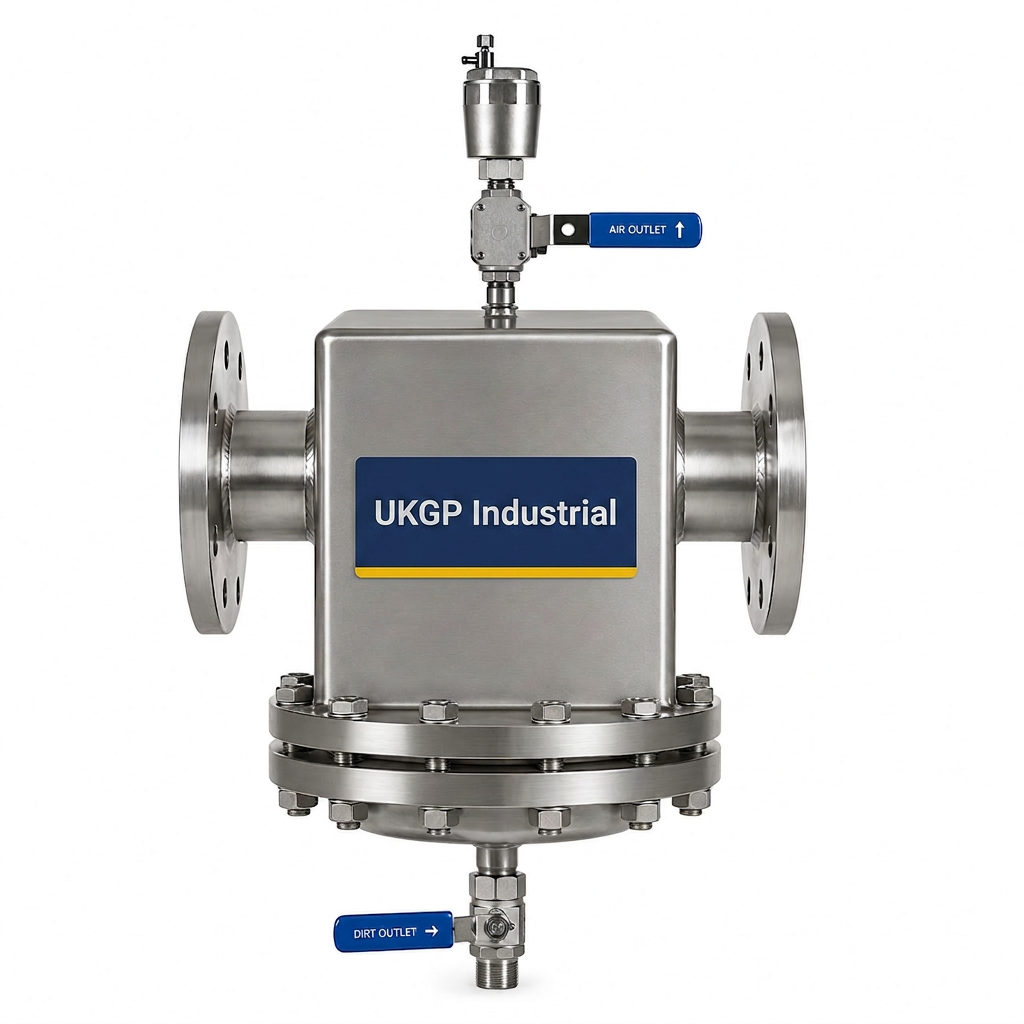
Combined separators utilise a dual-action mechanism. For air removal, they typically employ a pall-ring or wire-mesh medium that creates a 'dead zone' where turbulence is minimised, allowing microbubbles to rise and exit via an automatic air vent. For dirt removal, the reduction in velocity allows particles heavier than water to settle into a collection chamber at the bottom of the unit. Efficiency is governed by Stokes' Law; the slower the velocity within the unit, the more effectively particles of a specific micron size will precipitate.
BSRIA BG29/21 (Pre-commission Cleaning of Pipework Systems) and BG50 (Water Treatment for Closed Heating and Cooling Systems) emphasise that mechanical filtration and deaeration are not optional. High-efficiency boilers and modern heat pumps with narrow-channel heat exchangers have lower tolerances for debris than legacy cast-iron plant. Sizing a separator based merely on the nominal pipe size (e.g., matching a 100mm pipe with a 100mm separator) without calculating actual flow rates is a common error that leads to system degradation.
- Microbubble entrainment causing 'milky' water.
- Oxidation leading to magnetite (Fe3O4) formation.
- Reduced thermal conductivity in heat exchangers.
- Erosive wear on pump impellers and control valve seats.
Primary Sizing Criteria: Flow Velocity vs. Pipe Size
The most frequent mistake in HVAC design is sizing a separator to match the line size. While a 50mm pipe might be able to carry a specific flow, the velocity through that pipe may exceed the optimal threshold for effective deaeration and dirt separation. For peak efficiency, the velocity of the fluid entering a combined separator should ideally be between 1.0 m/s and 1.5 m/s. If the velocity exceeds 3.0 m/s, the internal medium may become a source of turbulence rather than a separation aid, potentially shearing bubbles and re-entraining them into the flow.
To calculate the required size, engineers must use the formula: Q = A × v, where Q is the flow rate (m³/s), A is the cross-sectional area (m²), and v is the velocity (m/s). For example, a system with a flow rate of 25 m³/h in a 100mm pipe results in a velocity of approximately 0.88 m/s. This is well within the window for high-performance separation. However, if the design calls for a high-velocity 'constant volume' pump strategy, a larger separator with transitioned pipework may be required to slow the fluid sufficiently.
When selecting a unit, refer to the manufacturer’s pressure drop charts. BSRIA guidelines suggest that the pressure drop across a clean separator should not significantly impact the pump head—typically staying below 5-10 kPa at design flow. If the calculated Δp is too high, the engineer should upsize the separator (e.g., using a 150mm unit on a 125mm line) using eccentric reducers to avoid air pockets at the top of the pipe.
- Maximum design flow rate (m³/h or l/s).
- Required velocity at the separator throat (typically <1.5 m/s).
- Allowable pressure drop (Δp) across the unit.
- Maximum operating pressure and temperature.
Placement Strategies for Peak Deaeration Efficiency
The solubility of air in water is inversely proportional to temperature and proportional to pressure (Henry’s Law). Therefore, air is most easily removed where the water is at its hottest and the pressure is at its lowest. In an LTHW (Low Temperature Hot Water) system, this point is on the flow pipe, immediately after the boiler or heat exchanger, but before the pump. In this position, the heat has liberated the maximum amount of microbubbles, and the separator can capture them before they reach the rest of the circuit.
In chilled water (CHW) systems, the temperature is relatively uniform, so pressure becomes the dominant factor. The separator should be placed on the return header, where the water is at its warmest and usually at the lowest pressure point in the circuit (before it enters the chiller or the pump suction). This ensures that any air released during the heat-gain phase of the circuit is captured. For systems with significant static heights, like multi-storey commercial buildings, separators must be located on the main plant floor rather than at the highest point, as the static pressure at the top can keep air in a dissolved state.
For dirt separation, placement is less sensitive to temperature but highly sensitive to flow patterns. By placing the combined unit on the return to the plant room, we protect the primary heat source (boilers/chillers) from debris returning from the secondary circuits. This is particularly vital when retrofitting new plant into old pipework, where 'black water' and sludge are more prevalent. Protecting the most expensive components in the plant room must be the engineer's priority.
- LTHW: Highest temperature (Flow side).
- CHW: Lowest pressure (Return side).
- Pump protection: Suction side vs. Discharge side.
Steel vs. Brass: Material Selection for Commercial Loads
The material of the separator body is largely determined by the pipe size and system volume. For domestic and light commercial applications (up to 50mm/2"), forged brass bodies are standard. They provide excellent corrosion resistance and are easy to install via threaded connections. However, for industrial plant rooms and larger commercial developments, flanged steel separators are the industry standard. These units are typically fabricated from carbon steel and should be coated internally or treated to prevent the unit itself from becoming a source of rust.
Steel separators for larger mains (DN50 to DN600 and beyond) often feature internal coalescence media made of stainless steel or high-durability synthetics. In high-rise applications, the shell must be rated for the appropriate PN (Pressure Nominal) rating—usually PN10 or PN16, though PN25 is required for specific district heating interfaces. It is essential to ensure that the separator flanges match the rest of the system (e.g., BS EN 1092-1) to avoid installation delays.
Weight is also a factor in sizing and selection. A DN200 (8") steel combined air and dirt separator can weigh in excess of 150kg when filled with water. Engineers must ensure the plant room floor or pipe support system is designed to handle this point load. Selecting a unit with an integrated 'skirt' or support feet can alleviate stress on the pipework, which is a common oversight in fast-track M&E installations.
Integrating Magnetite Filtration with Microbubble Separation
While standard separators rely on gravity and velocity reduction, magnetite (Fe3O4) is often so fine that it remains in suspension even at low velocities. Modern combined separators are frequently equipped with magnetic inserts—often high-power Neodymium magnets—positioned within the flow path or in a dry sleeve. These magnets 'pull' the ferritic sludge out of the flow more effectively than gravity alone. BSRIA BG50 notes that magnetic filtration is one of the most effective ways to prevent 'sludge-up' in modern modulating pumps.
When sizing a magnetic unit, the 'cleaning' mechanism must be considered. Some units require the system to be bypassed for cleaning, while others allow for 'dry' cleaning where the magnets are removed from a sleeve, allowing the sludge to fall into the collection chamber for blow-down without interrupting flow. Manual blow-down valves should be piped to a safe tun-dish or drain. In sealed systems, the volume of water lost during blow-down must be accounted for by the pressurisation unit's make-up capacity.
The micron rating of a separator is a point of confusion. Most high-quality combined separators can remove particles down to 5 microns over multiple passes. This is critical because particles as small as 5-10 microns are responsible for the abrasive wear seen in high-efficiency circulator bearings. When specifying for a project, ensure the separator is rated for 'multiple-pass' filtration to reach these levels, as no single-pass mechanical separator can achieve 5-micron filtration at full system flow.
- Ferritic vs. Non-ferritic particles.
- The 5-micron threshold for modern boiler protection.
- Blow-down frequency and maintenance access.
Special Considerations for Distributed Systems
In large-scale district heating or cooling networks, a single central separator may not be sufficient. As the network expands, the 'travel time' for a microbubble or particle to return to the plant room increases, raising the risk of it settling or causing damage in a terminal branch. In these scenarios, 'distributed' separation is recommended. A large central unit handles the main plant, while smaller 'satellite' separators are installed on major branch returns. This prevents debris from one zone from contaminating the entire network.
Variable Primary Flow (VPF) systems pose a unique sizing challenge. Because the flow rate fluctuates based on demand, the separator must be sized for the maximum design flow. However, if the flow drops significantly during low-load periods, the 'scrubbing' effect of the internal media may actually become more efficient. The risk in VPF systems is undersizing for the peak; if the peak flow exceeds the manufacturer's recommended limit, the air separation function ceases to work effectively just when the boilers/chillers are working hardest and air liberation is at its highest.
For data centre cooling circuits, where uptime is the only metric of success, duplex or redundant separator arrangements are sometimes employed. Although a separator is a 'passive' device with few moving parts, the ability to isolate and clean one unit while the system remains live is a critical design feature for Tier III and IV facilities. In these cases, the pressure drop across the valves and manifolds must be added to the separator's Δp for the total pump head calculation.
- High-rise district heating.
- Variable Primary Flow (VPF) systems.
- Large-scale cooling for data centres.
Installation and Maintenance Requirements
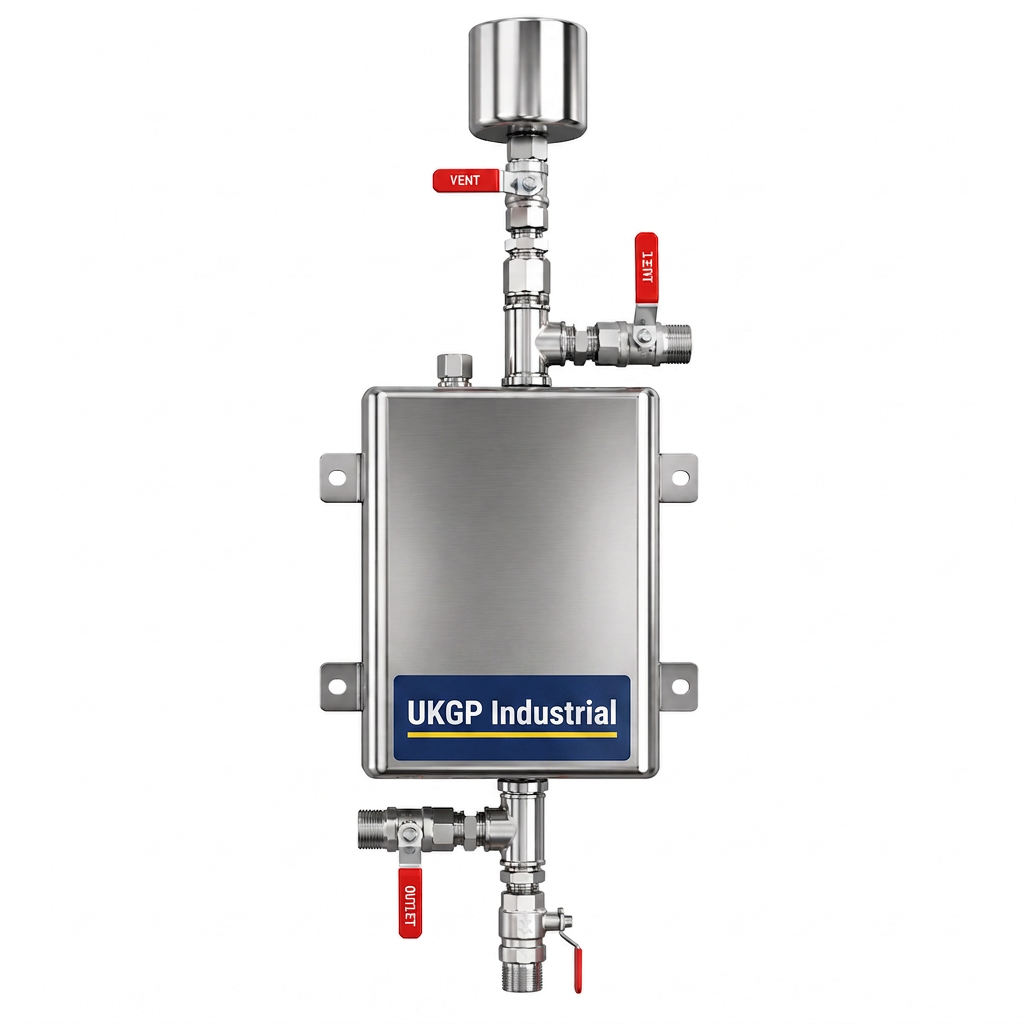
Correct installation is as vital as sizing. A separator must be installed vertically (for most models) to allow the automatic air vent (AAV) to function and the dirt to settle into the sump. The AAV should be fitted with a check valve or isolation valve to allow for maintenance without draining the system, and it should be piped to a safe location if the system contains glycol. BSRIA BG29/21 highlights that during the initial weeks of a new system's operation, the dirt separator will collect the most debris as the system 'cleans up' its internal surfaces.
Maintenance schedules should be dictated by the water quality monitoring results required by BG50. Initially, the separator should be blown down weekly. Once the system has stabilised, this may be moved to a monthly or quarterly schedule. If the system is treated with chemicals (inhibitors or biocides), the blow-down should be timed to avoid wasting high concentrations of freshly dosed chemicals. Sizing the drain-off pipework correctly ensures that the velocity of the blow-down is sufficient to clear the sump.
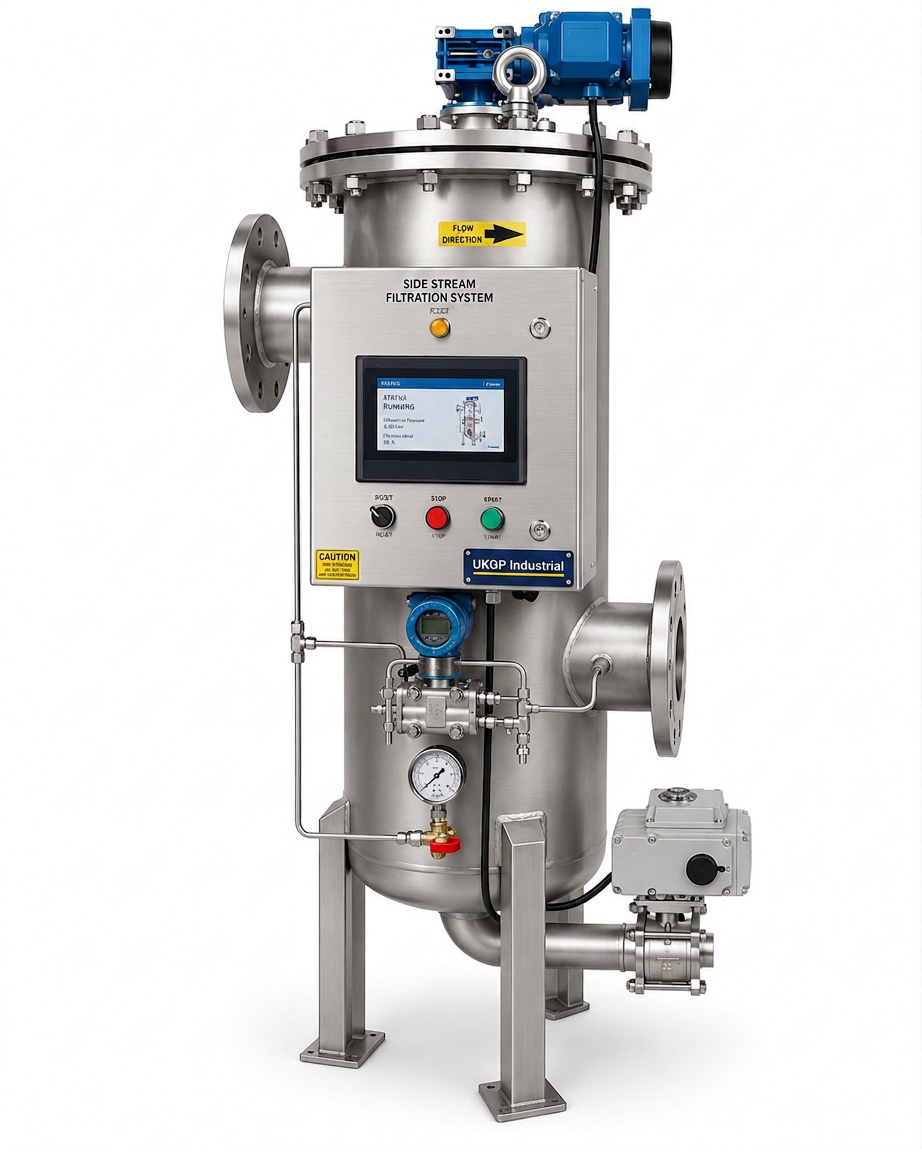
If the system has high levels of contamination—common in refurbishment projects—the dirt separator should be used in conjunction with a side-stream filtration unit. While the main separator removes the bulk of the debris, the side-stream unit can provide finer filtration (down to 1 micron) and can be serviced without affecting the main system flow. This 'belt and braces' approach is the gold standard for protecting multi-million-pound plant investments in London's commercial refurb market.
- Clearing air from the automatic vent.
- Draining the sludge chamber.
- Checking magnetic sleeves.
Summary Checklist for Plant-Room Consultants
When finalising a specification for a combined air and dirt separator, the consultant must provide the contractor with the specific flow rate (m³/h) and the maximum allowable pressure drop. Simply stating 'provide 100mm separator' is insufficient and shifts the risk onto the installer. The specification should also explicitly state the required PN rating and whether a magnetic core is required—which, given the prevalence of ECM pumps, should be standard practice.
In conclusion, the sizing of separators is a balance between hydraulic efficiency and separation performance. By following the velocity guidelines of 1.0–1.5 m/s and placing the units at the thermal and pressure 'sweet spots' of the circuit, engineers can ensure their systems remain clean, efficient, and compliant with BSRIA standards. This proactive approach to water quality is the most cost-effective way to reduce future call-outs and component failures.
Ultimately, a well-sized separator is the foundation of a robust water treatment strategy. It complements chemical dosing and pre-commission cleaning, ensuring that the 'as-installed' efficiency of a building's HVAC system is maintained throughout its operational life. For technical support on specific flow calculations or high-pressure applications, consulting manufacturer data sheets for UKGP Industrial products is recommended to ensure compliance with UK building codes.
- Match the separator to the actual flow rate, not the pipe size.
- Place for deaeration where 'T' is high and 'P' is low.
- Ensure the pressure drop is accounted for in the pump head calc.
- Always include magnetic separation for modern LTHW plant.
Frequently asked questions
What are the standard temperature and pressure limits for these units?
- Standard microbubble deaerators and dirt separators are typically rated for 110°C and 10 bar, though high-pressure variants exist for high-rise or district heating applications. Always check the PN rating against the system safety valve setting.
Can a combined separator replace a side-stream filtration unit?
- While a separator removes circulating debris, it cannot process the entire system volume as quickly as side-stream filtration. For systems over 2,500 litres or those with high risk of corrosion, BSRIA BG50 recommends combining a main-flow separator with side-stream filtration.
Can I use a combined air and dirt separator as a hydraulic balancer?
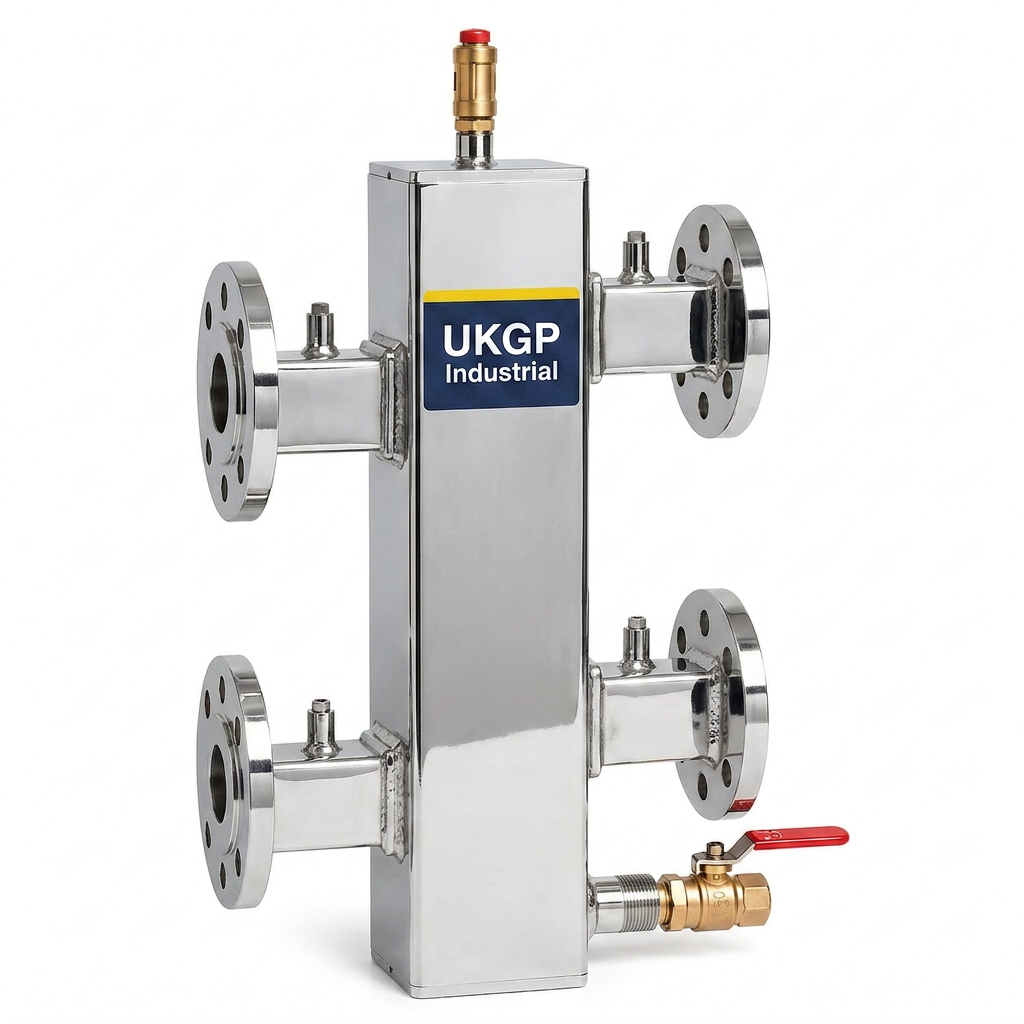
- No. Combined separators are designed for low-velocity 'polishing'. Using them for hydraulic separation (primary-secondary circuit decoupling) requires a dedicated Low Loss Header with internal separation features.
Why is the flow pipe preferred over the return for air separation?
- In LTHW systems, the highest temperature occurs at the flow from the boiler/heat pump. Since gas solubility decreases as temperature rises, this is the most efficient point for air removal. High-heat points liberate the most microbubbles.
What happens if I undersize the separator?
- Pressure drop increases with the square of the flow rate. If you double the flow through a separator, the pressure drop increases fourfold. This can lead to pump cavitation or failure to meet the design flow at terminal units.