The Physics of Air and Dirt Entrainment
The presence of air in a hydronic system is not merely a nuisance involving 'noisy pipes'; it is a fundamental driver of hydraulic inefficiency and component failure. Air exists in three states within a closed loop: free air (trapped at high points), entrained air (bubbles carried by the flow), and dissolved air (invisible gases held within the molecular structure of the water). While automatic air vents (AAVs) manage free air, they are ineffective against microbubbles and dissolved gases. A high-efficiency deaerator is required to address these smaller, more insidious pockets of gas.
When oxygen remains in the system water, it facilitates the oxidation of ferrous components, leading to the formation of magnetite (Fe3O4), commonly known as black sludge. This particulate matter is abrasive and highly detrimental to the longevity of modern, high-efficiency circulators with permanent magnet rotors. Furthermore, the accumulation of dirt on heat exchange surfaces acts as an insulator, significantly reducing the thermal efficiency of the plant. A combined separator addresses both issues by creating a 'calm zone' where both gases and solids can be extracted.
Henry's Law provides the physical basis for deaeration. By reducing the velocity of the fluid and forcing it over a large surface area (internal coalescing media), the separator allows microbubbles to merge and rise out of the flow. Simultaneously, the reduction in velocity allows particles with a higher density than water to settle at the bottom of the chamber. Understanding this dual-action process is essential for correct sizing and placement within the plant room.
- Henry's Law states that the amount of dissolved gas in a liquid is proportional to its partial pressure.
- Increasing temperature reduces the solubility of gases, making the flow pipe of an LTHW system the ideal location for deaeration.
- Decreasing pressure also reduces solubility, which is why air often releases at the highest points of a building.
Design Criteria and Specification Standards
When specifying an air and dirt separator, the primary consideration for the building services engineer is the flow rate. Sizing a separator based solely on the pipe diameter is a common error that can lead to system performance issues. If the velocity through the unit is too high, the internal 'calm zone' is compromised, and the efficiency of both air bubble coalescence and dirt sedimentation drops significantly. Most industrial-grade separators are designed for a maximum velocity of 1.5 m/s at the flange connection; exceeding this will result in poor separation and high pressure drops.
Material compatibility is another critical factor. For commercial LTHW systems, carbon steel or stainless steel housings are standard. In chilled water systems, the risk of external corrosion due to condensation means that high-quality insulation jackets are mandatory, and stainless steel bodies may be preferred to prevent 'sweating' damage. The internal components, often referred to as 'coalescing' or 'PALL' rings, must be robust enough to withstand the local water chemistry and potential high temperatures without degrading or causing blockages.
Compliance with the Pressure Equipment Directive (PED) 2014/68/EU (or the UK equivalent, PER) is non-negotiable for large-scale plant room equipment. Engineers must verify that the selected unit is CE/UKCA marked and rated for the specific pressure and temperature regime of the project. For systems operating above 10 bar or 110°C, special bespoke units may be required. Always consult the manufacturer's pressure-temperature curves before finalising a schedule.
- System pressure: Ensure the unit rating exceeds the safety valve setting.
- Maximum flow rate: Selection should be based on velocity, typically not exceeding 1.5 m/s at the inlet.
- Temperature limits: Standard units are often rated to 110°C, suitable for most LTHW applications.
- Internal media: Look for stainless steel or high-spec polymers that offer low pressure drop and high surface area.
Sizing for Optimal Efficiency
The efficiency of a combined separator is intrinsically linked to the residence time of the water within the vessel. As flow enters the larger diameter of the separator body, its velocity drops. This reduction in kinetic energy allows gravity to pull denser dirt particles toward the collection chamber at the bottom, while the internal media creates a 'scrubbing' effect on the microbubbles. A common design target is to reduce the velocity within the vessel to approximately 0.5 m/s, even if the pipework velocity is higher.
Pressure drop (Δp) must be factored into the pump head calculations. A clean air and dirt separator should ideally have a pressure drop of less than 10 kPa. If the calculated Δp is higher, it suggests the unit is undersized for the peak flow rate. It is often more cost-effective to size up by one pipe dimension to ensure lower operational costs over the life of the system, rather than forcing high-velocity flow through a smaller, cheaper unit.
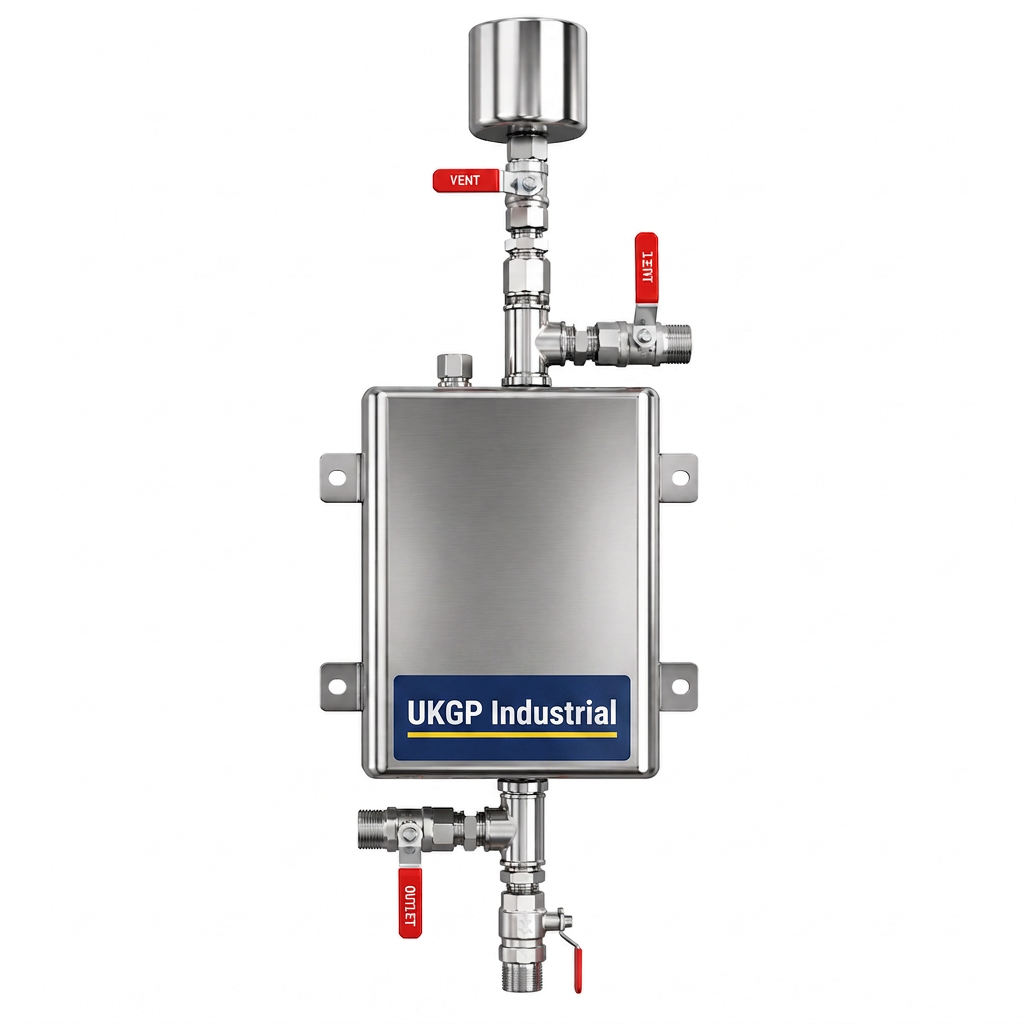
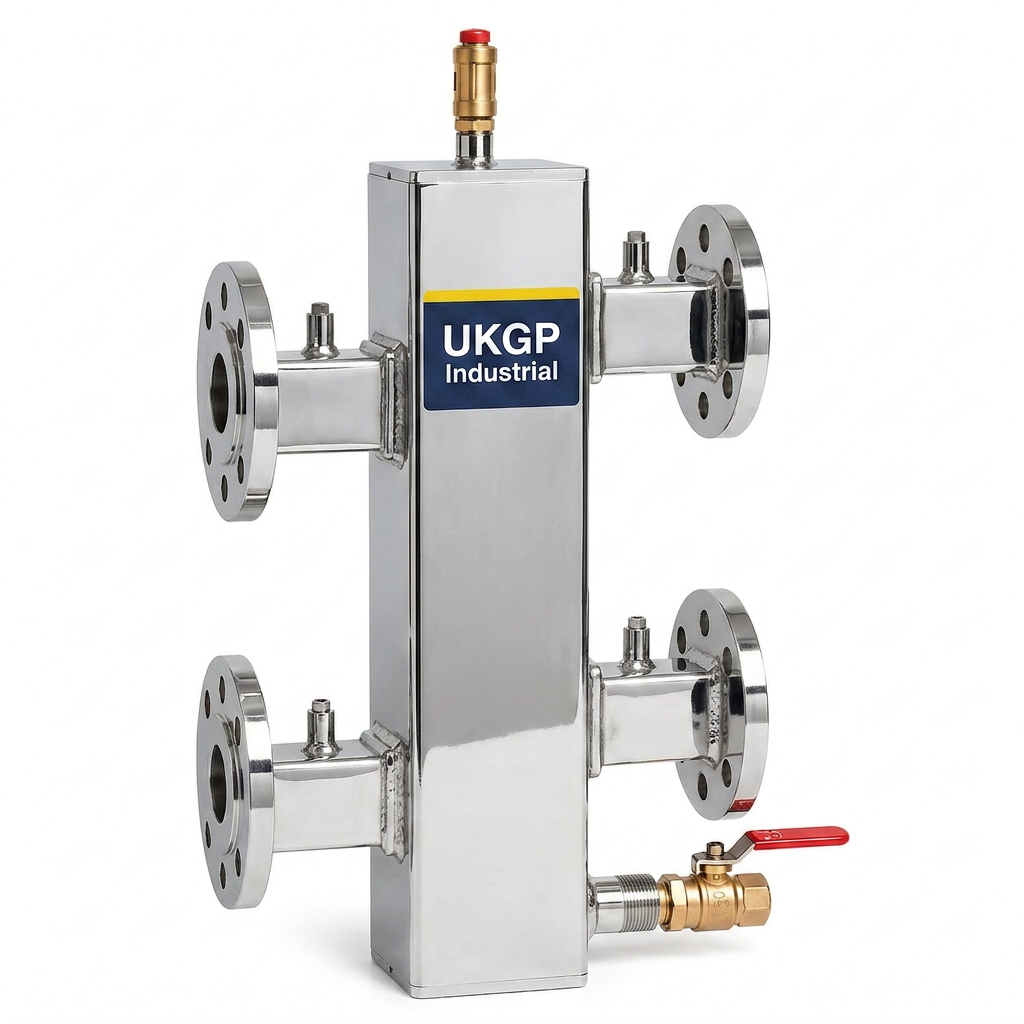
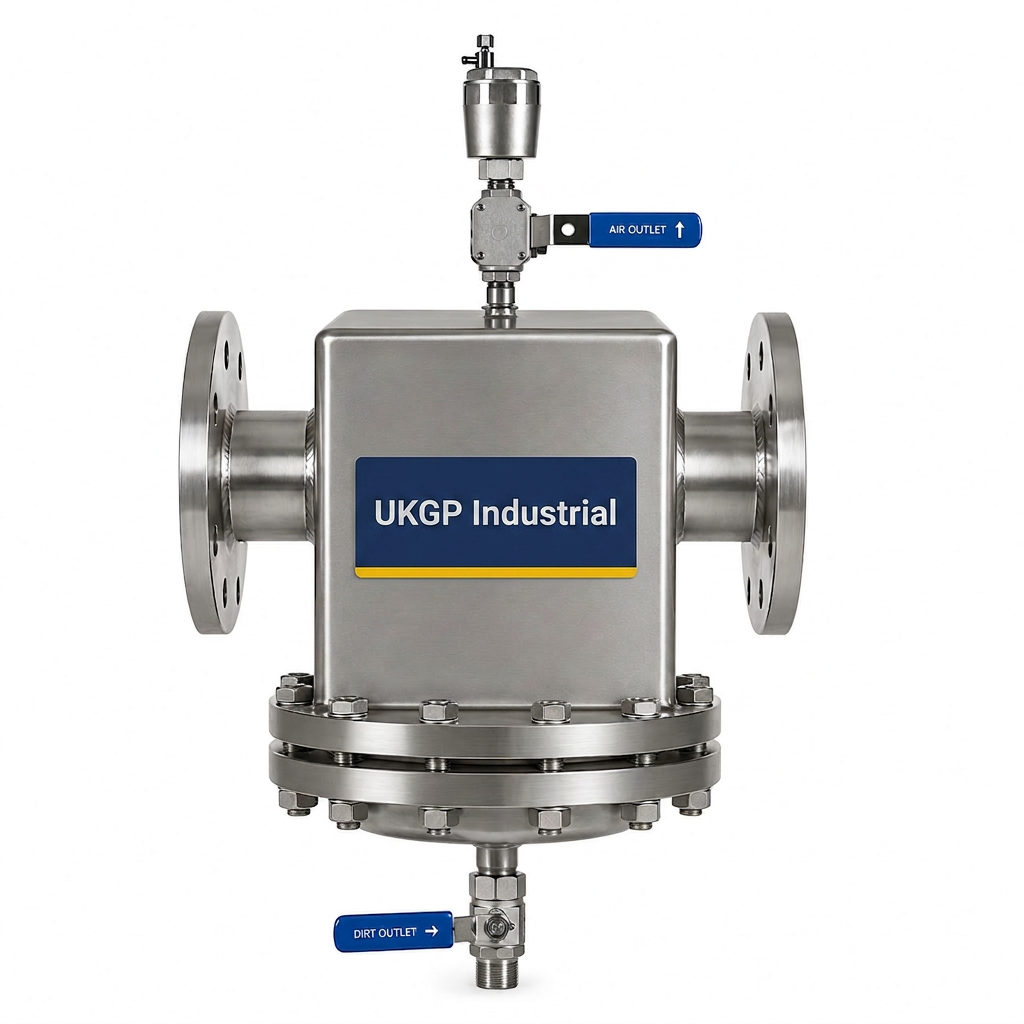
UKGP Industrial provide range of air and dirt separators designed to meet these stringent requirements. When selecting a unit, engineers should ensure the dirt collection chamber is of sufficient volume to prevent frequent clogging between maintenance intervals. High-capacity sumps are particularly important during the 'clean-up' phase of a new installation or following a major system refurbishment, where the loading of construction debris and scale is at its peak.
- Inlet/Outlet bore size (typically DN50 to DN600+).
- Total water volume of the system.
- Pump head and available NPSH.
- Physical footprint and clearance needed for flushing.
Compliance with BSRIA BG29/21 and BG50
BSRIA BG29/21, 'Pre-commissioning Cleaning of Pipework Systems', emphasizes the importance of removing debris before a system is brought into full operation. While chemical flushing is a major part of this process, the presence of a permanent, high-efficiency air and dirt separator ensures that any remaining or newly precipitated solids are captured continuously. Reliance on temporary 'strainers' is often insufficient for protecting modern control valves and heat exchangers with narrow waterways.
The ongoing management of water quality is covered by BSRIA BG50. This guide focuses on preventing corrosion, scale, and bio-fouling in closed-circuit systems. Atmospheric oxygen is the primary agent of corrosion; by installing an effective deaerator, the engineer significantly reduces the partial pressure of oxygen within the loop. This, in turn, reduces the consumption of chemical corrosion inhibitors, leading to lower maintenance costs and a more environmentally friendly system.
Regular monitoring is a key theme of BG50. A combined separator with a transparent blow-down sight glass (where applicable) or a systematic flushing regime allows facilities managers to visually inspect the quantity and type of debris being removed. Monitoring the rate of accumulation can provide early warning of an internal corrosion issue that may require secondary intervention, such as chemical dosing or side-stream filtration.
- BSRIA BG29/21 mandates the removal of suspended solids to protect sensitive equipment.
- Filtration and separation are essential for achieving the required 'PPM' levels of iron and copper.
- Continuous deaeration helps maintain the protective magnetite layer on steel pipework.
The Role of Magnetism in Dirt Separation
In LTHW systems containing ferrous components—such as carbon steel pipes or cast iron radiators—the formation of magnetite is inevitable. These particles are often smaller than 5 microns, making them difficult to capture using standard gravitational separation alone. The integration of a powerful neodymium magnet within the dirt separator significantly enhances its capture rate. As the flow passes through the 'calm zone', the magnetic field pulls even the smallest ferrous particles out of suspension and holds them against the magnet sleeve.
For industrial applications, the magnetic insert must be designed for ease of maintenance. The most effective designs feature a dry-pocket magnet that can be withdrawn from the unit. When the magnet is removed, the captured debris falls into the collection sump, allowing it to be flushed out via the blow-down valve without needing to isolate or depressurise the entire system. This is a critical feature for plant rooms that cannot afford downtime.
Without magnetic separation, magnetite can accumulate in areas of low flow or, more dangerously, within the magnetic fields of modern ECM (electronically commutated motor) pumps. This can lead to the 'locking' of the rotor or damage to the pump bearings. Therefore, for any system with carbon steel pipework, a magnetic version of the air and dirt separator should be considered the minimum specification standard.
- Magnetite is the leading cause of premature circulator failure.
- Standard separators may miss very fine ferrous particles.
- Magnetic rods should be removable for cleaning without draining the system.
Installation Best Practices for Plant Rooms
The positioning of the air and dirt separator is critical to its performance. For air removal, the physics dictate that the unit should be placed at the point of highest temperature and lowest pressure. In an LTHW system, this is typically the primary flow pipe, immediately after the boiler or heat exchanger. However, for dirt removal, the ideal location is often on the return pipe to protect the boiler and pumps from system-bound debris. In practice, a combined unit is most often installed on the flow pipe, as the benefits of air removal (preventing corrosion at the source) usually outweigh the return-side benefits.
Engineers must ensure that the 'point of no pressure change'—the connection point for the expansion vessel—is correctly coordinated with the separator and the pump. The separator should ideally be located between the boiler and the pump, but after the expansion vessel connection, to ensure that the static pressure at the unit's air vent is stable. Incorrect placement can lead to the AAV either drawing air into the system (due to negative pressure) or failing to release it.
Accessibility for maintenance is frequently overlooked. A dirt separator that cannot be safely flushed will eventually become a source of system contamination. There must be adequate height below the blow-down valve to accommodate a bucket or, ideally, a permanent tundish and drain pipe. Furthermore, if the unit features a removable magnetic rod or internal mesh for cleaning, there must be sufficient overhead or lateral clearance to extract these components without dismantling the main pipework.
- Install on the suction side of the pump to protect the impeller.
- The flow pipe is preferred for air removal due to higher temperatures.
- Ensure sufficient clearance below the unit for blow-down valve operation.
Integration with Other Water Treatment Components
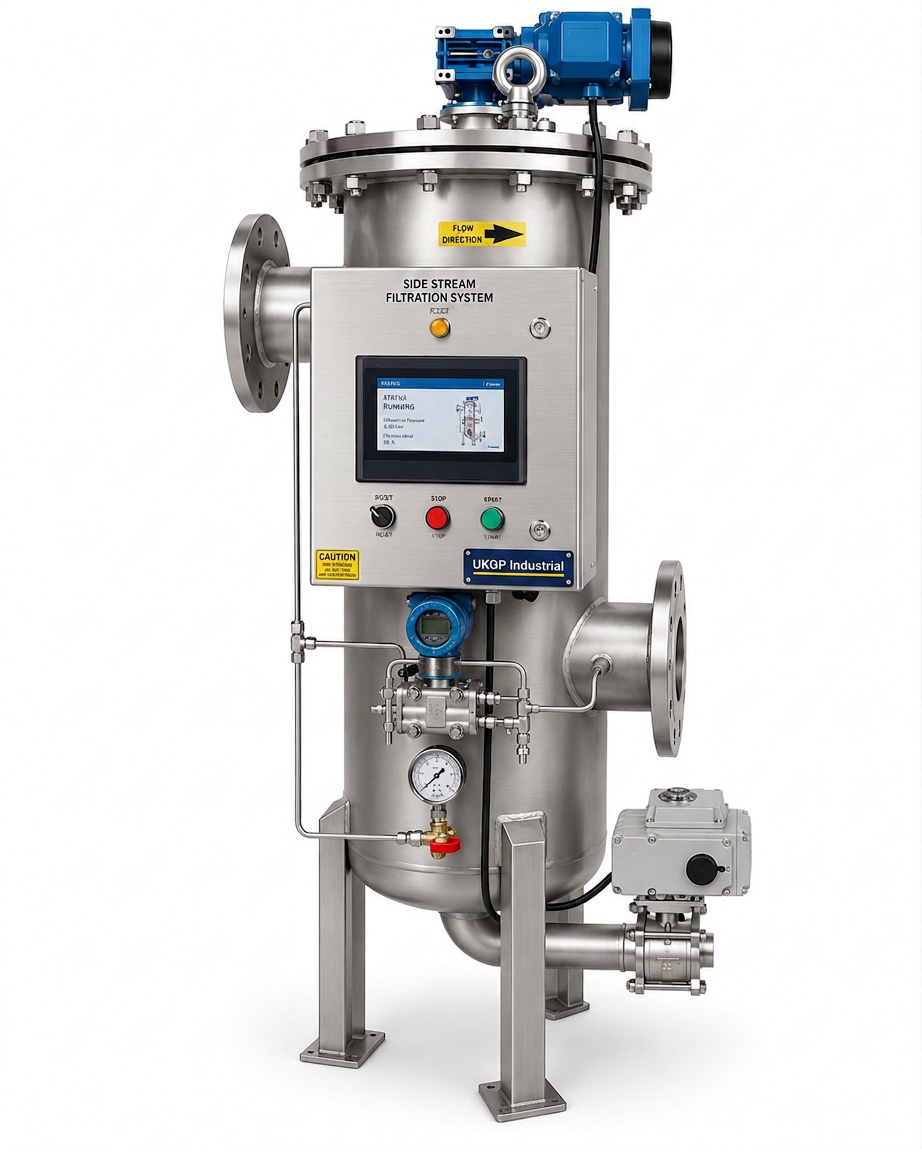
While a main-line air and dirt separator is essential for bulk removal, it is often part of a wider water treatment strategy. Side-stream filtration units can be used in conjunction with separators to achieve even higher levels of water clarity. While the main-line separator handles the full flow and removes larger debris, a side-stream filter (typically taking 5-15% of the flow) can filter down to sub-micron levels, ensuring the water meets the most stringent BSRIA BG50 requirements.
Chemical dosing is another pillar of system health. A dosing pot should be used to maintain the correct concentration of inhibitors and biocides. However, chemicals can only work effectively if the system is clean. Using a combined separator to remove the 'dirt load' first ensures that the chemicals can react with the pipe surfaces rather than being wasted on neutralizing circulating sludge. In this way, the separator acts as a 'pre-treatment' that maximizes the efficacy of the chemical regime.
For systems with large volumes or multiple circuits, such as district heating or large commercial campuses, the combination of a main-line separator and a side-stream filtration unit provides the most robust protection. This 'belt and braces' approach is particularly recommended when connecting new high-efficiency plant (like heat pumps or condensing boilers) to older, existing pipework which may have a legacy of corrosion deposits. Proper coordination between these components ensures long-term operational stability.
- Side-stream filtration provides finer particle removal than main-line separators.
- Dosing pots are used to introduce inhibitors once the system is clean.
- A holistic approach combines separation, filtration, and chemical treatment.
Maintenance and Long-term Operational Integrity
The primary maintenance task for an air and dirt separator is the periodic 'blow-down' of the collection chamber. For a new system or one that has recently undergone work, this should be performed weekly to remove the initial surge of installation debris. Over time, as the system water stabilizes, this interval can be extended to coincide with quarterly or bi-annual plant room inspections. The process involves opening the drain valve for a few seconds whilst the system is under pressure to eject the accumulated sludge.
The automatic air vent (AAV) at the top of the unit also requires attention. These vents can sometimes become 'gummed up' by system additives or mineral deposits, leading to leaks or a failure to vent air. Most high-quality separators feature a serviceable AAV that can be cleaned or replaced without draining the entire vessel. It is also wise to check the 'vapour' outlet of the AAV for signs of moisture, which could indicate a failing float mechanism.
Every 3-5 years, or as dictated by the water quality analysis, the separator should be internally inspected. This involves isolating the unit and removing the top flange to check the condition of the coalescing media. If the media is heavily fouled with scale or bio-film, it should be cleaned or replaced to ensure the pressure drop remains within design limits. By following a structured maintenance regime, the air and dirt separator will continue to protect the system's most expensive components for decades. Regardless of the manufacturer, the fundamental principle remains: a separator only works if it is kept clean.
- Weekly flushing during the first month of operation.
- Annual internal inspection of the coalescing media.
- Verification of the automatic air vent operation.
Frequently asked questions
Where is the optimum location for an air and dirt separator in an LTHW system?
- Ideally, separators should be installed on the flow pipe where the temperature is highest (to aid air release) and before the primary circulation pumps (to protect them from debris), but always after the point of no pressure change (expansion vessel connection).
Which BSRIA standards govern the use of separators?
- BSRIA BG29/21 and BG50 provide industry-standard guidance. BG29 covers pre-commissioning cleaning, while BG50 focuses on the ongoing water quality management for closed-circuit systems. High-efficiency filtration and deaeration are critical components of compliance with these standards.
Can I use an automatic air vent instead of a microbubble deaerator?
- A deaerator uses velocity reduction and internal media (like Pall rings or mesh) to extract dissolved microbubbles, whereas an automatic air vent only handles large pockets of free air. Microbubbles are responsible for the vast majority of ongoing corrosion and heat transfer issues.
Is a magnetic insert necessary for all air and dirt separators?
- For systems with older radiators or high risk of magnetite, a magnetic insert is essential. Without it, fine black sludge (magnetite) may continue to circulate as it is too small for standard gravitational separation alone.
What is the maximum allowable pressure drop across a separator?
- Ideally, the pressure drop across a clean separator should not exceed 10-15 kPa at design flow rates. Excessive pressure drop indicates either an undersized unit or a significant accumulation of debris requiring immediate flushing.