The Role of Combined Separation in Heat Networks
In large-scale district heating schemes, air and dirt issues are magnified by the sheer volume of water and the complexity of the distribution pipework. Air enters the system during initial filling and through micro-leaks at glands or seals, leading to localised corrosion, noise, and reduced heat transfer across the primary-to-secondary plate heat exchangers. Simultaneously, the formation of black iron oxide (magnetite) can lead to blockages in control valves and premature failure of high-efficiency pumps.
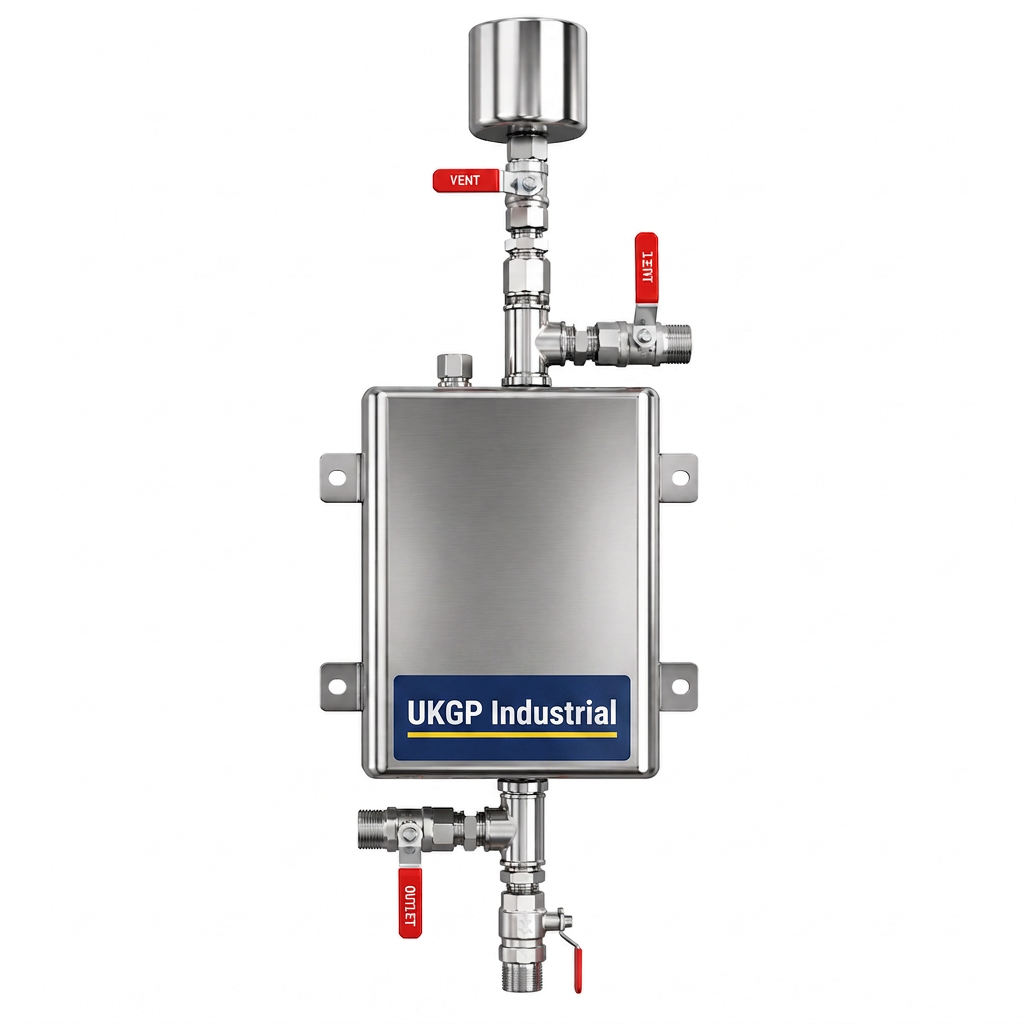
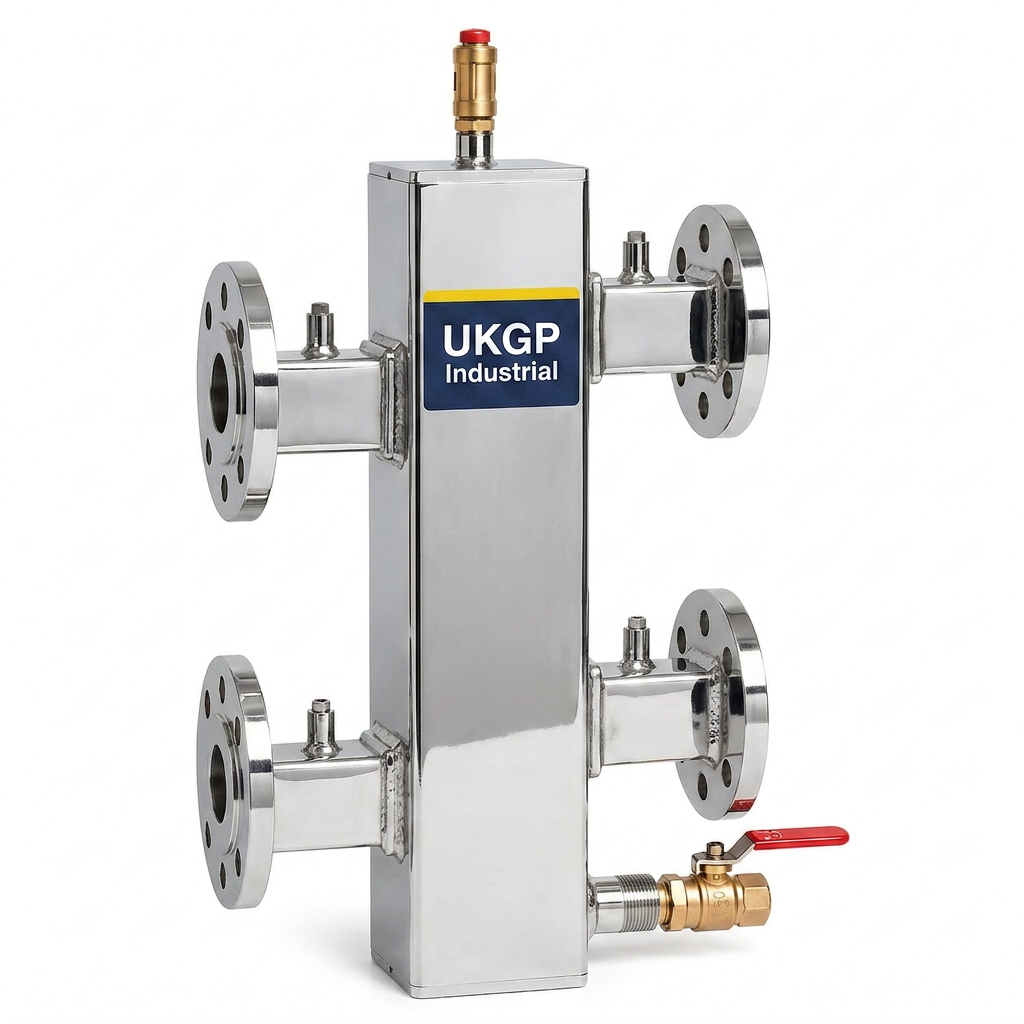
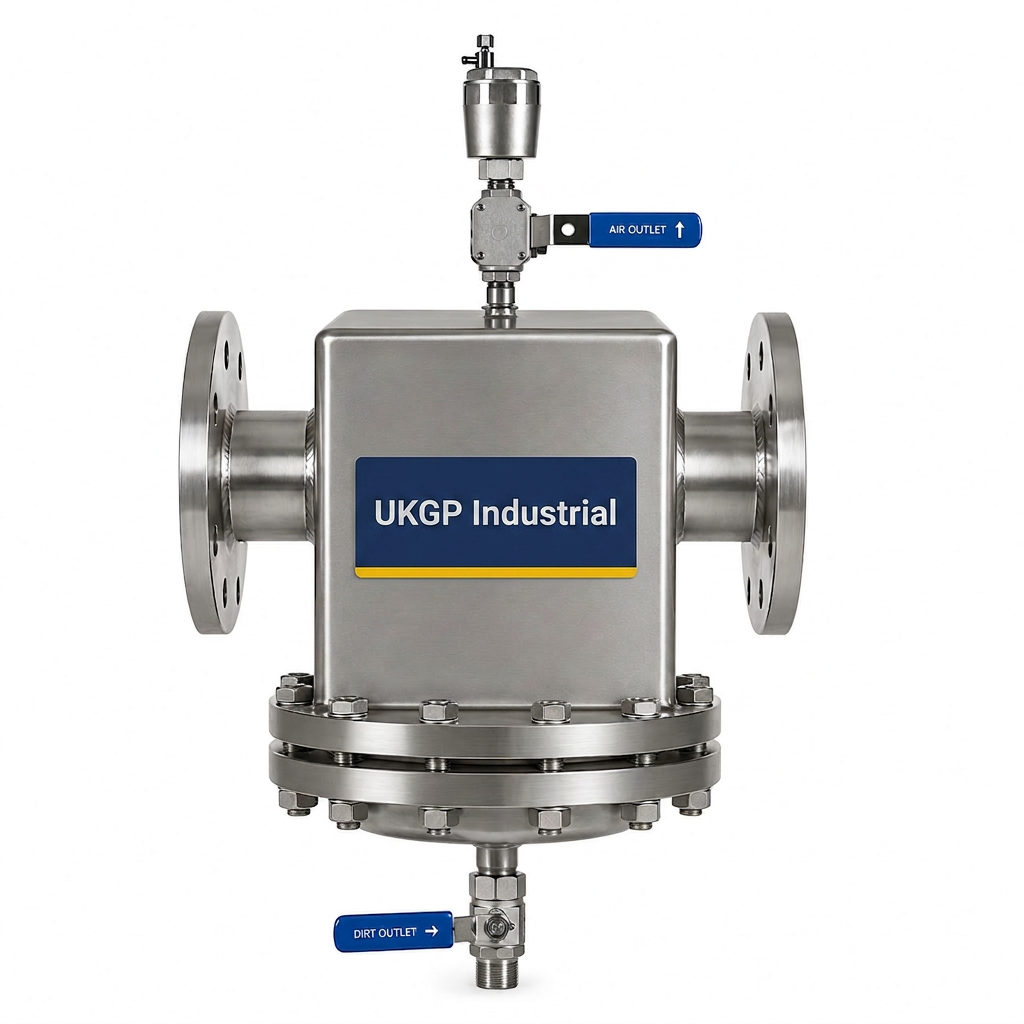
A combined air and dirt separator serves as a multi-functional protection device. By integrating deaeration and dirt removal into a single vessel, engineers can reduce the plant room footprint while providing comprehensive protection. These units typically employ a stainless steel or copper internal lattice—referred to as coalescing media—which creates a laminar flow zone. This allows micro-bubbles to rise to the automatic air vent while heavier particles settle into the collection chamber at the base of the unit.
- Micro-bubble deaeration through coalescing media surface area.
- Sedimentation of non-magnetic debris within a low-velocity zone.
- Magnetite capture using high-intensity external magnetic sleeves.
- Reduction in system commissioning time by accelerating the initial degassing phase.
Technical Selection and Velocity Limitations
Selecting the correct size of separator is critical. It must be sized based on the maximum flow rate (m³/h) rather than the nominal pipe diameter. Most standard separators are designed for a maximum flow velocity of 1.5 m/s. If the velocity is exceeded, the turbulent energy within the vessel prevents the separation of micro-bubbles and re-entrains settled dirt. For district heating mains where velocities are often higher, High-Velocity (HV) variants designed for speeds up to 3.0 m/s must be specified.
Effective separation also requires the unit to be installed at the point of lowest air solubility. For LTHW systems, this is typically on the flow pipe immediately after the boiler or heat source, where the temperature is highest. In chilled water systems, the separator should be installed on the return line before the chiller. Neglecting the temperature-to-solubility relationship significantly reduces the efficiency of the deaeration process.
Mechanical Integrity and Material Standards
District heating systems operate under demanding conditions, often involving high pressures (PN16 or higher) and temperatures fluctuating between seasonal peaks. The construction of the separator must reflect this; robust carbon steel bodies are standard, but the internal elements should be manufactured from corrosion-resistant materials like 316 stainless steel to ensure longevity. In many specifications, the vessel must be manufactured in accordance with the Pressure Equipment Directive (PED) 2014/68/EU.
Furthermore, the dirt collection chamber should be of sufficient volume to ensure that blow-down intervals are manageable for facilities teams. The inclusion of a magnetic sleeve is non-negotiable in modern plant rooms. By positioning magnets on the exterior of the vessel or within a dry well, engineers ensure that magnetite particles are actively drawn out of the flow and held in the collection zone until they can be flushed away during maintenance.
- Flanged connections (PN16/PN25) to BS EN 1092-1.
- Removable bottom flanges for easy access to internal coalescing media.
- Drain valves with safety caps to prevent accidental discharge.
- External magnetic rings to enhance magnetite capture without interrupting flow.
Compliance with BSRIA BG29/21 and BG50
Water quality management in the UK is governed by the principles laid out in BSRIA BG29/21 (Pre-commission cleaning of pipework systems) and BG50 (Water treatment for closed heating and cooling systems). These documents emphasise that continuous removal of contaminants is essential for the entire life cycle of the system. An air and dirt separator is a primary tool for achieving the 'suspended solids' targets defined in these standards.
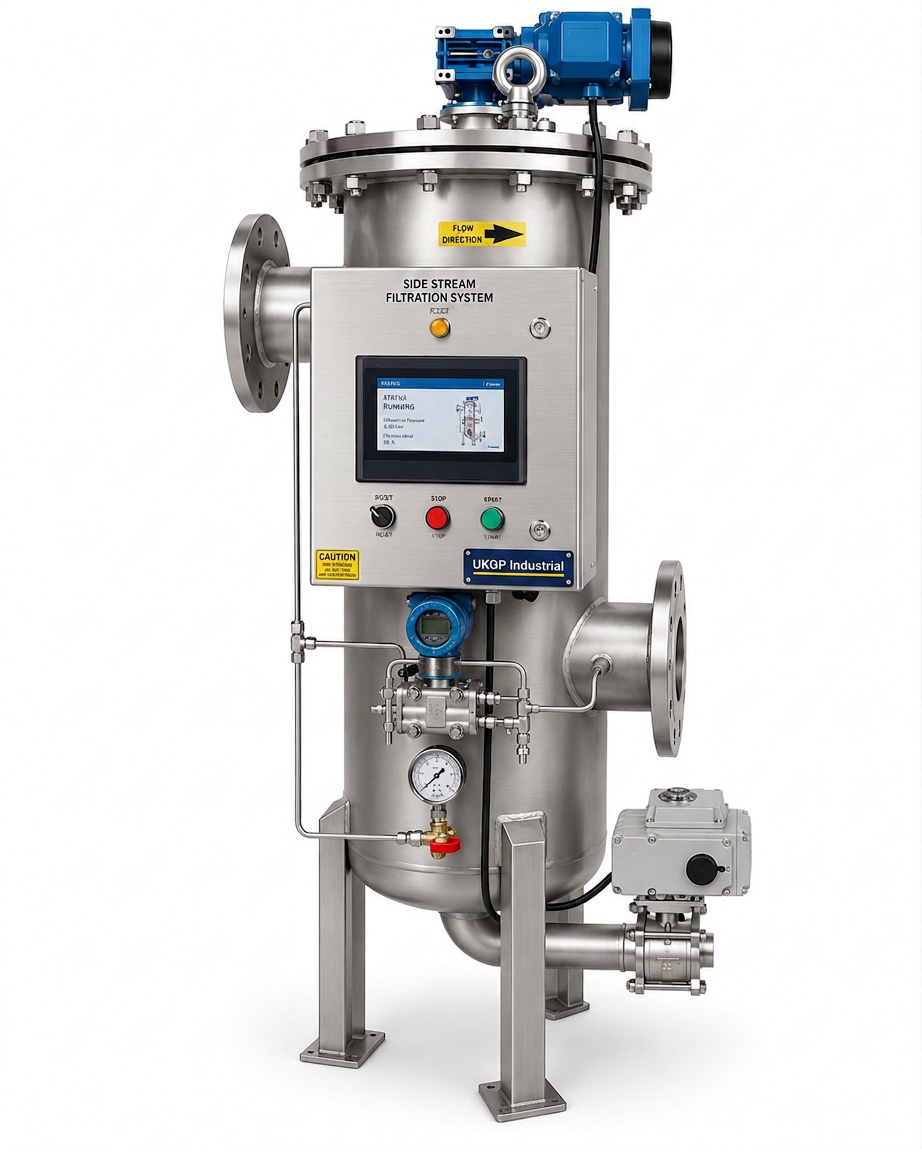
While the separator is excellent for removing bulk debris and micro-bubbles, it is often used in conjunction with side-stream filtration for the highest level of system hygiene. In district heating networks where the secondary side may be prone to contamination from older building circuits, combining a primary-loop separator with a side-stream filter ensures that even the smallest particles (down to 5 microns) are removed, maintaining the clarity of the system fluid and protecting sensitive heat metering equipment.
Installation and Maintenance Best Practices
For maximum efficacy, the combined separator should be installed in a horizontal run of pipework. Vertical installations are possible with specific 360-degree adjustable models, but for the high-flow requirements of district heating, horizontal flanged vessels are the industry standard. Sufficient clearance must be provided beneath the unit to allow for the removal of the bottom flange and internal media during major maintenance intervals.
Maintenance of these units is generally straightforward but must be proactive. A weekly blow-down is recommended during the first month following commissioning, tapering to quarterly intervals once the system has stabilised. Failure to purge the collection chamber can lead to the 'bridging' of debris, which eventually bypasses the separator and re-enters the distribution network, potentially causing damage to downstream circulators.
- Check the automatic air vent for signs of leakage or blockage from system additives.
- Open the drain valve briefly to 'blow down' collected sludge and magnetite.
- Ensure the magnetic sleeve is removed or deactivated prior to flushing to allow the release of iron oxide particles.
- Record the volume or nature of the waste removed to track system corrosion trends.
Conclusion: Long-term Asset Protection
The integration of high-performance air and dirt separators is a critical step in the design of resilient district heating networks. By addressing the dual threats of oxygen-induced corrosion and magnetite accumulation, these units preserve the integrity of heat exchangers and maintain the hydraulic balance of the system. For the consultant or contractor, specifying a unit that meets the velocity and pressure demands of the network is the most effective way to ensure long-term performance and compliance with UK engineering standards.
Ultimately, the cost of a high-quality separator is a fraction of the cost associated with system downtime, premature pump failure, or the remedial cleaning of a fouled network. By selecting UKGP Industrial solutions, engineers can be confident in the mechanical robustness and separation efficiency of their plant room installations.
Frequently asked questions
What is the maximum flow velocity for a standard air and dirt separator?
- While standard units handle velocities up to 1.5m/s, High-Velocity (HV) variants should be specified for district heating headers where flow rates often exceed this. Using a standard unit in a high-velocity stream leads to excessive pressure drop and reduced separation efficiency.
How often should the dirt collection chamber be blown down?
- In accordance with BSRIA BG29 and BG50, the separator should be checked weekly during the first month of operation, and thereafter during quarterly maintenance visits. If the system has high levels of magnetite or iron oxide, more frequent blow-down is required to prevent the collection chamber from bridging.
Are there specific pressure considerations for district heating separators?
- In district heating, the separator's PN rating must match the design pressure of the primary network, which often exceeds PN16. High-temperature gaskets and specialised internal media are required if the flow temperature exceeds 110°C.
Can a combined separator replace a side-stream filter?
- While the separator handles micro-bubbles and circulating debris, a side-stream filter provides finer filtration (down to 5-10 microns) which is essential for protecting heat meters and balancing valves in large-scale residential secondary circuits.