The Necessity of Combined Separators
Modern LTHW and CHW systems utilize high-efficiency, low-water-content boilers and heat exchangers with narrow waterways. This makes them significantly more susceptible to blockage and erosion than older, robust cast-iron systems. BSRIA BG50 (Water Treatment for Closed Heating and Cooling Systems) emphasises that mechanical filtration and deaeration are as critical as chemical dosing for long-term asset protection.
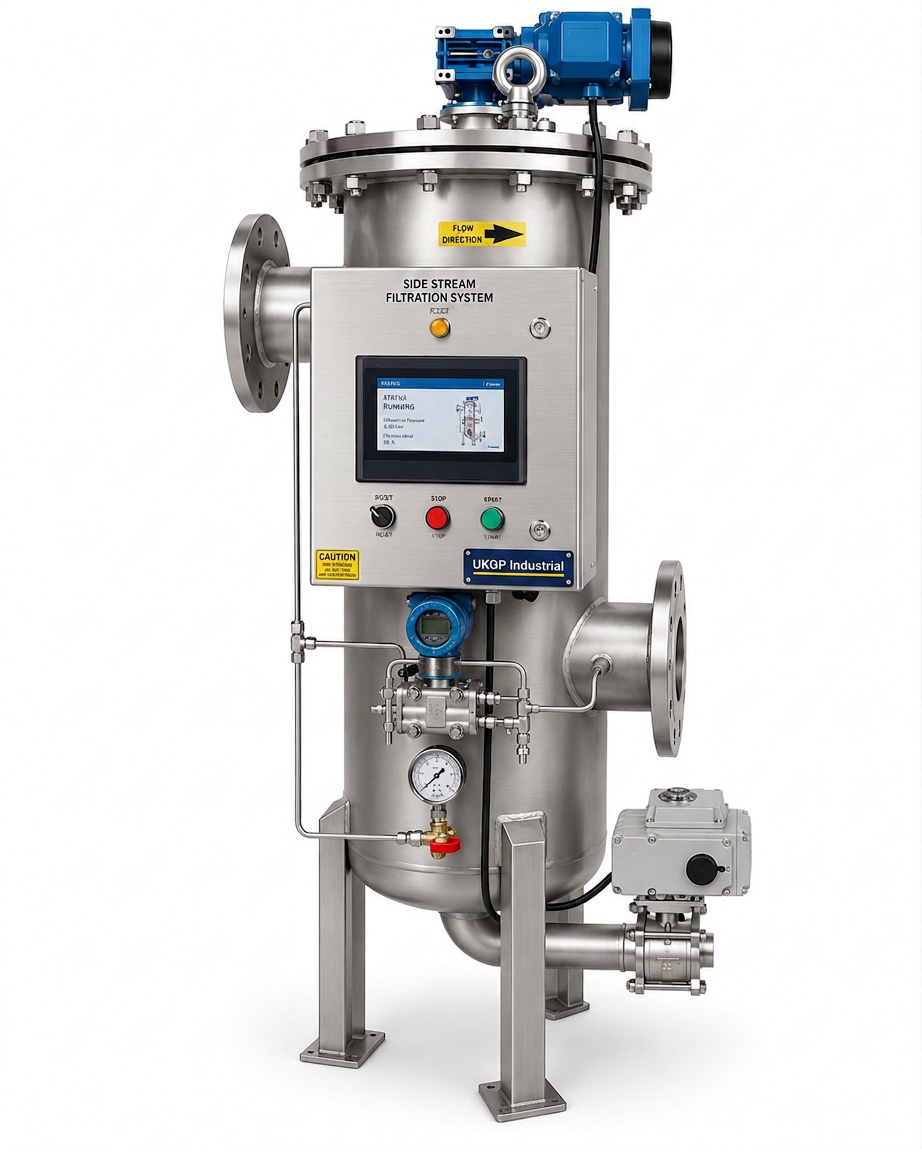
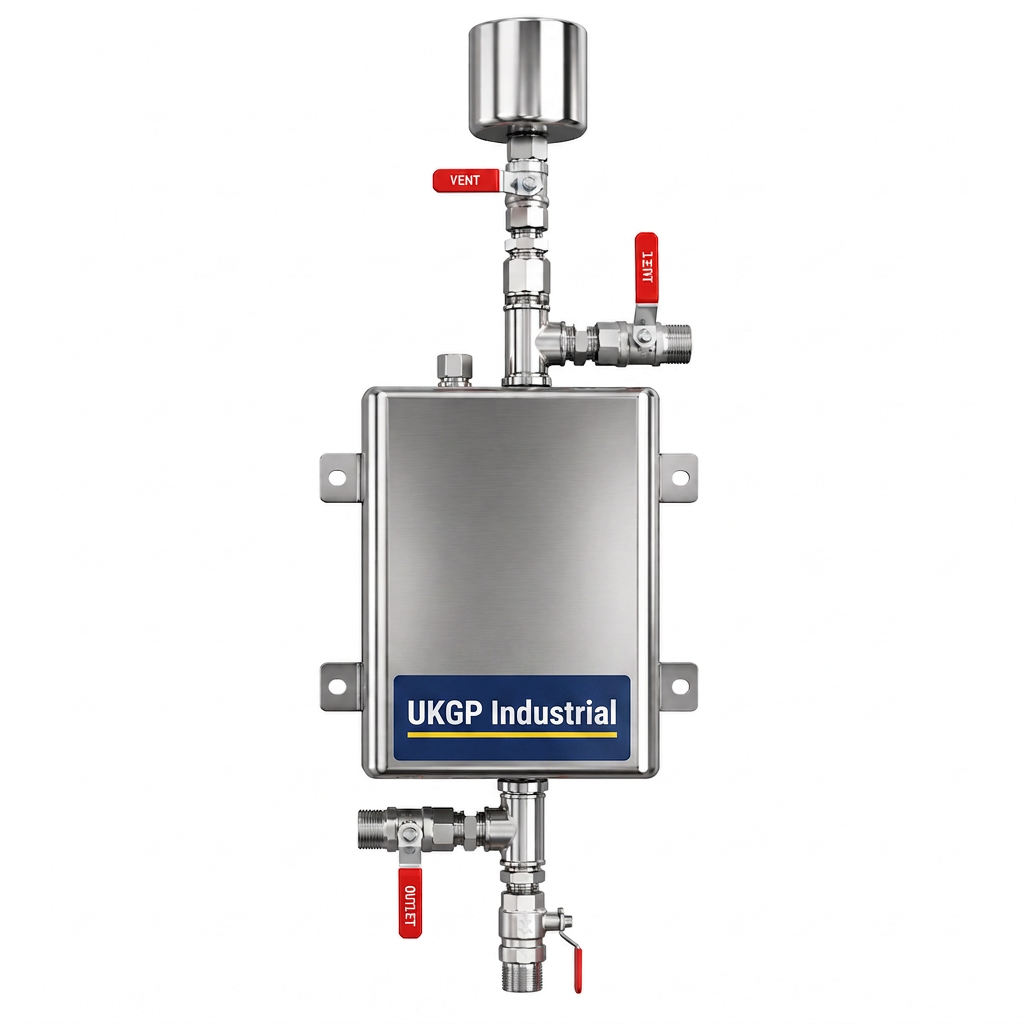
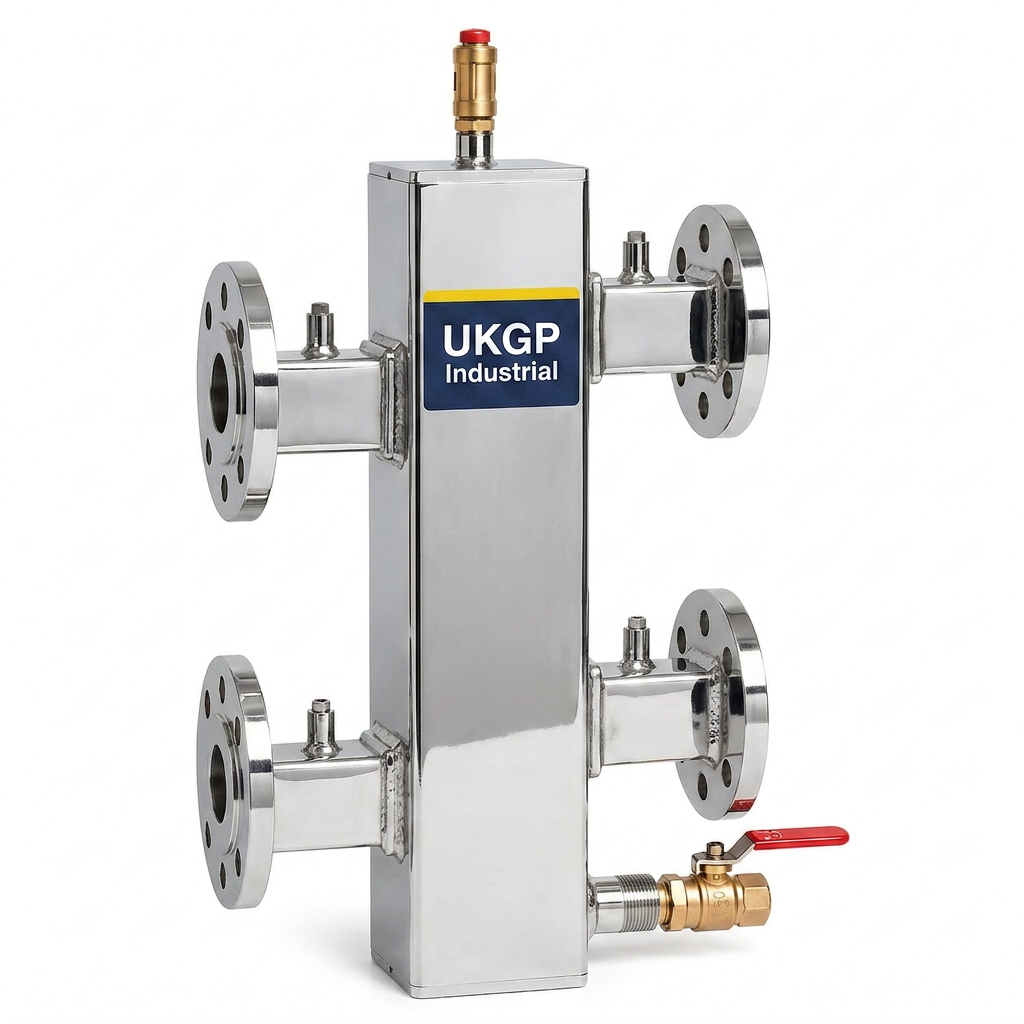
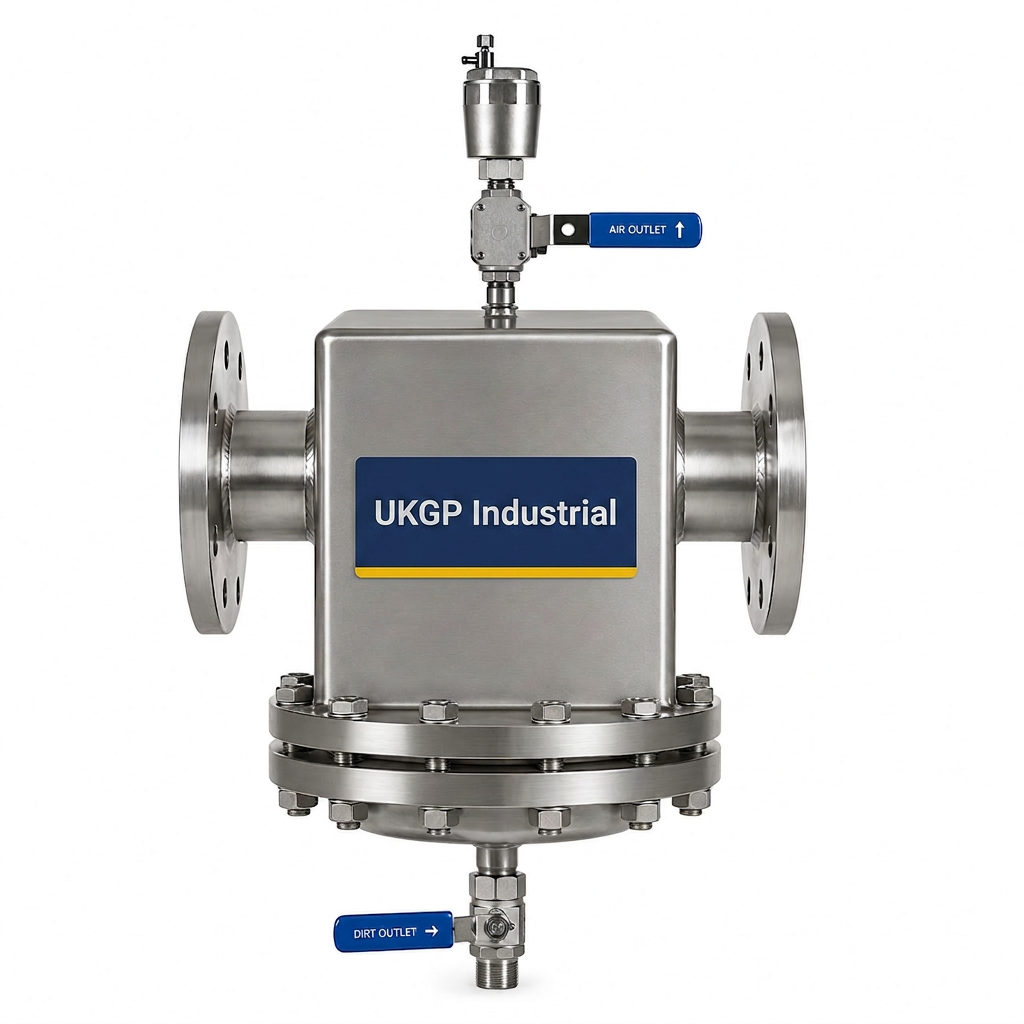
A combined air and dirt separator serves two functions within a single vessel. By utilizing an internal coalescing medium—often a Pall ring or stainless steel wire mesh structure—the unit reduces fluid velocity and creates turbulence. This encourages microbubbles to rise to the automatic air vent and heavy particles to settle in the collection chamber at the base of the unit.
- Corrosion: Oxygen facilitates the formation of magnetite (black sludge).
- Reduced Heat Transfer: Air pockets in heat exchangers and emitters act as insulators.
- Pump Damage: Air leads to cavitation, while dirt erodes impellers and seals.
- Cost: Increased pumping energy due to restricted flow and debris buildup.
Compliance with BSRIA BG29/21 and BG50
BSRIA BG29/21 (Pre-commission Cleaning of Pipework Systems) is the industry benchmark for ensuring new systems are fit for purpose. It mandates that systems must be free of debris before handover. While flushing is the primary method, the installation of permanent air and dirt separators ensures that any residual particles or gases liberated during the initial heating cycles are captured and removed. Failure to manage these contaminants often voids manufacturer warranties on boilers and chillers.
Beyond commissioning, BG50 focuses on the 'Greatest Risk' period—the first six months of operation. During this time, standard strainers often bypass or clog. A combined separator provides a non-clogging alternative that maintains system integrity without the constant need for isolation and mesh cleaning, which can introduce fresh, oxygenated water into the loop.
Correct Sizing and Installation Parameters
Sizing a separator based solely on pipe diameter is a common specification error. The critical metric is the flow rate (m³/h) and the resulting velocity. To achieve effective separation, the velocity through the vessel's internal chamber must be significantly lower than the pipe velocity. Typically, units are rated for a maximum flow velocity of 1.5 m/s or 3.0 m/s for 'high-velocity' variants. If the system flow exceeds these parameters, separation efficiency drops exponentially.
Location is equally vital. Henry’s Law dictates that the solubility of gas in a liquid decreases as temperature rises and pressure drops. Therefore, microbubble deaerators should be placed at the point of highest temperature and lowest pressure in the system. For a heating system, this is immediately downstream of the heat source; for a cooling system, it is on the return header before the chiller.
- LTHW Systems: On the flow pipe, after the boiler, where temperature is highest (solubility of air is lowest).
- CHW Systems: On the return pipe, before the chiller, where temperature is highest.
- Orientation: Must be installed vertically to allow the automatic air vent to function and debris to settle via gravity.
Magnetic Filtration in the Modern Plant Room Sunflower
The rise of high-efficiency circulators with permanent magnet motors has changed the requirements for dirt separation. Magnetite, a sub-micron metallic byproduct of corrosion, is attracted to the magnetic fields within these pump motors, leading to seizing and premature failure. Standard gravity-based separators struggle to capture the finest magnetite particles which can remain in suspension.
Integrating a high-flux neodymium magnetic insert into the dirt separator vessel significantly enhances its performance. These magnets pull metallic sludge out of the flow path and hold it against the sleeve. During maintenance, the magnet is withdrawn (the 'dry pocket' design), allowing the captured sludge to be flushed out via the blow-down valve. This method is far more effective at protecting sensitive components than traditional non-magnetic separation.
Maintenance and Life Cycle Costs
One of the primary advantages of combined separators over traditional Y-strainers is the ease of maintenance. A Y-strainer requires the system to be drained or isolated, the cap removed, and the mesh cleaned manually. This is a labour-intensive process that often leads to air ingress. In contrast, a separator is maintained via a simple blow-down procedure. Opening the ball valve at the base of the unit for a few seconds uses the system pressure to eject collected sludge.
From a life-cycle perspective, the 'zero-head-loss' characteristics of a separator are superior. As a strainer collects dirt, its pressure drop increases, forcing pumps to work harder and increasing energy consumption. A high-quality UKGP Industrial air and dirt separator maintain a constant, low pressure drop throughout its service life, contributing to lower operational expenditures (OPEX) and extended lifespan of the central plant.
- Weekly: Blow down the dirt collection chamber for 5-10 seconds.
- Monthly: Check the automatic air vent (AAV) for signs of leakage or salt deposits.
- Annually: Inspect the internal coalescing medium if the design allows for a removable flange.
Frequently asked questions
What is the difference between an air and dirt separator and a standard dirt separator?
- While both are effective, 'air and dirt separators' have a lower pressure drop than 'dirt separators' and use a coalescence medium to remove microbubbles as well as particles. This dual-action prevents cavitation and oxidative corrosion more effectively than a standard strainer or cyclonic dirt separator alone.
How do I size a separator for a high-flow commercial system?
- Standard separators are sized by pipe diameter (e.g., DN50 to DN600), but technically they are limited by flow velocity. Most units are designed for a maximum velocity of 1.5 m/s at the flange to ensure the internal velocity is low enough for air/dirt precipitation. Crossing this threshold significantly reduces efficiency.
Can a separator replace a traditional Y-strainer?
- Filters (like strainers) require downtime to clean meshes and can block, increasing DP. Separators use internal media to slow flow and allow particles to drop without restricting the main flow path, allowing for blow-down while the system is operational.
Is a magnetic insert necessary for LTHW systems?
- Magnetic inserts (jackets or dry-pocket magnets) are essential in modern systems containing circulators with ECM/permanent magnet motors. These motors act as magnets, attracting magnetite into the pump bearings. A magnetic separator captures this debris before it reaches the plant.