The Role of Combined Separation in Modern HVAC Systems
The integration of air and dirt separation into a single vessel is now standard practice for UK plant room design. Historically, these functions were handled by separate components—automatic air vents at high points and Y-strainers on the return. However, modern high-flow systems require a more sophisticated approach. Microbubbles and fine suspended solids (magnetite) are not effectively captured by traditional methods, leading to reduced heat transfer efficiency and premature component failure.
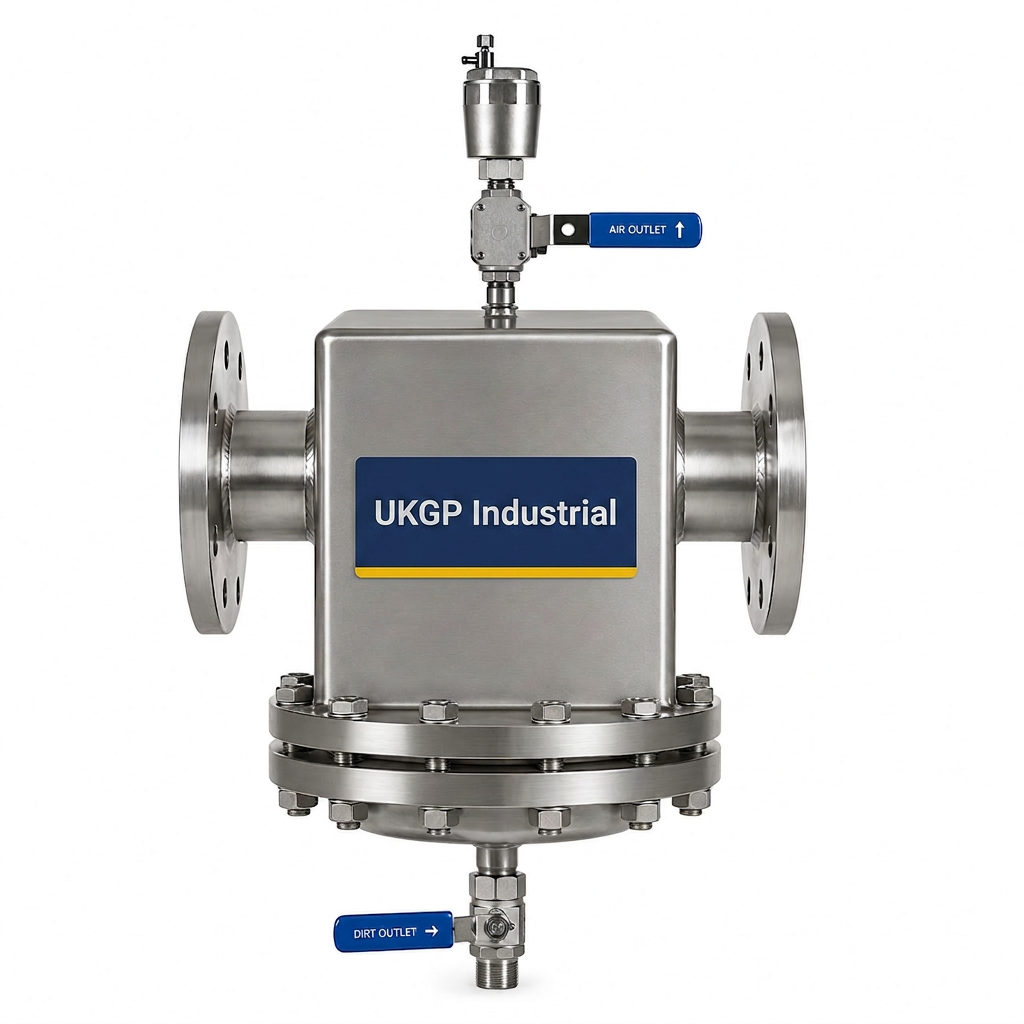
A combined air and dirt separator works on the principles of velocity reduction and coalescence. By slowing the fluid flow within the vessel, entrained air bubbles rise to the top to be discharged via an automatic valve, while heavier dirt particles settle into a collection chamber at the base. This dual action is essential for maintaining the thermal conductivity of the heat medium, as even a 1mm layer of magnetite can reduce heat transfer efficiency by up to 10% in modern plate heat exchangers.
Specifying a combined unit also reduces the 'footprint' within often-congested plant rooms. Instead of two separate sets of flanges and isolation valves, a single DN-rated unit handles both functions. This reduces installation costs, leak paths, and the overall pressure drop across the plant. For engineers, the priority is selecting a unit that can handle the full system design flow rate without inducing excessive parasitic pumping heads.
- Removal of microbubbles (deaeration) to prevent cavitation and corrosion.
- Separation of dirt and sludge (magnetite) to protect heat exchangers.
- Reduction in commissioning time by accelerating the venting process.
- Compliance with BSRIA BG29/21 and BG50 water quality standards.
Compliance with BSRIA BG29/21 and BG50
Water quality is no longer a 'best practice' suggestion; it is a contractual requirement on most UK commercial projects. BSRIA BG29/21 highlights the necessity of removing suspended solids during the pre-commissioning phase to prevent "settled solids" from providing a breeding ground for bacteria or causing under-deposit corrosion. A high-quality air and dirt separator is the primary line of defence during the critical early stages of a system's life.
BSRIA BG50 focuses on the long-term maintenance of water quality. It specifically identifies magnetite—a black iron oxide byproduct of corrosion—as a major threat to system longevity. Magnetite is sub-micron in size and paramagnetic. Standard Y-strainers will miss the majority of these particles. Engineers must specify separators with magnetic inserts (typically Neodymium magnets) to 'trap' these particles effectively.
Failure to adhere to these standards often voids the warranties of major plant components, particularly condensing boilers and heat pumps. When a circulator pump fails due to iron oxide accumulation in the magnetic rotor, manufacturers will frequently request water quality logs. The presence of a correctly sized and maintained air and dirt separator is often the first thing a forensic engineer will look for during a warranty claim investigation.
- BSRIA BG29/21: Pre-commission cleaning of pipework systems.
- BSRIA BG50: Water treatment for closed heating and cooling systems.
- BS 8552: Sampling and monitoring of water from building services systems.
Technical Specifications: Calculating Flow and Pressure Drop
The most common error in separator selection is sizing based on the pipe diameter rather than the actual flow rate (m³/h). High-velocity systems can 'wash' bubbles and dirt straight through a separator if the vessel is undersized. For effective separation, the flow velocity within the separator's internal medium should be reduced to approximately 1.0 m/s to 1.5 m/s. If the system velocity exceeds 3.0 m/s, a larger nominal size separator with reducers may be required.
Pressure drop (Δp) is an essential calculation for the system designer. While air and dirt separators are generally low-resistance devices compared to strainers, they still contribute to the total dynamic head of the pump. A typical well-sized unit should have a pressure drop between 1 kPa and 5 kPa at design flow. Excessive pressure drop indicates that the unit is undersized, which will not only increase energy consumption (PUE) but also reduce separation efficiency.
When specifying, engineers should request the Kv value of the separator. Using the formula Δp = (Q / Kv)², where Q is the flow rate in m³/h, the designer can accurately predict the impact on the pump curve. In variable volume systems, the separator must be sized for the peak design flow, ensuring that even at maximum demand, the velocity reduction is sufficient for the coalescence of microbubbles to occur.
Magnetic Filtration and Sludge Removal
While velocity reduction handles heavier debris, magnetite requires an active removal method. Modern separators often feature an internal magnetic rod or external magnetic sleeve. These utilise high-strength Neodymium magnets to attract and hold the fine iron oxide particles that are otherwise held in suspension by the fluid velocity. Without a magnetic element, a separator's efficiency in removing magnetite can drop by over 60%.
The location of the magnets is a key design consideration. Some designs place the magnets inside a dry well within the vessel. This allows the magnets to be removed during servicing, which releases the captured magnetite to the bottom of the sump for blowing down. This 'cleanable' design is vastly superior to fixed magnets, which can become saturated and difficult to clear. A blow-down valve (usually 1/2" or 3/4" BSP) at the base of the unit allows for the removal of collected sludge without shutting down the system.
Effective deaeration is the second half of the equation. As the fluid velocity drops, microbubbles attach to the internal pall rings or mesh (the coalescence medium). These bubbles grow in size until their buoyancy overcomes the fluid's downward force, rising to the automatic air vent (AAV) at the top. This AAV must be robust, ideally featuring an anti-leak mechanism to prevent 'weeping' if system debris reaches the seat of the valve.
Optimising Installation Points for Maximum Efficiency
The physical placement of an air and dirt separator is dictated by the laws of Henry’s Law (gas solubility). For LTHW (Low Temperature Hot Water) systems, the separator should be installed on the flow pipework after the heat source. This is the point of highest temperature and lowest pressure, where air is most likely to be in its gaseous, bubble form. Installing it on the return pipe significantly reduces its effectiveness as a deaerator.
In Chilled Water (CHW) systems, the logic is reversed. The hottest point of the system is the return pipework coming back from the AHUs or FCUs before it enters the chiller. Therefore, the separator should be placed on the main return header. This ensures that any air released as the chilled water warms up through the building is captured before it can reach the chiller’s heat exchanger.
For dirt removal, the location is less critical than for air, but the common preference is to protect the most expensive equipment. In a plant room with a plate heat exchanger (PHX) separating the primary and secondary circuits, a separator should be installed on both sides to protect the narrow channels of the PHX. In all cases, sufficient clearance must be provided above the unit for AAV maintenance and below the unit for sludge blow-down and magnet removal.
- LTHW Systems: Install on the flow pipe, immediately after the boiler or heat exchanger.
- Chilled Water Systems: Install on the return pipe, just before the chiller.
- Always install in the 'hottest' part of the circuit for air removal (where gas solubility is lowest).
- Always install in the 'lowest pressure' part of the circuit for air removal (where gas escapes fluid easily).
Material Selection and Longevity
For most commercial and industrial applications, carbon steel is the standard body material, typically finished with an epoxy-coated exterior to prevent corrosion. However, in specific environments—such as marine applications, process cooling with demineralised water, or highly corrosive atmospheres—stainless steel (304 or 316L) may be required. Stainless steel units offer superior resistance to internal corrosion and are often specified in food-grade or pharmaceutical environments.
The internal 'media' or 'pall rings' should also be scrutinised. These are the components that facilitate coalescence. High-quality separators use stainless steel or robust synthetic media that will not degrade or oscillate under high flow rates. Cheap internals can break apart over time, potentially sending debris into the very system the separator was meant to protect. Engineers should look for 'non-clogging' designs that do not rely on fine meshes which could act like a filter and block up.
Connection types vary by pipe size. Units up to 2" generally feature BSP threaded connections, while larger units (DN50 to DN600+) are flanged to BS EN 1092-1. For high-pressure systems, such as those in high-rise London developments, PN16 or PN25 rated vessels are necessary. It is essential to ensure the flange rating of the separator matches the rest of the system's valves and pipework to avoid weak points in the hydraulic integrity.
Integrating Secondary Filtration Methods Balancing DIY and Pro
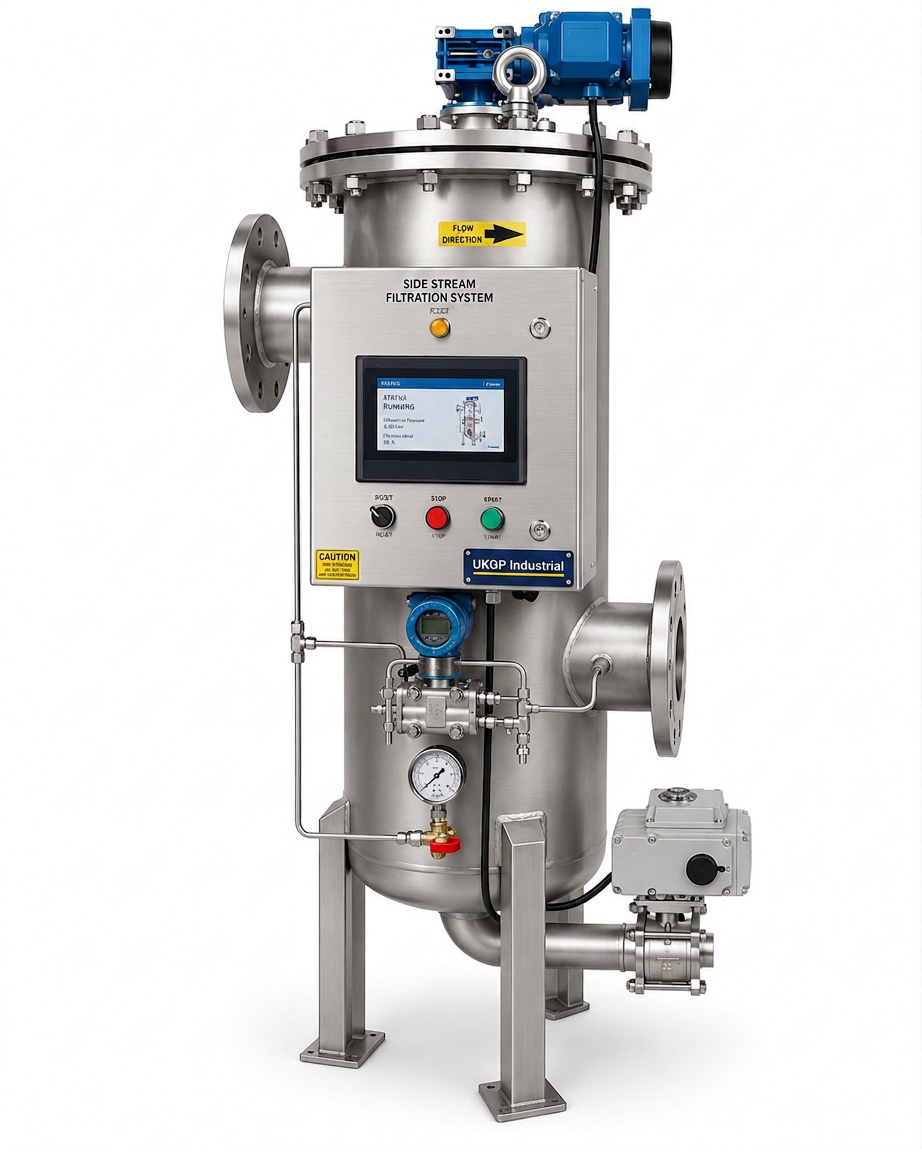
While an inline air and dirt separator is excellent for full-flow protection, it is often complemented by side-stream filtration in larger or older systems. An inline separator is designed to catch what passes through it in real-time, but it may not be sufficient for systems with massive volumes of circulating water and decades of accumulated sludge. Side-stream units can provide finer filtration (down to 5 microns) and often include bags or cartridges that are changed periodically.
The combination of a high-velocity air and dirt separator for primary protection and a side-stream filter for 'polishing' the water provides the highest level of protection. This is particularly recommended when retrofitting new boilers into an existing, aged pipework network. The inline separator handles the bulk solids and air protection for the new plant, while the side-stream filter progressively cleans the legacy system water.
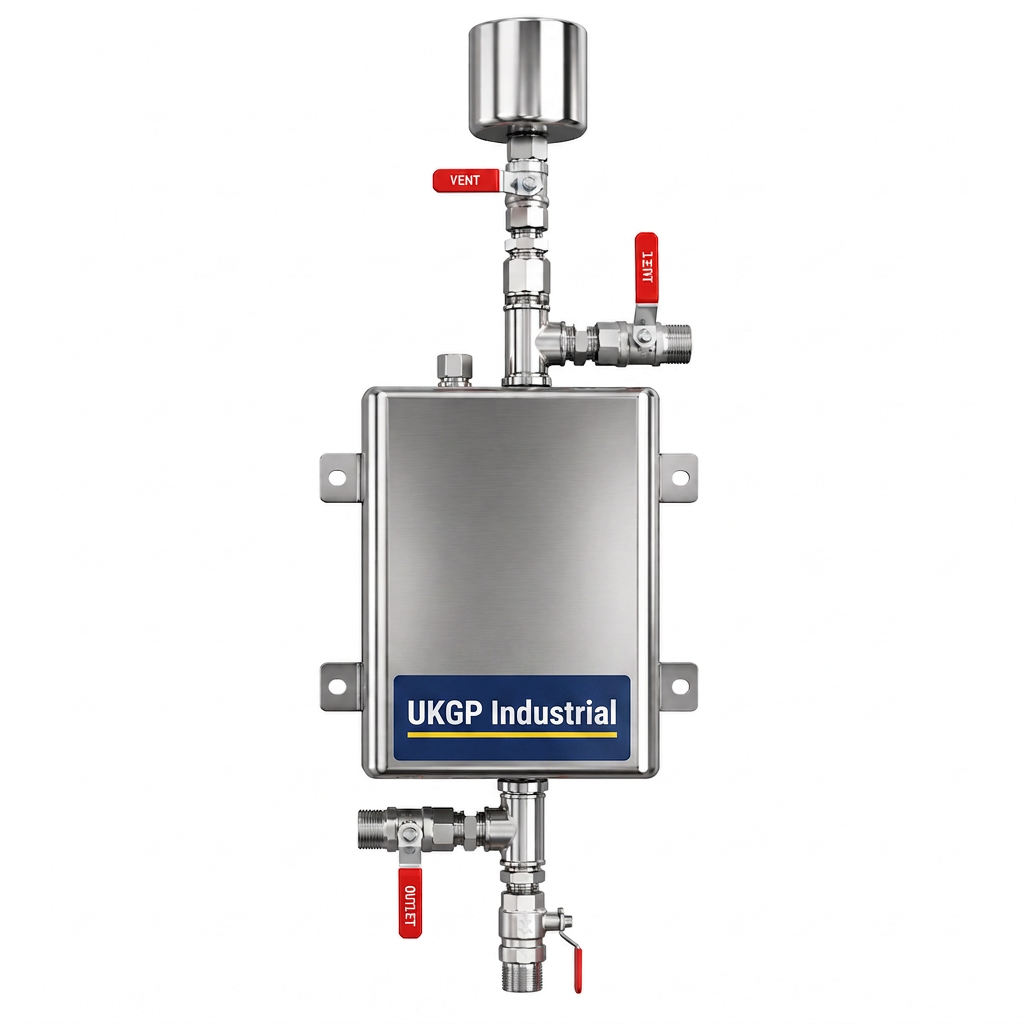
Furthermore, the inclusion of a chemical dosing pot is required to introduce inhibitors that prevent the further formation of magnetite and scale. Without chemical inhibition, no separator—no matter how efficient—can stop the chemical process of corrosion. The separator and the dosing pot work in tandem: one prevents the cause, and the other removes the symptoms. In a professionally managed plant room, these components form a comprehensive water quality strategy.
Maintenance Protocols and Operational Best Practices
A common 'fit and forget' mentality leads to many separators becoming ineffective. For a separator to function, the sludge chamber must be cleared regularly. In the first few weeks of a new system's operation (post-BG29/21 cleaning), the blow-down valve should be opened weekly. Once the system has stabilised, this can usually be moved to a monthly or quarterly schedule during routine FM inspections.
The automatic air vent at the top of the unit is a mechanical wear part. Over time, calcium deposits or fine silt can interfere with the float mechanism, leading to leaks or 'seizing' in the closed position. High-quality separators feature a 'serviceable' AAV that can be isolated and cleaned or replaced without draining the entire system. Specifying a unit with an integrated isolation valve for the AAV is a major advantage for facilities managers.
Finally, visual inspection of the 'blow-down' discharge is a simple yet effective diagnostic tool. If the water remains black or heavily silted after several months of operation, it indicates that the chemical inhibitor levels may be low or that there is an ongoing ingress of oxygen (likely through a leaking expansion vessel or pump glands). In this way, the air and dirt separator acts as an early warning system for the overall health of the building's HVAC infrastructure.
Frequently asked questions
What are the standard pressure and temperature ratings for commercial separators?
- Standard units are rated for 110°C and 10 bar, but high-temperature models for MTHW or high-pressure versions for tall buildings (16-25 bar) are available. Always verify both the PN rating and the temperature limit against the safety valve setting.
How often should an air and dirt separator be serviced?
- Maintenance frequency depends on the system's age and condition. For new installs following BSRIA BG29/21 cleaning, monthly checks are typical. On older, 'dirty' systems, weekly blowing down of the sludge valve may be necessary. Magnus separators should be checked during annual shutdowns.
Can I use a Y-strainer instead of an air and dirt separator?
- While both remove debris, a separator is a low-pressure-drop device designed for continuous bypass or full-flow removal of microbubbles and fine magnetite. A strainer is a coarse mesh filter designed to protect specific components (like pumps) from large 'construction' debris. Separators are far more effective for long-term water quality.
Are these units suitable for use with glycol-based antifreeze?
- Yes, as long as the internal media and body materials are compatible. For glycol circuits, ensure the air vent's float mechanism and seals are rated for the specific glycol concentration and type (Ethylene or Propylene).