The Dual Functionality of Combined Separators
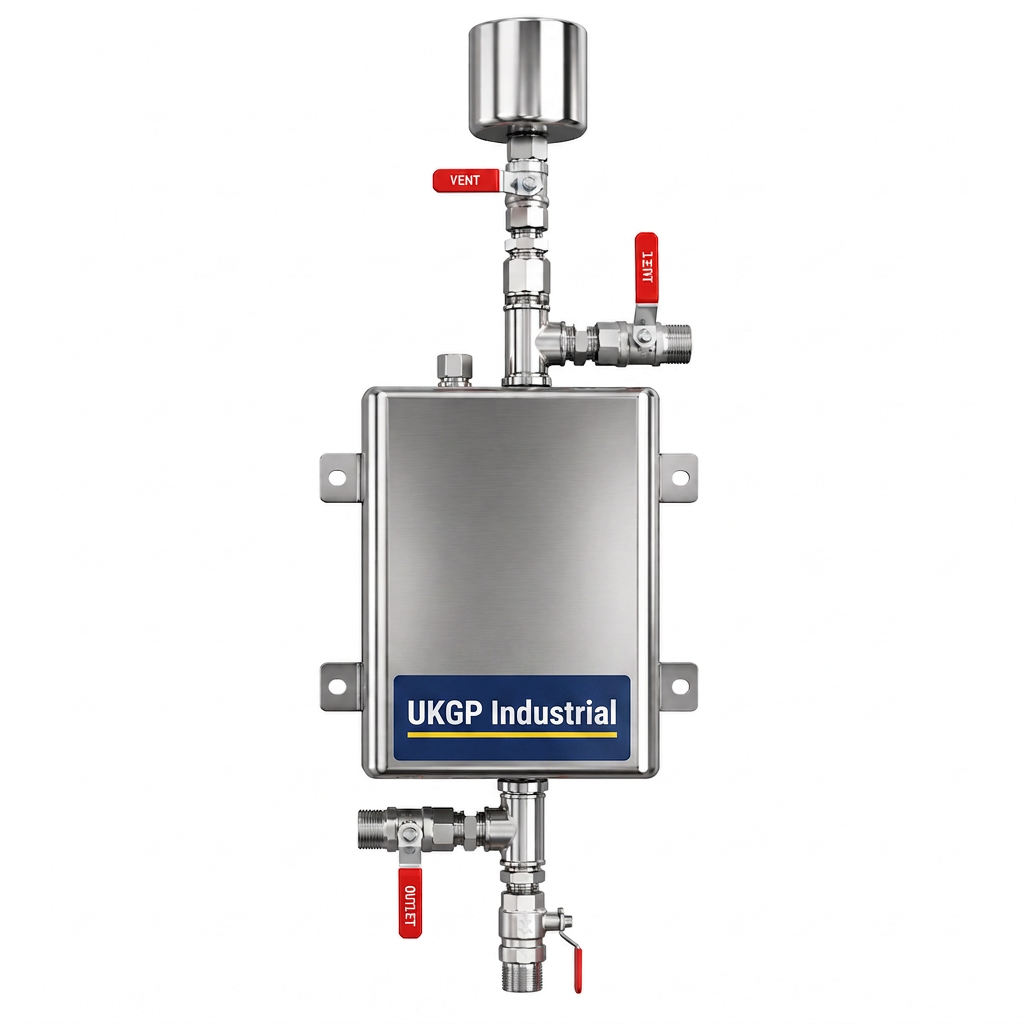
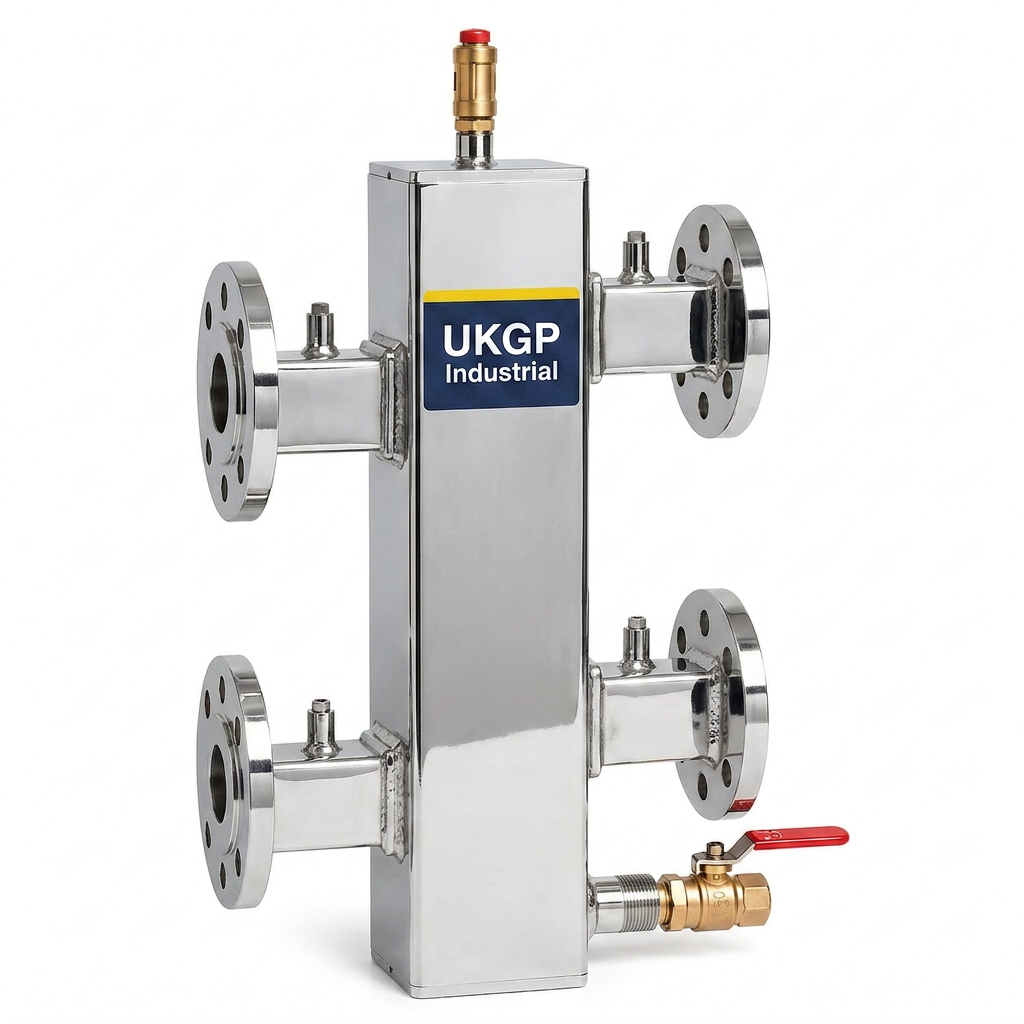
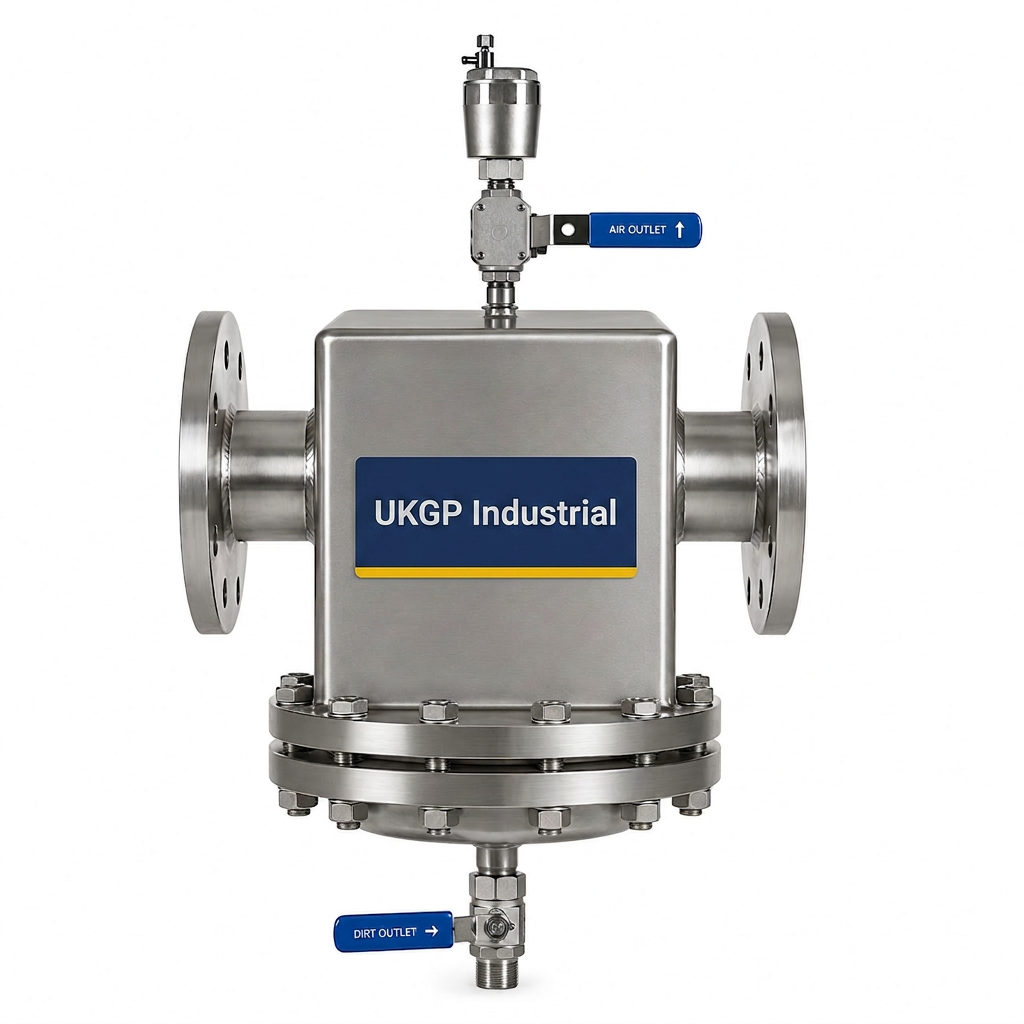
A combined air and dirt separator is a multi-functional component engineered to address two primary system contaminants: free air/micro-bubbles and suspended solids (sludge). In closed-loop LTHW and chilled water systems, air exists in three forms: trapped air at high points, dissolved air within the water, and micro-bubbles distributed throughout the flow. Standard automatic air vents (AAVs) are effective only for trapped air at the point of installation, whereas a dedicated separator uses a coalescing medium—often a stainless steel or copper internal structure—to force micro-bubbles to merge and rise out of the flow.
Simultaneously, the large internal volume of the separator body reduces the flow velocity of the fluid significantly. This reduction in velocity allows suspended solids, which are denser than water, to drop out of the flow and settle into the collection chamber at the bottom of the unit. This 'quiet zone' is essential because it prevents the re-entrainment of dirt into the system distribution pipework. By combining these two processes, engineers can protect sensitive downstream components such as modulating pumps and plate heat exchangers from both erosion and blockage.
Unlike traditional Y-strainers, which only capture larger particles and eventually restrict flow as they blind, a separator is designed to operate with a constant, low pressure drop. The debris collected in the bottom of the vessel can be flushed out while the system is live via a dedicated blow-down valve. This makes combined units far more suited to the high-efficiency, low-carbon heating systems specified in current UK building regulations.
- Micro-bubble deaeration through coalescing media.
- Dirt separation via velocity reduction and gravity.
- Protection of high-efficiency pumps and plate heat exchangers.
- Compliance with BSRIA BG29/21 and BG50.
Impact on System Performance and Longevity
Air is a major insulator in building services. The presence of air pockets in radiatiors or heater batteries significantly reduces the heat transfer coefficient, forcing boilers to run longer or at higher temperatures to meet the building's set-point. By removing micro-bubbles at the source, air and dirt separators ensure that the fluid remains a more effective medium for heat transport. This lead to measurable improvements in the seasonal performance factor (SPF) of heat pumps and the efficiency of condensing boilers.
Furthermore, the presence of oxygen is the primary driver of internal corrosion. Oxygen entering the system through permeable components or during makeup water cycles reacts with ferrous metals to create magnetite (black sludge). By deaerating the water to a level below the saturation point, separators starve the corrosion process of its fuel. This is particularly vital in modern UK plant rooms where compact, thin-walled heat exchangers are common; these components have zero tolerance for the abrasive effects of circulating magnetite.
Dirt and sludge also wreak havoc on variable speed pumps. Magnetite is magnetic, and as modern pumps often utilise permanent magnet motors, they can actually attract debris into the motor housing, leading to premature bearing failure and seized impellers. A combined separator, often equipped with a magnetic insert, removes these particles before they reach the pump, significantly extending the mean time between failures (MTBF) for the entire plant.
- Elimination of 'air-locking' and noise in terminal units.
- Reduction in oxygen-driven corrosion rates.
- Protection of pump impellers from cavitation and abrasive wear.
- Enhanced heat transfer across emitters.
BSRIA BG29/21: The Benchmark for Cleanliness
The BSRIA BG29/21 'Pre-commission Cleaning of Pipework Systems' is the definitive guidance for UK building services. It outlines the necessary steps to ensure a system is free of debris, scale, and biological growth before it is handed over to the client. While chemical cleaning and flushing are central to this process, the role of mechanical separators is explicitly recognised. BG29/21 emphasizes that system cleanliness cannot be maintained through a single flush; it requires ongoing management to prevent the build-up of secondary contaminants.
The presence of a combined air and dirt separator provides a continuous cleaning mechanism that supports the objectives of BG29/21. During the initial commissioning phase, the separator captures the fine 'fines' and construction debris that may have bypassed initial coarse flushing strainers. The standard highlights that even small amounts of suspended solids can lead to under-deposit corrosion and the rapid degradation of water quality. Using a high-grade separator helps contractors achieve the stringent turbidity targets set out in the guide's water analysis appendices.
Moreover, BG29/21 notes that the design of the system should facilitate easy maintenance. A separator with a blow-down valve allows the facility manager to remove accumulated sludge without draining the system or breaking into the pipework. This aligns with the 'life-cycle' approach to building maintenance, ensuring that the water quality achieved at commissioning is preserved throughout the operative life of the building.
- Specific threshold for suspended solids and iron content.
- Requirement for constant removal, not just initial flushing.
- Guidance on bypass filtration and separation.
Engineering Specification and Sizing Standards
A common error in UK plant room design is sizing an air and dirt separator based solely on the pipe diameter. This is a flawed approach because the effectiveness of the separator is entirely dependent on the fluid velocity. Most high-quality separators are designed to operate at a maximum flow velocity of 3.0 m/s, with optimal separation occurring at around 1.0 to 1.5 m/s. If the velocity is too high, the 'quiet zone' is compromised, and debris will be pulled back into the stream. Conversely, if the unit is oversized, it unnecessarily increases the project cost and plant room footprint.
Consulting engineers must specify separators based on the peak flow rate (m³/h) and the allowable pressure drop (kPa). In high-flow systems, multiple units may be required in parallel, or a side-stream filtration approach may be used. However, for most commercial LTHW systems, a full-flow in-line separator is preferred to ensure that all water circulating through the plant is treated on every pass. The pressure drop across a clean separator is typically negligible (less than 5-10 kPa), but this must be accounted for in the total dynamic head (TDH) calculations for the circulating pumps.
Material selection is also critical. For chilled water systems (CHW), carbon steel separators must be adequately insulated with vapor-sealed material to prevent external condensation and corrosion. In many UK applications, stainless steel units or those with specialized internal coatings are specified to provide a longer service life, particularly in systems where water chemistry may fluctuate. The specification should always require the unit to be manufactured to the Pressure Equipment Directive (PED) 2014/68/EU standards.
- In-line full flow vs. side-stream bypass.
- Correct sizing based on velocity, not pipe size.
- Pressure drop considerations for pump selection.
Separator vs. Side-Stream Filtration
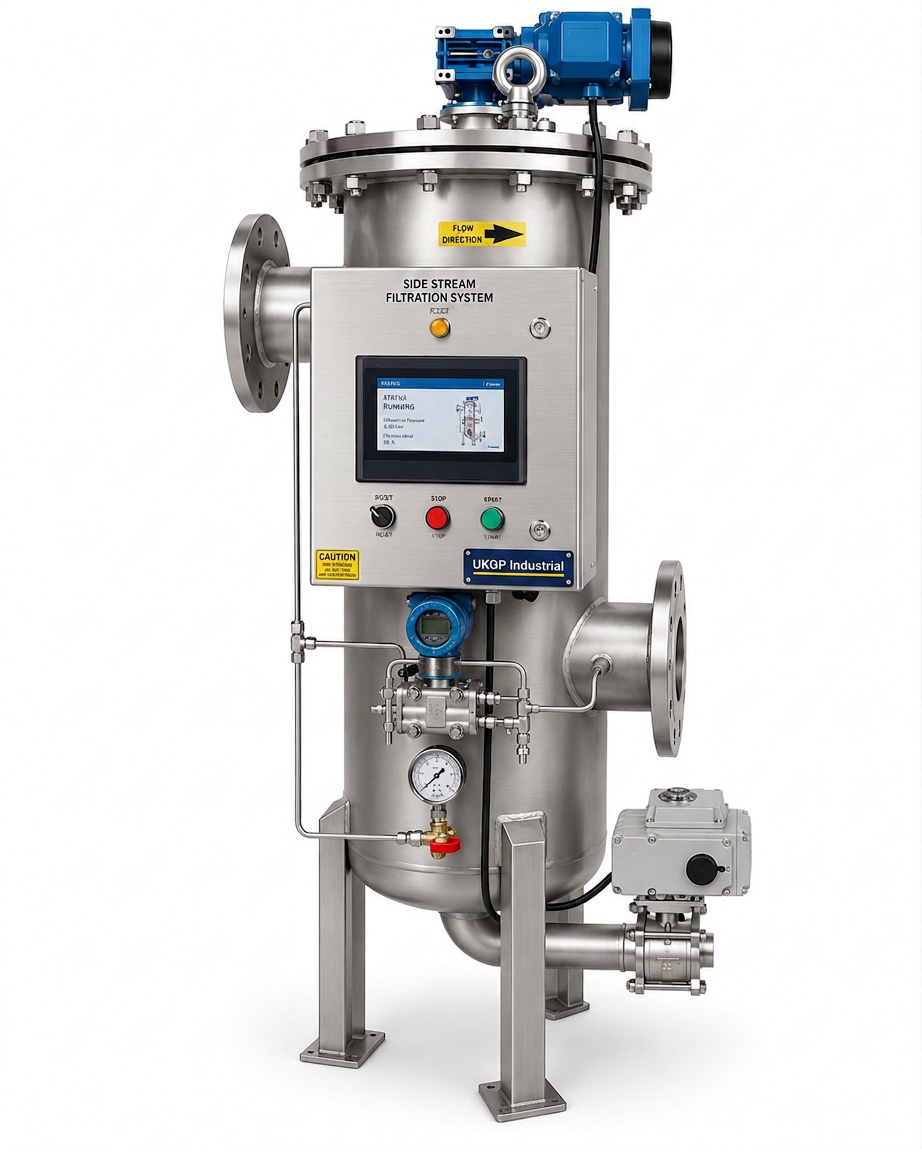
While air and dirt separators are excellent for general system protection, they are often used in conjunction with side-stream filtration on larger or older 'legacy' systems. A combined separator is a passive device that relies on gravity and velocity reduction; it is generally effective at removing particles down to approximately 5-10 microns. Side-stream filtration, however, uses active media (such as bag or cartridge filters) to achieve higher levels of filtration, often down to 1 micron, but only treats a portion of the flow (typically 5-15%).
The choice between a standalone separator or a combined approach depends on the system volume and the cleanliness requirements. For a new-build LTHW system designed to BG29/21 standards, a high-efficiency in-line air and dirt separator is often the primary line of defense. It captures the vast majority of circulating debris. However, if the water analysis shows high levels of very fine suspended iron (magnetite), a side-stream filter or a separator with a high-strength magnetic insert becomes necessary to reach the required clarity.
In maintenance-led retrofits, where an old boiler is being replaced by a modern high-efficiency unit, the installation of both is highly recommended. The separator provides the bulk removal of air and coarse sludge, while the side-stream filter acts as a 'polishing' unit to continuously clean the system water, which may have been contaminated for years. This belt-and-braces approach is the most effective way to protect the new plant and satisfy manufacturer warranty conditions.
- Relative vs. absolute filtration.
- The 'sludge' problem in older systems.
- Complementary technologies for total system health.
Installation Best Practices in LTHW/CHW Systems
For air removal to be most effective, the separator must be installed at the point of lowest air solubility in the system. According to Henry’s Law, air is less soluble in water at higher temperatures and lower pressures. Therefore, in an LTHW system, the ideal location is on the primary flow pipe, immediately after the boiler and before the main circulating pumps. In a chilled water system (CHW), the unit should be placed on the return header, where the water is at its warmest before entering the chiller.
Orientation is another critical factor. Most air and dirt separators are designed for horizontal or vertical pipework and cannot be rotated without losing their effectiveness. The deaeration vent at the top must remain upright to allow the gas to escape, and the drain valve at the bottom must be accessible for regular blow-down. If a separator is installed in a location where it cannot be serviced, its value as a dirt collector is entirely lost as it will eventually fill with sludge.
Finally, engineers must consider the mechanical support of the unit. Larger separators (DN150 and above) contain a significant volume of water and are considerably heavy. They should be supported by independent brackets or floor plinths rather than relying on the pipework itself. It is also good practice to install isolation valves on either side of the unit to allow for internal inspection during major shutdowns, although this is more common for units with removable flanges.
- The point of lowest solubility for air.
- Accessibility for maintenance and flushing.
- Support and anchoring of large vessels.
Maintenance and the BG50 Standard
While BG29/21 focuses on the pre-commissioning phase, BSRIA BG50 'Water Treatment for Closed Heating and Cooling Systems' covers the ongoing maintenance. BG50 stresses that mechanical separators are not 'set and forget' devices. They require a scheduled flushing regime to be effective. In the first few weeks after commissioning, the drain valve should be opened frequently—sometimes daily—to remove the high volume of construction debris. Once the system has stabilized, a monthly or quarterly blow-down is typically sufficient.
When performing a blow-down, safety is paramount. The water in an LTHW system is under pressure and at high temperature; the discharge should be piped to a safe, visible drain point using heat-resistant hose or permanent pipework. Facility managers should monitor the clarity of the water being flushed. If the water remains heavily discoloured after several seconds of flushing, it indicates either a failure in the water treatment chemicals or a high rate of ongoing corrosion that requires further investigation.
Regular inspection of the internal coalescing medium is also recommended every 3-5 years, depending on the system's condition. Some separators feature a removable top flange or a bottom plate which allows the internal element to be cleaned or replaced. If the internal structure becomes heavily fouled with scale or 'glues' (resulting from chemical overdosing or bacterial bio-films), its ability to strip air and drop dirt will be severely impaired. Maintaining these units ensures the system remains compliant with BG50 throughout its lifecycle.
- Flushing regimes and frequency.
- Monitoring the health of the separator.
- Health and Safety during blow-down procedures.
Conclusion: Integrating Separation into Modern Design
The integration of air and dirt separators into modern building services design is no longer an afterthought but a prerequisite for success. As we move towards lower-temperature heating (Heat Pumps) and higher-efficiency cooling, the margin for error in water quality has narrowed. Air and dirt are the enemies of these sensitive systems, leading to increased energy bills, higher maintenance costs, and premature equipment failure. Relying on outdated filtration methods like Y-strainers is no longer sufficient to meet the standards set by BSRIA BG29/21.
By specifying high-performance combined separators, engineers provide a robust, low-maintenance solution that addresses both gas and solid contamination. These units are a key component in the 'clean system' philosophy required for modern plant rooms. They ensure that the heat transfer fluid performs as intended, protecting the investment of the client and the reputation of the design engineer. In the context of the UK’s drive towards Net Zero, the energy savings garnered from improved heat transfer and reduced pump head are significant contributors to a building’s overall efficiency.
Ultimately, compliance with BG29/21 and BG50 is about more than just checking a box during commissioning; it is about ensuring the system operates reliably for 20 to 30 years. Professionals who prioritise the inclusion of air and dirt separators in their designs are choosing the most cost-effective way to prevent the long-term degradation of building services infrastructure. Proper selection, correct placement, and a commitment to maintenance are the pillars of a clean, efficient, and compliant hydronic system.
- Lowering energy consumption.
- Meeting manufacturer warranty requirements.
- Operational reliability.
Frequently asked questions
Where is the optimum position for an air and dirt separator?
- The separator should be installed on the flow pipe from the boiler/chiller where the pressure is lowest and temperature is highest (for LTHW), as this facilitates the release of air. If space is limited, return-side installation is still beneficial for dirt removal before the heat exchanger.
Do I need a side-stream filter if I have a combined separator?
- While a separator uses a coalescing medium to drop debris and rise air, side-stream filtration (usually with bags or cartridges) specifically targets finer suspended solids. In high-rise or large-volume systems, both are often required to meet BG29/21 turbidity targets.
What are the maintenance intervals for these units?
- In accordance with BG50 (Maintenance), separators should be flushed at least monthly, or more frequently during the first few weeks of operation following a system flush or retrofit. Blow-down occurs via the drain valve at the base.
How does velocity affect the performance of a separator?
- Velocity is critical. Most separators are designed for a flow velocity of 1.5 m/s to 3.0 m/s. Exceeding the manufacturer’s maximum flow rate will result in high pressure drops and reduced separation efficiency as air bubbles/dirt particles are carried through by the force of the water.