Pre-Installation Assessment and Sizing
Before selecting equipment, a thorough assessment of the existing system capacity and water condition is vital. Unlike primary filtration, side stream filtration operates by continuously diverting a portion of the circulating water—typically 5% to 15%—through a high-efficiency filter. To size the unit correctly, engineers must calculate the total system volume. If original O&M manuals are unavailable, volume can be estimated based on the pipework diameters and radiator/fan coil counts, or by measuring the chemical dilution rate.
Consultants should refer to BSRIA BG50 (Water Treatment for Closed Heating and Cooling Systems) which emphasises that mechanical filtration is as critical as chemical dosing. In retrofit scenarios, the goal is often 'remediative' rather than just 'preventative'. This means the initial filtration load will be significantly higher than in a new build. Sizing should also account for the required turnover rate; a standard benchmark is to ensure the entire system volume passes through the filter every 24 hours.
- Determining system volume (litres) for correct sizing.
- Analysing current water chemistry and TSS (Total Suspended Solids) ppm.
- Identifying primary contaminants (e.g., magnetite in steel systems vs. debris in mixed-metal systems).
- Assessing available plant room floor space and electrical supply.
Hydraulic Integration and Connection Points
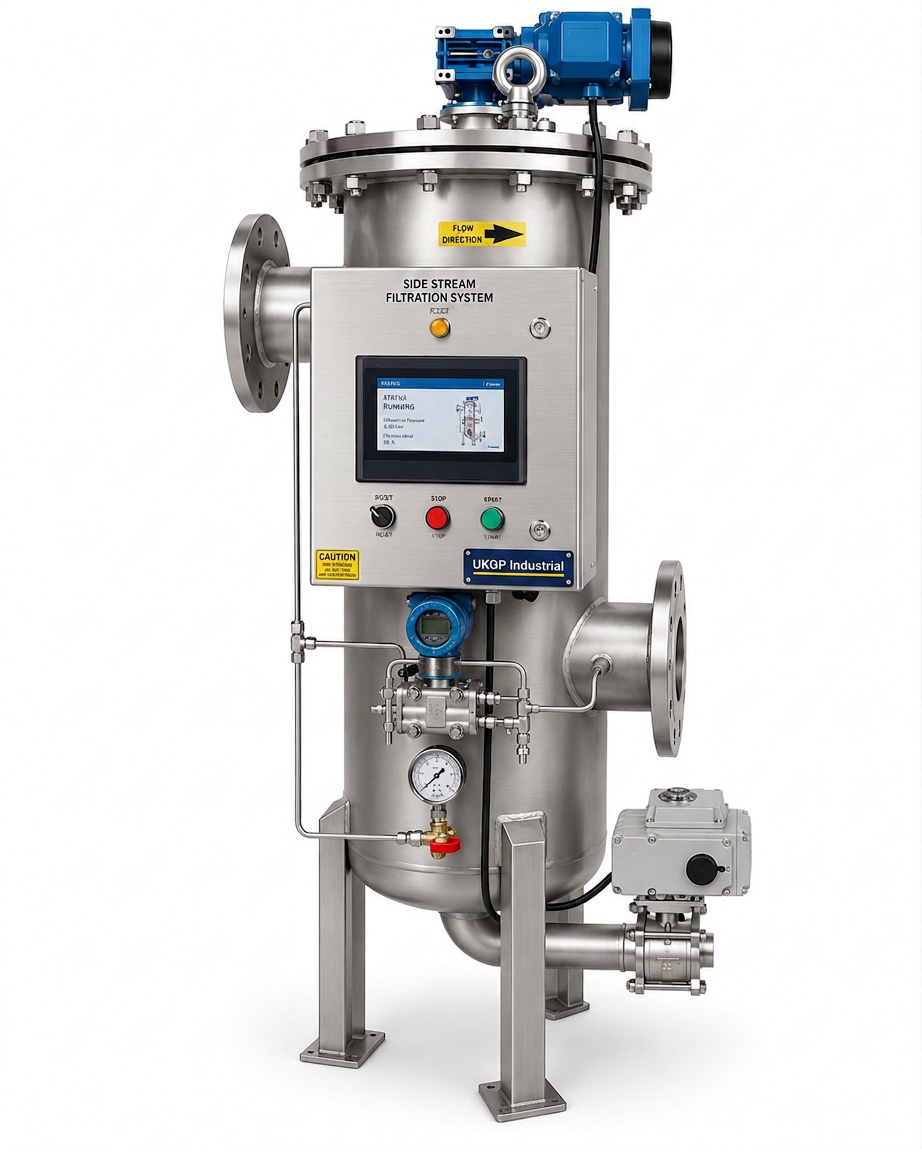
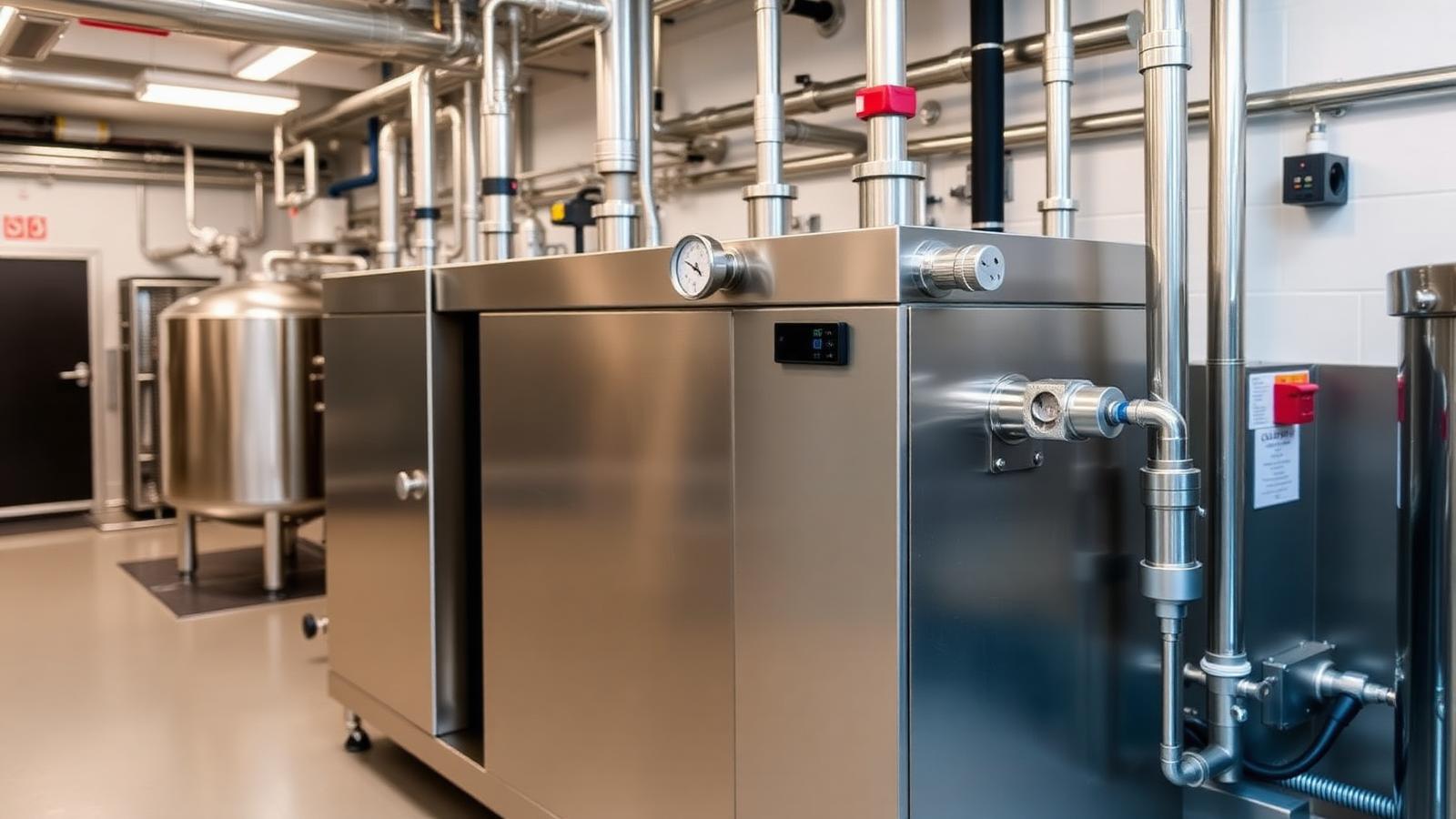
The physical connection of the filtration unit to the existing network is critical for performance. In a retrofit context, connecting across the main flow and return headers is common, but this relies on the system’s differential pressure, which may fluctuate with variable speed pumps. For consistent results, a UKGP side stream filtration skid with an integral pump is preferred. This ensures the filter operates at a constant flow rate irrespective of the main system's hydraulic state, providing reliable 'round-the-clock' cleaning even when the main pumps are modulation down.
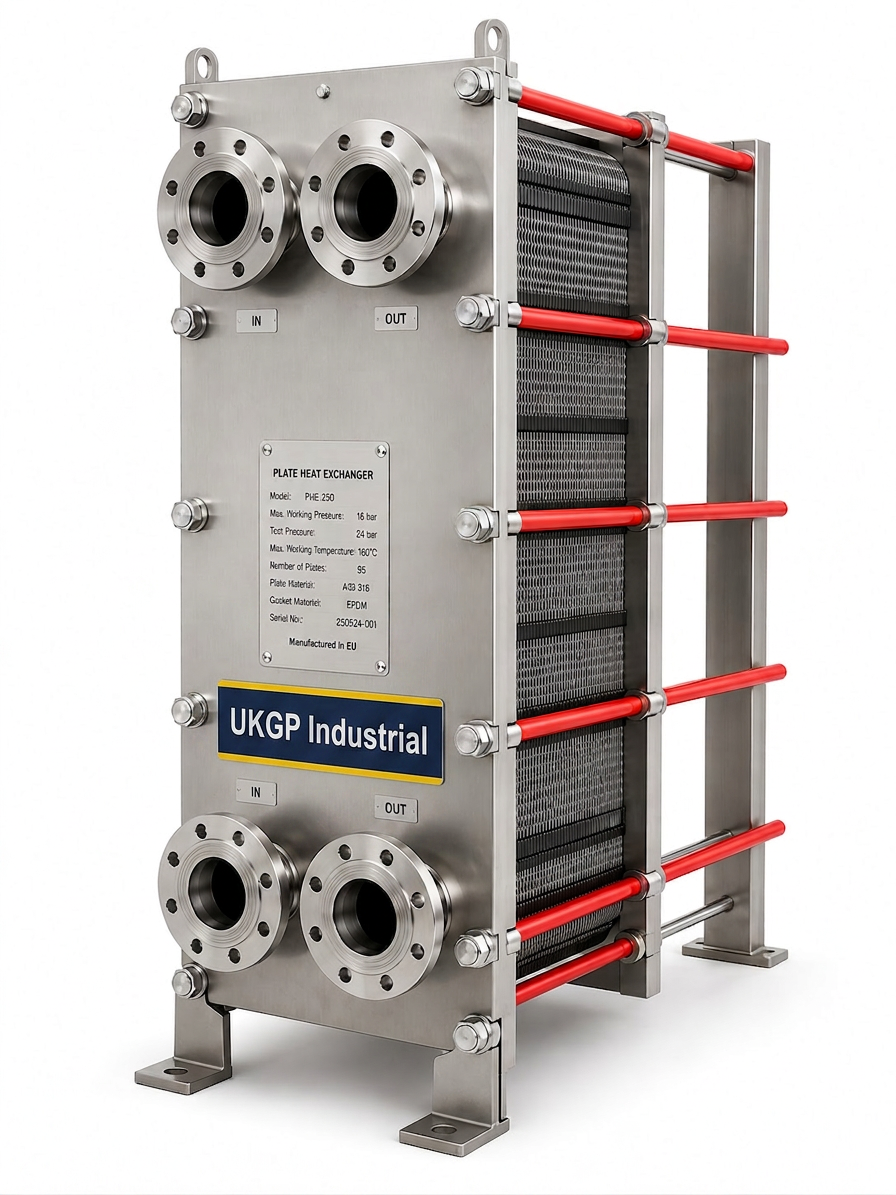
Connection points should ideally be located in the plant room on the main return pipework, prior to the boilers or the UKGP plate heat exchanger. This protects the most expensive primary assets from incoming debris. Use 'wet tapping' or 'hot tapping' techniques if the system cannot be drained down, though most commercial retrofits are scheduled during low-demand periods where a partial drain-down of the plant room headers is feasible. Ensure that the take-off and return points are spaced at least 500mm to 1000mm apart to prevent 'short-circuiting' of the filtered water.
- Directly across the main flow and return headers to utilise system differential pressure.
- Using a dedicated pump (skid-mounted) to ensure constant flow regardless of system demand.
- Placement on the return leg, upstream of heat exchangers or boilers.
Technical Specification of the Filtration Unit
When specifying the unit for a retrofit, a dual-stage approach is the industry gold standard. Magnetite, a byproduct of internal corrosion in steel pipework, is often the primary culprit for seized pump rotors and blocked control valves. Therefore, the unit must incorporate high-intensity magnetic rods within the flow path. These rods should be easily removable for cleaning without requiring a complete system shutdown.
Following the magnetic stage, a physical bag filter captures non-magnetic particles such as scale, weld slag, and Bio-wrap. For a heavily contaminated system, engineers should start with a 50-micron bag to avoid immediate blinding, and progressively move down to a 5-micron or 1-micron bag as the water clarifies. Specifying a unit with clear pressure gauges on the inlet and outlet allows facility managers to monitor the 'dirty' status of the filter, ensuring maintenance is proactive rather than reactive.
- High-intensity magnetic rods for capturing black iron oxide (magnetite).
- Filter bags ranging from 50 microns down to 1 micron for non-magnetic debris.
- Differential pressure gauges to indicate filter saturation.
- Isolating valves for 'no-stop' maintenance.
Ancillary Equipment and System Stabilisation
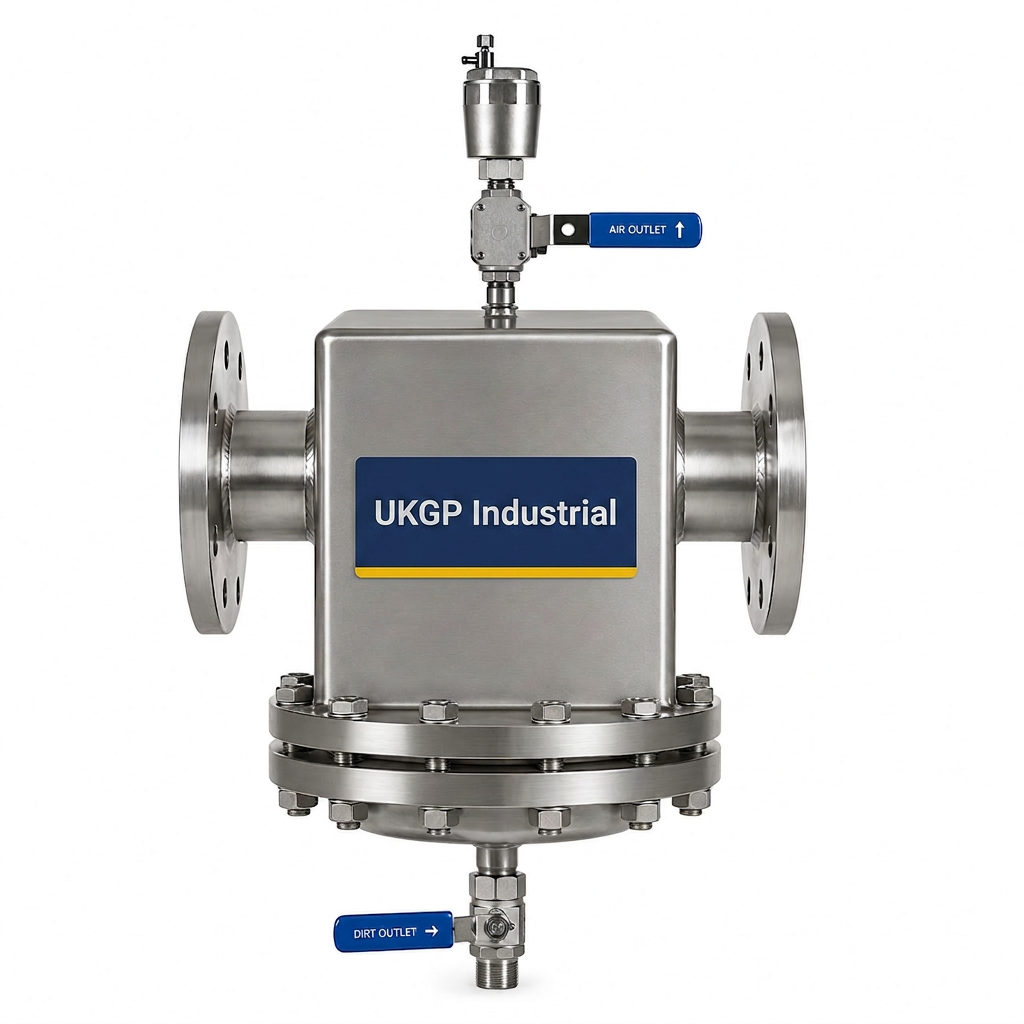
Effective side stream filtration is part of a wider ecosystem of water quality management. During a retrofit, it is common to find that existing air removal is inadequate. Micro-bubbles contribute to ongoing corrosion, which produces the very magnetite the filter is trying to remove. Incorporating UKGP air & dirt separators alongside the filtration skid ensures both dissolved gases and heavy particles are addressed, creating a comprehensive treatment strategy.
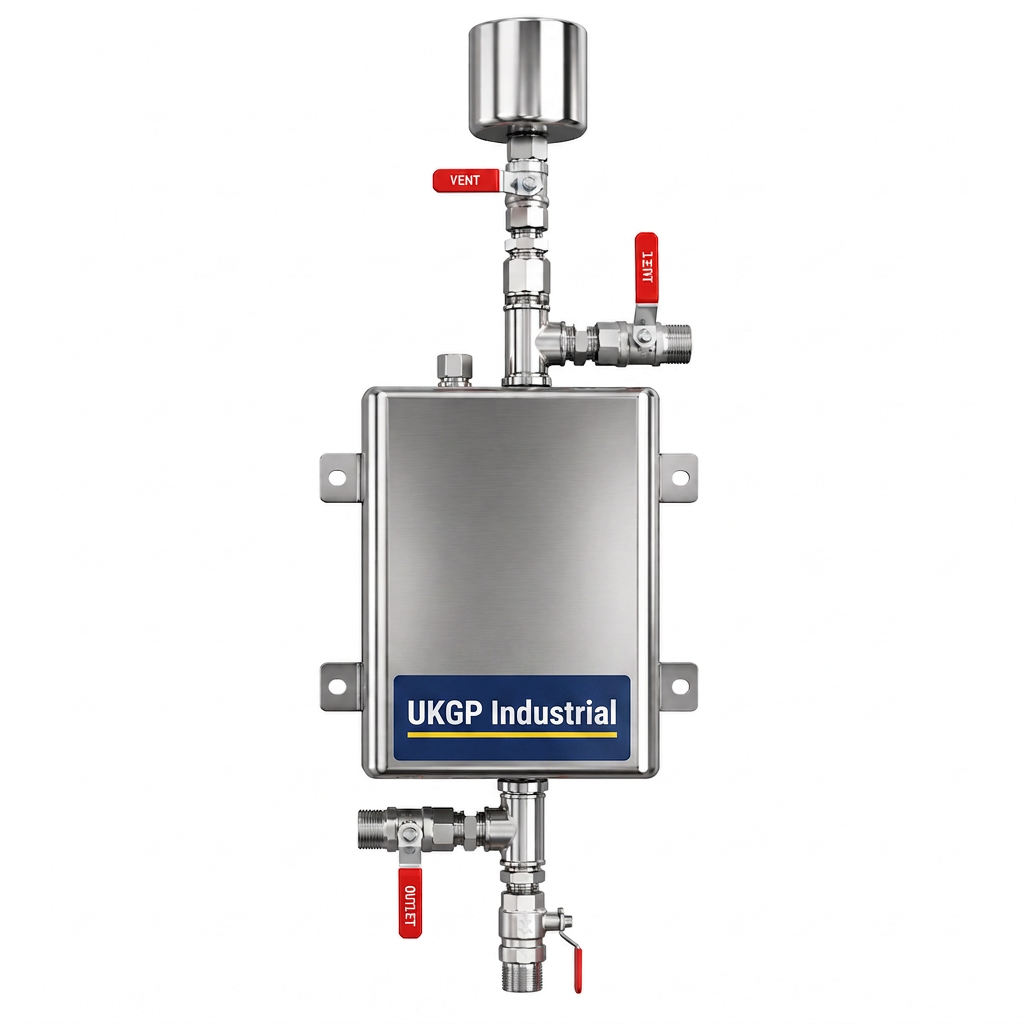
Furthermore, once the mechanical filtration has removed the bulk of the 'sludge', the system's chemical balance must be restored. A UKGP chemical dosing pot should be installed to allow for the easy introduction of corrosion inhibitors and biocides. Removing the debris often reveals the true state of the system chemistry; with the solids gone, chemicals can work more effectively to passivate the metal surfaces and prevent further degradation. Balancing mechanical removal with chemical protection is the only way to ensure long-term system stability.
- Installing a UKGP chemical dosing pot for inhibitor top-ups.
- Checking and cleaning the UKGP air & dirt separators regularly.
- Ensuring the filtration skid is interlocked with the BMS for fault monitoring.
Ongoing Maintenance and Performance Monitoring
The first 48 hours after commissioning a retrofit side stream filter are critical. In a dirty system, the filter bag may reach capacity within hours. Maintenance staff should be briefed to check the differential pressure gauges frequently during this period. As the system cleans up, the intervals between bag changes will lengthen. It is a common mistake to remove the filter once the water 'looks clear'; however, microscopic particles continue to cause erosive wear, so the unit should remain in continuous operation.
Performance should be validated through periodic water analysis in accordance with BSRIA BG50 guidelines. By tracking the reduction in Total Suspended Solids (TSS) and iron levels, M&E contractors can provide tangible evidence of system improvement to the end client. Not only does this protect the plant, but it also frequently results in lower energy consumption, as clean heat exchanger surfaces and improved flow characteristics allow the system to operate much closer to its original design efficiency.
- Visual 'jar tests' to compare before-and-after water clarity.
- Periodic TSS and dissolved iron testing via an independent lab.
- Monitoring of heat transfer rates across major heat exchangers.
Frequently asked questions
What is the recommended flow rate for a side stream filter?
- Ideally, the system should be designed to turn over the full system volume every 24 hours. This typically equates to a flow rate of 5-15% of the total circulating flow.
Which BSRIA standards apply to side stream filtration?
- BSRIA BG29/21 covers pre-commission cleaning, while BG50 provides specific guidance on water treatment and monitoring for closed systems in buildings, including the use of side stream filtration.
How does a side stream filter affect system pressure drop?
- Pressure drop is negligible because the unit operates on its own dedicated pump on a 'side loop', meaning it does not add resistance to the main system headers or index circuit.
Should I use magnetic or bag filtration?
- In systems with high levels of magnetite or previous corrosion, we recommend using a UKGP side stream filtration skid that incorporates both a high-intensity magnetic core and a particulate filter bag for dual-action removal.
How often do filter bags need replacing?
- Bag changes should be dictated by the differential pressure gauges on the skid. In dirty systems, this may be daily during the first week, settling to monthly or quarterly as the system clears.