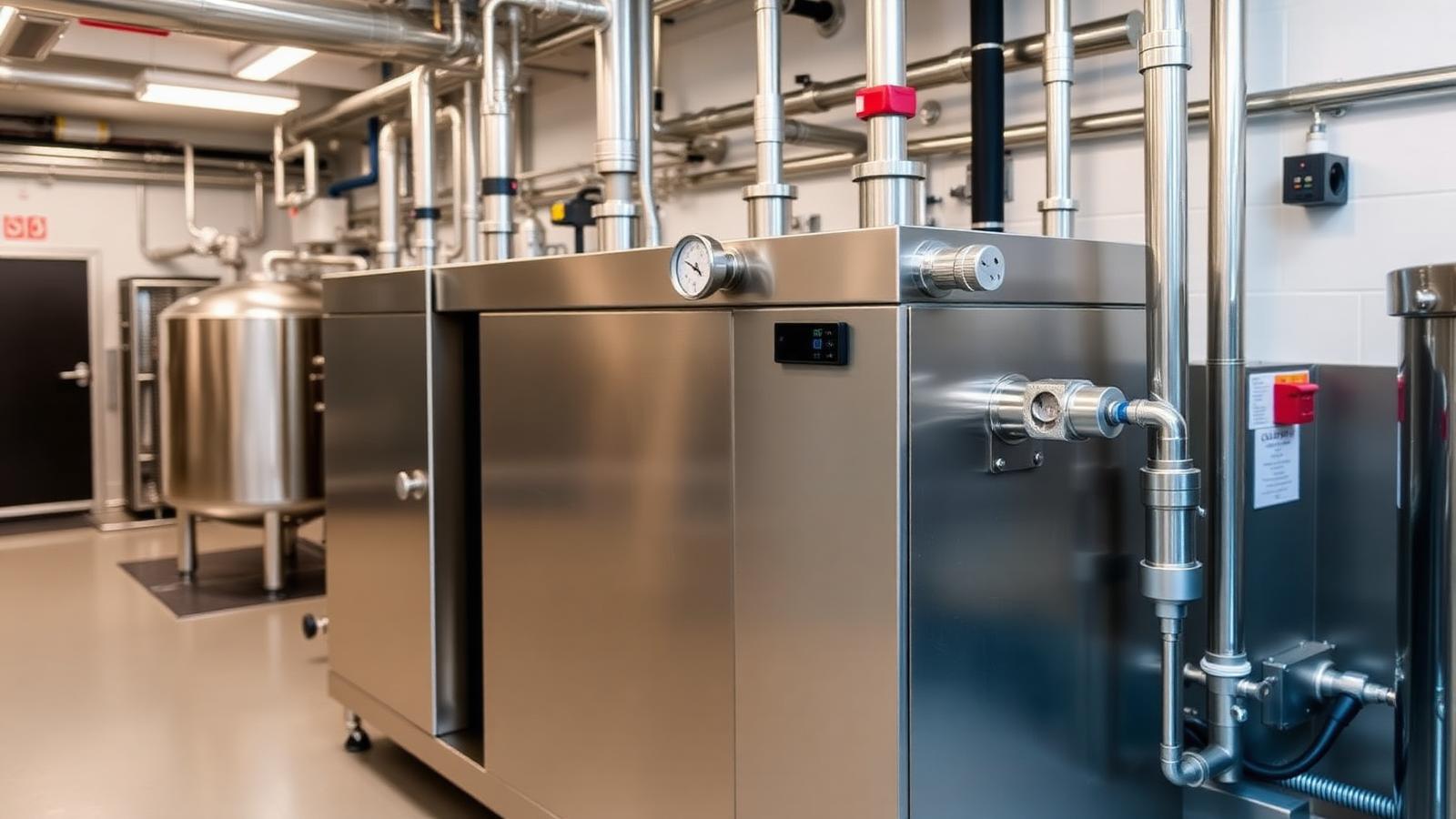
Pre-Installation Site Assessment and Sizing
Before specifying a side stream filtration unit, a comprehensive assessment of the system volume and water quality is mandatory. BSRIA BG29/21 emphasizes that system cleaners and biocide treatments are only effective if the resulting particulate matter can be physically removed from the loop. For most commercial applications, the filter should be sized to process the total system volume at least once Every 24 hours, which typically equates to a flow rate of 5% to 15% of the primary circulating flow.
Engineers must distinguish between the needs of a new-build installation and a retrofit. In a new system, the objective is the removal of construction debris and flash rust. In a legacy system, the filter must handle a significantly higher load of magnetite and scale. Failure to accurately gauge the debris load will lead to rapid filter saturation, excessive maintenance intervals, and potential bypass of the filtration media if the pressure differential is not monitored.
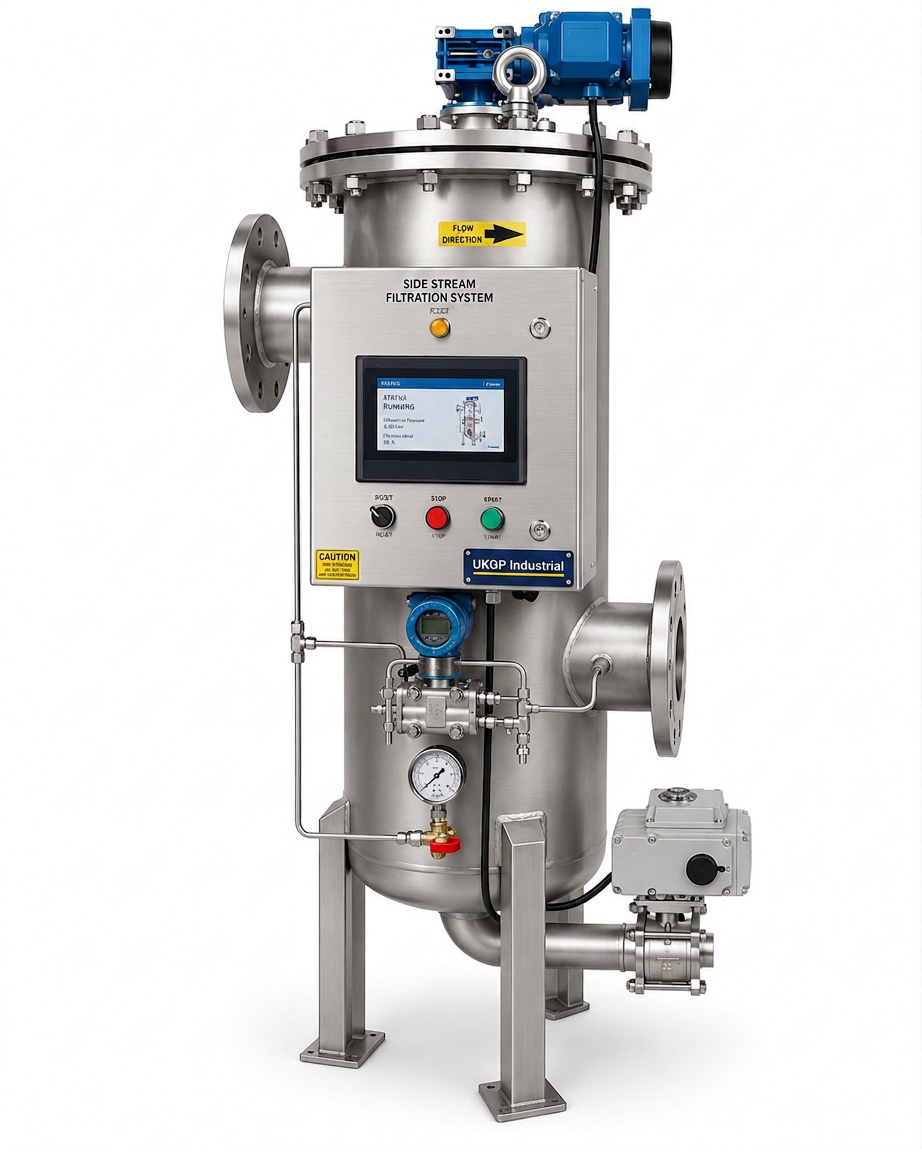
Pressure considerations are equally vital. While some passive filters rely on the system’s differential pressure between the flow and return, this can be unreliable in variable volume systems where pump speeds fluctuate. A dedicated UKGP side stream filtration skid, which incorporates an integral booster pump, ensures a constant flow rate regardless of the main system's hydraulic state, providing more predictable and effective polishing of the water.
- Calculation of total system water volume (m³).
- Evaluation of system pump head vs. filter pressure drop.
- Assessment of suspended solids (mg/L) via water analysis.
- Space requirements for filter bag withdrawal and maintenance access.
Hydraulic Connection and Pipework Management
The physical integration of the side stream filter into the HVAC loop requires precision to avoid hydraulic short-circuiting. The ideal installation point is across the primary flow and return headers, or across the common return before the pumps or heat exchangers. Tapping into the return line is generally preferred as it captures debris before it enters heat-generating plant or sensitive heat exchangers. Isolation valves must be installed at the take-off points to allow for maintenance without draining the entire system.
Pipework for the side stream loop should be sized according to the flow requirements of the specific filter skid. For a typical 5 m³/h flow rate, 40mm or 50mm pipework is usually sufficient, but the run length must be factored into the head loss calculations if a booster pump is not used. Avoiding unnecessary bends and ensuring the suction line is as short as possible will prevent cavitation and air ingress issues. All external pipework should be insulated to the same standard as the primary loop to prevent heat loss and condensation.
The use of a UKGP side stream filtration skid allows for a 'plug and play' approach, where the internal pipework of the skid is already optimised for flow and pressure drop. When connecting the skid, ensure that the return discharge is downstream of the suction point by a minimum of 1.0 metre to ensure circulating water is not immediately re-filtered, which reduces the efficiency of the overall system cleaning. Final connections should always be made using high-quality unions or flanges to facilitate easy removal if required.
- Selection of flow and return tapping points.
- Installation of isolation valves and non-return valves.
- Integration of flow meters and differential pressure gauges.
- Provision for drainage and chemical dosing ports.
System Location and Physical Arrangement
The location of the filtration plant is often dictated by available space in the plant room, but priority should be given to accessibility. A side stream filter that is difficult to access will likely be neglected by facilities management teams. There must be sufficient vertical clearance above the vessel to pull out the filter basket or bag—failure to account for this is a common design error that necessitates costly rework. If the unit is located in a basement or sub-basement, ensure there is adequate lifting equipment or height for manual handling.
Weight is a significant factor, especially when the vessel is full of water and accumulated debris. The installation surface must be a level, vibration-dampened concrete plinth. For larger skids, engineers should verify the structural load-bearing capacity of the plant room floor. If the unit includes an integrated pump, flexible connectors should be used on the inlet and outlet pipework to prevent the transmission of vibration through the building’s distribution network.
Environmental conditions also play a role. If the filtration unit is installed in a damp or poorly ventilated area, electrical components such as the pump motor and control panel must have the appropriate IP rating (typically IP55 or higher). Provision for a nearby floor drain or gully is essential to manage the water lost during filter bag changes and for the periodic blow-down of the vessel to remove heavy sludge collected in the bottom of the housing.
- Placement near the primary return to the plant.
- Adequate clearance for bag/cartridge removal (min 600mm above unit).
- Proximity to a floor gully for drainage.
- Stable, level concrete plinth or floor capable of supporting the operating weight.
Commissioning and Initial Operation
Commissioning begins with a thorough pressure test of the side stream loop to ensure no leaks are present. Once the integrity is confirmed, the vessel should be vented using the manual or automatic air vent at the highest point of the housing. Trapped air not only reduces the filtration surface area but can also lead to accelerated corrosion within the vessel and noise issues within the plant room. Initial start-up should be performed with the bypass valves closed and the flow gradually introduced to avoid hydraulic shock.
If the system is equipped with a booster pump, the commissioning engineer must verify the correct rotation of the motor and set the flow rate according to the design specification. This is also the time to calibrate the differential pressure gauges. A 'clean' reading should be recorded as a baseline. Typically, a clean filter bag will show a pressure drop of less than 0.2 bar. As the bag captures magnetite and scale, this pressure will rise; the manufacturer’s recommended limit for bag change-out—usually 1.0 to 1.5 bar—must be noted in the O&M manual.
During the first 24 to 48 hours of operation on a new or recently cleaned system, the filter bags may blind very quickly. It is critical that the contractor remains on-site or returns frequently during this initial 'clean-up' phase. Water samples should be taken from the inlet and outlet of the filter to verify the reduction in suspended solids. This laboratory data provides the necessary evidence for CIBSE and BSRIA compliance and ensures the system is ready for formal handover to the client.
- Monitoring of ΔP across the filter housing.
- Proper venting of the filter vessel.
- Safe disposal of contaminated filter media.
- Verification of pump rotation and flow rates.
Integrating Air and Dirt Separation for Maximum Efficiency
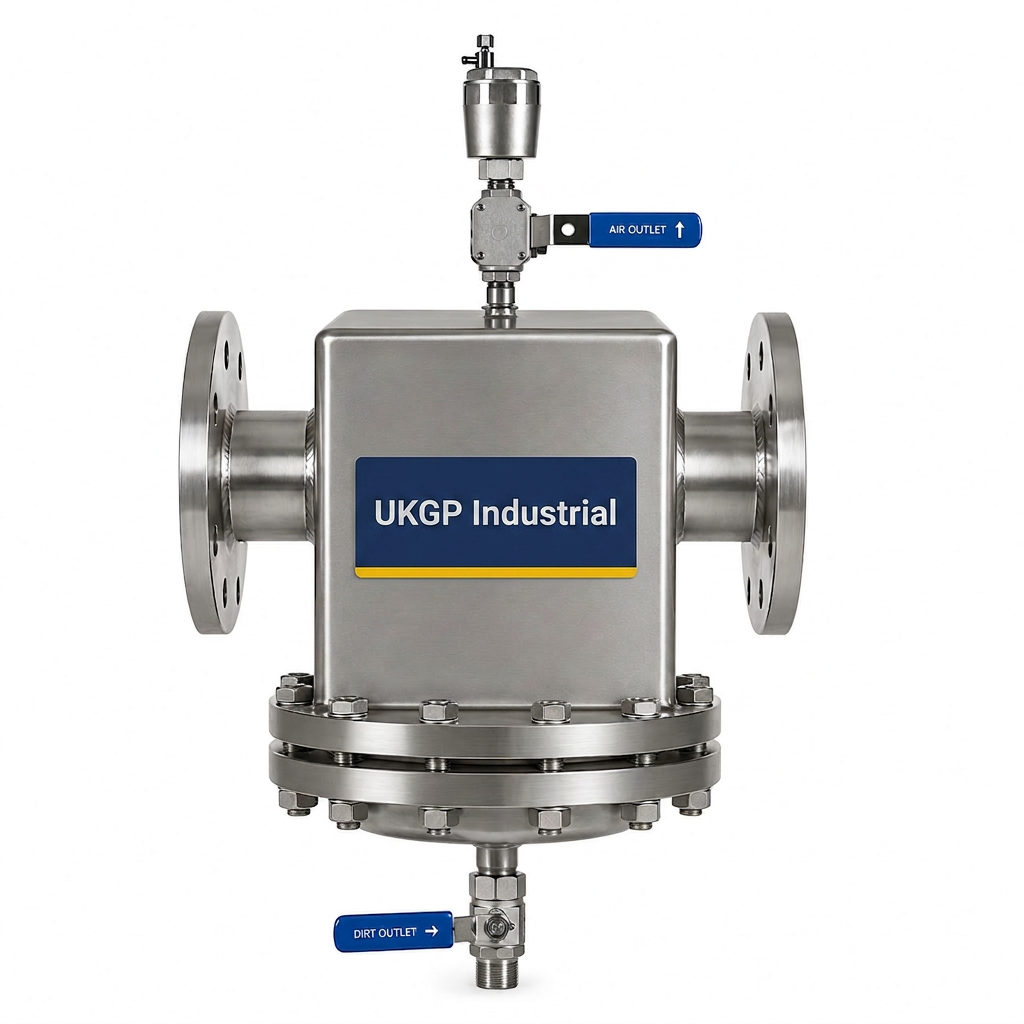
While side stream filtration is peerless for removing fine particles (down to 1–5 microns depending on the media), it should not be the only line of defence. For total system protection, UKGP air & dirt separators should be installed on the main flow to remove larger debris and micro-bubbles before they can cause damage. The separator handles the macroscopic issues, while the side stream filter provides the continuous polishing needed to keep the water within the strict turbidimetric limits required by modern boiler manufacturers.
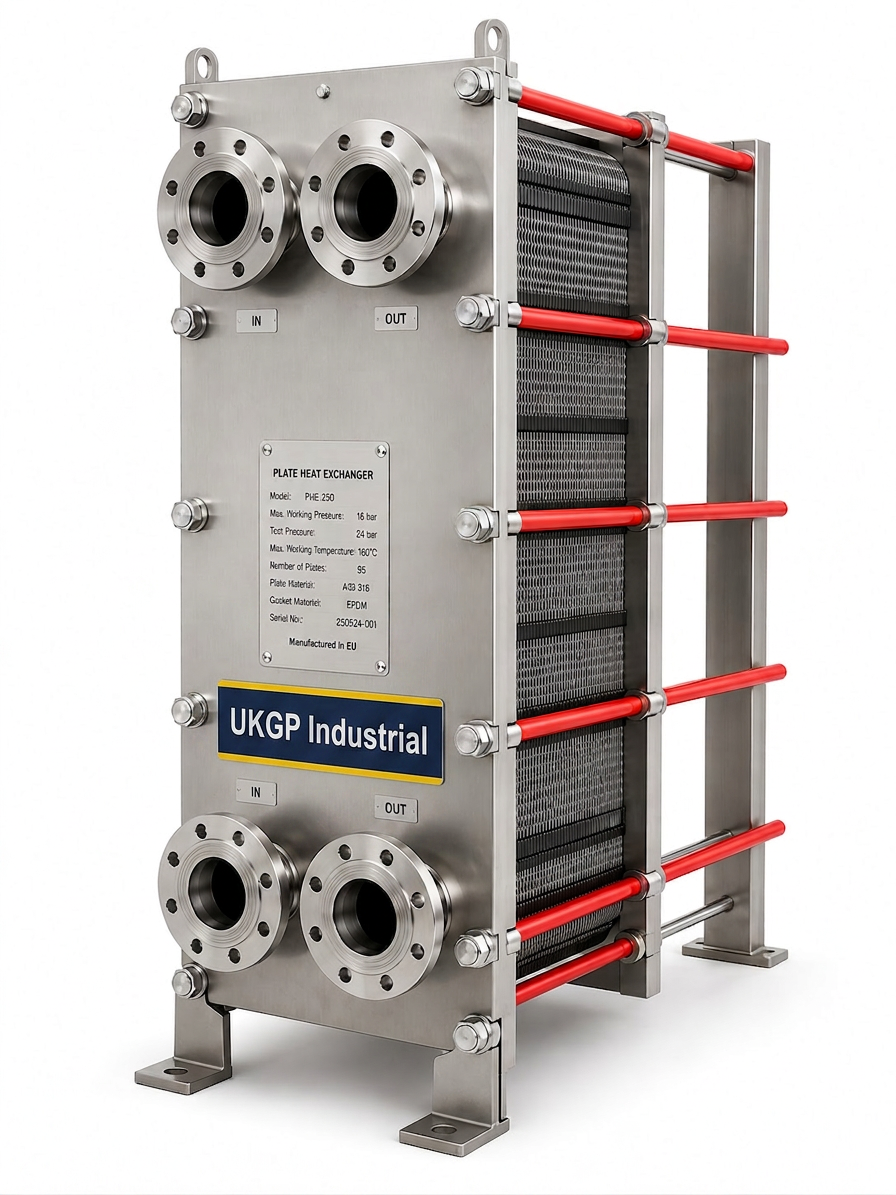
In high-temperature systems or those using Plate Heat Exchangers (PHE), the risk of magnetite deposition is particularly high. Magnetic black sludge often settles in areas of low velocity, such as the secondary side of a PHE or within the jackets of high-efficiency boilers. By combining a UKGP plate heat exchanger with a properly sized side stream filter, engineers can ensure that the heat transfer surfaces remain clean, maintaining the designed Delta T and prevents the 'kettling' or localised hotspots that lead to premature component failure.
The strategic placement of these components creates a multi-stage decontamination strategy. The air and dirt separator acts as the 'coarse' filter, protecting the pumps and primary plant, while the side stream skid acts as the 'fine' filter, maintaining the chemical and physical integrity of the water long-term. This dual approach is increasingly mandated by insurers and is considered best practice for any commercial heating or chilled water system over 50kW capacity.
- Primary full-flow air and dirt separation.
- Secondary side stream polishing.
- Protection of plate heat exchangers and boiler heat cells.
- Extending the life of control valves and sensors.
Chemical Treatment and Long-term Water Quality Maintenance
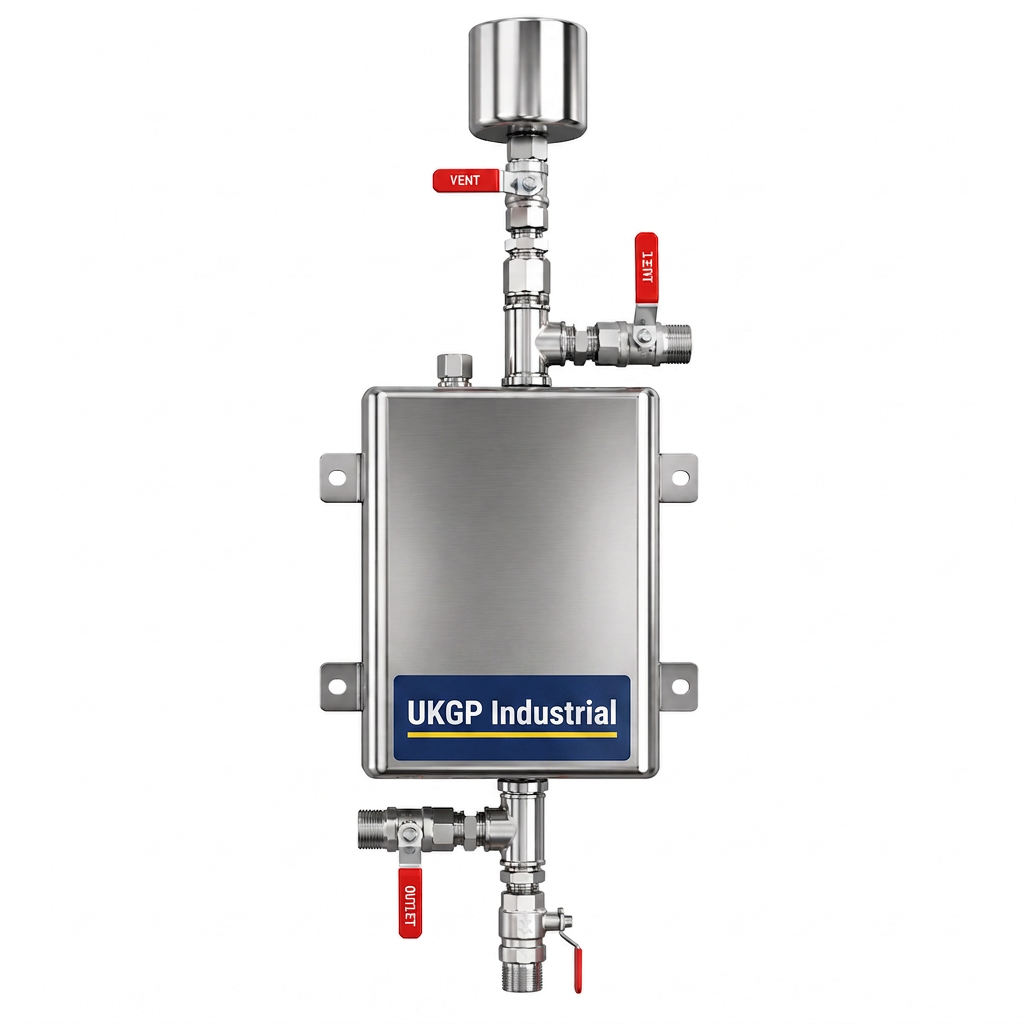
Side stream filtration and chemical water treatment are complementary, not mutually exclusive. The filter removes the physical contaminants, while the chemicals prevent the formation of new ones. To maintain the correct inhibitor levels, UKGP chemical dosing pots are often installed in parallel with the filtration skid. This allows facilities managers to introduce biocides and inhibitors easily as part of a scheduled maintenance routine, ensuring the system water remains non-corrosive and free of bacterial growth.
BSRIA BG50 (Water Treatment for Closed Heating and Cooling Systems) provides the framework for this ongoing maintenance. It stresses that filtration alone cannot stop corrosion if the water chemistry is incorrect (e.g., high dissolved oxygen or incorrect pH). Conversely, chemicals cannot protect a system that is choked with existing sludge. By using the side stream filter to 'clean' the system and the dosing pot to 'protect' it, the engineer creates a stable environment that extends the life of the plant by decades.
Regular water analysis is the final piece of the puzzle. Monthly or quarterly testing should check for iron levels, copper, pH, and conductivity. If iron levels begin to rise despite the presence of a side stream filter, it indicates either a failure in the chemical protection or that the filter media (bags/cartridges) have bypassed or are saturated. Keeping a log of bag changes and chemical additions is essential for demonstrating due diligence and maintaining manufacturer warranties on boilers and chillers.
- Chemical dosing for corrosion inhibition.
- Magnetite removal and management.
- Protection of variable speed pumps.
- Compliance with BSRIA BG50.
Economic and Operational Benefits for Facilities Managers
For facilities managers, the installation of a side stream filtration system represents a significant reduction in operational expenditure (OPEX). A system contaminated with just 1mm of scale or magnetite can see a 7% to 10% drop in heat transfer efficiency. In a large commercial building, this translates to thousands of pounds in additional fuel costs. By maintaining clear water, the side stream filter ensures the system operates at its peak designed efficiency, directly supporting CSR and carbon reduction targets.
Furthermore, the mechanical wear on variable speed pump seals and the clogging of control valves (PICVs) are frequently caused by suspended solids. These components are expensive to replace and often difficult to access. A side stream filter effectively 'insures' these components against premature failure. The cost of the filtration skid is often recovered within the first two years of operation through reduced repair costs alone, not including the energy savings associated with cleaner heat transfer surfaces.
Finally, the environmental impact of traditional 'dump and flush' cleaning methods is coming under greater scrutiny. Side stream filtration allows for 'online' cleaning, where the system is cleaned while it is operational, with zero water wastage. This avoids the need to discharge hundreds of litres of chemically treated water into the sewer system, making it the more sustainable choice for modern building management and aligning with ISO 14001 environmental management standards.
- Reduction in energy consumption by up to 10%.
- Lower maintenance costs and reduced downtime.
- Protection of expensive plant assets.
- Sustainable approach to water management (less flushing required).
Frequently asked questions
What percentage of system flow should be diverted through the side stream filter?
- In accordance with BSRIA guidelines, a side stream system should be sized to treat 5% to 15% of the total system volume per hour. For high-debris systems or older retrofits, engineers should aim for the upper end of this range to ensure adequate turnover.
Can a side stream filter replace a primary air and dirt separator?
- While both remove solids, an air and dirt separator is a full-flow device designed for primary protection, whereas a side stream filter provides secondary, fine-particle polishing and often higher-capacity debris holding. Using both is common practice in large commercial decentralised plant rooms.
How often should filter bags be replaced in a new installation?
- Depending on system conditions, bags should be inspected monthly during the first six months. Once the system stabilises, quarterly inspections or monitoring of the pressure differential Gauges is sufficient. If the Delta P exceeds 1.0 bar, the bag requires immediate replacement.
Can I install a side stream filter on a low-pressure header?
- Yes, provided a booster pump is integrated into the side stream skid. If relying on system differential pressure alone, flow may be inconsistent. A dedicated pump ensures a constant flow rate of 3-5 m³/h (depending on skid size) regardless of main loop fluctuations.