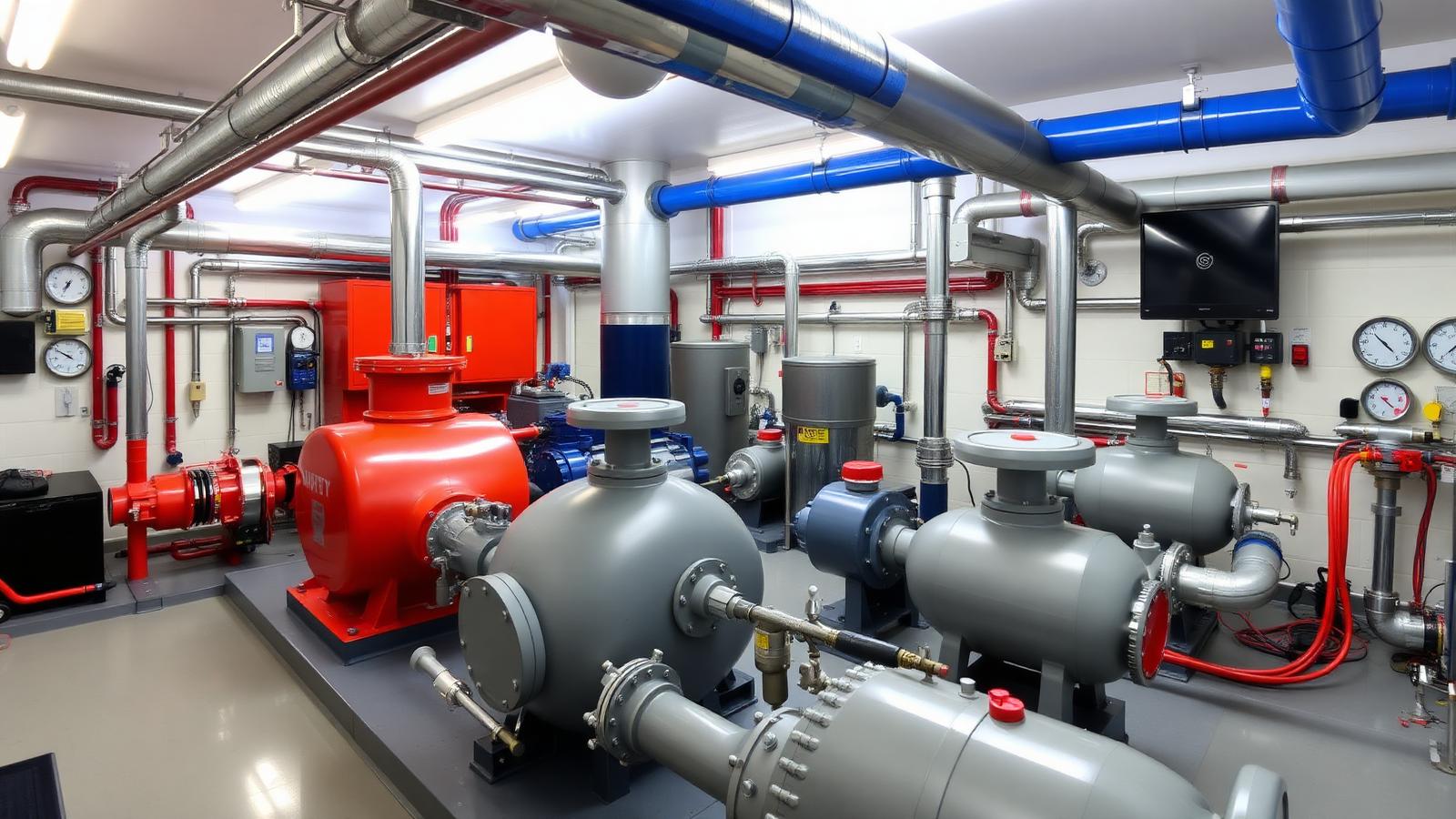
The Fundamental Role of Side Stream Filtration
In large-scale district heating networks, the sheer volume of water makes full-stream filtration practically impossible due to the astronomical pressure drops and pump energy requirements. Side stream filtration offers a pragmatic solution by diverting a portion of the circulating volume—typically between 5% and 15%—through a dedicated filtration loop. This process continuously removes suspended solids, corrosion products, and environmental contaminants without interrupting the primary flow to the consumer.
Without effective filtration, these sub-micron particles, primarily magnetite (Fe3O4), settle in areas of low flow. This leads to under-deposit corrosion and the premature failure of sensitive components such as VFD-controlled pumps and balancing valves. In a district heating context, where reliability is paramount to avoid service level agreement (SLA) penalties, the cumulative effect of suspended solids can be devastating to the operational bottom line.
Modern systems must adhere to the rigorous guidelines set out in BSRIA BG50/2021. This document highlights that water quality must be managed throughout the life of the building, not just during the commissioning phase. Side stream filtration acts as the 'kidneys' of the system, providing a continuous cleaning mechanism that compensates for the inevitable ingress of oxygen or mechanical wear that occurs over decades of operation.
- Removal of suspended solids and magnetite.
- Protection of high-efficiency pumps and control valves.
- Prevention of 'dead legs' and sediment buildup in low-velocity zones.
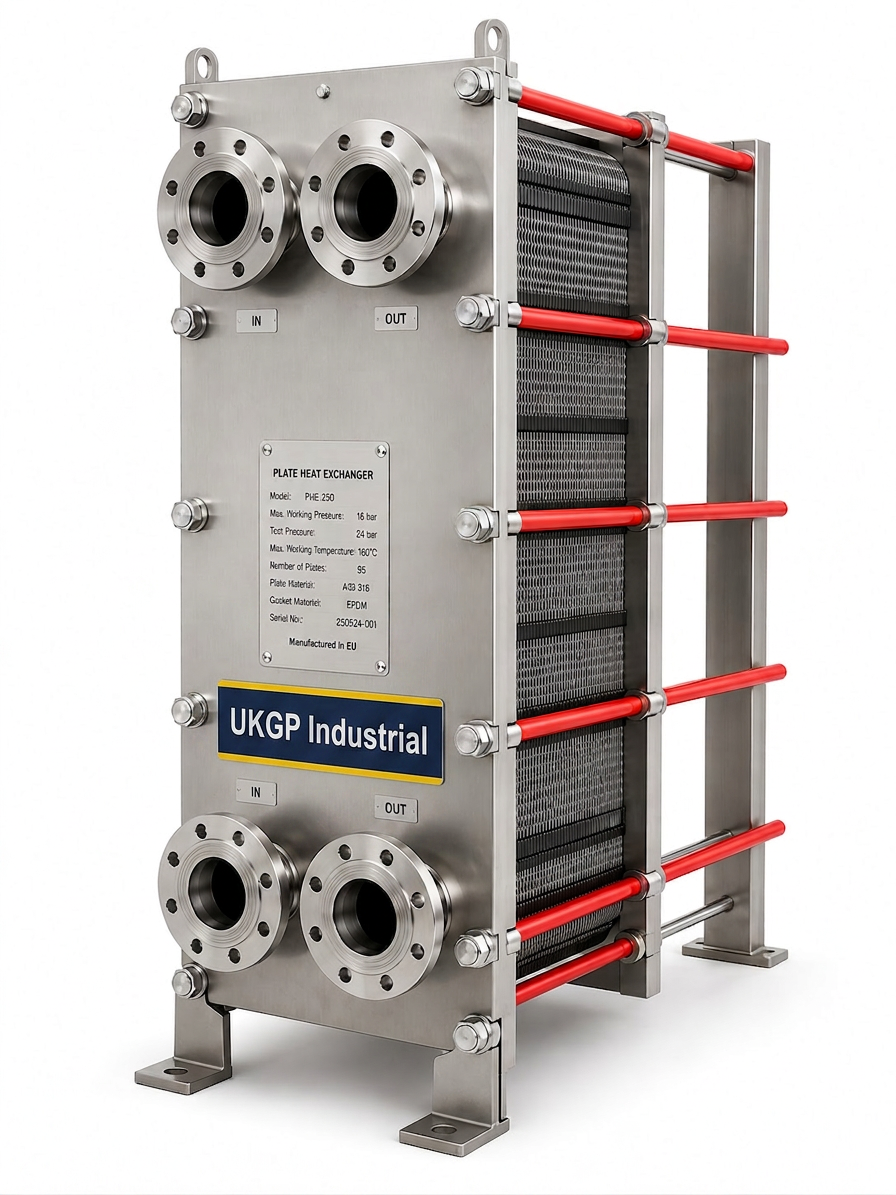
- Maintaining the efficiency of plate heat exchangers.
Impact of Suspended Solids on Network Efficiency
The efficiency of a district heating network is largely defined by its Delta T (ΔT). High return temperatures are the enemy of low-carbon heat sources such as heat pumps and condensed flue gas systems. Suspended solids contribute directly to 'low Delta T syndrome' by coating the internal surfaces of heat exchangers with a foulant layer. Even a millimetre of scale or magnetite buildup can reduce heat transfer efficiency by over 10%, forcing the network to circulate more water to meet demand.
Furthermore, modern high-efficiency circulators rely on permanent magnet motors. These are highly susceptible to magnetite, which is naturally attracted to the magnetic field of the rotor. Once captured, these particles act as an abrasive paste, wearing down bearings and seals, eventually leading to pump failure. In a district heating network, where pumps are often the single largest consumer of electricity, maintaining optimal hydraulic performance is essential for sustainability.
Control valves and Heat Interface Units (HIUs) are also at risk. Debris can block small-bore capillaries and foul the seats of pressure-independent control valves (PICVs). This results in poor temperature control at the dwelling level, leading to resident complaints and increased maintenance call-outs. By removing these particles at the plant room level, the entire network's reliability is bolstered.
- Secondary heat exchanger fouling leading to increased return temperatures.
- Magnetite accumulation in pump rotors causing mechanical seizure.
- Erosion of valve seats and seals by abrasive particles.
- Inaccurate metering due to debris in ultrasonic or mechanical flow meters.
Technical Specification of Filtration Skids
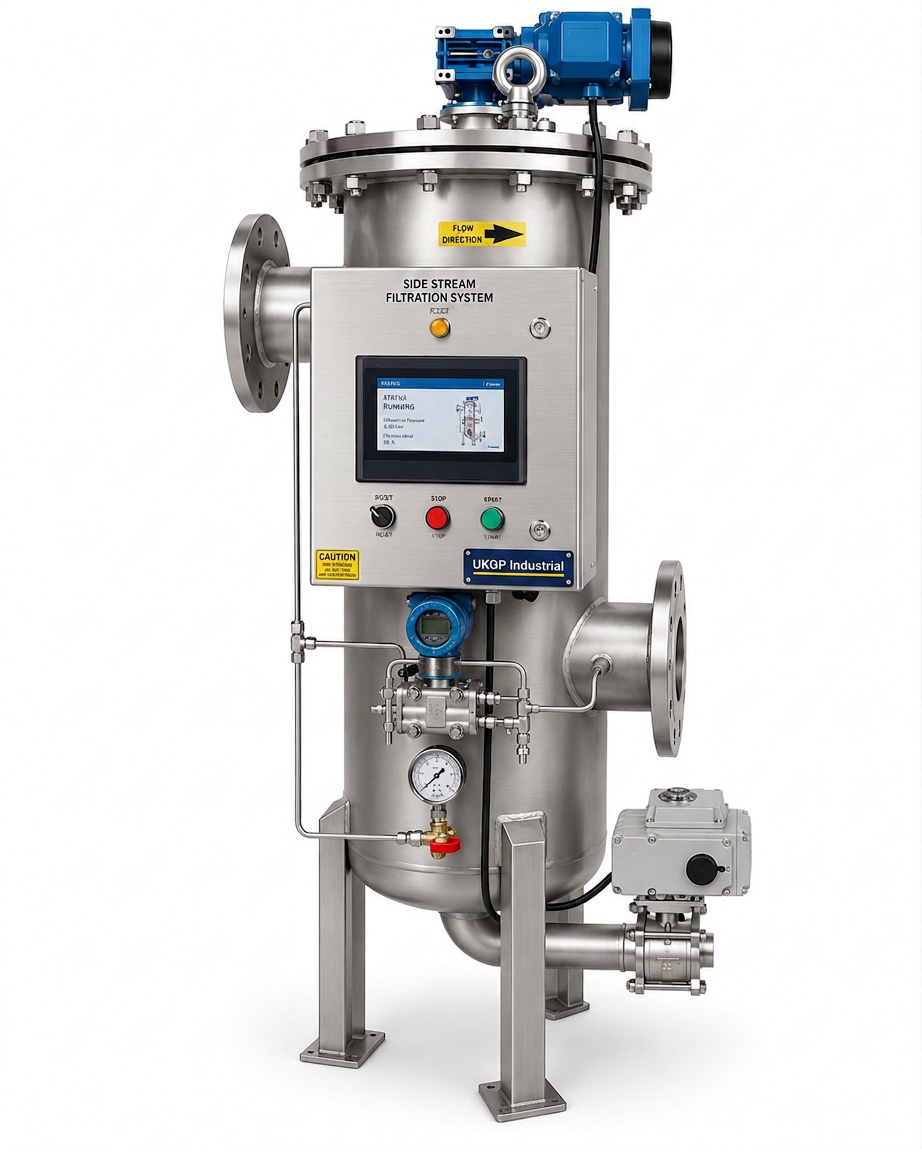
When specifying a filtration system for a district heating plant room, engineers must choose between manual and automatic systems. For smaller networks, a manual bag filter or cartridge system may suffice, but large-scale infrastructure demands the UKGP side stream filtration skid. These integrated units combine high-efficiency magnetic separation with fine mechanical filtration, often down to 5 microns or less. This multi-stage approach ensures that both non-magnetic debris and fine iron oxides are effectively captured.
The location of the side stream loop is critical. It should ideally be installed across the main flow and return headers, where the differential pressure of the system pumps can drive the flow through the filter. However, in low-pressure-drop systems, a dedicated booster pump within the filtration skid may be required to ensure consistent flow rates through the media. This ensures that the 5-15% turnover rate is maintained regardless of the primary network demand.
Automated systems provide a significant advantage in terms of maintenance and data logging. These units can monitor the differential pressure across the filter elements and automatically initiate a backwash cycle or alert the BMS when a manual intervention is required. In the context of remote plant rooms or unmanned satellite centres, this level of automation is vital for maintaining water quality without constant site visits.
- Cartridge and bag filters for mechanical debris removal.
- High-intensity magnetic separators for magnetite capture.
- Automatic backwash systems for reduced maintenance.
- Combined units for comprehensive water treatment.
Compliance and Best Practice Frameworks
UK building services engineers are primarily guided by BSRIA standards. BG29/21 covers the initial flush and clean, which is critical for removing construction debris and protective coatings from new pipework. However, it is BG50/2021 that governs the ongoing 'steady state' of the network. This standard emphasises that water treatment is a continuous process. A robust side stream filtration strategy is the most effective way to meet the suspended solids limits defined in these documents.
CIBSE Guide W also stresses the importance of maintaining water chemistry. A side stream filter should be used in conjunction with a chemical dosing regime to maintain molybdate or nitrite levels and pH balance. It is a common misconception that chemicals alone can solve water quality issues; without physical removal of solids, chemicals can simply keep debris in suspension, where it continues to cause erosive wear.
Furthermore, an often-overlooked aspect of compliance is the documentation of water quality. Modern filtration skids can be integrated with the BMS to provide real-time data on system health. Frequent water sampling (at least quarterly for large networks) and analysis are required to validate that the filtration system is performing its task and to adjust the chemical dosing levels as necessary.
- BSRIA BG29/21 (Pre-commissioning cleaning).
- BSRIA BG50/2021 (Water treatment for closed systems).
- VDI 2035 (German standard for heating water quality).
- CIBSE Guide W (Water distribution systems).
Integration of UKGP Air & Dirt Separators
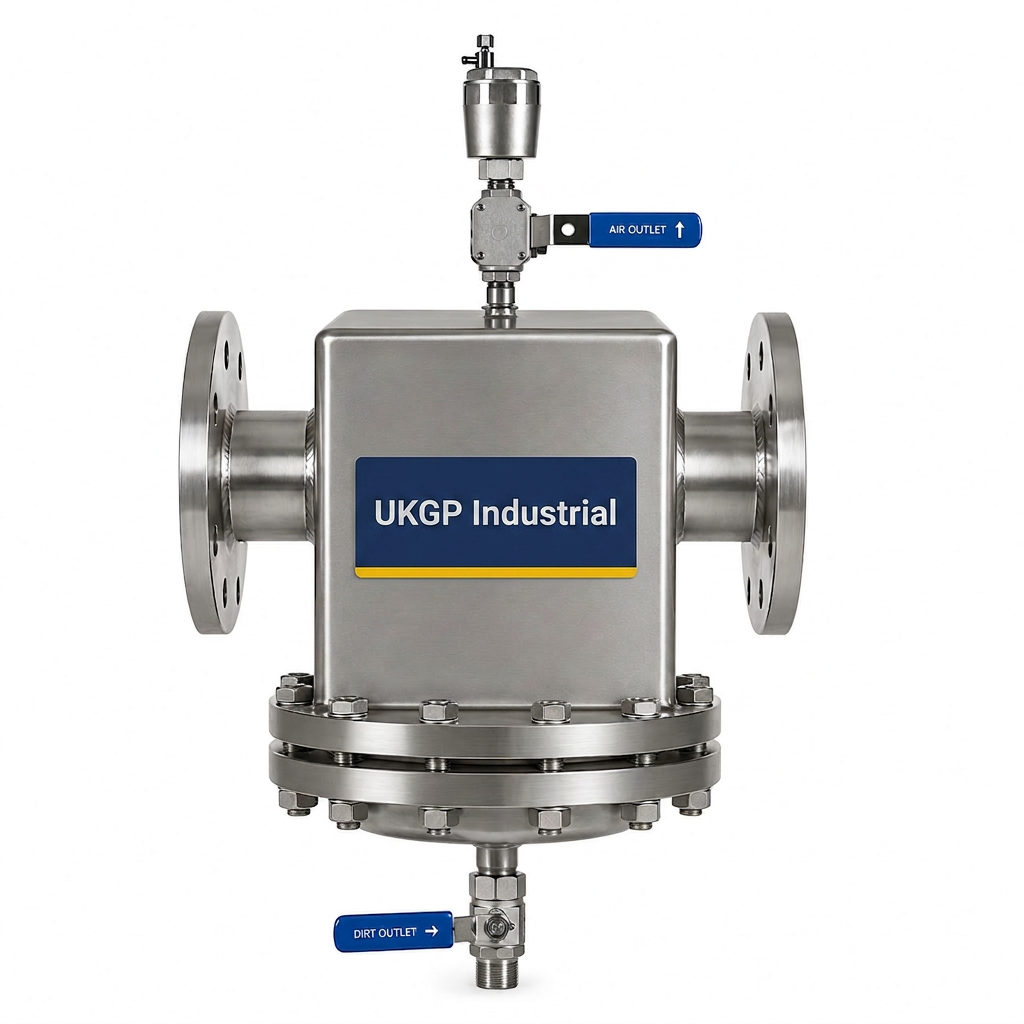
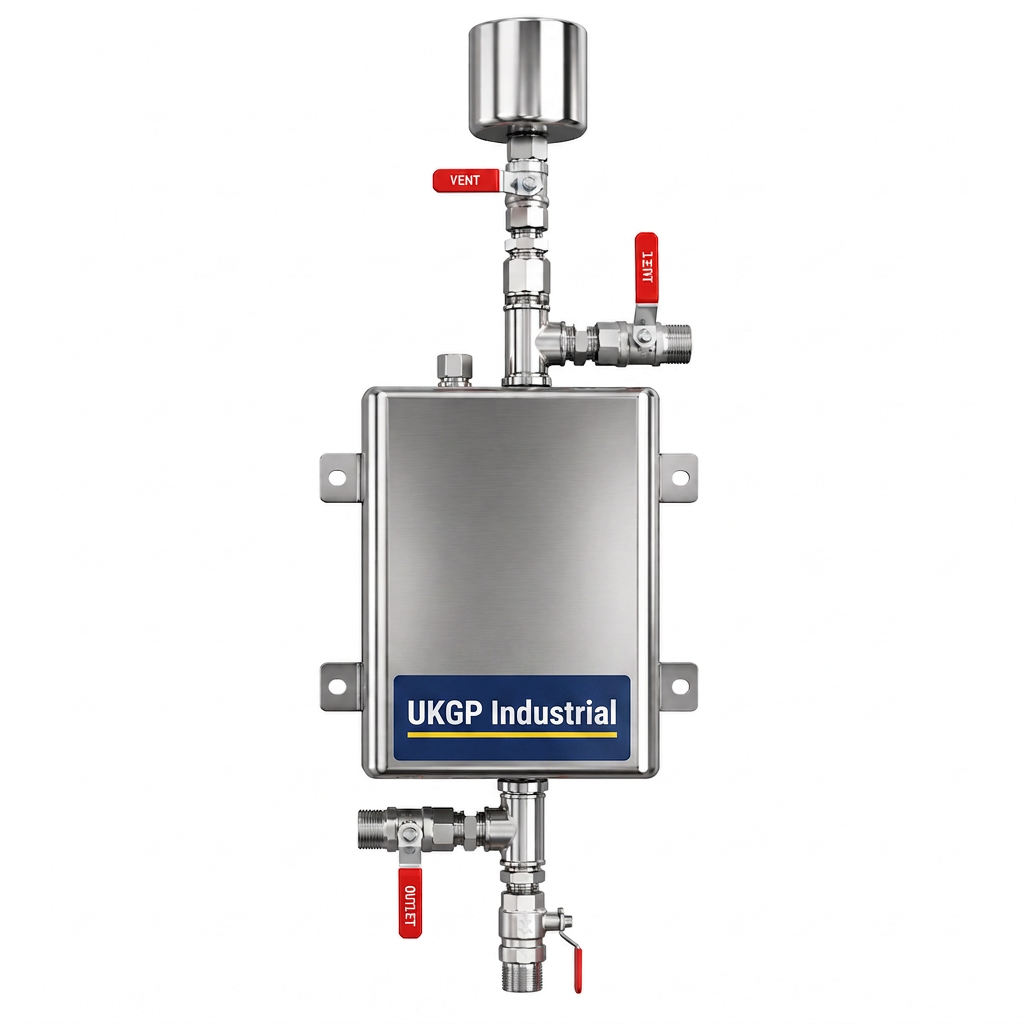
While side stream filtration handles the ongoing removal of fine particulates, the system must also deal with bulk air and heavy dirt during initial circulation. The installation of UKGP air & dirt separators at the main plant headers provides an essential first line of defence. These units utilise internal coalescing media to encourage micro-bubbles to rise and solids to fall into a collection chamber, where they can be flushed out during routine maintenance.
Air in a district heating network is a primary catalyst for corrosion. Dissolved oxygen reacts with carbon steel to form magnetite. By removing air at the highest temperature point (where it is least soluble) and at the point of lowest velocity, air and dirt separators significantly reduce the workload of the side stream filter. This integrated approach—combining bulk separation with fine side stream filtration—creates a comprehensive protection strategy.
For engineers, the challenge is often plant room space. Integrating a high-capacity air and dirt separator directly into the primary flow avoids the need for massive bypass loops for bulk debris. When combined with a side stream skid, the system achieves a level of water clarity that protects the most sensitive HIU components, such as plate heat exchangers and heat meters, from the moment the system is charged.
- Cyclone separators for high-density particle removal.
- Micro-bubble deaeration to prevent internal corrosion.
- Air and dirt separation in a single vessel.
- Low-pressure-drop design for energy efficiency.
Hydraulic Design and System Placement
The hydraulic integration of a side stream filter requires careful calculation. The flow through the filtration loop must be stable and not adversely affect the system's hydraulic balance. Ideally, the intake for the filtration skid should be taken from the return header, where debris is most likely to be present after travelling through the network. The filtered water is then returned to the return header downstream of the intake or into the flow header if a temperature boost is required.
Pressure management is another key factor. If the filtration skid relies on a dedicated pump, it must be coordinated with the network's pressurisation unit. If the filter is improperly placed, it could create local pressure drops that cause the pressurisation unit to over-fill the system. Engineers should ensure that the filtration loop is accounted for in the overall system head loss calculations.
Maintenance access is frequently a secondary thought but is vital for operational success. Filters must be positioned where operatives can easily change bags or cartridges without spilling system water or chemical inhibitors. Floor-mounted skids are preferred over wall-mounted units for large district heating applications due to the weight of the water-filled vessels and the ease of handling large filter elements.
- System volume calculation for turnover rates.
- Pump selection and NPSH considerations.
- Location relative to the neutral point and pressurisation unit.
- Accessibility for filter bag/cartridge replacement.
The Economics of Water Quality Management
The CAPEX for a high-quality side stream filtration system is often less than 1% of the total network cost, yet its impact on OPEX is profound. By preventing the accumulation of magnetite and scale, the network maintains its designed efficiency for years. In contrast, a neglected system will see a gradual rise in fuel/electricity consumption as the pumps work harder and the heat exchangers lose performance.
Labour costs for reactive maintenance are another significant factor. Clearing blocked HIUs or replacing seized pumps in a 200-dwelling development is an expensive exercise that far outweighs the cost of a scheduled filter change. Furthermore, many equipment manufacturers, particularly of high-efficiency boilers and plate heat exchangers, will void their warranties if the water quality fails to meet their specific standards.
Insurance companies are also becoming increasingly litigious regarding water quality. In the event of a catastrophic system failure or flooding due to corrosion-induced pipe leaks, the presence of a robust filtration system and a documented maintenance log can be the difference between a successful claim and a massive financial loss. Investment in quality filtration is essentially an insurance policy for the building’s most expensive asset.
- Increased system lifespan and reduced capital expenditure.
- Lower energy consumption through maintained heat transfer.
- Reduced reactive maintenance costs and resident complaints.
- Insurance and warranty compliance for boilers and heat pumps.
Long-term Maintenance and Performance Monitoring
No filtration system is 'set and forget'. The efficacy of a side stream filter depends entirely on the diligence of the facilities management team. A routine maintenance schedule should be established, including the regular checking of pressure gauges. A sudden drop in differential pressure may indicate a ruptured filter bag, while a rapid increase indicates high levels of system contamination that may require further investigation into the chemical treatment or oxygen ingress.
Digital monitoring is the future of district heating maintenance. By linking the filtration skid to a cloud-based monitoring platform or the local BMS, FMs can receive alerts on their mobile devices when a filter change is due. This proactive approach ensures that the system is never running with a bypassed or blinded filter, maintaining the 5-15% turnover rate at all times.
Finally, the results of the filtration should be visible in the chemical analysis reports. A successful strategy will show a steady decline in suspended solids (measured in mg/l) and iron content. If levels remain high despite filtration, it is a clear sign of ongoing active corrosion within the network, prompting an immediate review of the system’s airtightness or chemical inhibitor concentrations.
- Quarterly water analysis for chemical and physical parameters.
- Monthly inspection of filter differential pressure.
- Annual calibration of electronic sensors and automated valves.
- Logging of all filter changes and backwash events.
Frequently asked questions
What are the primary BSRIA standards governing district heating water quality?
- While BSRIA BG29/21 focuses on pre-commissioning cleaning, BG50/2021 provides the ongoing water quality criteria for systems in operation. District heating systems must adhere to these to prevent micro-biological growth and scale.
What is the recommended flow rate for side stream filtration?
- For district heating networks, a circulation rate of 5-15% of the total system volume per hour is the standard design benchmark to ensure suspended solids are removed faster than they are generated.
How do I identify if my side stream filter is sized correctly?
- A sudden increase in differential pressure (DP) across the filter media or a drop in secondary side heat transfer efficiency at the individual HIUs often indicates a failure in the filtration strategy.
Why is magnetic separation required alongside mechanical filtration?
- Magnetic filtration is essential for capturing magnetite (black iron oxide), which is the primary byproduct of corrosion in carbon steel pipework common in heat networks. Traditional media filters often struggle with these sub-micron particles.