Fundamental Layout and Flow Strategy
The bypass arrangement for a side stream filtration system must be designed to divert a specific percentage of the total system flow—typically between 5% and 15%—through the filtration media. The most common configuration is a 'kidney loop' arrangement tapped across the main return header. This layout ensures that the filtration process does not interfere with the primary hydraulic balance of the building. The take-off point should be located on the side or top of the header to avoid drawing in heavy sludge from the bottom, which can prematurely blind the filter media.
Precision in the valve arrangement is critical. The bypass must include lockable isolation valves on both the inlet and outlet to allow for safe maintenance. Furthermore, a non-return valve should be installed on the discharge side of the side stream pump to prevent the primary system pressure from forcing water backward through the filter when the filtration unit is powered down or undergoing a backwash cycle. For systems with variable speed primary pumps, the bypass must be able to maintain a constant flow rate regardless of the main circuit's fluctuating pressure.
- Isolation valves (Full bore ball or butterfly).
- Non-return valve (NRV) to prevent backflow.
- Regulating/Balancing valve for flow control.
- Sampling points for water quality testing.
- Pressure gauges (Upstream and downstream of the filter).
Sizing and Hydraulic Considerations
Sizing the bypass pipework requires a balance between achieving the required turnover rate and managing velocity. Oversizing leads to air pocket formation and unnecessary cost, while undersizing creates excessive resistance that the side stream pump may struggle to overcome. For most commercial applications, pipework between 25mm and 50mm is sufficient, depending on the system volume. The pressure drop across the filter media—whether it be a bag filter, cartridge, or sand media—increases as it captures debris. Therefore, the bypass arrangement must be sized to handle the 'dirty' pressure drop to ensure flow does not stagnate.
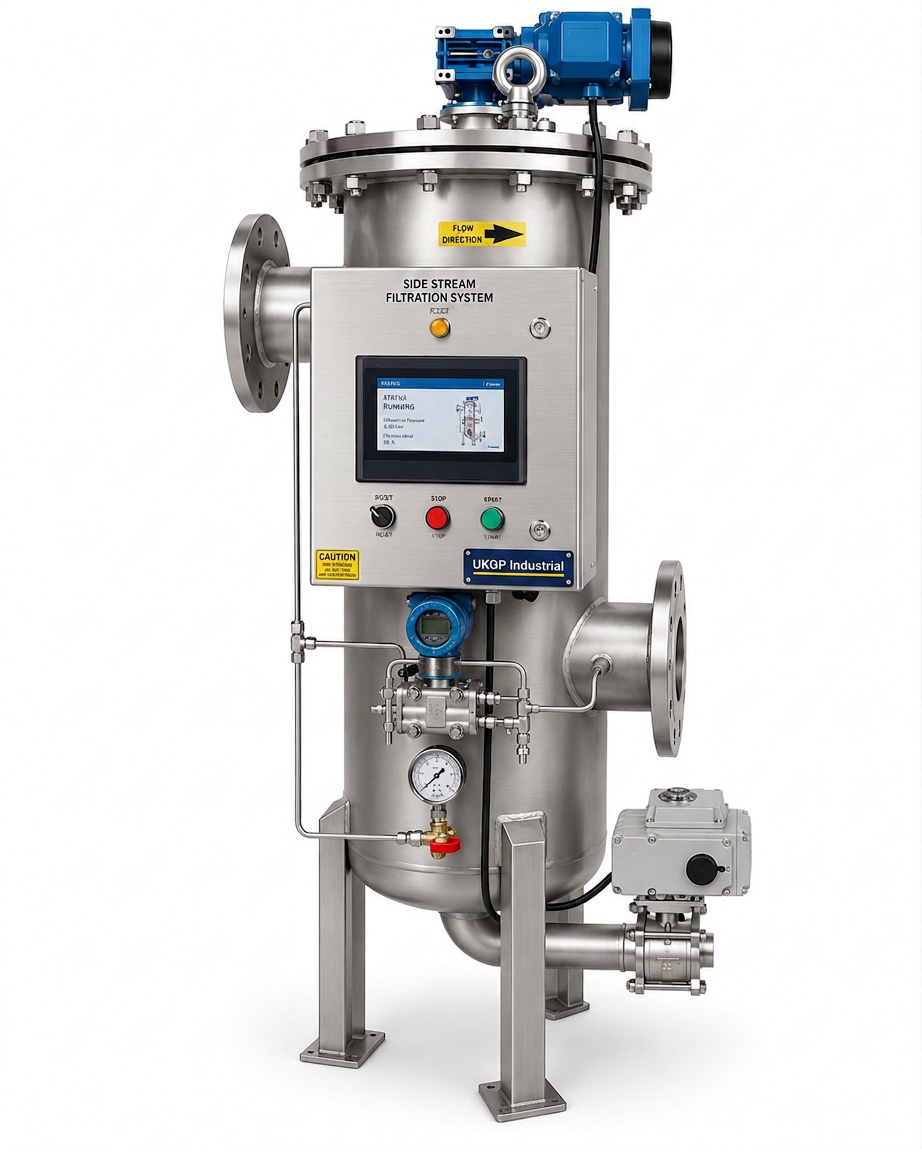
The UKGP side stream filtration skid is designed to integrate seamlessly into these bypass arrangements, providing a self-contained pump and controller. When installing these units, the pressure differential between the take-off and return points must be accounted for. If the differential is low, the skid’s integral pump provides the necessary head to drive the water through the filtration media. It is essential to refer to CIBSE Guide S for internal pipework diameters to ensure flow velocities remain within the recommended 0.5 m/s to 1.5 m/s range to avoid erosion or sedimentation within the bypass itself.
Valve Selection and Placement
The specific types of valves used in the bypass loop significantly impact the ease of commissioning and long-term operation. High-quality, full-bore isolation valves are essential to ensure there is no unnecessary restriction when the filter is clean. A double-regulating valve (DRV) or a flow-limiting valve should be installed on the return leg of the bypass. This allows the commissioning engineer to set the flow precisely to the 5-15% target, preventing the bypass from 'robbing' flow from the terminal units. All valves should be clearly labelled with their 'Normal Open' or 'Normal Closed' status to assist plant-room operators.
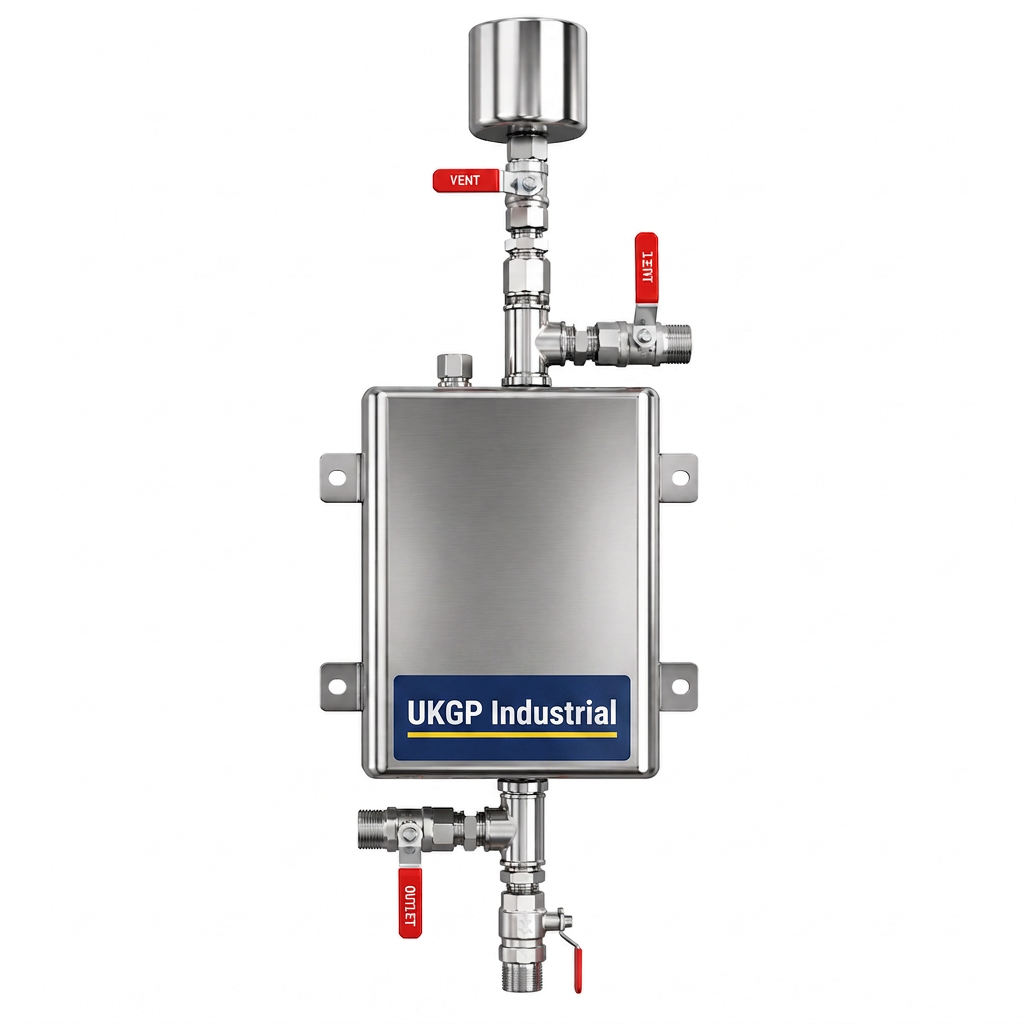
In addition to the filtration bypass, the arrangement should ideally include a secondary bypass for a dosing pot. The UKGP chemical dosing pot is frequently installed in parallel or in close proximity to the filtration unit. While the filtration unit removes solids, the dosing pot allows for the introduction of chemical inhibitors. By placing these two systems in the same plant-room zone, maintenance teams can manage both physical and chemical water treatment from a single location, ensuring compliance with BG50 guidelines for water quality management.
Instrumentation and Monitoring Points
To manage a side stream filter effectively, the bypass arrangement must include specific instrumentation. Differential pressure (DP) gauges are the most critical tools; one should be placed on the inlet and one on the outlet of the filtration vessel. By monitoring the pressure drop, facilities managers can determine exactly when a filter bag or cartridge requires replacing, rather than relying on guesswork or fixed-time intervals. A sudden drop in differential pressure may indicate a burst filter medium, while a steady increase signals successful particle capture.
Sampling valves should be installed on both the inlet and outlet bypass lines. This allows for 'before and after' water analysis to prove the filter's efficacy. Under BSRIA BG29/21, regular water sampling is a requirement for the validation of system cleanliness during the pre-commissioning cleaning phase and ongoing operation. Having dedicated, easy-access sampling points avoids the need to draw water from the main header or drain valves, which may contain unrepresentative concentrated sludge or stagnant water.
Integration with Air and Dirt Separation
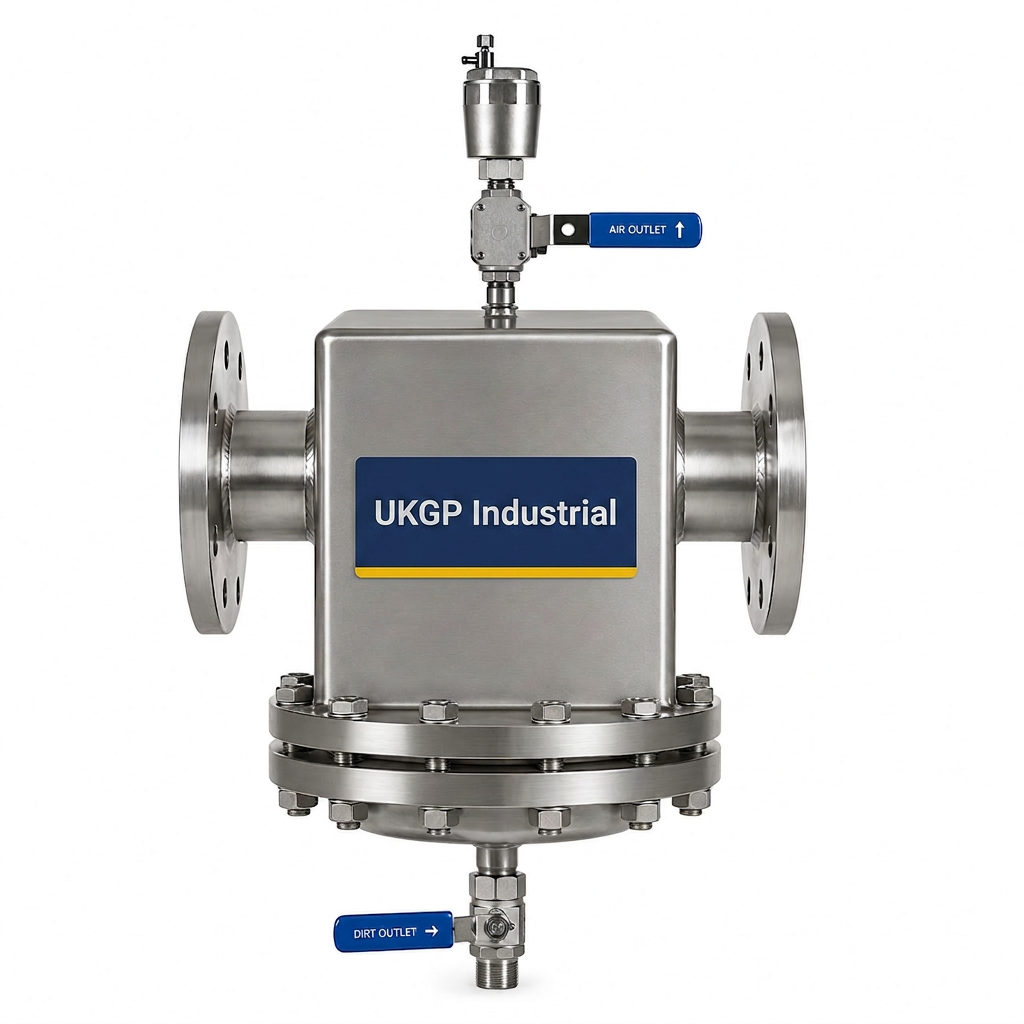
While the side stream filtration bypass handles microscopic suspended solids (typically down to 5 or even 1 micron), it should be viewed as one part of a holistic debris management strategy. Microbubble air and dirt separators are typically installed on the main flow/return to handle larger particles and entrained air. Integrating UKGP air & dirt separators at the system's high and low-velocity points complements the side stream bypass by reducing the overall 'dirt load' the fine filtration unit has to process. This extends the lifespan of the filter media and reduces maintenance frequency.
Final commissioning of the bypass valve arrangement should involve a full hydraulic test. Once the main system is balanced, the side stream bypass should be opened and the regulating valve adjusted. It is vital to check that the operation of the side stream pump does not induce noise or vibration into the main header. Proper anchoring of the bypass pipework and the use of flexible connectors, if the filtration unit is floor-mounted, will mitigate the risk of acoustic transfer through the building's structure.
Maintenance and Operational Safety
The bypass arrangement must facilitate safe maintenance without requiring a system-wide shutdown. Lockable valves are a health and safety requirement to prevent accidental opening while a technician is changing a filter bag. A drain valve should be located at the lowest point of the filtration bypass to allow the vessel to be emptied before opening. This prevents the spill of treated system water, which is both a safety hazard and a waste of expensive chemical inhibitors.
Furthermore, for large-scale industrial systems, automation of the bypass can be considered. Motorised isolation valves linked to the Building Management System (BMS) can provide alerts if flow is lost or if the bypass has been left in the closed position. For most commercial LTHW systems, however, a well-designed manual bypass arrangement with clear signage and high-quality components is sufficient to ensure long-term hydronic stability and thermal efficiency. Proper installation according to these guidelines will ensure the system meets the stringent requirements of modern UK building services.
Frequently asked questions
What is the recommended flow rate through a side stream filtration bypass?
- BSRIA BG29/21 recommends a flow rate of between 5% and 15% of the total system volume per hour. The bypass and pump sizing must be calculated to achieve this turnover to ensure effective particle capture.
Should I install a flow meter on the filtration loop?
- Ideally, yes. Incorporating a water meter or a flow sensor within the bypass line allows maintenance teams to verify that the filtration unit is receiving the designed flow rate, which is critical for system cleanliness.
Where is the best location to tap into the main system?
- Standard practice is to install the filtration loop on the return header, usually on the suction side of the primary pumps. This ensures the filter receives the coolest water in a heating system and captures debris before it reaches the heat source.
Why can't I just install the filter in-line with the main flow?
- The bypass allows the filtration unit to be isolated for filter media changes or maintenance without shutting down the primary heating or cooling circuit, maintaining system uptime in commercial environments.
Can a side stream filter replace a chemical dosing pot?
- While the bypass loop handles particulate matter, a dosing pot is required for the introduction of corrosion inhibitors and biocides. Both are essential components of a robust water treatment strategy under BG50.