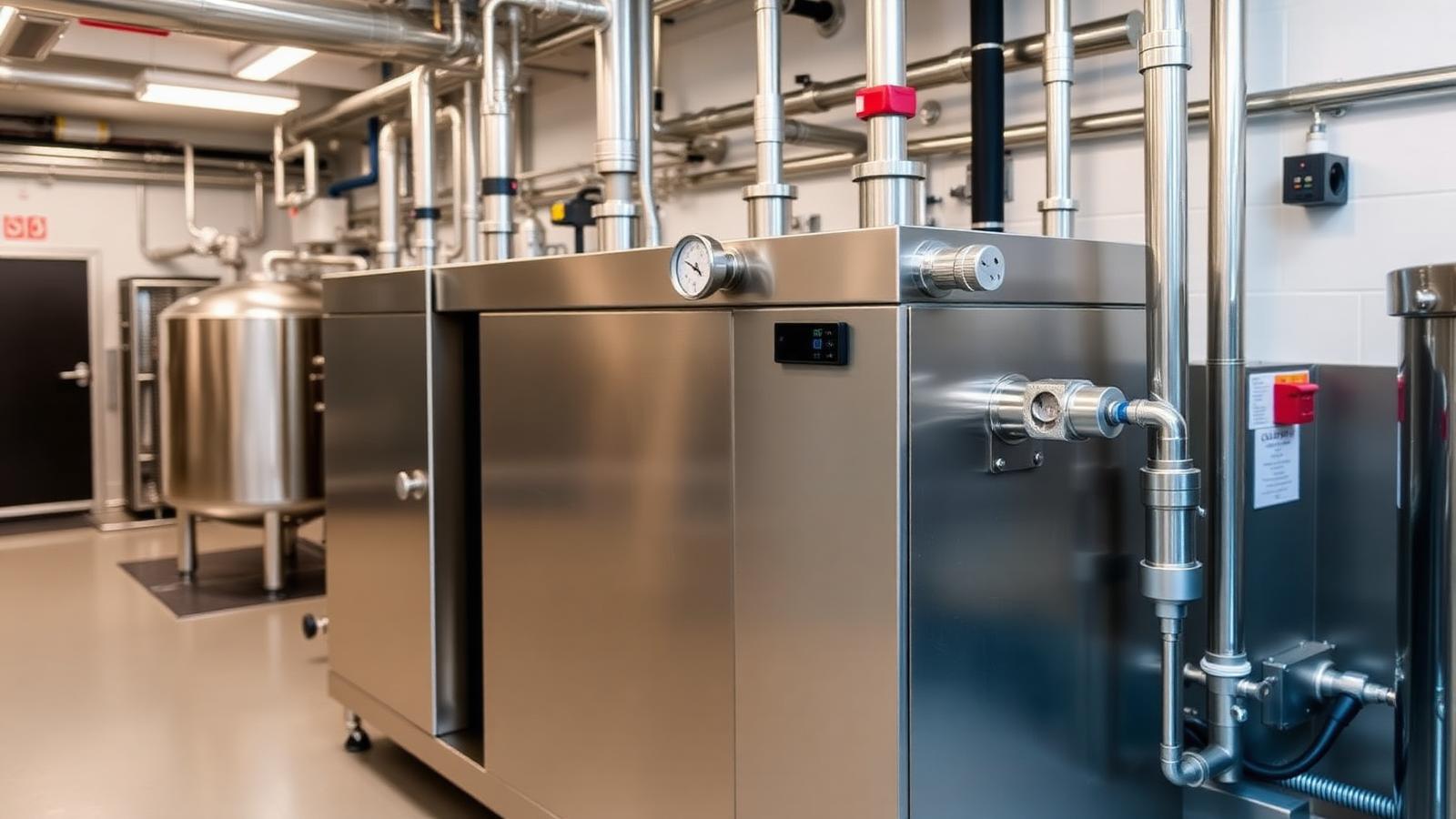
The Technical Requirement for Side Stream Filtration
The evolution of HVAC system design has led to the adoption of sophisticated, precision-engineered components. While older systems with large-bore pipework and cast-iron radiators could tolerate a degree of 'sludge', modern systems featuring plate heat exchangers and PICVs (Pressure Independent Control Valves) are highly sensitive to particulate matter. Side stream filtration (SSF) acts as a kidney for the system, continuously diverted a portion of the circulating water through a high-efficiency filter media to maintain water clarity.
Without effective filtration, suspended solids—predominantly magnetite formed through electrolytic corrosion—circulate at high velocities. This particulate matter is abrasive, leading to the erosion of valve seats and pump impellers. Furthermore, magnetite is paramagnetic and is attracted to the permanent magnet motors found in modern circulating pumps. This can lead to catastrophic pump failure and significant repair costs. For the consultant, specifying SSF is not an 'extra' but a fundamental requirement for system longevity.
Compliance with BSRIA BG29/21 is often the primary driver for installation. This guide highlights that while initial flushing removes the bulk of construction debris, it is the ongoing filtration during the 'settling-in' period and the life of the building that prevents the build-up of damaging sludge. BSRIA BG50 further reinforces the need for continuous monitoring and treatment of closed-circuit systems to mitigate the risks of corrosion and scale.
- Suspended solids (TSS) reduction to prevent erosion.
- Removal of magnetite to protect variable speed pump rotors.
- Prevention of 'bridging' in small-bore heat exchanger plates.
- Compliance with BSRIA BG29/21 (Pre-commission cleaning) and BG50 (Maintenance).
Sizing and Flow Rate Calculations
Sizing a side stream filtration unit is not a matter of matching the main pipe diameter, but rather calculating the required 'turnover' of the system volume. The industry standard, as referenced in BSRIA documentation, suggests that between 5% and 15% of the total system volume should pass through the filtration unit every hour. For a new system with 10,000 litres of water, a filtration rate of 500 to 1,500 litres per hour (0.5 to 1.5 m³/h) is usually sufficient.
Calculating the 'clean' and 'dirty' pressure drop is critical for hydraulic stability. Most side stream units rely on the differential pressure across the system’s main pumps to drive the flow. If the available DP is insufficient, a pumped side stream skid must be specified. Engineers should ensure that the filtration circuit does not create a hydraulic bypass that upsets the system balance, particularly in variable volume systems where DP can fluctuate significantly.
For older systems or those undergoing renovation, a higher turnover rate is often recommended (10-15%). This accounts for the higher baseline of suspended solids and the potential for existing deposits to become liberated during the initial months of operation. Over-sizing the filter housing can also be a strategic choice, reducing the frequency of bag changes and lowering the associated maintenance labour costs for the facilities management team.
- Total system volume (m³).
- Required turnover rate (typically 5-15% per hour).
- Available pressure differential (bar).
- Pipework material and existing water quality.
Critical Component Specification
A robust side stream filtration system must combine multiple technologies to be effective. The primary component is typically a stainless steel filter vessel containing a replaceable bag or cartridge. While 50-micron bags are common for initial clean-up, final polishing of the water often requires 5-micron or even 1-micron media to capture the finest magnetite particles that cause discolouration and micro-abrasion. Stainless steel 304 or 316 housings are preferred for their corrosion resistance and longevity.
The inclusion of rare-earth magnets within the filter housing or as a separate 'mag-rod' assembly is non-negotiable in modern specifications. Since a large percentage of HVAC debris is ferrous, magnetic attraction captures particles that are far smaller than the pore size of the physical filter bag. This 'dual-stage' approach significantly improves the efficiency of the unit. The UKGP side stream filtration skid, for example, integrates these components into a pre-plumbed assembly, reducing on-site fabrication time and ensuring the hydraulic performance is pre-validated.
Beyond the filter itself, the skid should include high-quality isolation valves, a flow control valve (to prevent excessive velocity through the media), and air vent points. For larger commercial installations, the inclusion of differential pressure gauges is essential. These gauges provide a clear visual indicator of when the filter media is blinded and requires replacement, moving the maintenance regime from reactive to proactive.
- Magnetic vs. Non-Magnetic filtration capabilities.
- Filter media micron rating (typically 5µm to 50µm).
- Materials of construction (Stainless Steel vs. Carbon Steel).
- Ease of isolating and venting.
Manual vs. Automatic Filtration Systems
The choice between a manual bag filter and an automatic backwashing system is largely driven by the available maintenance budget and the criticality of the system. Manual systems are the most common in the UK market due to their lower capital cost and simplicity. However, they require facilities managers to physically open the vessel and change bags once the pressure drop exceeds a certain threshold. In the first three months of a new system, this may happen weekly, which can be an overlooked operational expense.
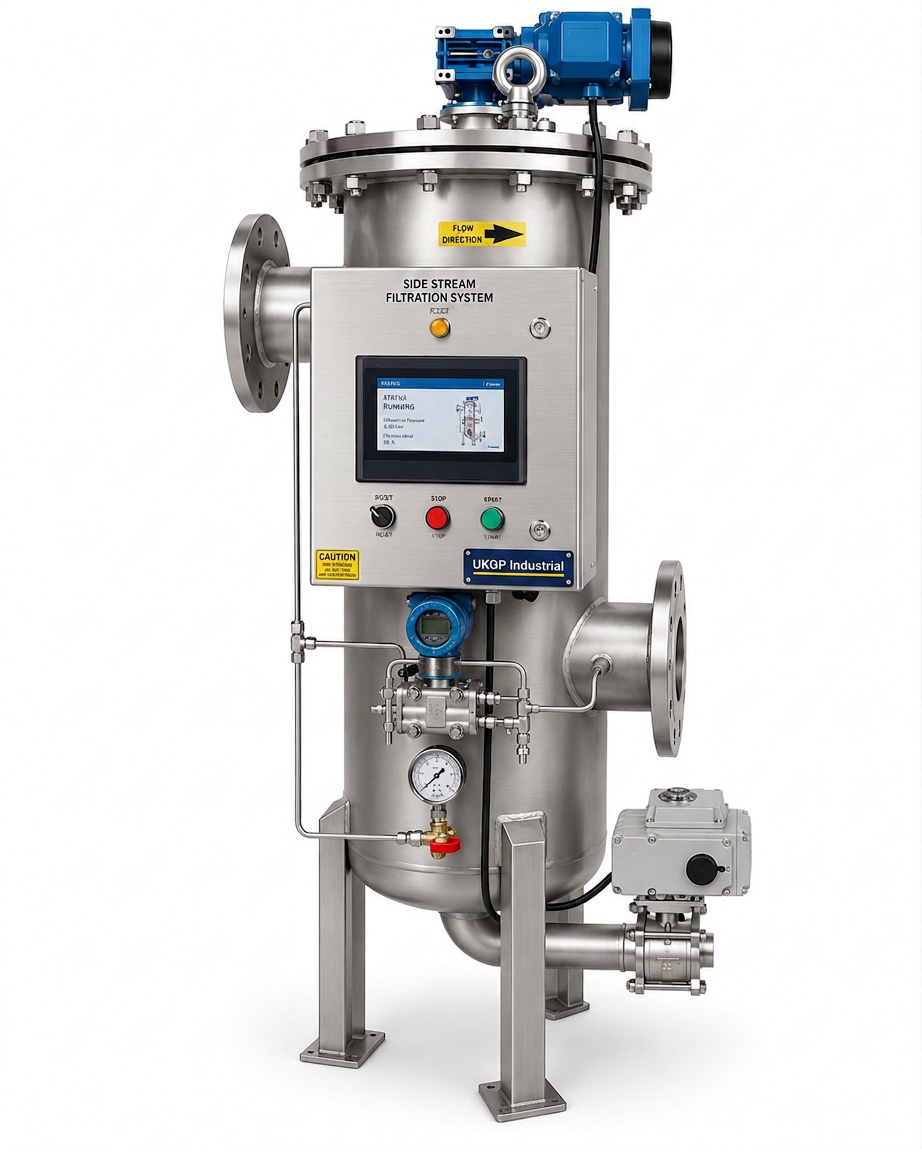
Automatic systems use a variety of mechanisms, such as back-flushing or scrapers, to clear the filter screen when a high DP is detected. These are ideal for unmanned plant rooms or critical industrial processes where downtime or manual intervention must be minimised. However, they are more complex, require a power supply and a waste drain connection, and generally have a higher footprint. For most commercial office or residential heat networks, a high-quality manual skid remains the engineering preference for its reliability.
Another consideration is the 'pumped' skid vs. the 'passive' skid. A passive skid takes advantage of the main system pump's energy. If the filtration unit is located in a position with low DP—such as far out in the circuit or in a low-loss header configuration—a dedicated booster pump on the skid is required to ensure the target turnover rate is met. Engineers should always verify the pressure at the proposed take-off and return points before finalizing the specification.
- Standard bag filters (Cost-effective, versatile).
- Centrifugal separators (Low maintenance, removes heavy solids).
- Automatic backwash filters (High CAPEX, low monitoring required).
- Pumped vs. Passive skids.
The Role of Air and Dirt Separation in Filtration Strategy
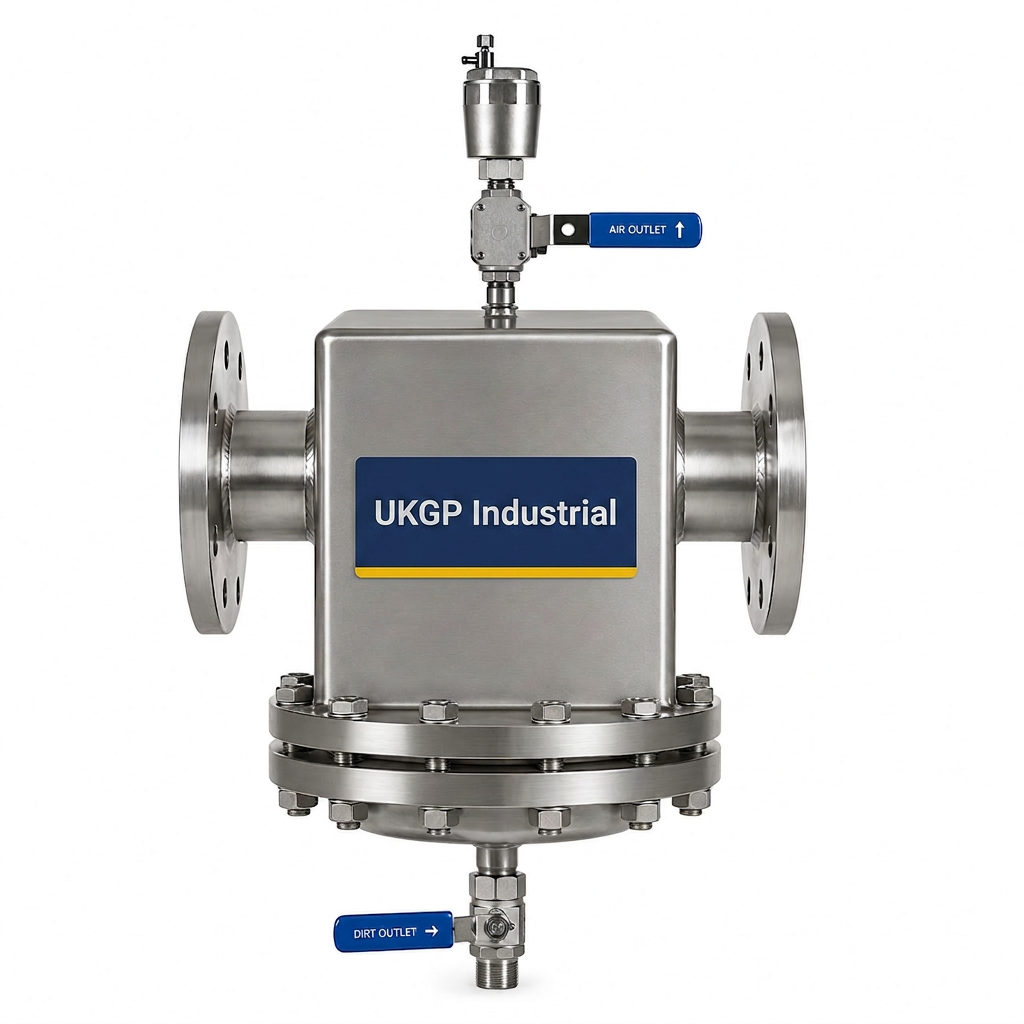
Side stream filtration is part of a broader water quality strategy and should not be used in isolation. To achieve BSRIA-compliant water, it must be used in conjunction with high-quality air and dirt separation. While the SSF unit handles fine suspended solids, air and dirt separators are typically installed on the main flow or return to capture bulk debris and micro-bubbles in the initial pass. This reduces the load on the side stream filter, extending the life of the finer filter bags.
The UKGP air & dirt separators are designed for full-flow installation, providing a first line of defence. By removing air, the rate of internal corrosion is significantly reduced, which in turn reduces the amount of magnetite that the side stream filter has to manage. This holistic approach—combining full-flow separation with side stream filtration—is considered 'best practice' for any system exceeding 250kW in capacity. It ensures that both heavy particulates and fine suspended matter are addressed.
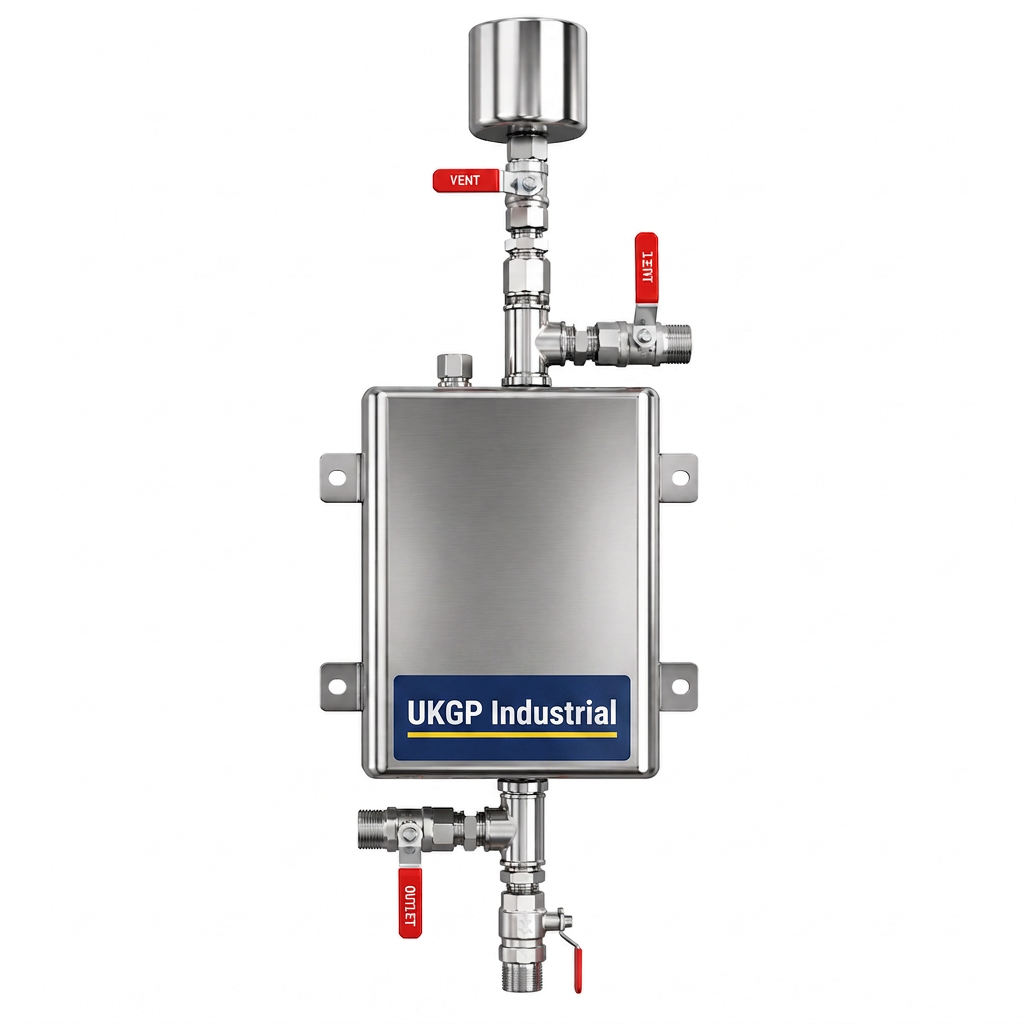
Furthermore, the strategy must include proper chemical treatment. A chemical dosing pot should be used to introduce inhibitors that passivate metal surfaces. The side stream filter actually facilitates better chemical distribution by ensuring the water is clean and free of sludge that can 'hide' areas of the pipework from the inhibitor. When specifying the system, ensure the filtration unit is compatible with common glycols and inhibitors used in the UK market.
- Integrating magnetic separation.
- Using air & dirt separators effectively.
- The role of chemical dosing.
- Sampling and monitoring ports.
Protecting the Heat Interface: Plate Heat Exchangers
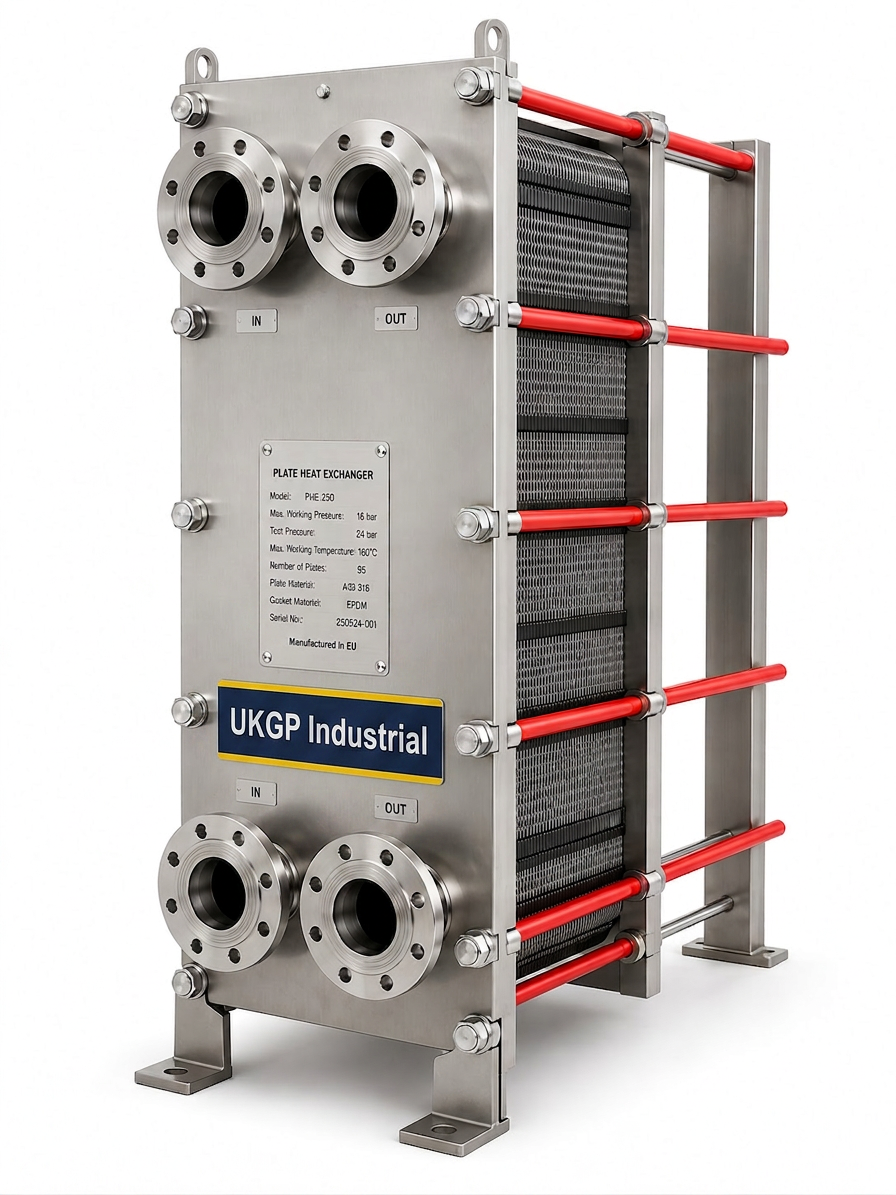
One of the most sensitive components in a modern HVAC system is the plate heat exchanger (PHE). Whether used for hydraulic separation between a boiler house and a heat network, or for domestic hot water generation, the narrow channels within a PHE are easily fouled by debris. A fouled UKGP plate heat exchanger will exhibit reduced heat transfer efficiency and increased pressure drop, leading to higher pump energy consumption and potentially preventing the system from meeting peak demand.
Side stream filtration is the primary guard against PHE fouling. By maintaining low TSS (Total Suspended Solids) levels, the filtration system ensures that the turbulent flow within the PHE channels remains unobstructed. Engineers should pay particular attention to systems where the primary side (e.g., old boilers) is connected to a new secondary side (e.g., a modern heat pump or chilled water circuit) via a PHE. In these 'brownfield' upgrades, the side stream filter should be installed on the old-pipework side to prevent debris from reaching the heat exchanger.
The cost of a filtration skid is often less than the cost of a single chemical descale and cleaning of a large PHE. When justifying the procurement of SSF to a client, the 'payback' should be framed in terms of asset protection and the maintenance of the original design 'Delta T'. If the PHE cannot transfer heat effectively because of magnetite coating the plates, the entire system's efficiency—and the building's EPC rating—will suffer.
- Protecting the high-efficiency interface.
- Contamination risks.
- Thermal performance impacts.
- Maintenance access.
Installation Best Practice and Commissioning
The location of the side stream offtake is vital for performance. Standard practice is to take the supply from the discharge side of the main pumps and return it to the suction side (or the return header). The offtake should be located on the side or top of the pipe—never the bottom—to avoid drawing in bulk heavy debris that could instantly block the filter. All pipework to and from the skid should be as short as possible to minimize pressure losses and avoid stagnant 'dead legs'.
Commissioning the unit involves more than just opening the valves. The flow rate through the skid must be verified using a flow meter or by measuring the pressure drop across the internal filter vessel and comparing it to the manufacturer’s curves. If the flow is too high, it can damage the filter bag or cause 'bypass' around the seals; if too low, the filtration targets won't be met. A commissioning valve (fixed orifice or manual/automatic balancing valve) should be included in the design for this purpose.
Finally, access for maintenance is frequently overlooked. A filter housing requires vertical clearance to allow the internal basket and bag to be lifted out. There should also be provision for local drainage so that the vessel can be emptied before opening, preventing plant room flooding. It is good practice to install the skid over a bund or tidy tray, particularly in prestigious commercial basements where water spillages must be strictly managed.
- Site offtake points.
- Isolation and 'double block and bleed' requirements.
- Drainage and bunding.
- Commissioning and flow verification.
Procurement Considerations and ROI
When procuring a side stream filtration system, the lowest capital price is rarely the best value. Engineers should evaluate the total cost of ownership, including the cost of replacement bags, the ease of cleaning the magnets, and the durability of the housing. A cheaply made carbon steel housing may eventually become a source of corrosion itself, whereas a 316 stainless steel unit will last the lifetime of the plant. Consider also the lead times and the availability of consumables; unusual filter bag sizes can lead to long-term operational headaches.
The return on investment (ROI) for side stream filtration is found in three areas: energy savings, reduced maintenance, and avoided capital replacement. Clean water has a lower viscosity and requires less pumping energy. More importantly, clean heat transfer surfaces allow boilers and chillers to operate at their peak efficiency. Studies have shown that even a 1mm layer of magnetite on a heat exchanger can reduce efficiency by up to 10%, which translates to thousands of pounds in wasted energy on a large commercial site.
For M&E contractors, specifying a pre-assembled skid like the UKGP side stream filtration skid reduces risk. Site-built filtration 'bottles' often lack the necessary flow control and magnetic separation features required for modern standards. By procuring a factory-tested unit, the contractor ensures that the system will perform to the consultant’s specification from day one, reducing the likelihood of expensive call-backs for water quality issues or pump failures during the defects liability period.
- Capital cost vs. Operational savings.
- Impact on energy consumption (SEC).
- Labour hours for filter changes.
- Asset life extension.
Frequently asked questions
What is the recommended flow rate for side stream filtration?
- BSRIA BG29/21 recommends a flow rate of between 5% and 15% of the total system volume per hour. Typically, 5% is the standard for well-maintained systems, while 10-15% is specified for older, high-debris systems.
At what differential pressure should filter bags be replaced?
- A clean pressure drop is typically 0.2 to 0.4 bar. Filter media should be cleaned or replaced when the differential pressure increases by 0.8 to 1.0 bar above the clean starting point.
Do I need magnetic filtration if I have a standard bag filter?
- Magnetic filtration targets magnetite (black iron oxide), which is often sub-micron. Traditional barrier filters (bags/cartridges) target non-ferrous debris. A high-specification system should include both to protect pumps and control valves.
Can side stream filtration replace chemical dosing?
- Yes. Filtration is a physical cleaning process, while chemicals provide corrosion inhibition and biocidal control. Filtration actually improves chemical efficacy by removing the solids that 'consume' inhibitors.
Where is the best location to install a side stream skid?
- The unit should be installed across the flow and return headers, or across the primary pump where a sufficient pressure differential exists to drive the flow through the skid.