Defining the Plate Heat Exchanger (PHE)
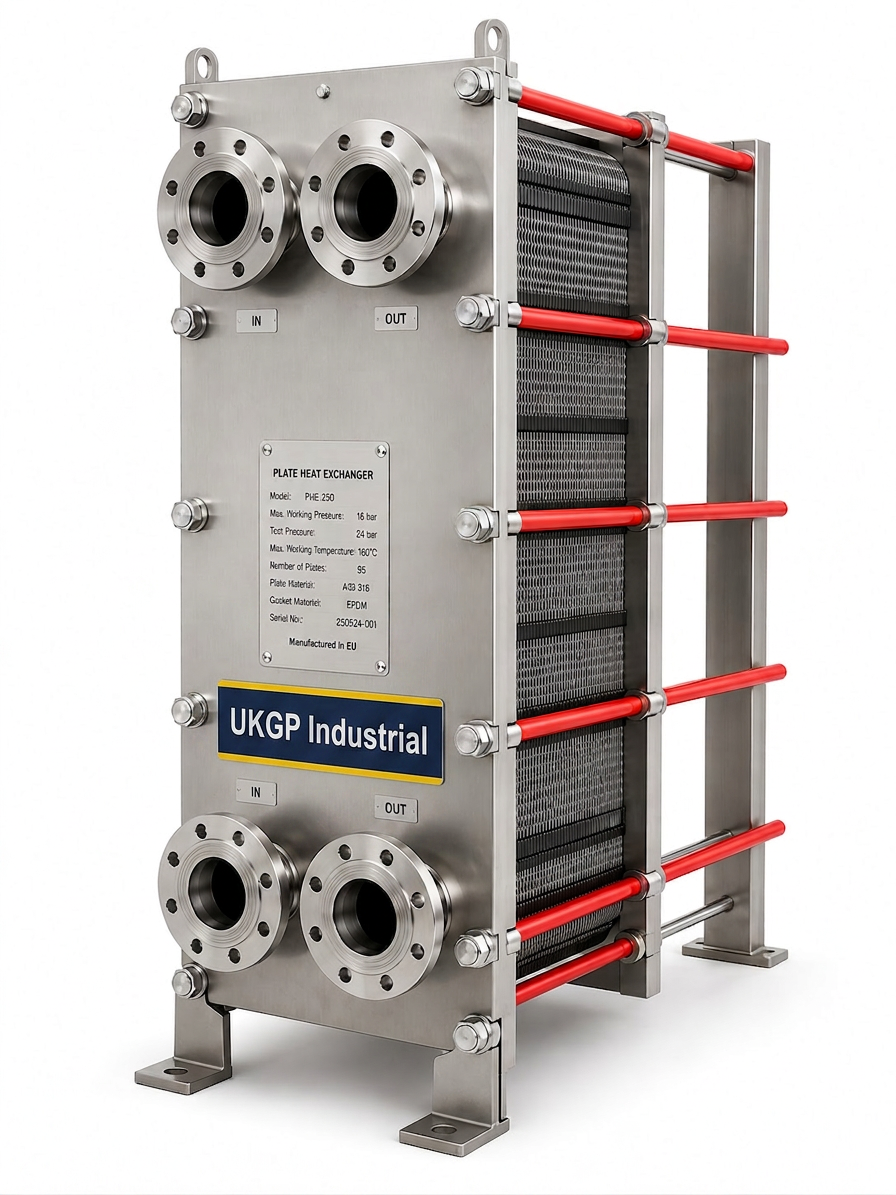
In UK building services, the plate heat exchanger is the primary method of hydraulic separation. By utilizing a series of corrugated metal plates, these units create a high surface area for energy transfer between two fluid streams without cross-contamination. This is essential in district heating where the primary network water, often treated with specific inhibitors and operating at high pressures, must remain separate from the building's secondary heating or Domestic Hot Water (DHW) circuits.
The efficiency of a PHE is driven by the 'approach temperature'—the difference between the inlet temperature of the primary side and the outlet temperature of the secondary side. High-performance units can achieve approach temperatures as low as 1°C. For UK engineers, compliance with BS EN 12828 and the Heat Network Code of Practice (CP1) dictates that PHE selection must account for peak load while maintaining low return temperatures to maximise system delta-T and minimise pump energy.
- Gasketed PHEs (GPHE): Modular, expandable, and maintainable. Required for large-scale district heating.
- Brazed PHEs (BPHE): Compact, high-pressure capability, but non-serviceable. Ideal for HVAC sub-stations.
- Welded PHEs: Used in high-temperature or aggressive chemical processes where gaskets would fail.
The Flat Plate Solar Exchanger (Collector) Mechanics
Technically defined as a solar collector, the 'flat plate solar exchanger' is an external component designed to convert solar radiation into thermal energy. Unlike a PHE, which transfers heat between two liquids, the solar collector transfers energy from electromagnetic radiation into a fluid medium, typically a water-glycol mix. In the UK climate, these are often preferred over evacuated tubes for commercial installations due to their robustness and lower cost-per-kW in high-demand applications.
The thermal performance of a solar collector is governed by the optical efficiency and heat loss coefficients (a1 and a2 values). For plant room consultants, the integration of these collectors requires a secondary PHE to interface the solar loop with the thermal store. This prevents the glycol-heavy solar circuit from contaminating the building’s DHW or heating water, and ensures that the primary solar circuit can be kept under different pressure conditions than the building services.
- Absorber Plate: Typically copper or aluminium with a selective coating to maximise solar absorption.
- Glazing: Toughened low-iron glass to minimise reflection and resist impact.
- Insulation: High-density mineral wool or polyisocyanurate to prevent rear and side heat loss.
Operational Differences and System Integration
The primary difference lies in the energy source. A plate heat exchanger is a passive component within the plant room that requires a generated heat source (boiler, heat pump, or HIU). In contrast, the solar exchanger is an energy harvester. Integration between the two is standard practice in 'solar-plus' systems. For example, in a commercial DHW system, the solar collectors feed a pre-heat vessel via a dedicated PHE, while a secondary PHE (often gasketed for ease of cleaning) provides the top-up heat from a gas boiler or heat pump to reach the required 60°C for Legionella control.
Material selection is critical when comparing these technologies. Most commercial PHEs utilize 316L Stainless Steel plates, which offer excellent corrosion resistance for standard HVAC water. However, if the solar circuit or process cooling loop involves high concentrations of chlorides or aggressive chemicals, Titanium plates may be required. Solar collectors usually employ copper headers and risers, necessitating careful consideration of galvanic corrosion and the use of appropriate inhibitors as per BSRIA BG29/21.
Maintenance and Longevity in UK Plant Rooms
Modern plant room design emphasises 'maintainability'. Gasketed plate heat exchangers are the gold standard for commercial applications because they allow for 'clean-in-place' (CIP) or full strip-down services. Over time, calcium carbonate deposits (limescale) and magnetite can foul the narrow channels between plates, increasing the pressure drop and reducing thermal efficiency. Regular monitoring of the ΔP (differential pressure) across the PHE is essential.
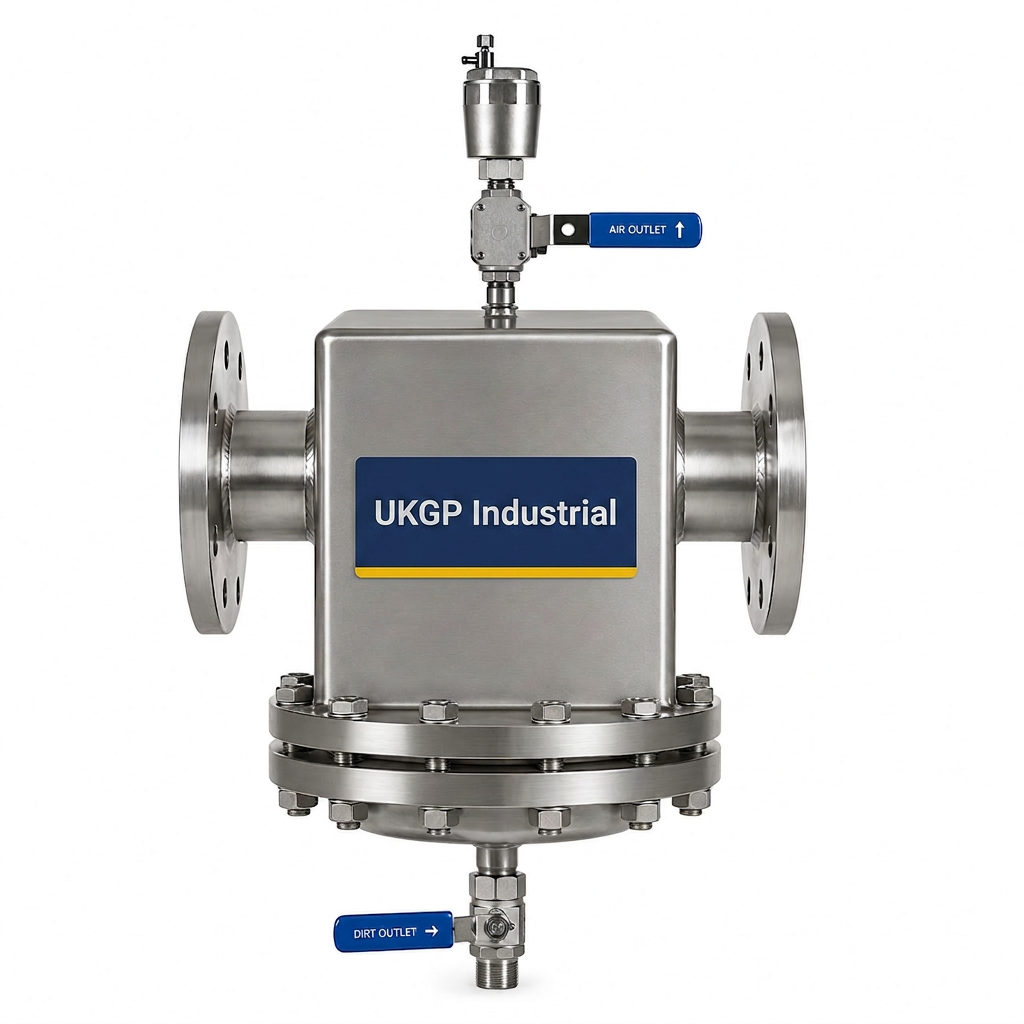
Solar collectors face different environmental challenges. While they have no moving parts, their performance is hindered by external soiling and internal degradation of the glycol fluid. If the solar loop is not properly de-aerated using high-quality air and dirt separators, the formation of 'glycol sludge' can occur, which drastically reduces the heat transfer rate in the intermediate PHE. Professional commissioning and annual fluid testing are mandatory to ensure these systems meet their 20-25 year design life.
Heat Transfer Coefficients and Efficiency Benchmarks
The efficiency of energy transfer in a PHE is significantly higher than in the header-and-riser configuration of a solar collector. A PHE can achieve ‘U-values’ (overall heat transfer coefficient) in the range of 3000 to 7000 W/m²K. A solar collector’s efficiency is limited by its solar absorptance and the ambient temperature, with peak efficiencies rarely exceeding 75-80% of the incidental solar radiation.
When designing for low-carbon heating, such as heat pump integration, the PHE must be sized with a large surface area to cope with the lower flow temperatures (typically 45-55°C). This ensures that the temperature 'lift' required by the heat pump is minimised, thereby protecting the COP (Coefficient of Performance). In solar thermal applications, the PHE sizing must also account for the variable flow rates produced by solar pump stations, which can vary from 1 l/min to 50 l/min depending on solar intensity.
- Corrugated plates create turbulent flow even at low velocities, which significantly increases the heat transfer coefficient compared to smooth-tube exchangers.
- Plate geometry (H-theta vs L-theta) allows engineers to balance thermal length against allowable pressure drop.
- Smaller footprint compared to shell-and-tube equivalents for the same kW output.
Conclusion: Strategic Specification for Engineers
For the UK building services engineer, the choice isn't between a plate heat exchanger and a solar collector, but rather how to correctly specify both to work in harmony. The PHE is the 'bridge' that allows renewable energy to enter the building's infrastructure safely and efficiently. Precise calculation of the 'log mean temperature difference' (LMTD) and careful selection of plate materials are the markers of a well-engineered system.
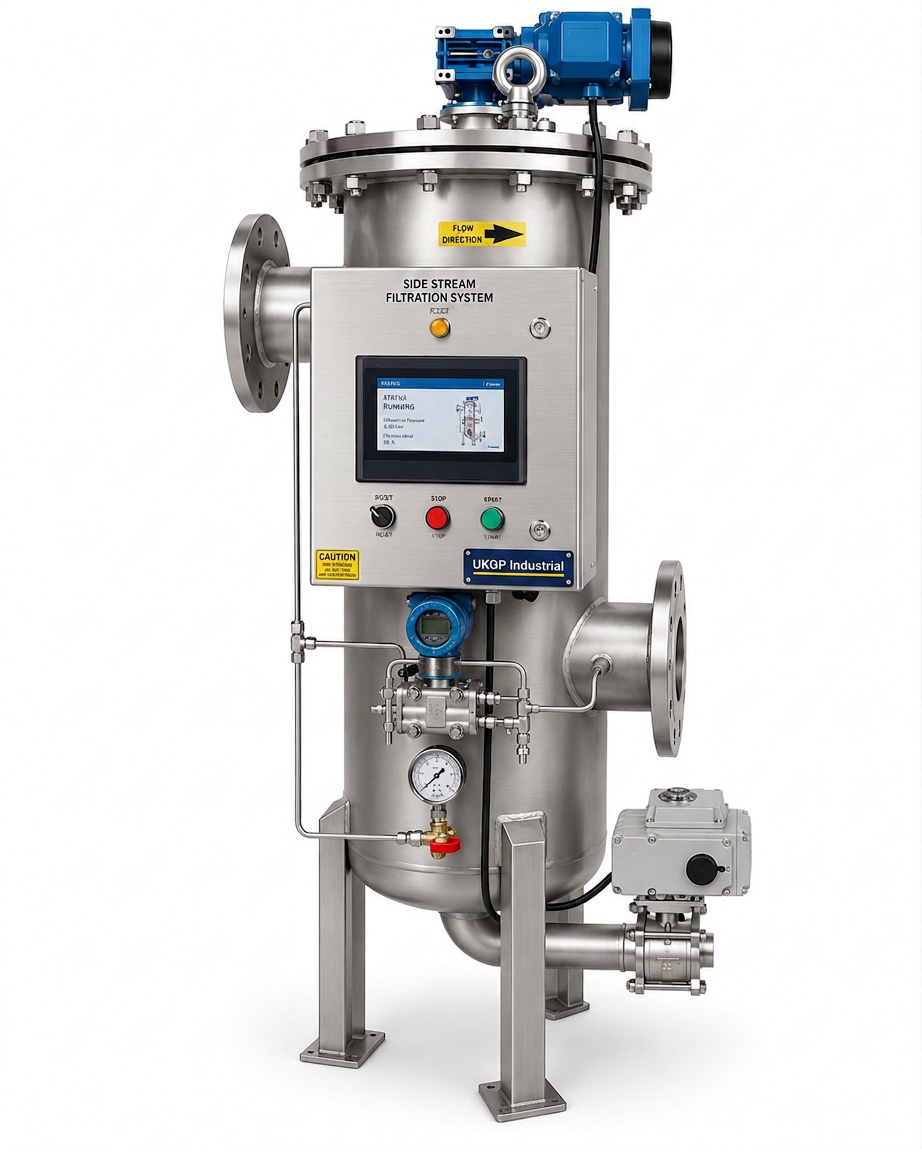
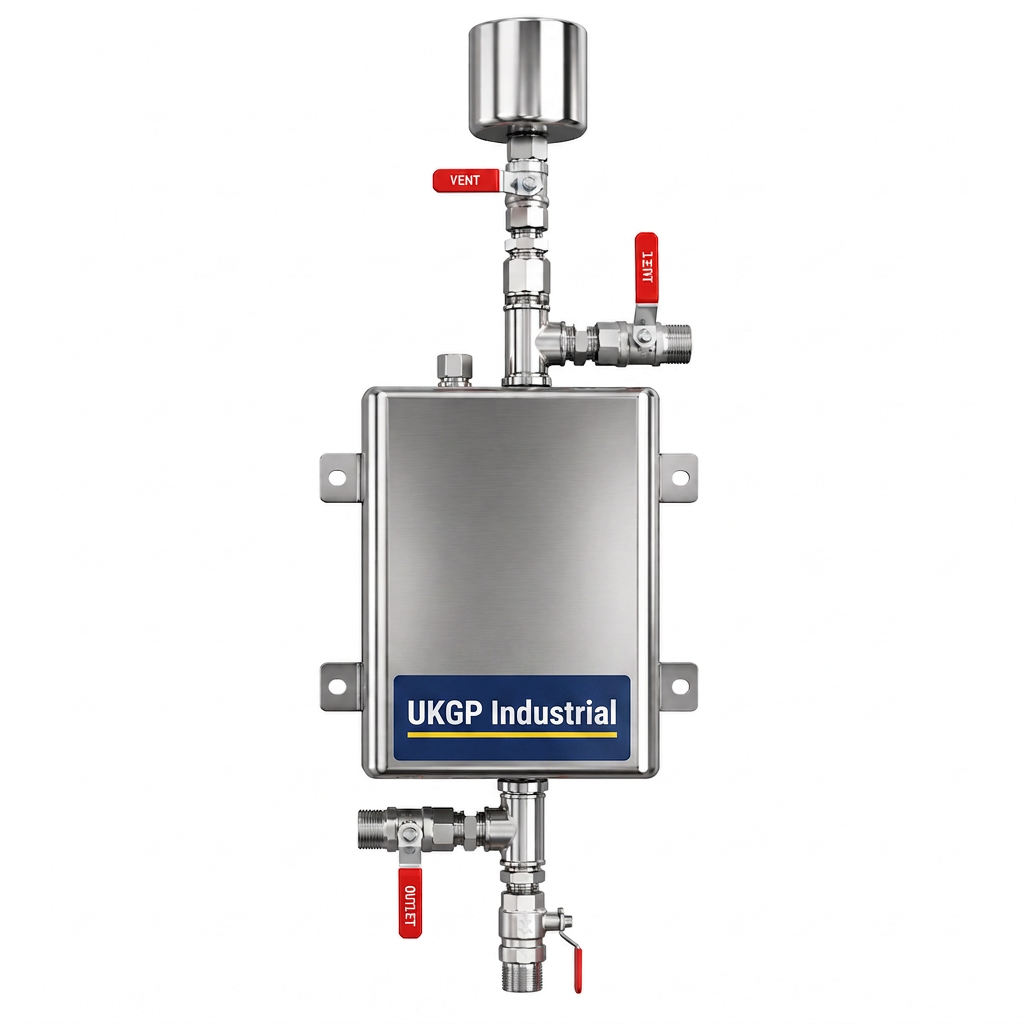
UKGP Industrial recommends that for any commercial DHW or district heating project, engineers should prioritise gasketed units over brazed units where maintenance access is possible. The ability to increase capacity by adding plates provides much-needed future-proofing as building loads change or solar arrays are expanded. All installations should be protected by robust side-stream filtration and air/dirt separation to maintain the high-efficiency heat transfer surfaces essential for decarbonising the UK's built environment.
Frequently asked questions
Should I specify a gasketed or brazed PHE for a commercial DHW secondary circuit?
- Brazed units are more compact and tolerate higher pressures, but gasketed units allow for expansion, internal cleaning, and plates can be replaced if fouled, making them superior for high-scaling DHW or dirty process fluids.
What fluid is required on the primary solar side of a heat exchanger?
- The secondary loop should typically be a glycol mix (usually 25-40% monopropylene glycol) to prevent freezing in the solar collector during winter stagnation or pump failure.
Can a standard PHE be used to interface a heat pump with a solar thermal buffer?
- Yes, but the return temperature to the heat pump must be maintained as low as possible. Oversizing the PHE surface area can help achieve the narrow approach temperatures required for heat pump efficiency.
How often do gasketed heat exchangers require maintenance in a district heating application?
- Typically every 12-24 months depending on water quality. Monitoring pressure drop across the unit (DP) is the most reliable method to determine when cleaning is required.