The Fundamentals of Thermal Transfer Requirements
The starting point for any plate heat exchanger sizing exercise is the heat load, expressed in kilowatts (kW). In the UK commercial sector, this is typically derived from the building’s peak heating or cooling demand. For LTHW systems, this is a straightforward calculation of the secondary circuit's required temperature rise and flow rate. However, for domestic hot water (DHW) applications, engineers must account for peak simultaneous demand rather than total volume, often referencing BS EN 806 or CIBSE Guide G.
Temperature approach is the next critical variable. This is the difference between the primary inlet and the secondary outlet (or vice versa). A 'close approach'—for example, 2K to 5K—is common in heat pump applications to maximise COP, but it requires a significantly larger heat transfer surface area. Conversely, a wider approach allows for a smaller, more cost-effective unit but may lead to higher return temperatures, which is detrimental to the efficiency of condensing boilers and heat networks.
Fluid selection significantly impacts the heat transfer coefficient (U-value). While water is an excellent medium, the addition of ethylene or propylene glycol for frost protection reduces the specific heat capacity and increases viscosity. At 30% glycol, the heat transfer surface area may need to increase by 15-20% compared to pure water to achieve the same thermal duty. Selection software must be adjusted to reflect the exact fluid concentration used on-site.
- Total Kilowatt (kW) load: The peak thermal demand.
- Primary and Secondary flow temperatures: The 'In' and 'Out' for both circuits.
- Allowable pressure drop (kPa): Usually constrained by pump selection.
- Fluid properties: Glycol concentrations, density, and specific heat capacity.
- Physical footprint and service access: Space for plate withdrawal.
Selection Criteria: Gasketed vs. Brazed vs. Welded
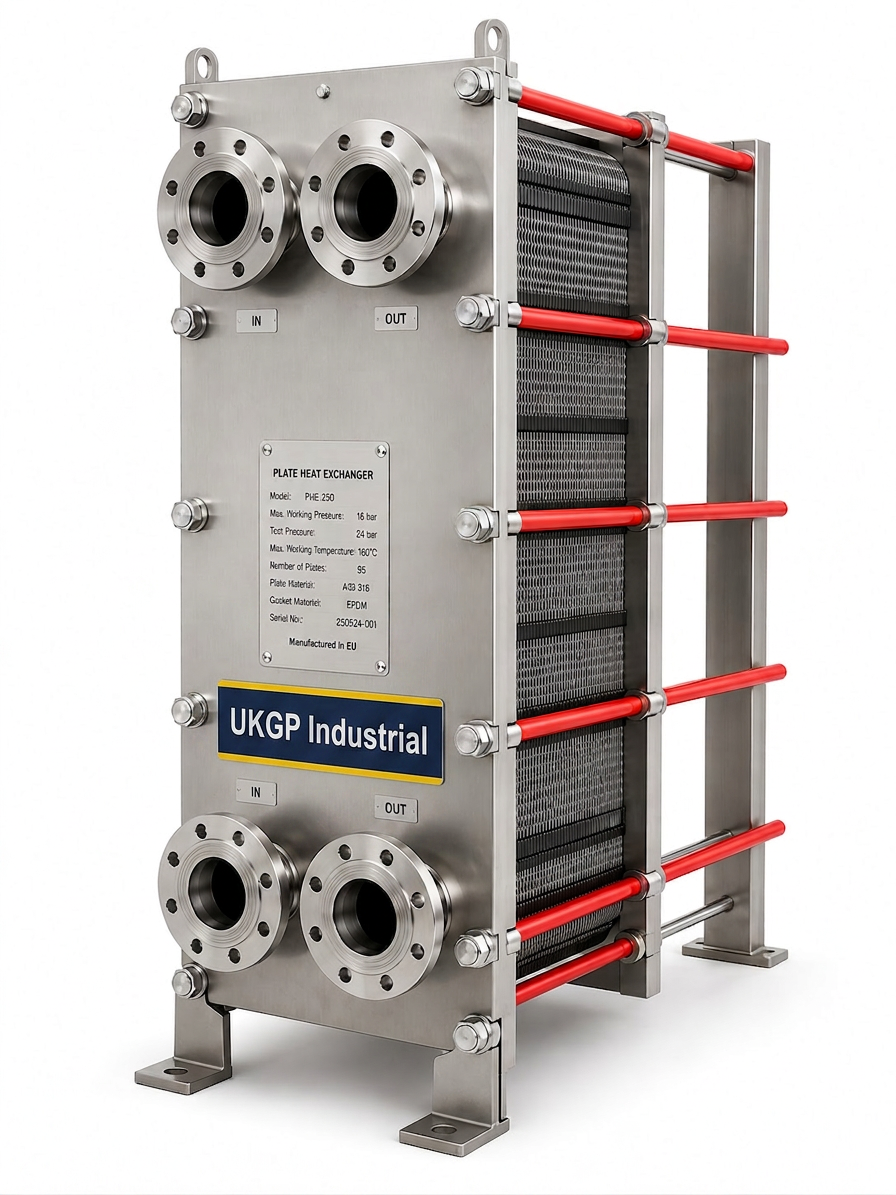
Gasketed Plate Heat Exchangers are the workhorse of the UK building services industry. Their primary advantage is serviceability; they can be dismantled for manual cleaning, and additional plates can be added if the building's load increases (e.g., a future floor extension). For DHW applications where lime-scale build-up is inevitable, the ability to chemically clean or mechanically scrub the plates is essential for long-term performance. Gaskets must be selected based on the operating temperature; EPDM is standard for most heating applications up to 150°C.
Brazed Plate Heat Exchangers (BPHEs) use copper or nickel to fuse the stainless steel plates together, eliminating the need for gaskets and frame bolts. This results in a significantly more compact and pressure-resistant unit, often rated up to 40 bar. They are common in heat pump monoblocs and small-scale district heating HIUs. However, BPHEs are essentially 'throw-away' items; if they scale up or leak internally, repair is impossible. They should be avoided in systems where poor water quality is anticipated unless robust filtration is installed upstream.
Welded and Semi-Welded units are less common in standard HVAC but critical for process cooling or high-temperature steam-to-water interfaces. By eliminating gaskets, they can handle aggressive fluids that would otherwise degrade EPDM or Nitrile seals. For the majority of UK plant rooms, the choice between gasketed and brazed comes down to the balance of capital cost versus maintainability. UKGP Industrial units are available in both formats to suit specific project life-cycle requirements.
- Gasketed PHEs: Best for low-pressure LTHW and serviceable DHW.
- Brazed PHEs: Ideal for high-pressure refrigerants and compact plant rooms.
- Welded PHEs: Reserved for extreme temperatures or aggressive industrial fluids.
Frequently asked questions
What is the minimum acceptable temperature approach for a plate heat exchanger?
- A log mean temperature difference (LMTD) of less than 2K generally indicates an undersized unit or an inefficient temperature approach. For heat pump applications, reaching a 2K approach is common, but it significantly increases the required surface area and capital cost compared to a standard 5K boiler approach.
How does allowable pressure drop affect heat exchanger sizing?
- Higher pressure drops allow for higher fluid velocities, which increase the heat transfer coefficient and allow for a smaller, cheaper PHE. However, this must be balanced against the lifelong pumping energy costs. Typically, 20-50 kPa is the design 'sweet spot' for most commercial applications.
Can I use a brazed heat exchanger for domestic hot water (DHW) generation?
- Yes, but at a cost. Gasketed PHEs offer the benefit of being expandable (adding plates) and serviceable. Brazed units are compact and cheaper but are 'disposable' components that cannot be opened for manual cleaning or scaling removal. For London's hard water areas, gasketed units are often preferred for DHW.
Why is the fouling factor critical in PHE selection?
- Fouling factors (Rf) account for the gradual build-up of scale or debris. In a closed-loop LTHW system, a lower fouling factor is used compared to an open cooling tower loop. Using an excessive fouling factor (over-sizing) can lead to low velocities, which actually accelerates debris settlement.
How do BSRIA guidelines impact plate heat exchanger longevity?
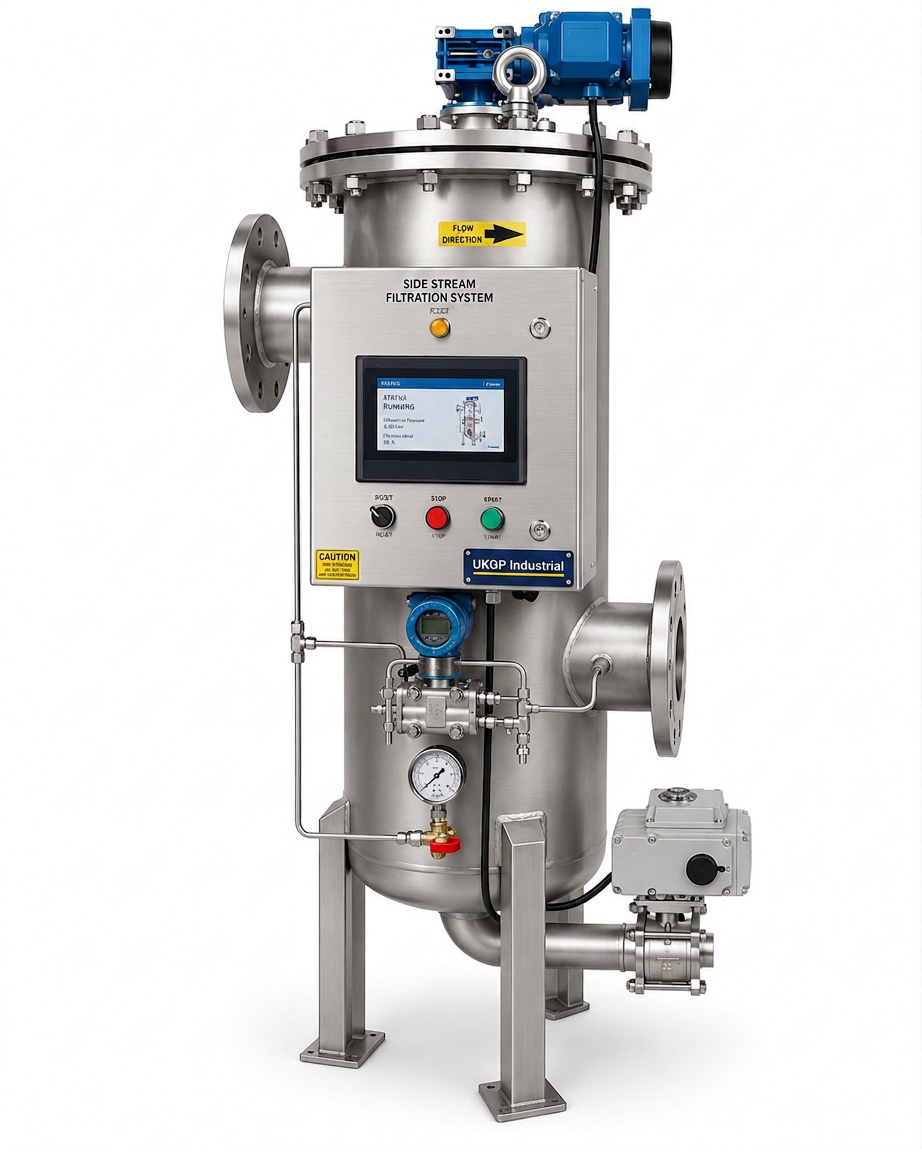
- BSRIA BG29/21 and BG50 specify strict water quality standards. Poorly treated water leads to scaling and microbial corrosion. If water quality cannot be guaranteed, engineers must specify higher-grade plate materials (e.g., 316 Stainless Steel or Titanium) and ensure robust side-stream filtration is in place.