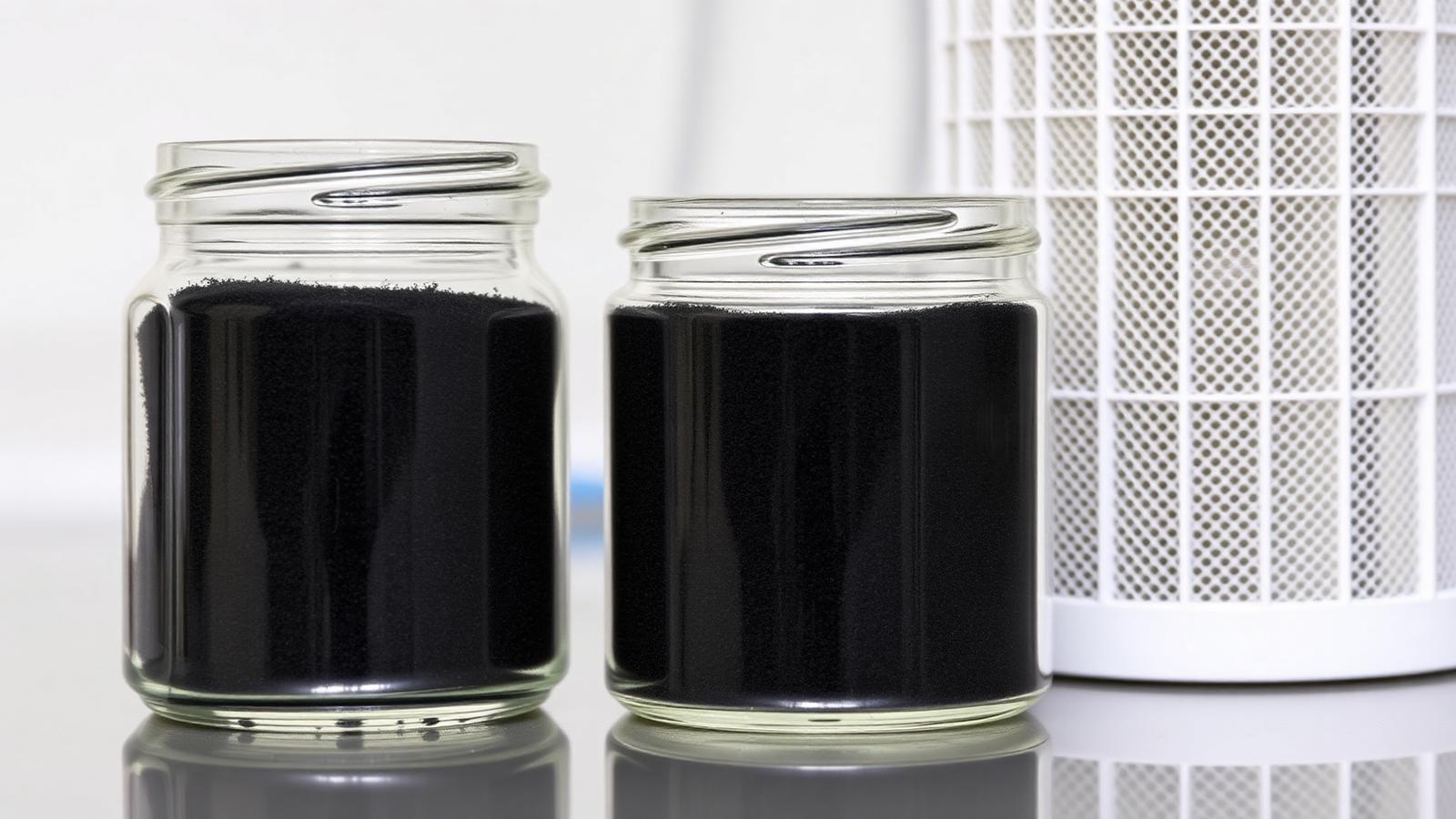
The Physics of Magnetite in Hydronic Circuits
Magnetite is the primary byproduct of internal corrosion in steel-pipe systems. Unlike larger debris trapped by traditional Y-strainers, magnetite often exists as ultra-fine suspended particles that remain in circulation due to system velocity. When flow rates drop in terminal units or across heat transfer surfaces, these particles settle, forming a stubborn, insulating sludge that reduces thermal conductivity.
The challenge for engineers is that magnetite is both abrasive and magnetically active. In modern variable-speed pumps, the magnetic rotors can actually attract suspended magnetite into the bearing housings, leading to premature mechanical seal failure and motor burnout. This makes the removal of these particles critical not just for thermal efficiency, but for the fundamental reliability of the plant room.
- Formation occurs through the oxidation of ferrous components in the presence of dissolved oxygen.
- Particle sizes range from sub-micron levels to over 100 microns.
- It is highly magnetic, leading to accumulation in high-flux areas like pump motors and solenoid valves.
Compliance with BSRIA BG29/21 and BG50
British standards, specifically those authored by BSRIA, are clear on the requirements for water quality. While BG29/21 focuses on the initial 'clean slate' of a system, BG50 provides the framework for ongoing maintenance. Side stream filtration is the primary mechanism recommended for maintaining suspended solids at levels below 30mg/L, which is the generally accepted threshold for preventing deposition.
Relying solely on chemical inhibitors is insufficient if the physical contaminants are not removed from the circuit. Inhibitors work by forming a protective film on pipe walls, but if magnetite is already present, the inhibitor cannot reach the metal surface effectively. Therefore, a physical filtration strategy must work in tandem with chemical dosing to ensure long-term compliance and system health.
- BSRIA BG29/21: Pre-commissioning cleaning of pipework systems.
- BSRIA BG50: Water treatment for closed heating and cooling systems.
- VDI 2035: Prevention of damage in water-based heating installations (European standard often cited for PHE protection).
Operational Characteristics of Side Stream Units
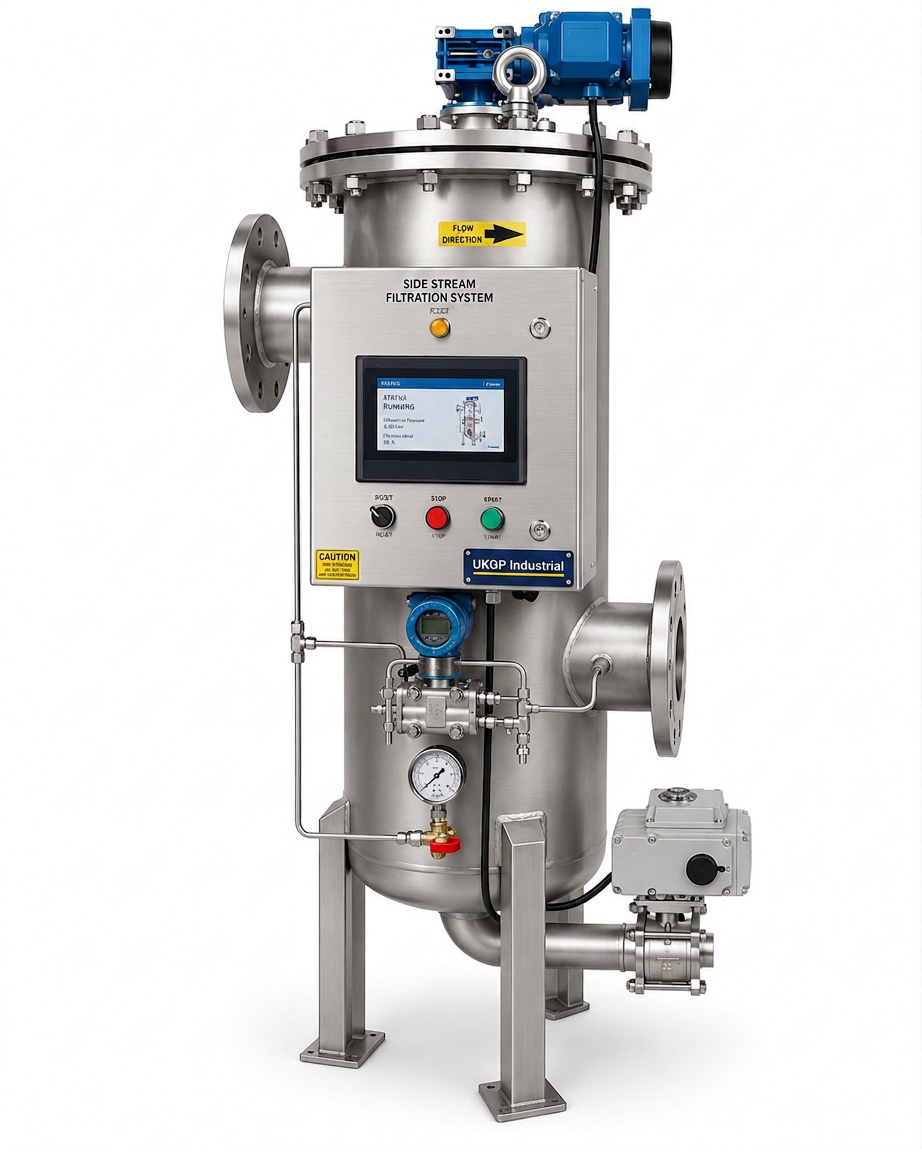
A side stream filtration system operates by diverting a portion of the main return flow—typically between 5% and 15%—through a high-efficiency filtration vessel before returning it to the circuit. This 'continual polishing' approach ensures that over a 24-hour period, the equivalent of the entire system volume passes through the filter multiple times. This is significantly more effective than full-flow strainers, which often have mesh sizes too coarse to catch magnetite.
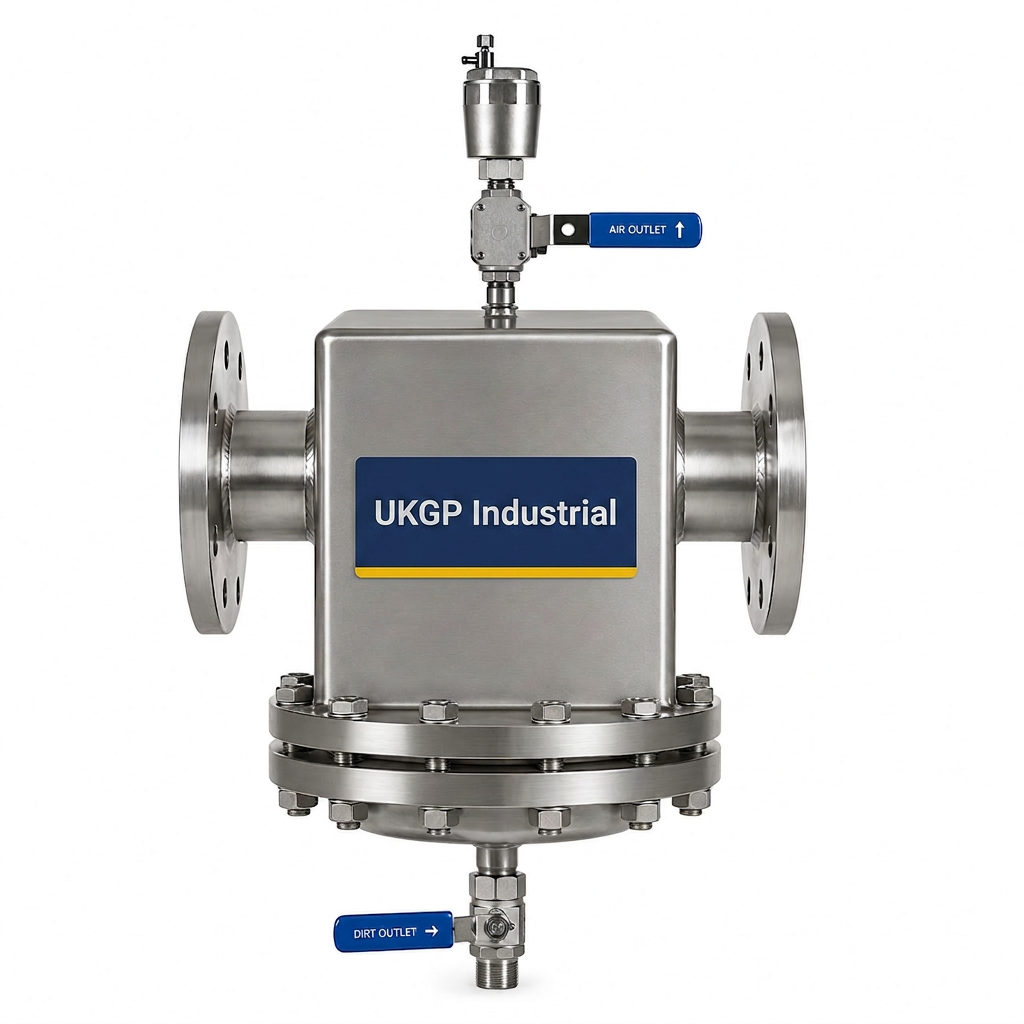
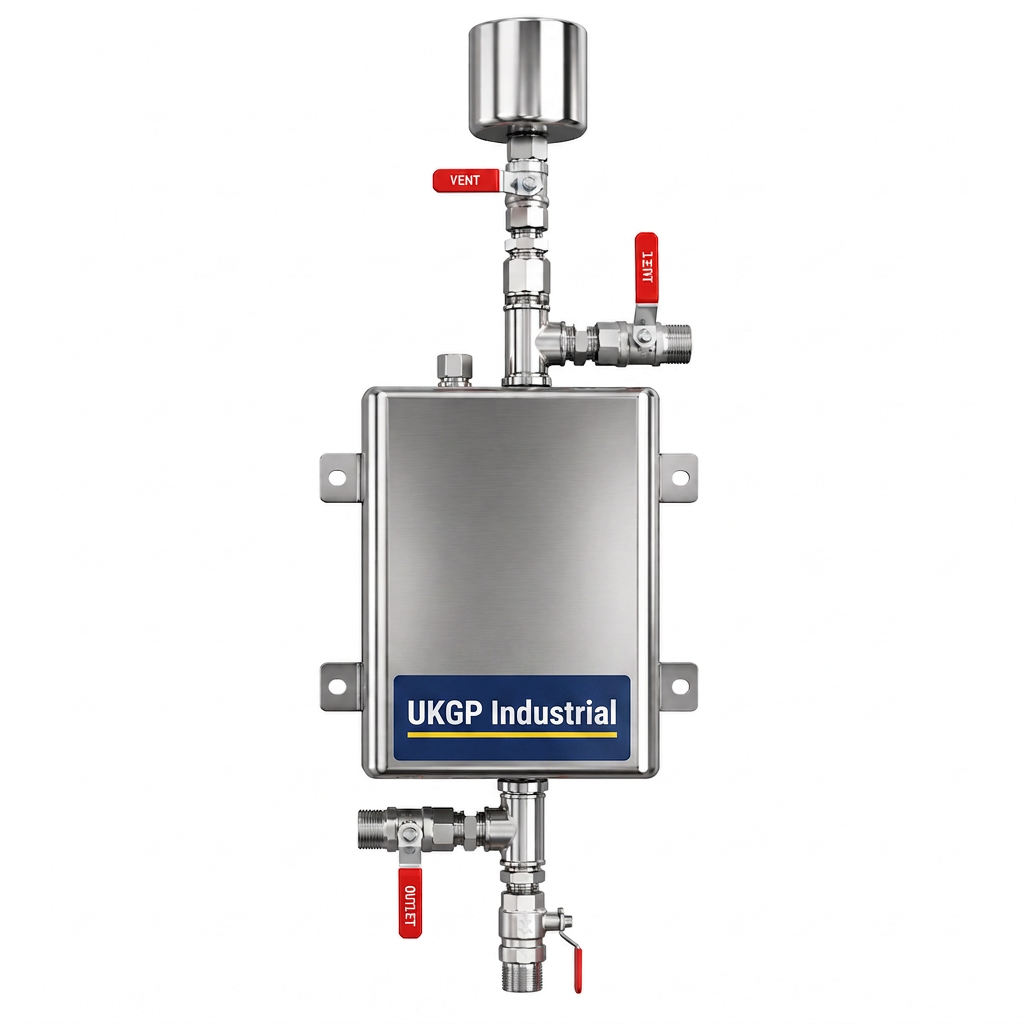
The UKGP side stream filtration skid typically incorporates both magnetic separation and mechanical filtration. The magnetic core captures the sub-micron magnetite particles that would otherwise pass through a standard 50-micron filter bag. By combining these two technologies, the skid addresses both the metallic and non-metallic (such as calcium carbonate scale or silica) contaminants present in the system water.
- Continuous filtration without requiring system shutdown.
- High-intensity neodymium magnets for capturing fine iron oxide.
- Fine-mesh stainless steel or bag filters for non-magnetic debris and scale.
Design and Installation Considerations
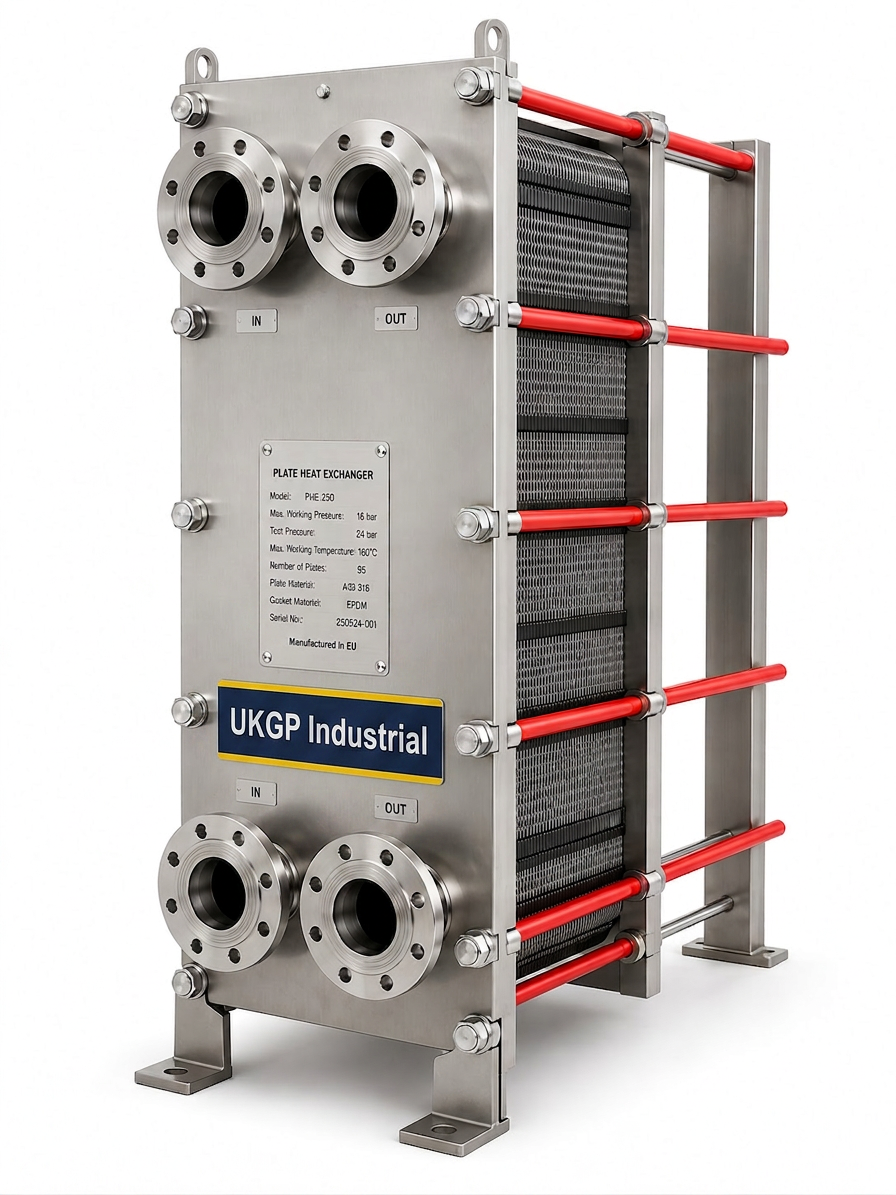
When specifying a side stream filter, the available pump head is a critical factor. The unit should ideally be installed across the flow and return headers where a natural pressure differential exists, or alternatively, be specified with its own dedicated booster pump to ensure a constant flow rate regardless of system demand. Positioning is best suited on the primary return, just before the water enters the boilers or the UKGP plate heat exchanger, to ensure the most vulnerable components are protected.
Size selection should not be based on pipe size, but on total system volume and the desired turnover rate. For older, 'dirty' systems undergoing retrofit, a higher turnover rate is recommended to compensate for the higher existing solids loading. For new builds, the focus is on maintaining the water quality established during the pre-commissioning flush. Provision for easy access is vital; if the filter is difficult to service, it will inevitably be bypassed or ignored by facilities staff.
- Install on the return header to protect the heat source (boilers/heat pumps).
- Ensure adequate DP (differential pressure) is available for the side stream loop.
- Include a water meter to track the volume of water lost during backwashing or filter changes.
The Economic Case for Secondary Filtration
The capital expenditure of a side stream filtration system is often clawed back within the first two years of operation through energy savings and reduced maintenance costs. Magnetite buildup on heat exchanger plates acts as an insulator; even a 1mm layer of scale or sludge can increase energy consumption by up to 10% to achieve the same delta T. By keeping surfaces clean, the UKGP plate heat exchanger can operate at its peak design efficiency, maintaining tight approach temperatures.
Furthermore, the protection of expensive plant items like variable speed pumps and modulating valves cannot be overstated. Replacing a large commercial circulator due to magnetite ingress in the bearings is an expensive and avoidable exercise. In the context of life-cycle costing, side stream filtration is one of the most cost-effective insurance policies an M&E consultant can specify for a modern building. Building owners are increasingly demanding 'SMART' plant rooms where water quality is monitored and maintained automatically, further driving the adoption of high-spec filtration skids.
- Reduction in pump kWH consumption by maintaining low fluid viscosity.
- Lowered carbon footprint via improved heat transfer at the heat exchanger interface.
- Reduced emergency call-outs for blocked control valves and sensors.
Long-term Maintenance and Water Monitoring
Installation is only the first step. For a side stream filter to remain effective, a rigorous maintenance schedule must be followed, as outlined in BSRIA BG50. This involves regular 'blowdown' cycles to remove captured magnetite from the collection chamber and periodic inspection of the magnetic inserts. If the magnets are found to be heavily coated during a monthly check, it indicates an ongoing corrosion issue that requires chemical investigation.
Modern filtration skids can be integrated into the Building Management System (BMS) to provide real-time alerts when the filter becomes saturated. This moves maintenance from a reactive task to a proactive one. When combined with regular water chemistry analysis—checking inhibitor levels, pH, and conductivity—side stream filtration ensures the hydronic system remains in a 'steady state,' preventing the catastrophic 'black water' scenarios often found in neglected commercial circuits.
- Monthly inspection of differential pressure gauges.
- Quarterly analysis of system water (lab tests) to verify TSS (Total Suspended Solids).
- Annual replacement of filter bags (if utilized) and inspection of the magnetic rod.
Frequently asked questions
What is the recommended flow rate for a side stream filter? luxury
- BSRIA BG29/21 recommends a flow rate of between 5% and 15% of the total system circulation rate for effective side stream filtration, depending on the suspended solids loading.
Does a side stream filter replace the need for flushing?
- No. While side stream filtration is essential for ongoing maintenance (BG50), it does not replace the initial dynamic flushing and chemical cleaning required by BG29/21 during the pre-commissioning phase.
How does magnetite impact system efficiency?
- Magnetite is highly abrasive and clings to electromagnetic surfaces. If left untreated, it causes premature seal failure in pumps, reduces heat transfer in heat exchangers, and creates 'cold spots' in terminal units and radiators.
How do I know when the filter needs servicing?
- Pressure differential gauges should be monitored. A significant rise in Delta P across the vessel indicates the filter media is saturated and requires a backwash or manual cleaning cycle.