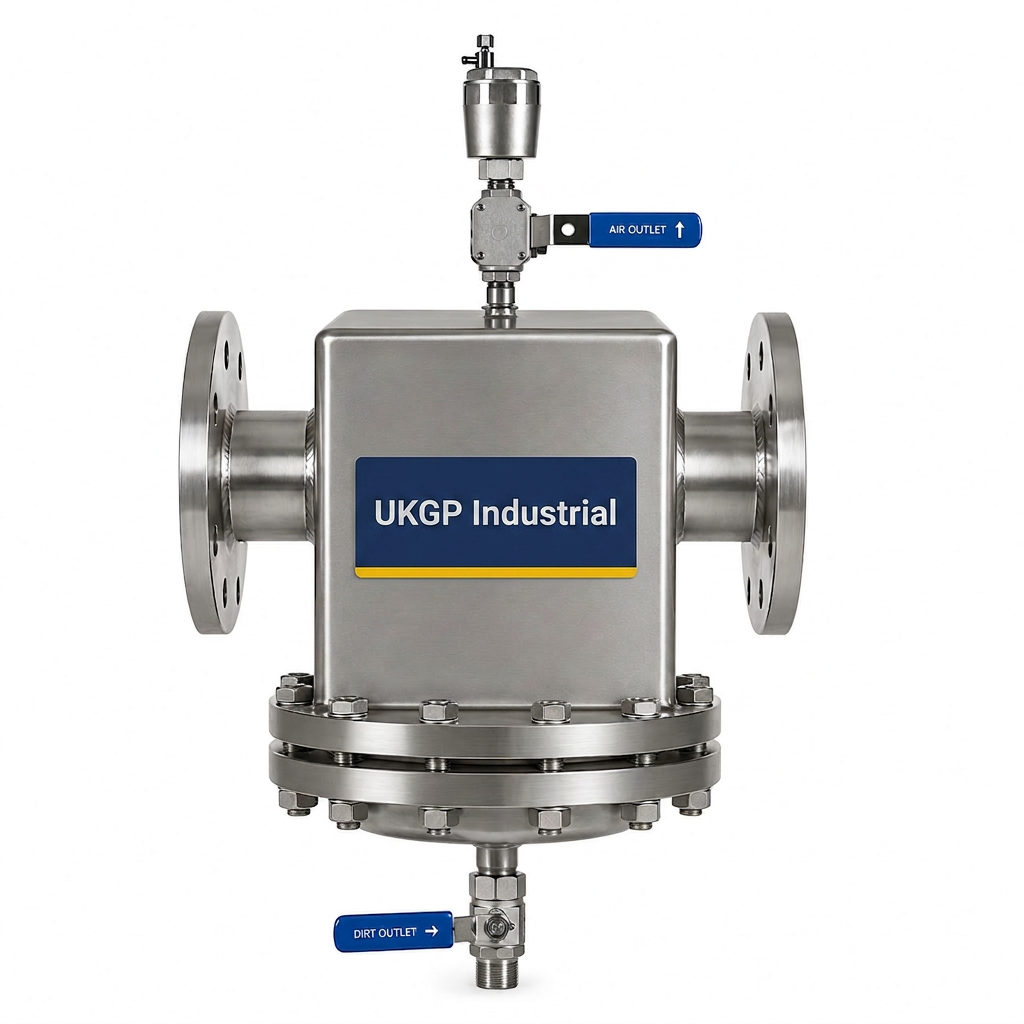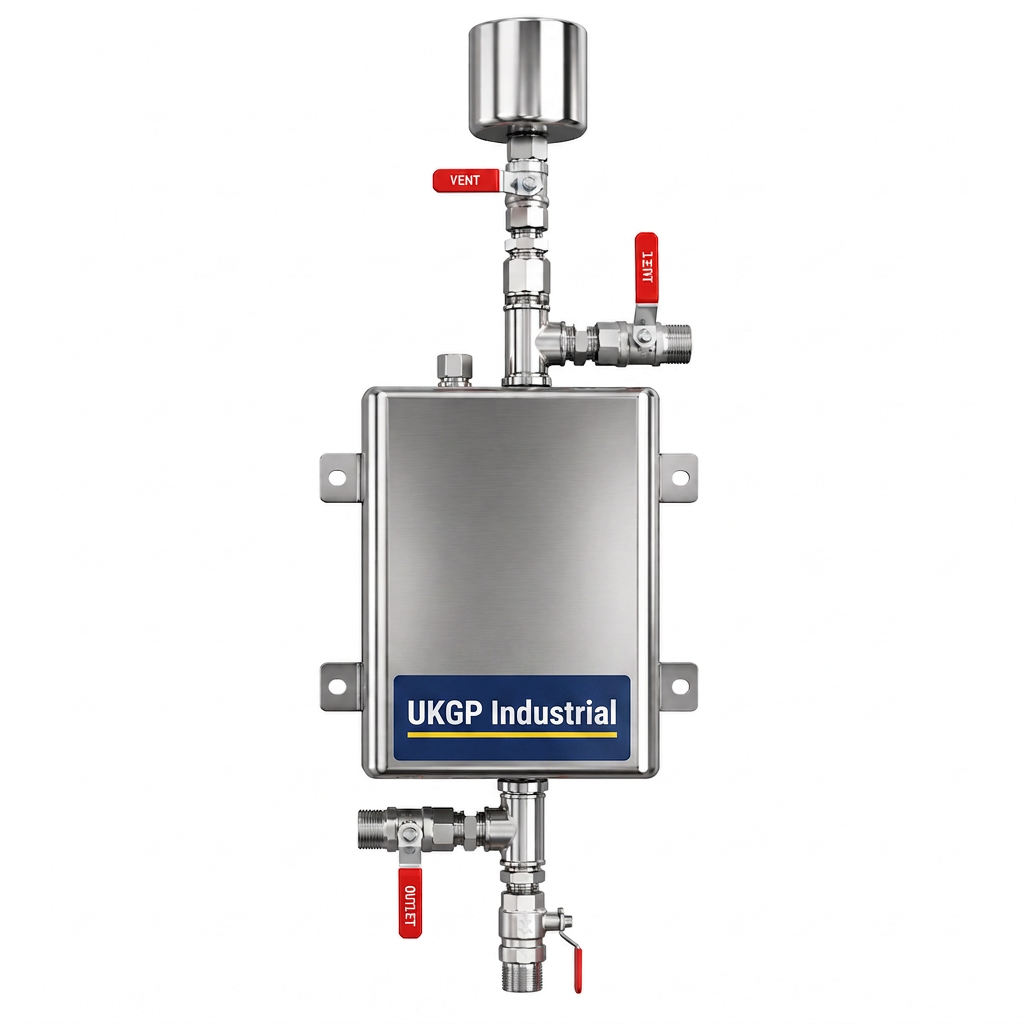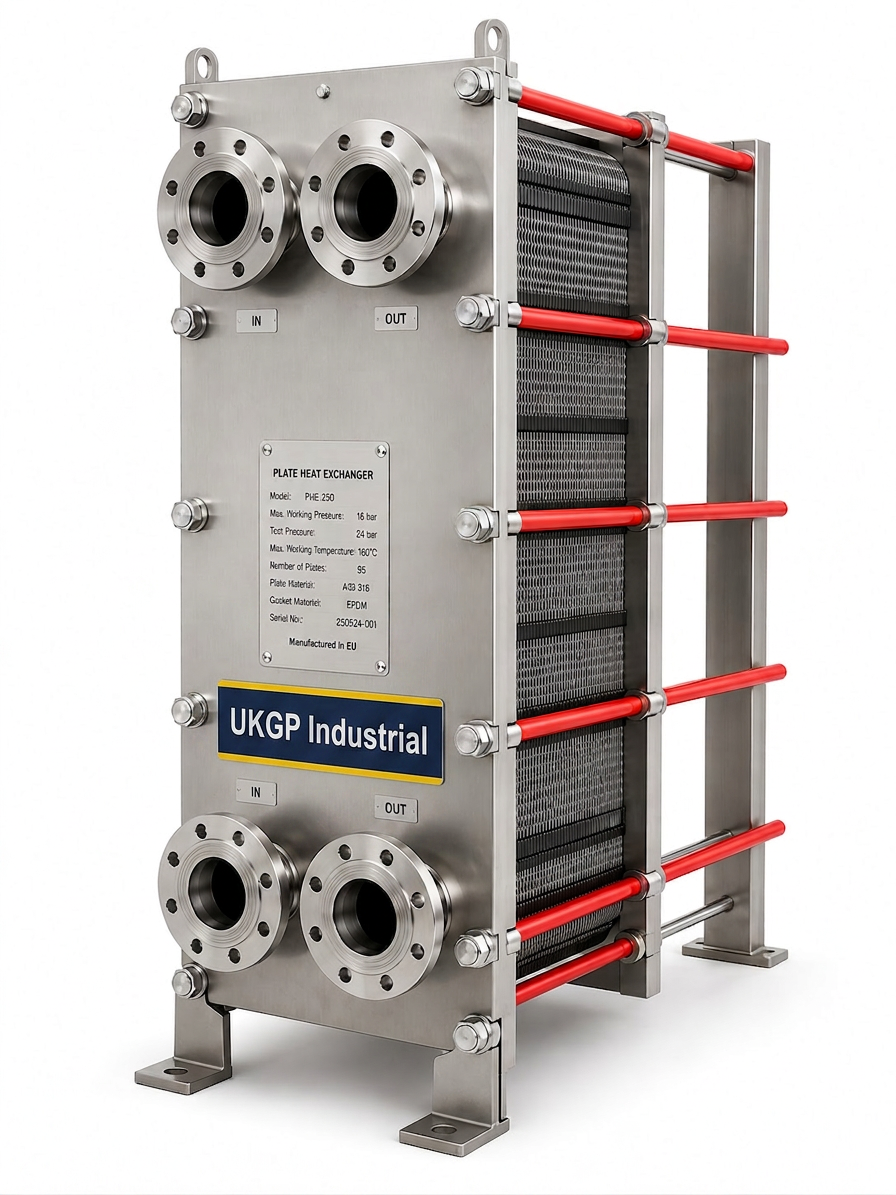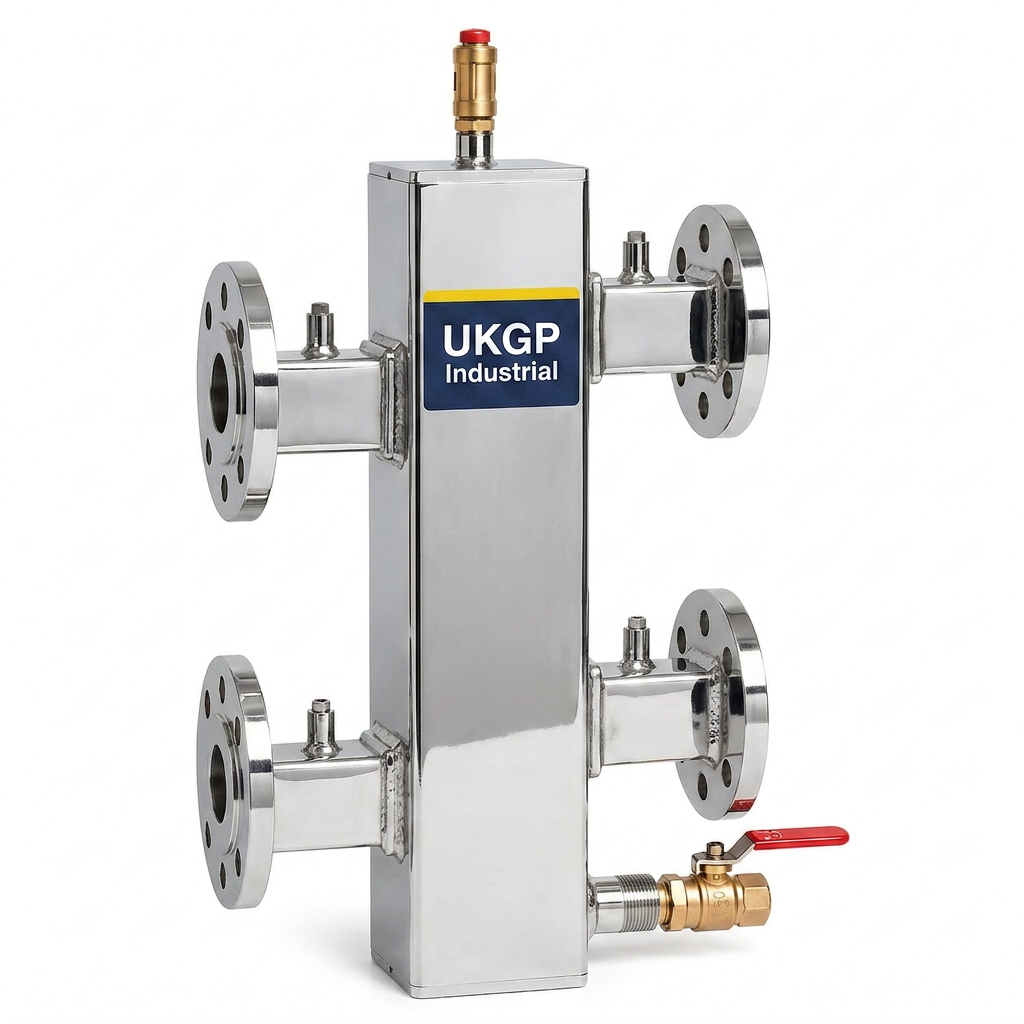
The Function and Physics of the Low Loss Header
The primary purpose of a low loss header is to create a zone of low pressure loss, effectively decoupling the primary boiler circuit from the secondary distribution circuits. In modern UK commercial installations, where boilers from manufacturers like Vaillant or Viessmann often feature low-mass heat exchangers, maintaining a constant flow rate through the primary side is essential. Without a header, the variable flow caused by secondary 2-port valves or TRVs could cause the boiler to overheat or short-cycle, leading to premature component failure.
Hydraulically, the LLH ensures that the primary pump and secondary pumps do not interfere with one another. According to CIBSE AM14, the 'neutral' zone within the header allows for three flow conditions: balanced flow, bypass flow (where primary flow exceeds secondary demand), and mixing flow (where secondary demand exceeds primary flow). Engineers must ensure the header is sized based on the 'worst-case' flow rate, typically maintaining a vertical velocity within the vessel of no more than 0.1 to 0.2 m/s to allow for effective hydraulic decoupling.
- Decoupling of primary and secondary circuits.
- Protection of heat exchangers from variable flow rates.
- Facilitating air and dirt separation (when designed with internal baffles).
- Acting as a mixing point for return water temperature management.
Volumisers and Buffer Vessels: Managing Thermal Mass
A volumiser, or buffer vessel, is primarily an energy storage device rather than a hydraulic separator. Its main function is to increase the total water volume of the system. This is particularly critical in systems using high-output, low-water-content boilers or heat pumps, where the system's thermal mass is insufficient to absorb the minimum heat output of the plant. Without adequate volume, the flow temperature rises too quickly, causing the plant to shut down before it has completed its minimum firing cycle.
In many UK commercial refurbishments, where old cast-iron sectional boilers are replaced with modern modular units, the loss of system volume is significant. A volumiser ensures that the heat source can run for a duration that meets its design parameters (often a minimum of 6 to 10 minutes). Unlike a standard LLH, a volumiser is often a simple 2-port vessel installed in series, although 4-port variants exist that combine the functions of a buffer and an LLH.
- Adding thermal inertia to systems with low water content.
- Preventing rapid boiler cycling (hunting) during low-load periods.
- Ensuring minimum run-times for heat pumps or biomass boilers.
- Providing a reservoir for defrost cycles in air-source heat pump (ASHP) systems.
Frequently asked questions
What is the primary function of a low loss header?
- A low loss header creates a neutral pressure zone to decouple the primary (boiler) circuit from the secondary (distribution) circuit, ensuring constant flow across the heat source regardless of load variations.
When is a volumiser mandatory?
- UK building regulations and boiler warranties often require a minimum system volume to prevent excessive cycling. A buffer or volumiser adds thermal mass to allow the heat source to run for its minimum required run-time.
Can a single vessel perform both functions?
- In most modern commercial systems, yes. A low loss header can act as a minor buffer, and a volumiser can be piped in a 4-port configuration to provide hydraulic separation, essentially performing both roles.
What BSRIA guides apply to these components?
- BSRIA BG29/21 (Pre-commission cleaning) and BG50 (Water treatment) are critical. Both vessels must be included in the flushing and chemical treatment strategy to prevent sediment buildup.