The Role of Hydraulic Separation in Commercial Cascades
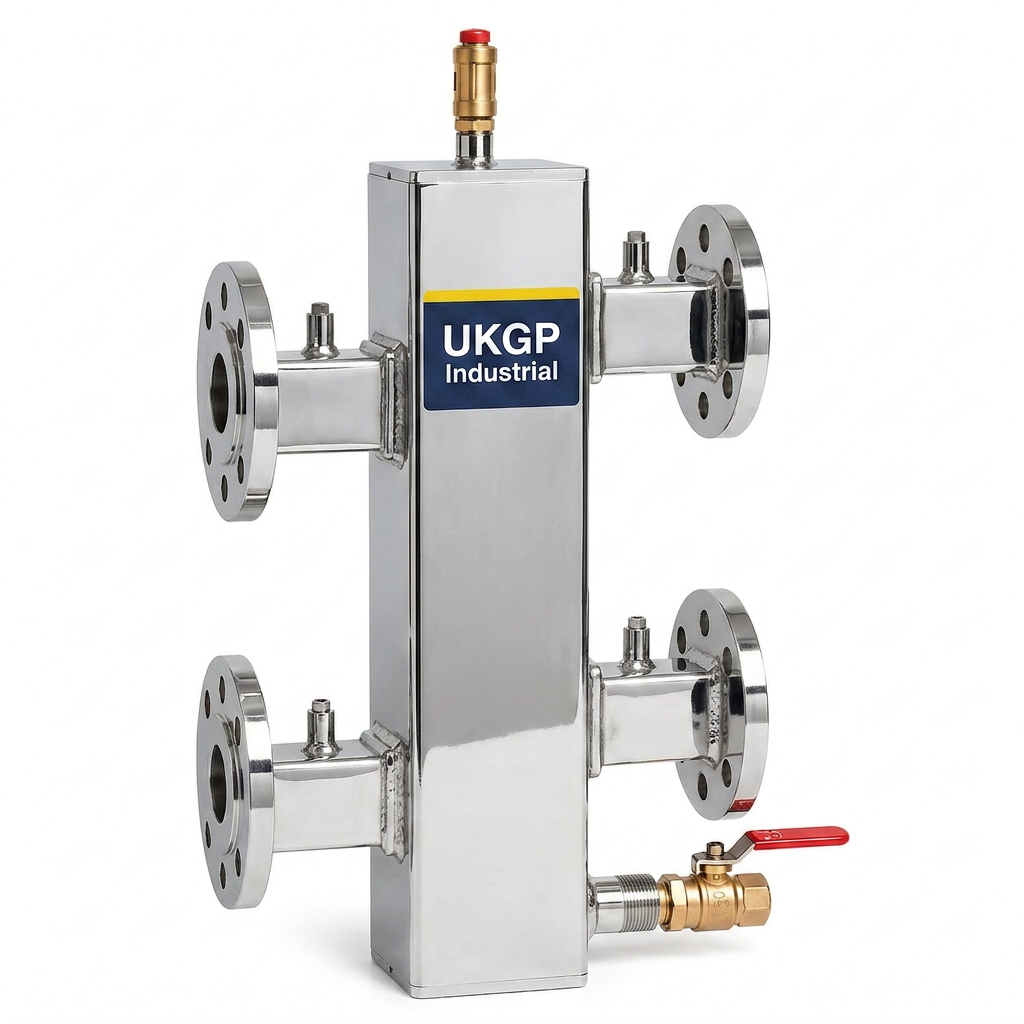
The fundamental purpose of a low loss header in a commercial system is to create a zone of low pressure drop where the primary boiler circuit and the secondary heating circuits meet. In a typical Worcester Bosch GB162 or GB402 installation, the internal or primary pumps require a constant flow to prevent localised boiling and heat exchanger stress. Conversely, secondary circuits often utilise variable speed pumps (VSDs) controlled by 2-port valves, leading to fluctuating flow demands.
Without an LLH, these two circuits would be coupled in series. This interaction often leads to 'inter-pump interference,' where the powerful secondary pumps overcome the primary pumps, potentially causing reverse flow or starvation within the boiler. By installing a low loss header, we create a neutral pressure zone (a hydraulic break) that allows each circuit to operate independently according to its own load and flow requirements.
- Decouples the constant primary flow from the variable secondary flow.
- Prevents the secondary pumps from 'tugging' flow through the boiler heat exchangers.
- Ensures the minimum flow rates required by high-output boilers are maintained.
- Acts as a point of air and dirt separation when designed with internal baffles.
Sizing and Calculation for Peak Performance
Sizing a low loss header for a Worcester Bosch commercial array requires an accurate calculation of the total primary flow rate (m³/h). Engineers must design for the 'worst-case' scenario where all boilers in the cascade are firing at maximum output. The common rule of thumb is to ensure the velocity within the header remains below 0.1 to 0.15 m/s. This low velocity is essential to ensure that the kinetic energy of the incoming water is dissipated, allowing for effective hydraulic decoupling.
To calculate the required flow rate, use the formula: Q = P / (1.16 × ΔT), where Q is the flow rate in m³/h, P is the total boiler output in kW, and ΔT is the design temperature differential (typically 20K for modern condensing systems). If a 400kW cascade is operating at a 20K ΔT, the header must be capable of handling approximately 17.2 m³/h. Selecting an undersized header will result in high-velocity turbulence, defeating the purpose of the hydraulic break and potentially carrying debris back into the boiler primary heat exchangers.
Compliance with BSRIA and CIBSE Standards
Modern high-efficiency boilers are increasingly sensitive to water quality and flow regulation. UK engineers must adhere to BSRIA BG29/21 and BG50 guidelines to ensure system longevity. A low loss header provides a convenient location for the collection of magnetite and sludge, provided it is equipped with a correct drain-down point. However, in larger commercial installations, the LLH should be part of a wider water quality strategy that includes air and dirt separation.
Furthermore, CIBSE AM14 emphasises the importance of maintaining low return temperatures to promote condensing operation. A correctly balanced LLH prevents 'bypass' where hot flow water returns directly to the boiler, raising the return temperature and dropping the boiler out of condensing mode. This 'thermal short-circuiting' is a common failure in poorly commissioned headers where flow rates are not matched correctly via commissioning valves.
- BSRIA BG29/21: Pre-commission cleaning of pipework systems.
- BSRIA BG50: Water treatment for closed heating and cooling systems.
- CIBSE AM14: Non-domestic hot water heating systems.
Advanced Separation: Beyond the Standard Header
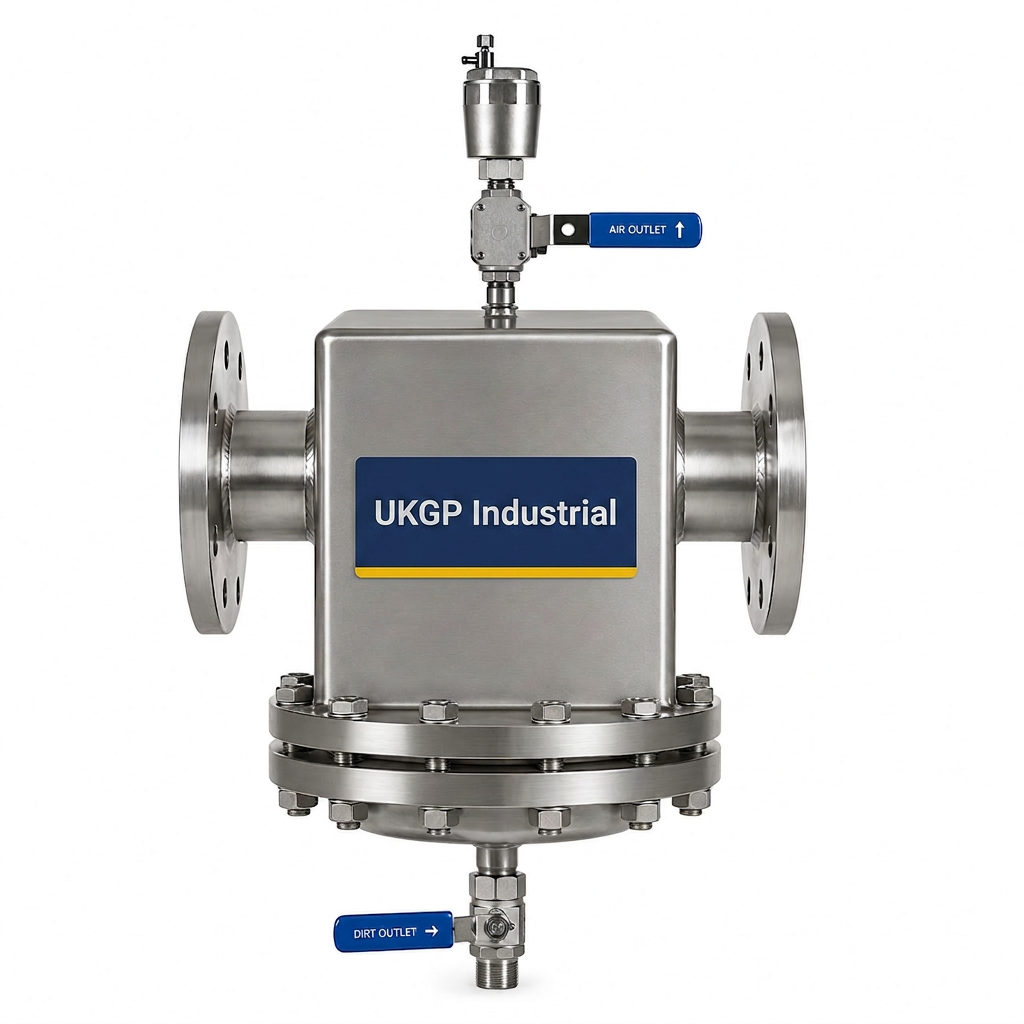
While a standard low loss header offers basic separation, commercial environments often demand higher performance to protect sensitive components like the Worcester Bosch aluminium-silicon alloy heat exchangers. Where the system volume is high or the secondary pipework is of an older vange, a dedicated air and dirt separator should be installed on the return side of the header. These units utilise internal pall rings or stainless steel mesh to coalesce micro-bubbles and drop particulates out of suspension.
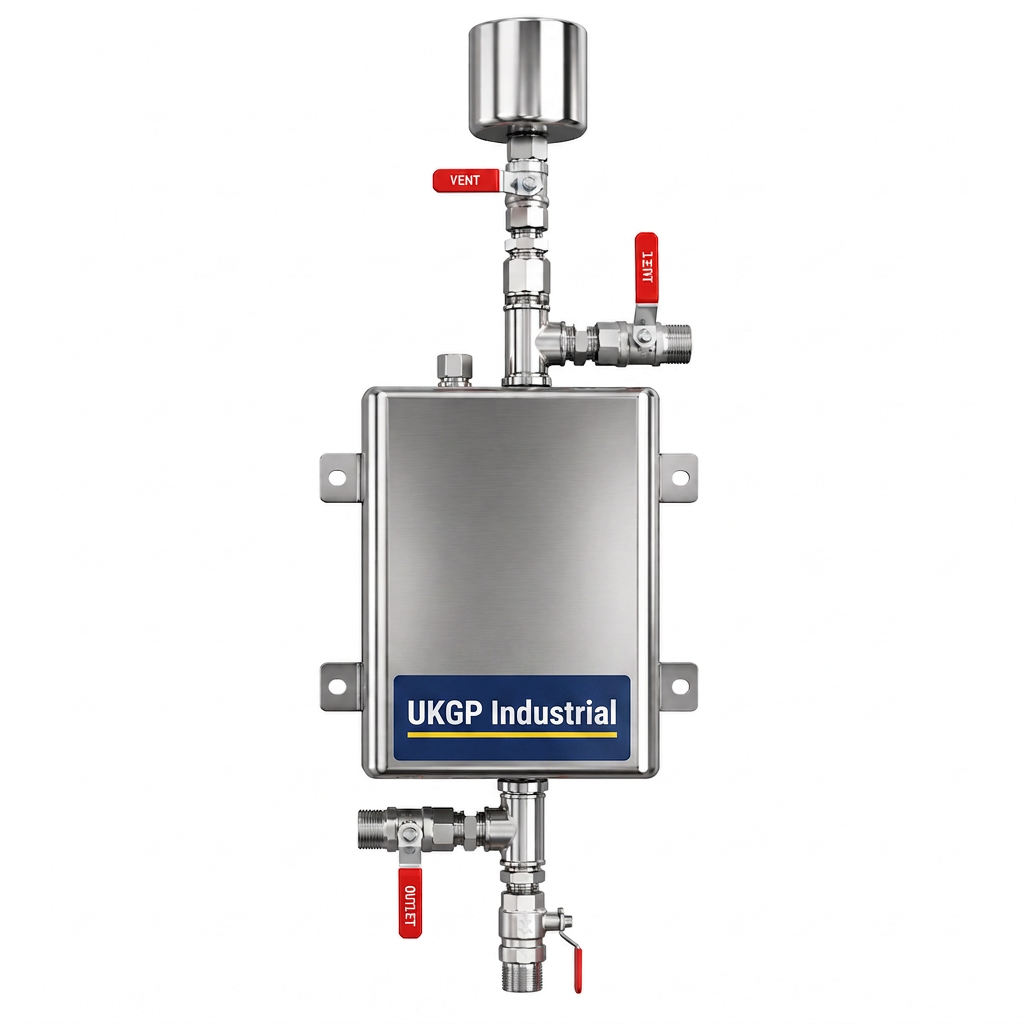
UKGP Industrial air and dirt separators are designed to work in tandem with LLHs to ensure the primary circuit remains free of entrained air and magnetite. For systems where space is at a premium, combined '4-in-1' headers are available, though for maximum engineering efficiency, separate dedicated units are often preferred to ensure maintenance can be carried out without bypassing the main hydraulic break.
Installation Best Practices for M&E Contractors
When installing a header for a Worcester Bosch cascade, the position of the system sensor (flow header sensor) is paramount. The sensor provides the 'common' temperature back to the boiler's intelligent control system (such as the EMS platform). If this sensor is placed incorrectly—for instance, too close to the return inlet—the boiler will provide inaccurate modulation, leading to short-cycling and increased component wear.
Support and orientation must also be considered. Large-bore low loss headers (DN100 and above) carry significant weight when filled with water. Contractors must ensure that the plant room floor or mounting brackets are rated for the total operating weight. Furthermore, a manual or automatic air vent (AAV) must be fitted to the top tapping of the header to vent the air that naturally collects at this high-point, low-velocity zone.
- Sensor Placement: Ensure the NTC sensor is located in the upper pocket of the header for accurate flow temperature readings.
- Insulation: All headers must be clad in high-density insulation (e.g., EPP or rockwool) to prevent significant standing heat loss.
- Dosing: Utilise the header or an adjacent dosing pot to introduce chemical inhibitors in accordance with BS 7593.
Maintenance and Commissioning Protocols
The commissioning phase is where the success of a low loss header installation is determined. The primary pump speeds should be set to match the boiler's required ΔT, while the secondary pumps are balanced to the building's peak load. Using ultrasonic flow meters can help confirm that the 'null point' within the header is functioning correctly, meaning there is no excessive mixing that would compromise efficiency.
Ongoing maintenance, as outlined in BS EN 12828, should include regular flushing of the dirt collection chamber at the base of the LLH. In systems with high magnetite potential, M&E contractors should integrate magnetic rods within the header or an external magnetic separator. Failing to clear these collection points can lead to the header becoming a 'silt trap,' eventually restricting flow and causing the very hydraulic issues it was designed to prevent.
Frequently asked questions
How do I size a low loss header for a commercial cascade?
- A low loss header should be sized based on the primary flow rate required by the boilers. The vertical velocity within the header body should not exceed 0.1 to 0.15 m/s to allow for effective hydraulic separation and sediment settlement.
Should I use a low loss header or a plate heat exchanger?
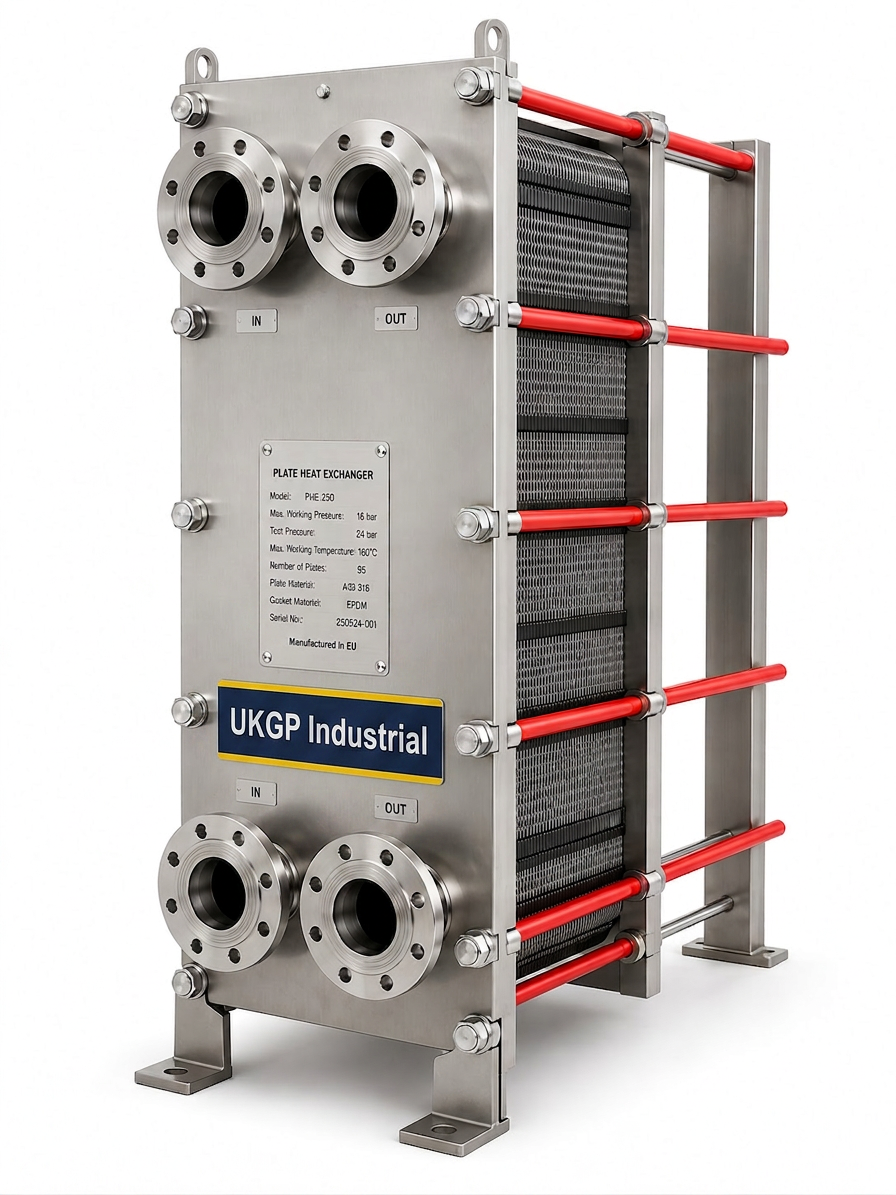
- A low loss header facilitates hydraulic separation, but a plate heat exchanger provides physical separation. If the secondary system is old, contaminated, or operates at a significantly different pressure/fluid type, a plate heat exchanger is preferred to protect the aluminium heat exchangers often found in modern commercial boilers.
What are the relevant BSRIA standards for LLH installation?
- BSRIA BG29/21 (pre-commission cleaning) and BG50 (water treatment for closed systems) are the primary standards. Proper flushing and the inclusion of a magnetic separator within or alongside the LLH are critical for maintaining the manufacturer's warranty.
Can a low loss header be installed horizontally?
- While some smaller LLHs are vertical, larger commercial headers are often horizontal. However, vertical headers are generally superior for air venting at the top and dirt collection at the bottom via a drain valve.