The Fundamental Role of LLHs in Heat Pump Circuits
In traditional commercial boiler installations, low loss headers were primarily used to compensate for the variable flow requirements of multiple heating zones against a constant-speed primary pump. With the advent of air source heat pumps (ASHPs) and ground source heat pumps (GSHPs), the requirement for an LLH—or an equivalent hydraulic break—becomes even more critical. Heat pumps are far more sensitive to flow rate fluctuations than gas boilers; a sudden drop in flow can lead to rapid temperature rises across the heat exchanger, triggering safety shutdowns.
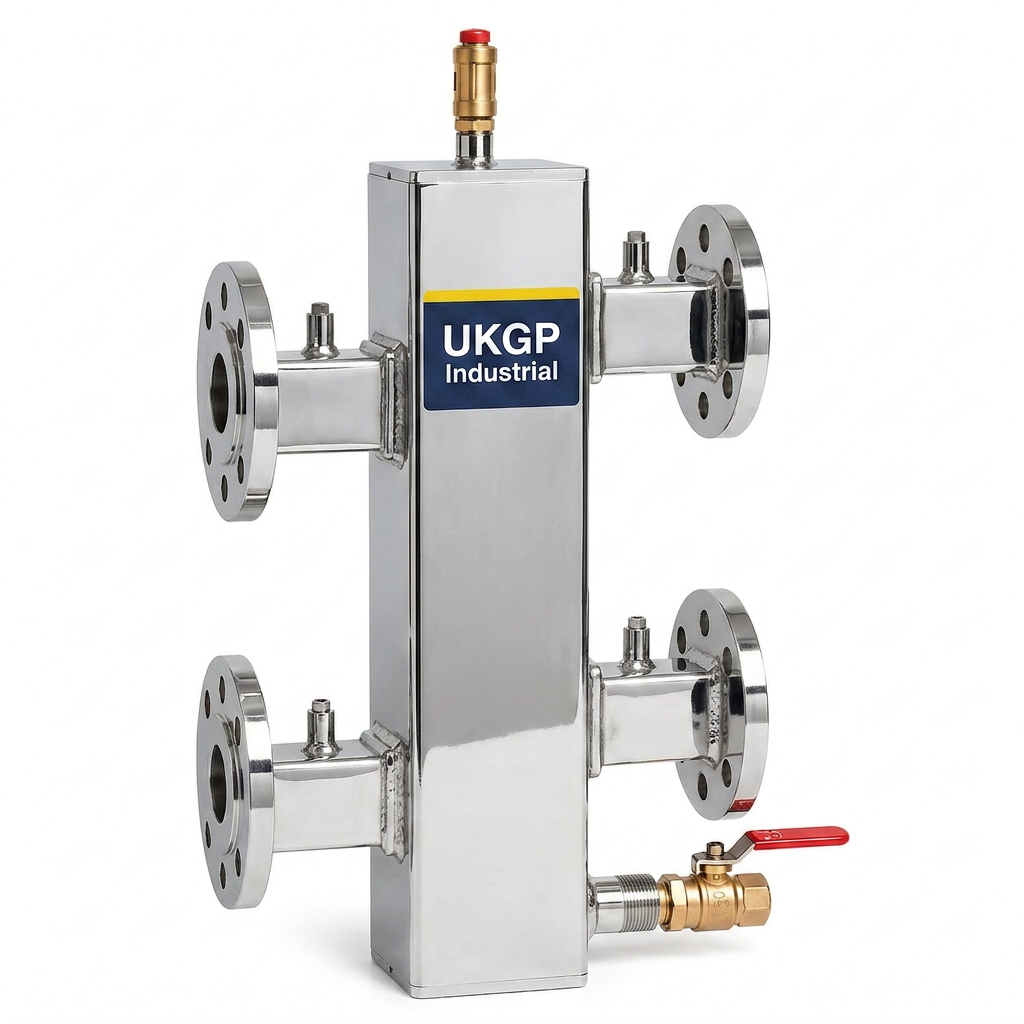
The low loss header serves as a neutral pressure zone. By installing a header, the primary circuit (the heat pump) and the secondary circuit (the building's emitters) become hydraulically independent. This allows the heat pump’s primary pump to maintain the manufacturer-specified flow rate (often calculated at a ΔT of 5K to 8K) while the secondary pumps vary their flow based on thermostatic demands. This decoupling is essential for the longevity of the compressor and the overall seasonal coefficient of performance (SCOP).
Beyond hydraulic balance, the LLH acts as an essential diagnostic point. By placing sensors in the upper portion of the header, the building management system (BMS) can accurately monitor the flow temperature being delivered to the secondary circuit. For heat pumps operating on weather compensation curves, this real-time feedback ensures the heat pump modulates correctly rather than cycling on and off in response to phantom loads.
- Hydraulic decoupling of primary (heat pump) and secondary (emitter) circuits.
- Maintaining minimum flow rates through the heat pump regardless of secondary demand.
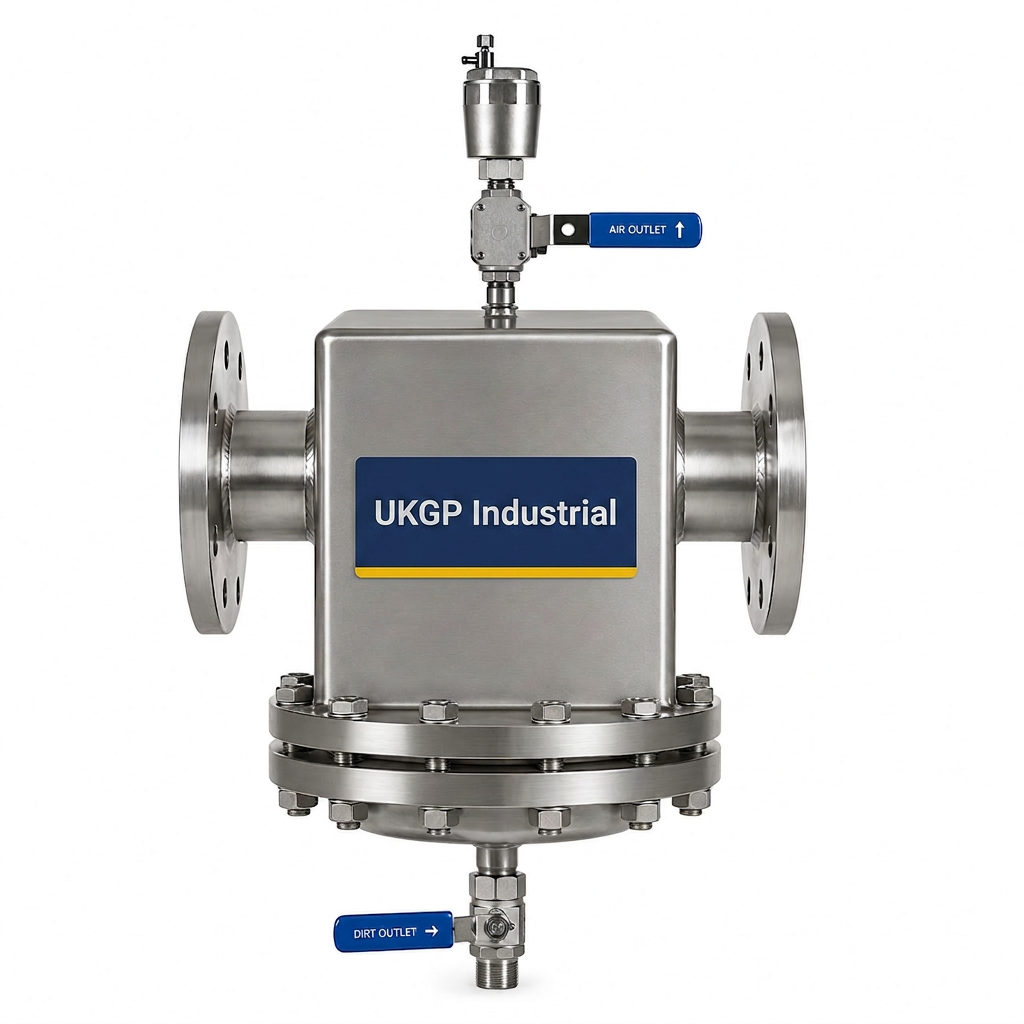
- Providing a point of low pressure drop for air and dirt separation.
- Facilitating accurate temperature sensing for weather compensation and modulation.
Sizing Criteria: The 0.1 m/s Velocity Rule
Sizing a low loss header for a heat pump system requires a different approach than for high-temperature boilers. Because heat pumps typically operate at a lower ΔT (differential temperature), the flow rates are significantly higher for the same kW output. For instance, a 100kW boiler at ΔT 20K requires approx. 4.3 m³/h, whereas a 100kW heat pump at ΔT 5K requires 17.2 m³/h. Failing to account for this 4x increase in flow will result in excessive velocity within the header.
To ensure effective hydraulic separation and to allow for the settlement of suspended solids, the vertical velocity within the body of the LLH should not exceed 0.1 to 0.2 m/s. If the velocity is too high, the header behaves like a simple 'T' junction, creating turbulence that carries over into the secondary circuit and prevents air bubbles from rising to the top vent. Engineers must calculate the cross-sectional area of the vessel based on the peak flow rate of the primary or secondary circuit—whichever is greater.
The physical dimensions are equally important. According to CIBSE AM14, the distance between the primary and secondary connections should be sufficient to prevent 'short-circuiting' of the heated water. A common industry standard is the '3D' or '4D' rule, where the distance between the nozzles is three to four times the diameter of the manifold. This ensures that the water has enough 'dwell time' within the vessel to neutralise its momentum before being drawn into the opposing circuit.
Frequently asked questions
What is the difference between a low loss header and a buffer tank in a heat pump system?
- While both provide hydraulic decoupling, a low loss header is a vertical vessel designed to manage flow differentials and facilitate air/dirt separation. A buffer tank has a much larger volume, typically sized to provide thermal mass to prevent heat pump short-cycling during low-load conditions.
How is the internal velocity of a low loss header calculated?
- The 'v=0.1 to 0.2 m/s' rule is the industry standard. For example, if your secondary flow is 10 m³/h, the internal diameter of the header should be sized so the vertical velocity remains below 0.2 m/s to allow for effective laminar flow and debris settlement.
Can a low loss header be used in reversible heat pump (heating and cooling) systems?
- Yes, but with caveats. In a cooling application, the low loss header must be fully vapour-sealed with closed-cell insulation to prevent interstitial condensation on the vessel shell, which can lead to rapid corrosion.
What are the specific water quality requirements for LLHs in heat pump circuits?
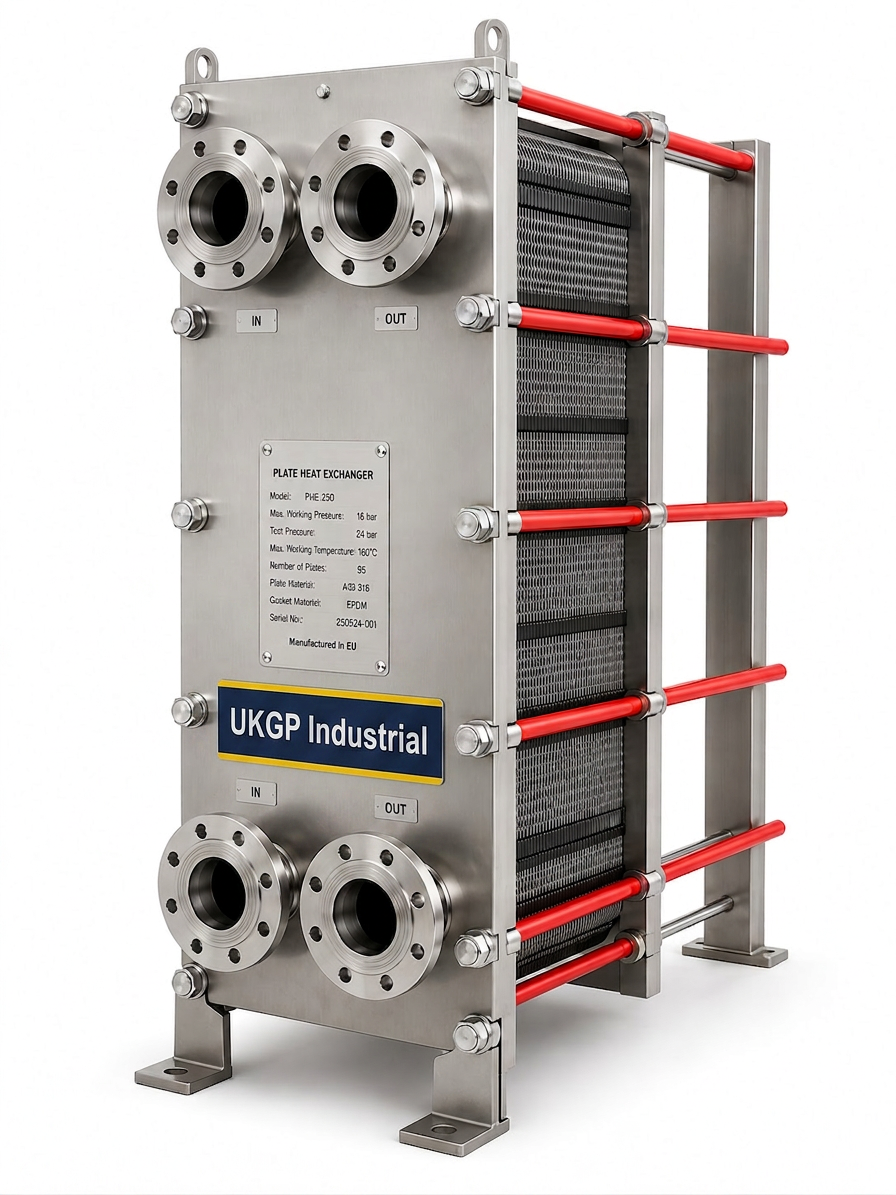
- BSRIA BG29/21 is critical. Because heat pumps operate at lower temperatures, they cannot 'boil off' contaminants. Proper flushing and the inclusion of a magnetic separator within or alongside the LLH is essential to protect the heat pump's internal plate heat exchanger.