COMMERCIAL HYDRONICS & PLANTROOM DESIGN

Low Loss Header Design for Cascade Boiler Systems

In modern commercial plantrooms, the transition from single large-output boilers to modular cascade arrangements has necessitated a more sophisticated approach to hydraulic management. A low loss header (LLH) acts as the bridge between the energy generation (primary) and energy distribution (secondary) circuits. When correctly specified, it ensures that the varying flow requirements of a multi-boiler cascade do not conflict with the constant or variable flow demands of the building’s heating emitters. This guide explores the technical requirements for integrating LLHs into commercial systems, ensuring peak efficiency and equipment longevity.

10 June 2026 10 min readLow loss headers
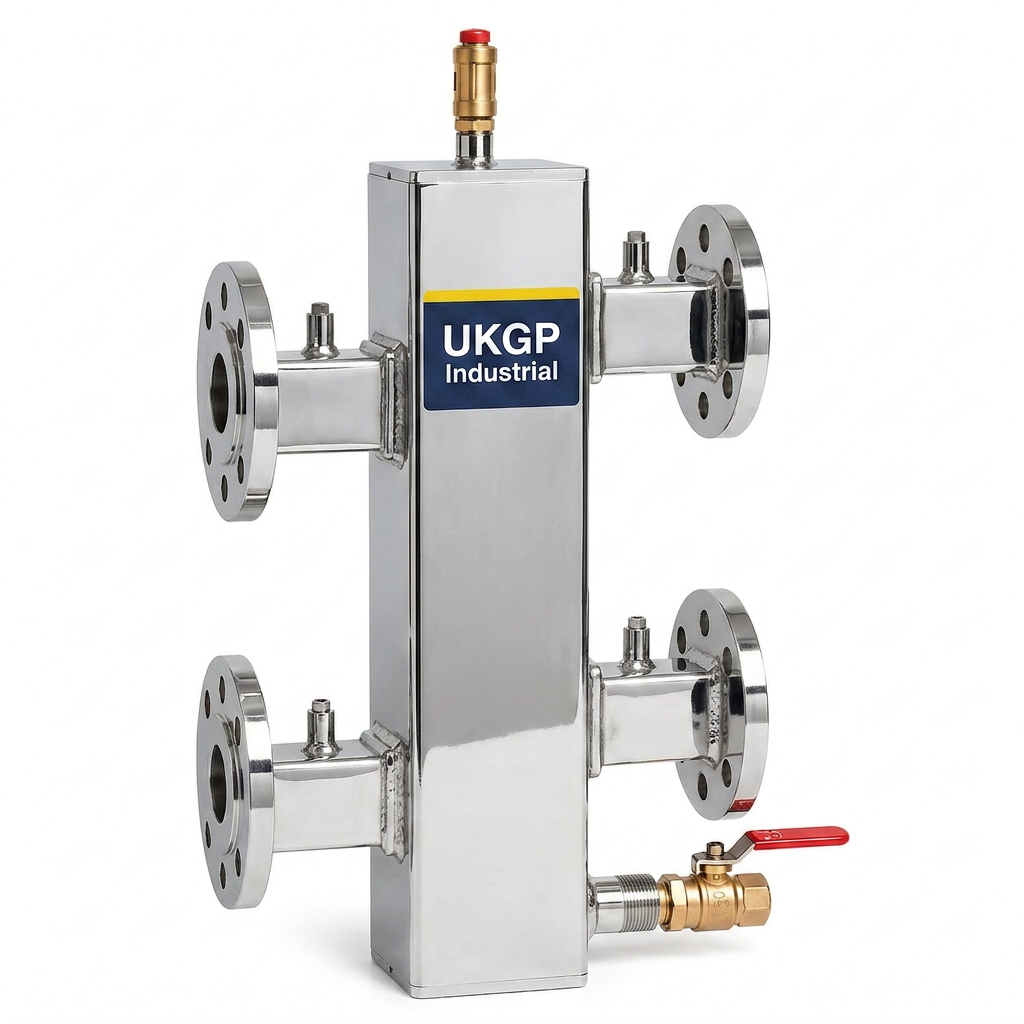
Low Loss Header Design for Cascade Boiler Systems — UKGP low loss header for commercial heating circuits
UKGP low loss header for commercial heating circuits

The Fundamental Role of hydraulic separation

The primary function of a low-loss header in a cascade boiler system is hydraulic decoupling. In a typical scenario, a bank of commercial boilers (such as those from Vaillant, Viessmann, or Worcester Bosch) requires a specific flow rate to maintain the delta T (ΔT) across their heat exchangers. Conversely, the secondary circuit—comprising AHUs, radiators, or underfloor heating—operates with variable flow rates dictated by 2-port valves and inverter-driven pumps. Without a header, these two circuits would compete, leading to pump conflict, cavitation, and erratic boiler cycling.

By creating a zone of low pressure and low velocity, the LLH allows the primary and secondary pumps to operate independently. The 'low loss' refers to the negligible pressure drop across the header, effectively creating a point of zero head in the system. This ensures that the operation of the secondary pump does not pull water through a non-firing boiler in a cascade, which would lead to thermal dilution and wasted energy.

Furthermore, the LLH acts as a buffer for temperature fluctuations. In a cascade system, as boilers stage on and off to meet the load, the header provides a volume of water that smooths out the transition, allowing the cascade controller to register more stable temperature readings via its flow sensor. This stability is critical for the longevity of the boiler’s internal components and the overall seasonal efficiency of the plant.

  • Hydraulic decoupling of primary and secondary circuits.
  • Management of variable flow rates without affecting boiler heat exchangers.
  • De-aeration and settlement of system debris.
  • Temperature stability for cascade controllers and BMS integration.

Frequently asked questions

How do I size a low loss header for a 500kW cascade system?

A low loss header should be sized based on the '1:3' ratio principle or the 'two-pipe' velocity remains below 0.5 m/s. It must accommodate the full flow rate of either the primary or secondary circuit, whichever is greater, without excessive pressure drop.

Can I use a plate heat exchanger instead of a low loss header?

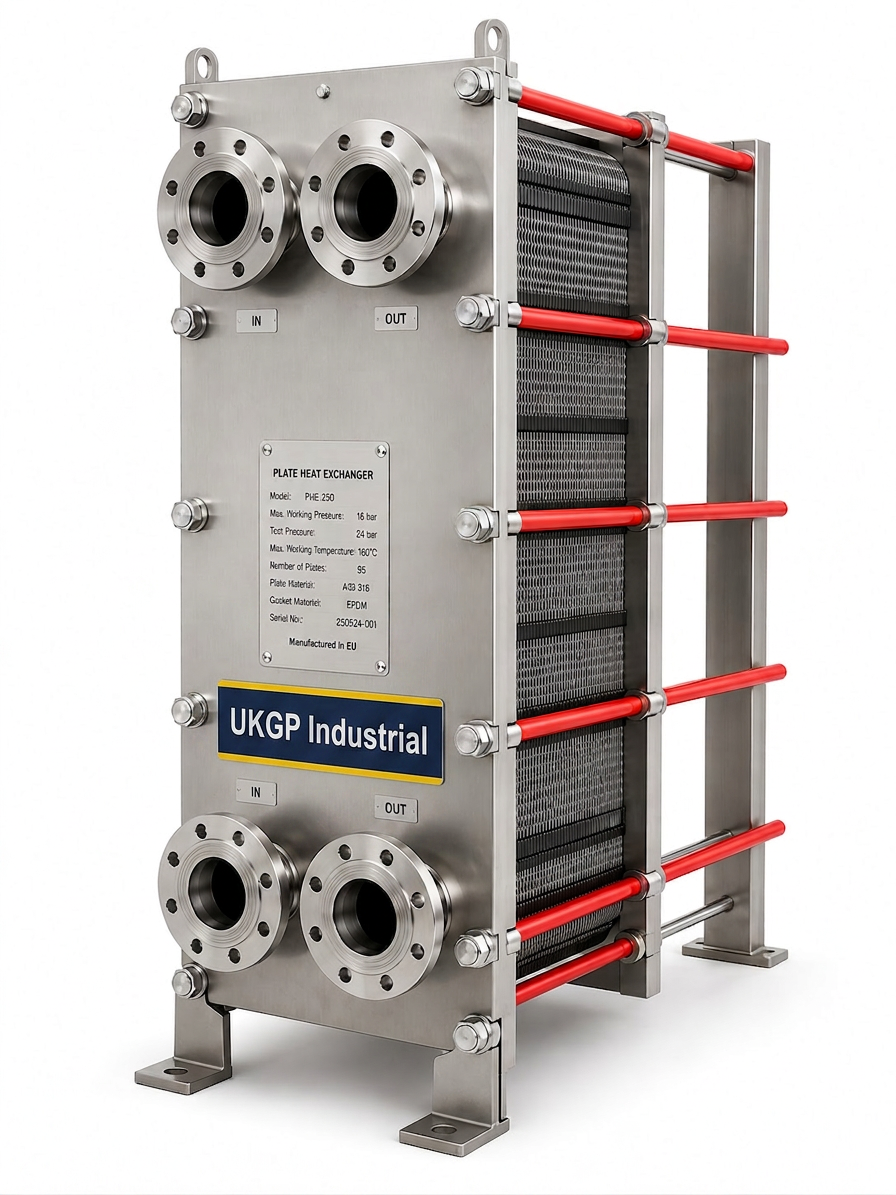
Yes, but it is not recommended for high-efficiency systems. A plate heat exchanger provides physical separation, protecting the primary circuit from contaminated or high-pressure secondary water, whereas an LLH only provides hydraulic separation.

What index circuit should the primary pump account for in an LLH system?

The primary pump (boiler pump) must overcome the resistance of the boiler and the primary pipework only. The LLH is considered a point of zero pressure drop, so the primary pump does not need to push water through the secondary emitters.

Where should the temperature sensors be placed in a low loss header?

Ideally, sensors should be placed in the upper third of the header (flow side) to ensure the cascade controller accurately reads the blended flow temperature feeding the secondary circuit.
Keep reading

Related articles

Low loss headers

The Engineering Guide to the Low Loss Header

In commercial HVAC design, achieving hydraulic equilibrium between the energy centre and the distribution circuit is critical. The low loss header (LLH) serves as the primary mechanism for hydraulic separation, ensuring that the primary boiler loop and the secondary system circuits operate independently without interference. For UK engineers adhering to BSRIA and CIBSE guidelines, understanding the velocity dynamics and temperature differentials within these vessels is essential for system longevity and efficiency.

Read
Low loss headers

How Does a Low Loss Header Work?

In modern commercial plant rooms, the low loss header (LLH) serves as the critical interface between heat generation and heat distribution. As building services engineers move toward high-efficiency condensing boilers and variable speed pumping, the requirement for precise hydraulic separation has never been greater. This guide explores the physics of pressure decoupling, the impact of flow dynamics on boiler longevity, and the practical application of LLHs in accordance with CIBSE and BSRIA guidelines.

Read
Low loss headers

Low Loss Header Sizing Guide

A low loss header (LLH) is more than just a piece of large-diameter pipework; it is the hydraulic heart of a commercial heating system. Its primary role is to create a zone of negligible pressure drop, permitting the primary (generation) and secondary (distribution) circuits to operate independently. In modern plant rooms featuring high-efficiency condensing boilers from manufacturers like Vaillant, Worcester, or Viessmann, correct sizing is critical to maintaining high Delta T (ΔT) and ensuring the return water temperature stays below the dew point. Failure to size a header correctly leads to pump conflict, poor temperature control, and significantly reduced plant longevity. This guide details the engineering principles, calculations, and British Standards necessary for precise LLH selection.

Read
Request Quote