The Principle of Hydraulic Decoupling
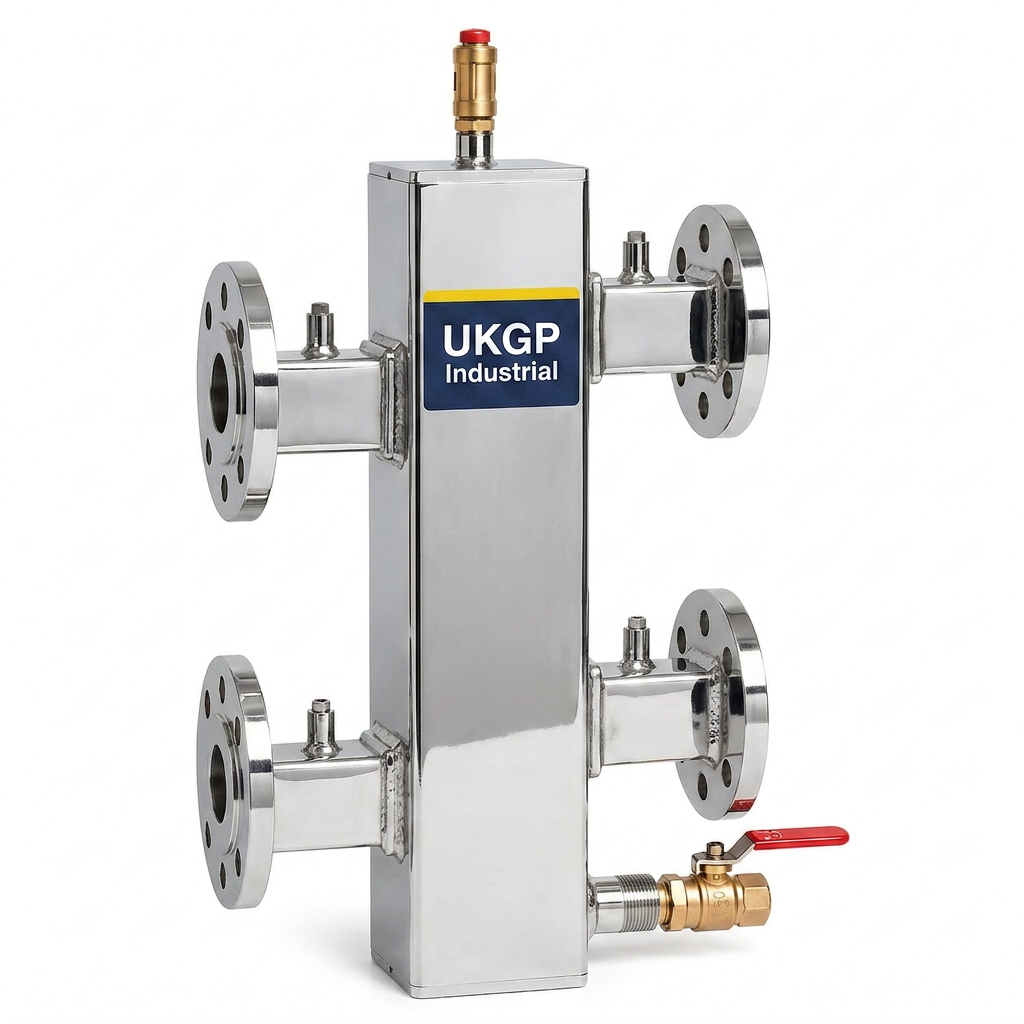
The primary function of a low loss header is to decouple the primary (generation) circuit from the secondary (distribution) circuit. In modern plant rooms featuring high-efficiency condensing boilers such as those from Viessmann, Vaillant, or Worcester Bosch, maintaining the correct flow rate is critical to prevent short-cycling and to protect the heat exchanger from thermal shock. By creating a zone of low pressure drop, the header ensures that the pumps in the primary and secondary circuits do not influence each other's performance.
When calculating flow rates, the engineer must determine whether the system will operate under 'Primary Lead' or 'Secondary Lead' conditions. In most UK commercial applications, especially those involving variable speed pumps on the secondary side, the header must accommodate fluctuating demands while ensuring the boilers receive their minimum required flow. Failure to calculate these intersecting flow rates correctly results in 'mixing' within the header, which can elevate return temperatures and prevent condensing mode.
- Ensures constant flow through the primary circuit (boilers).
- Allows variable flow in the secondary circuit (emitters).
- Acts as a neutral point of pressure in the system.
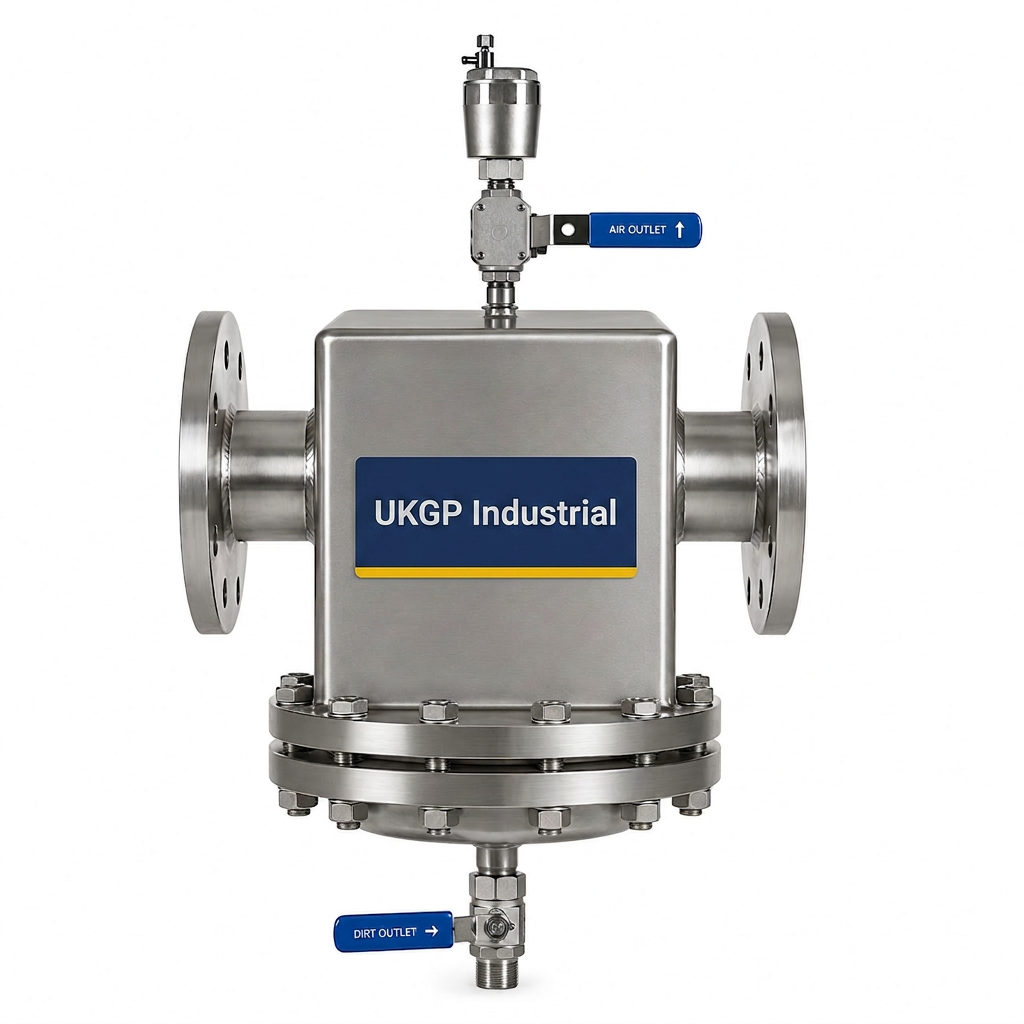
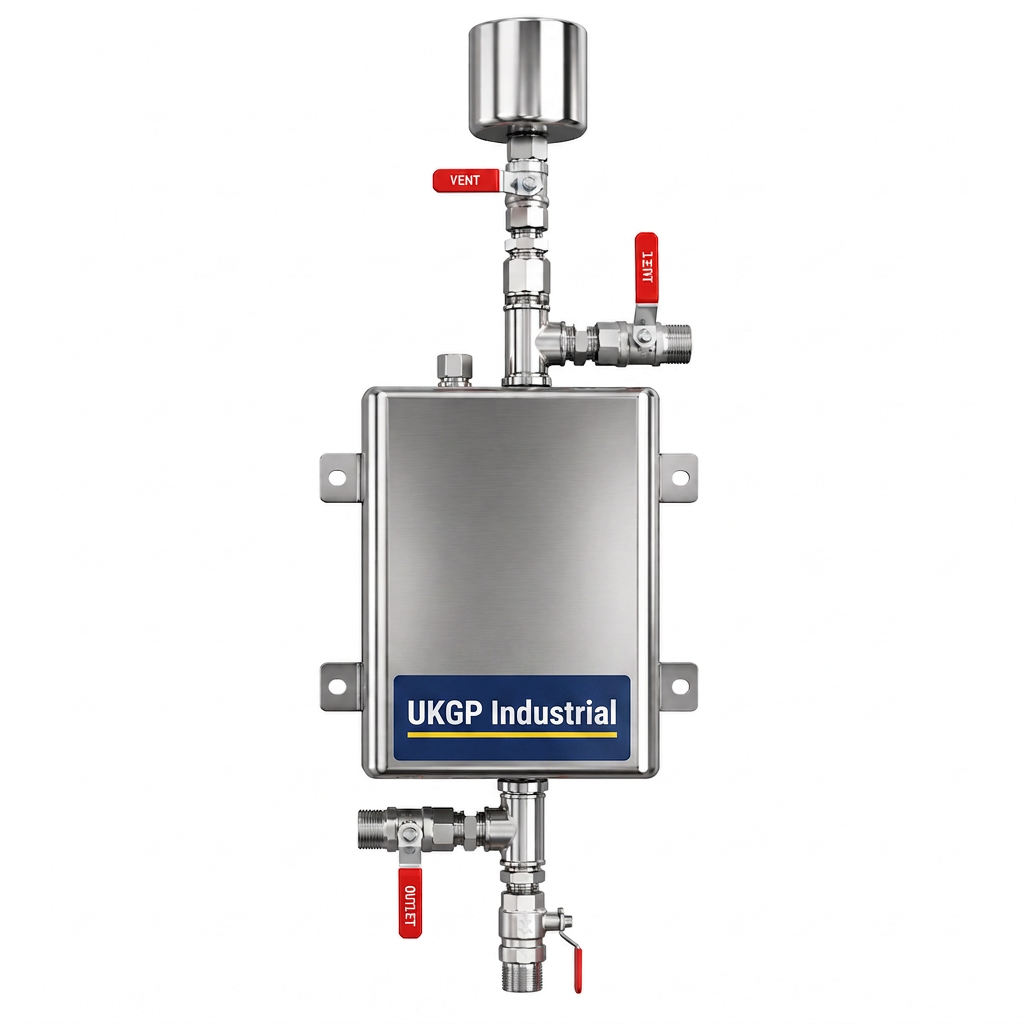
- Facilitates air and dirt separation via low-velocity zones.
Calculating Design Flow Rates
To begin the calculation, the total system flow rate must be established using the standard heat transfer equation: Q = m × Cp × ΔT. For a 500kW commercial plant room operating on a 20°C differential (80/60 system), the mass flow rate (m) is calculated as 500 / (4.187 × 20), resulting in approximately 5.97 kg/s. Converting this to cubic metres per hour involves dividing by the density of water (approx. 980 kg/m³ at 70°C), yielding roughly 21.9 m³/h.
It is essential to calculate the flow rate for both the primary and secondary circuits independently. In a correctly balanced condensing system, the secondary flow rate should ideally slightly exceed the primary flow rate to ensure the lowest possible return temperature to the boiler. However, many designers over-calculate the primary pump duty, leading to 'bypass' where hot flow water mixes directly into the return, raising the return temperature and killing the condensing effect. This is a common failure seen in BSRIA BG29/21 pre-commissioning audits.
- Total Peak Heat Load (kW)
- Design Temperature Differential (ΔT)
- Specific Heat Capacity of the fluid (typically 4.187 kJ/kg·K for water)
- Maximum allowable velocity (m/s) within the header body
Frequently asked questions
What is the recommended maximum velocity within a low loss header?
- Standard practice is to size for a vertical velocity of 0.1 m/s to 0.2 m/s. This allows for effective air and dirt separation while ensuring hydraulic decoupling. High-velocity headers risk turbulence and air carry-over.
Should primary flow always exceed secondary flow?
- In a condensing system, the primary flow must be less than the secondary flow to ensure the lowest possible return temperature back to the boilers, maximising the latent heat recovery.
Is there a 'rule of thumb' for LLH sizing?
- The 'four-to-one' rule is a common rule of thumb for headers, suggesting the header diameter should be approximately 4x the inlet pipe diameter, though this should be validated by velocity calculations.
Can a low loss header be used as an air separator?
- Yes, provided the velocities are low enough. For optimal performance, a dedicated air and dirt separator should be used, or a combined magnetic LLH unit should be specified.