The Fundamentals of Hydraulic Separation
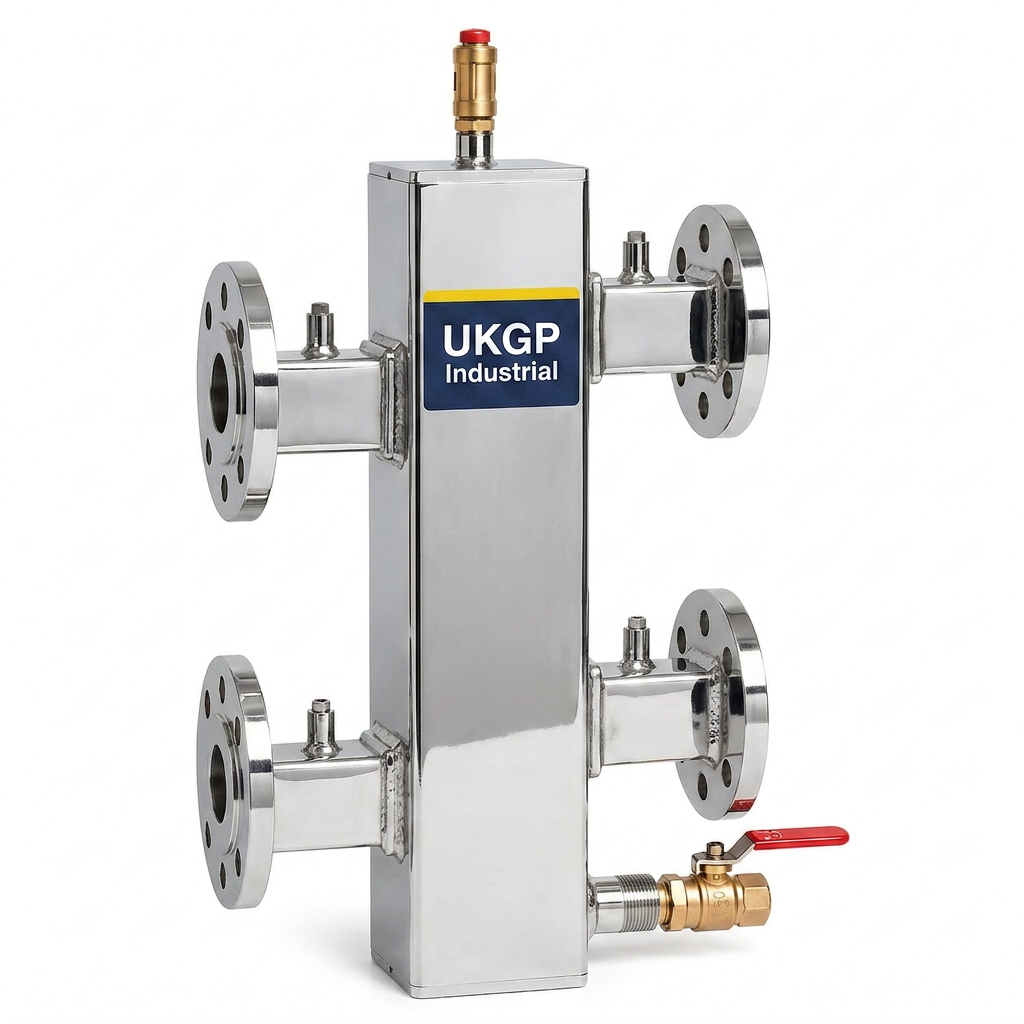
The primary function of a low loss header is to create a zone of low pressure loss where the primary (generation) circuit and secondary (load) circuit can operate independently. In commercial systems involving multiple boilers—such as those from Vaillant, Worcester Bosch, or Viessmann—the primary pumps must maintain a constant flow across the heat exchangers to prevent overheating and cycling. Conversely, secondary circuits often utilise variable speed pumps (VSDs) driven by 2nd-port or 3rd-port control valves, meaning flow rates fluctuate based on building demand.
Without an LLH, these two pump sets would effectively be in series, leading to hydraulic interference, pump cavitation, and inaccurate temperature control. By internalising the pressure drop, the header ensures that the pump head of the primary circuit does not influence the secondary circuit, and vice versa. This is particularly critical when integrating low-carbon technologies like Air Source Heat Pumps (ASHPs) which require high, stable flow rates compared to traditional gas-fired plant.
- Decoupling primary and secondary circuits.
- Protecting heat exchangers from variable flow rates.
- Facilitating air and dirt separation in a low-velocity zone.
- Acting as a mixing chamber for multi-boiler cascades.
Sizing and Flow Rate Calculations
Correct sizing of a low loss header is dictated by the maximum flow rate of either the primary or secondary circuit. Engineers should not size a header based on the pipe diameter of the boiler connections, but rather on the volumetric flow rate (m³/h) required to carry the designed kW load at a specific Delta T (ΔT). For example, a 500kW load at a 20K ΔT requires approximately 21.5 m³/h. If the ΔT is narrowed to 10K for a low-temperature system, the required flow rate doubles to 43 m³/h, necessitating a significantly larger header.
The internal velocity within the header should traditionally be kept below 0.2 m/s. This low velocity allows for the 'neutral' characteristic where pressure remains constant regardless of flow. If the header is undersized, the velocity increases, leading to a pressure differential across the header and effectively turning it into a common manifold rather than a hydraulic separator. This often results in 'ghost' flows and commissioning failures.
- Qp = Qs: Balanced flow (rare in practice).
- Qp > Qs: Primary flow exceeds secondary. Common at low load; ensures high flow temperature to the secondary.
- Qs > Qp: Secondary flow exceeds primary. Causes bypass of return water into the flow, lowering distribution temperature.
Integrating Air and Dirt Separation
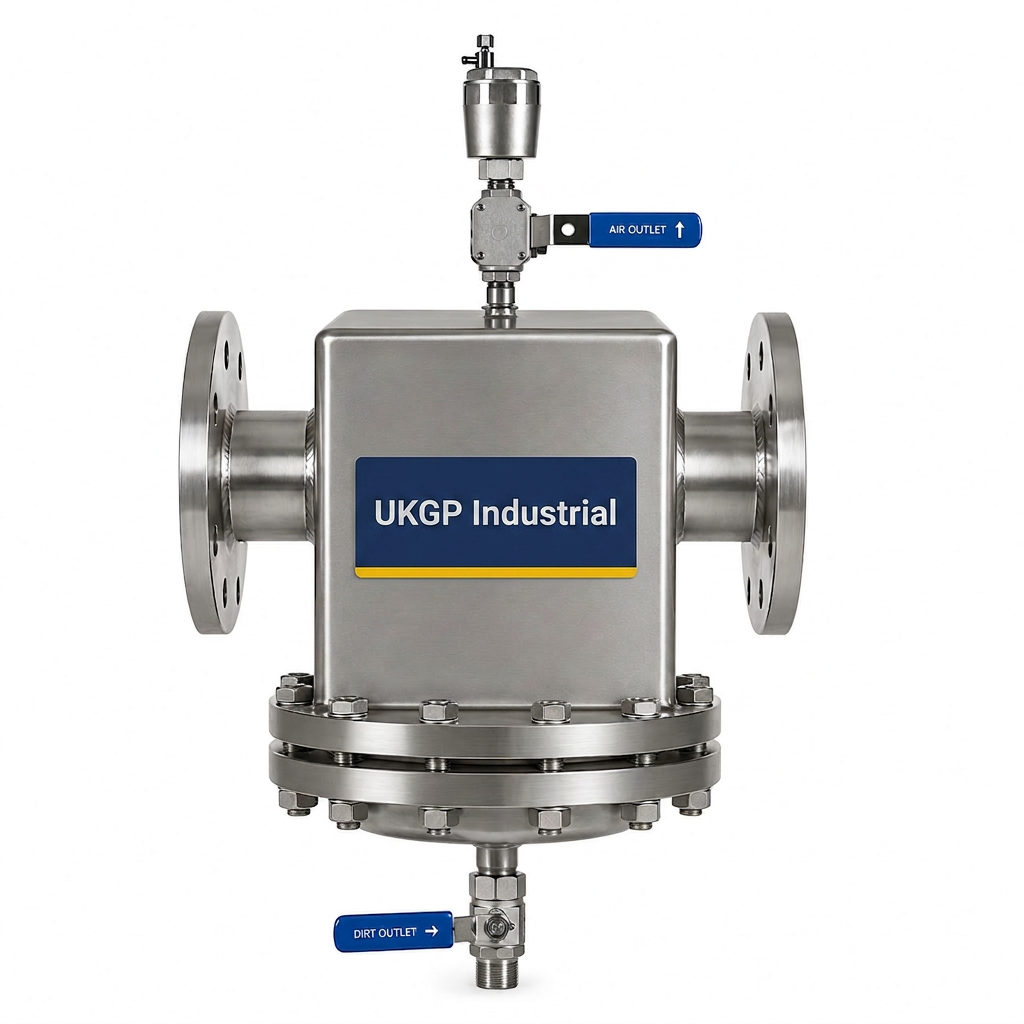
While the primary role of the LLH is hydraulic, its physical design—a large vertical chamber—makes it an ideal location for secondary water treatment functions. As the water enters the larger diameter of the header, its velocity drops sharply. This reduction in velocity allows entrained air bubbles to rise to the top and suspended solids to settle at the bottom. In accordance with BSRIA BG29/21 and BG50, maintaining water quality is paramount for the warranty of modern commercial boilers.
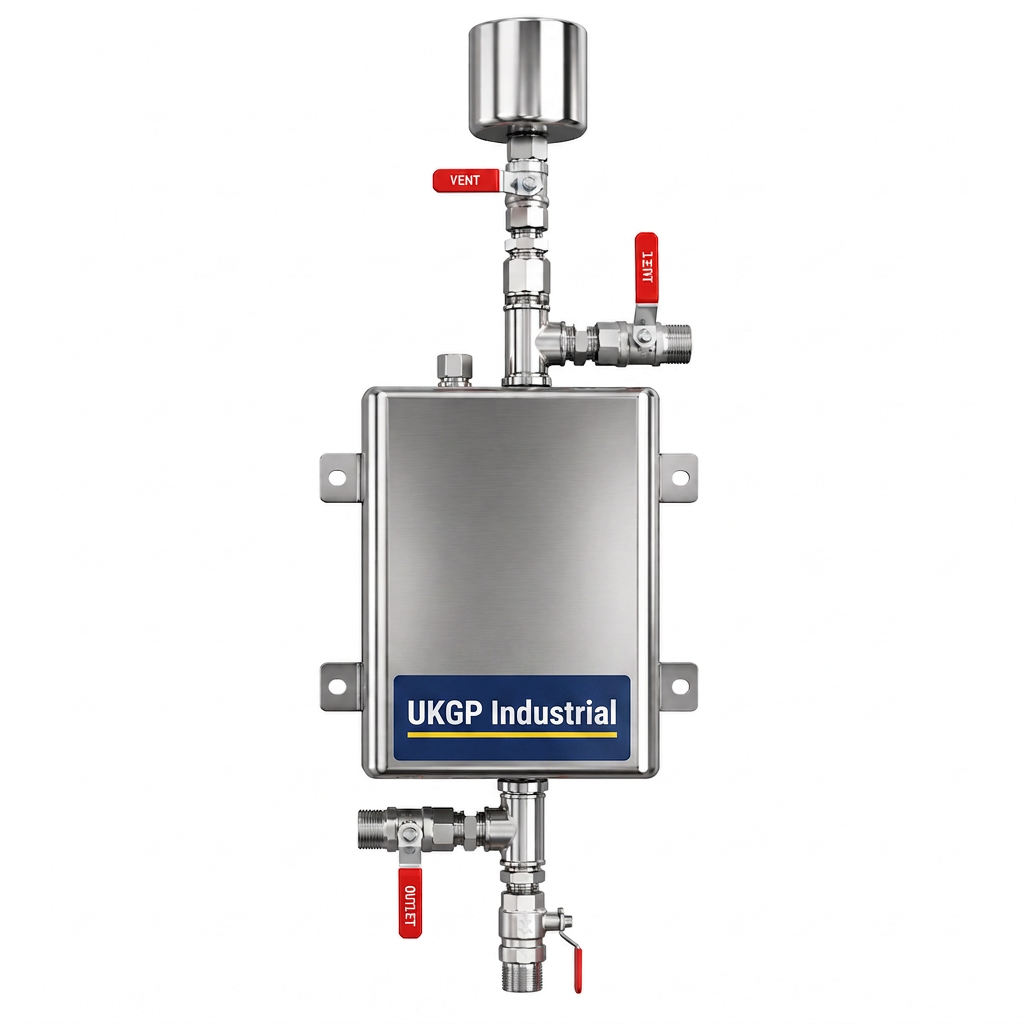
Many engineers now specify '4-in-1' low loss headers. These units incorporate an automatic air vent (AAV) at the highest point to purge gases and a drain valve at the lowest point for sludge removal. For systems with significant iron oxide (magnetite) risks, particularly in retrofit scenarios with existing steel pipework or cast-iron radiators, the inclusion of a magnetic insert within the header or a dedicated magnetic separator on the return leg is highly recommended.
Installation Best Practices and Pitfalls
For an LLH to function correctly, it must be installed in a vertical orientation. This allows for the natural stratification of temperatures and the effective operation of the air vent and drain. One of the most common installation errors is 'short-circuiting,' where the primary and secondary connections are placed too close together, or flow/return connections are swapped. This leads to high-temperature return water entering the boiler, which can prevent condensing boilers from reaching their dew point, significantly reducing seasonal efficiency.
Thermal insulation is another critical but often overlooked factor. An uninsulated low loss header acts as a massive heat emitter in the plant room. To meet Part L of the Building Regulations and CIBSE guidelines, headers should be encased in high-quality pre-formed thermal jackets. Furthermore, sensors for the Building Management System (BMS) should be placed in a dedicated pocket in the upper third of the header to ensure the control logic is reacting to the actual flow temperature being delivered to the secondary headers.
- Install the header vertically to utilise buoyancy for air removal.
- Locate the header as close to the primary heat source as possible.
- Ensure the primary flow and return are on one side, secondary on the other.
- Calculate the '3D' rule for nozzle spacing to ensure effective mixing.
Chemical Dosing and System Maintenance
The low loss header is often the logical point of reference for system pressure and water chemistry. While the header handles the physics of flow, the chemical integrity of the system must be maintained to prevent corrosion. The use of a chemical dosing pot, typically installed across the flow and return headers adjacent to the LLH, allows for the introduction of inhibitors and glycol without shutting down the system. Measurement of the water's TDS (Total Dissolved Solids) and pH should be part of a monthly maintenance regime.
Long-term maintenance of the low loss header itself involves regular flushing of the bottom drain valve. This should be performed while the system is under pressure to effectively eject settled sediment. If the header is equipped with a magnetic rod, this should be pulled and cleaned during annual shutdowns. Failure to maintain the LLH can lead to a build-up of sludge that eventually restricts the 'neutral' zone, causing the very hydraulic issues the unit was installed to prevent.
Frequently asked questions
Can a low-loss header be used in chilled water systems?
- Yes, provided the header is adequately insulated to prevent condensation and the flow velocity is calculated based on the higher viscosity and different temperature differentials typical of chilled water circuits. Distribution headers must be sized to avoid turbulent mixing that could degrade chiller efficiency.
What is the maximum recommended flow velocity within the header body?
- As a general rule of thumb, the header should be sized so that the vertical velocity of the water does not exceed 0.1 to 0.2 m/s. This ensures effective hydraulic separation and allows for the settlement of debris and the release of entrained air.
What happens if the secondary flow rate is higher than the primary?
- If the secondary flow rate exceeds the primary, return water from the secondary circuit is pulled back into the flow pipe, reducing the flow temperature to the emitters. This is often necessary for heat pump circuits or weather-compensated systems but must be accounted for in the control logic.
Is a low loss header the same as a shunt pump arrangement?
- While both manage pressure, a low loss header specifically balances flow rates between two circuits. A shunt pump is a recirculating pump used to maintain a minimum flow rate or temperature across a boiler/chiller to prevent thermal shock or condensation, often used in conjunction with, but not as a replacement for, an LLH.
Do I still need a separate air and dirt separator if I install an LLH?
- While a standard LLH facilitates some air and dirt removal via the low-velocity zone, a dedicated '4-in-1' separator or a header with integrated internal baffles and a larger chamber is superior. For systems sensitive to magnetite, a dedicated magnetic separator is always recommended.