The Role of Hydraulic Separation in Modern Plant Rooms
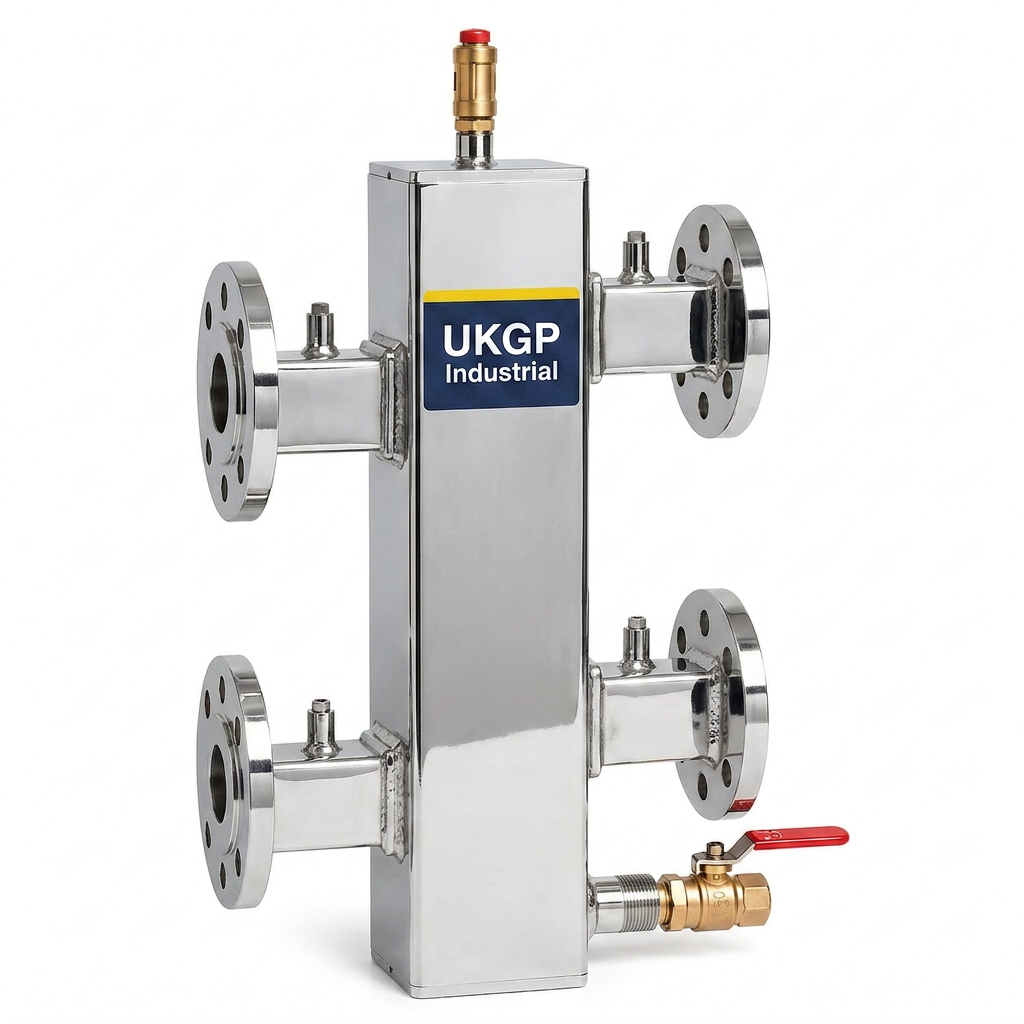
The shift toward condensing boiler technology and variable speed pumps has made hydraulic separation a critical design requirement. In a traditional system, the secondary circuit pumps can influence the flow across the boiler heat exchanger. If the secondary flow exceeds the primary, it can cause 'pump bypass' or excessive fluctuations in return temperatures, often leading to boiler cycling or 'shunting' and reduced seasonal efficiency. An LLH creates a zone of negligible pressure drop where the primary and secondary circuits meet.
CIBSE AM14 emphasizes the importance of maintaining an appropriate temperature differential (ΔT). Modern commercial boilers from manufacturers like Vaillant, Worcester Bosch, or Viessmann typically require a specific ΔT (often 20K) to remain in condensing mode. By using a low loss header, engineers can ensure that the primary pump maintains the manufacturer’s required flow rate across the heat exchanger, regardless of how many zones are calling for heat on the secondary side.
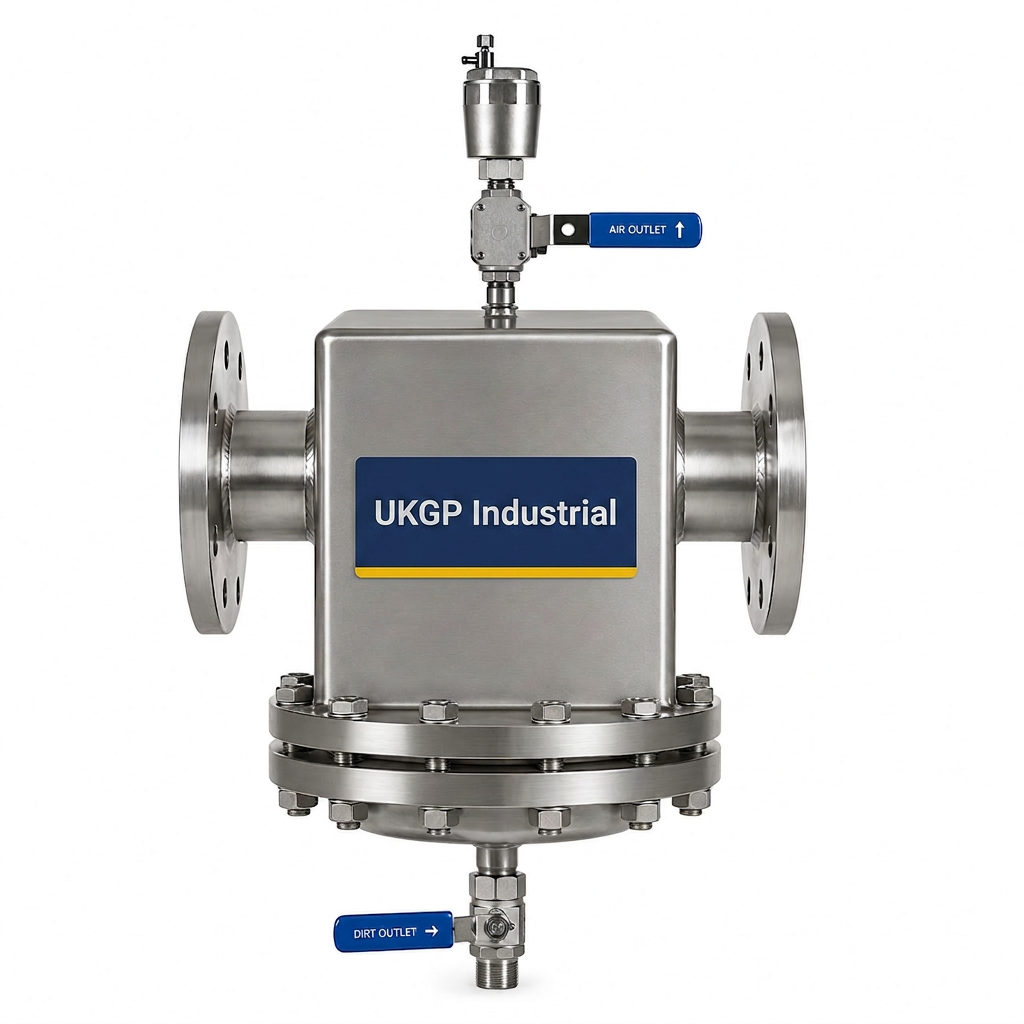
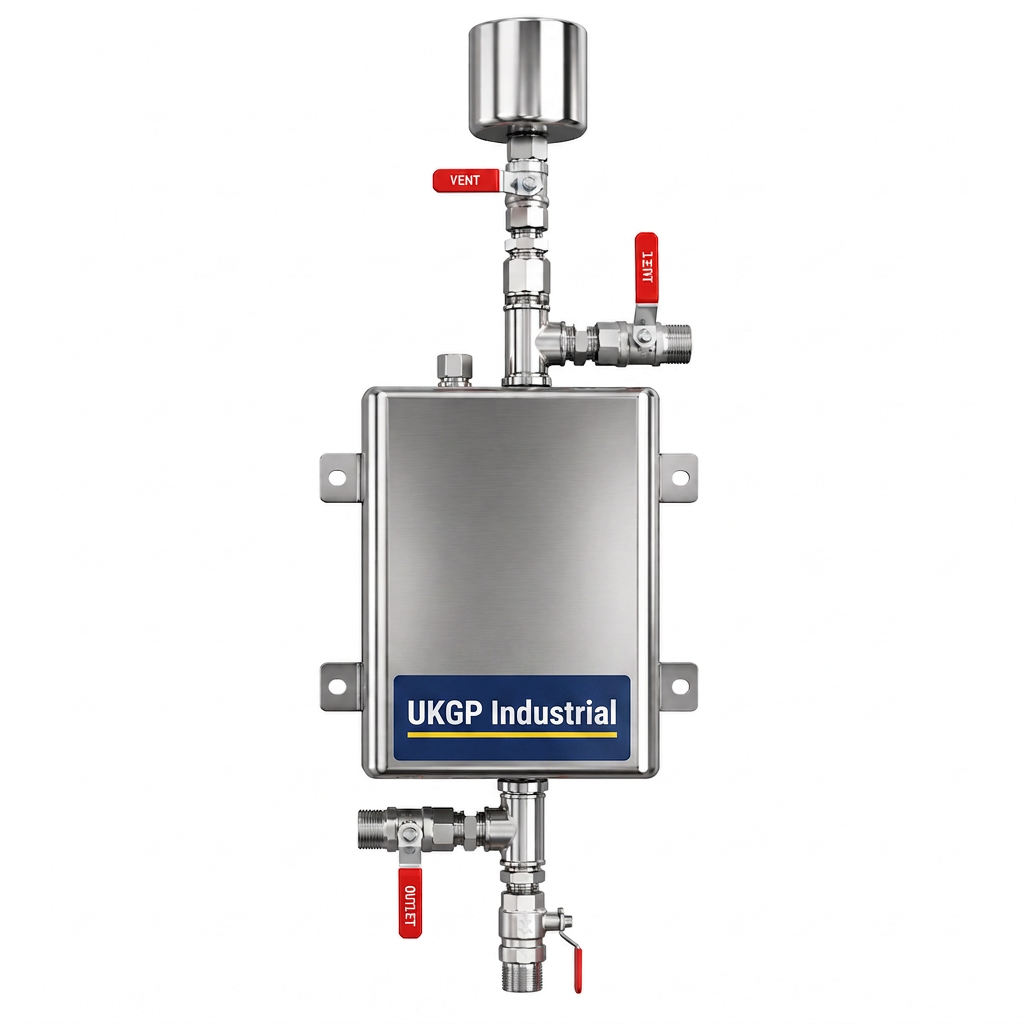
BSRIA BG29/21 and BG50 highlight the necessity of water quality and air management. A correctly designed low loss header doesn't just manage pressure; it acts as an initial point of air liberation and a settlement chamber for suspended solids. By slowing the water velocity significantly within the vessel body, bubbles are allowed to rise to a top-mounted automatic air vent (AAV), while heavy magnetite and debris fall to the base for removal via a drain valve.
- Hydraulic decoupling to prevent pump conflict.
- Facilitation of constant flow for primary heat sources (constant volume).
- Variable flow management for secondary circuits (TRVs and 2-port valves).
- De-aeration and dirt separation within a single neutral zone.
Technical Sizing: Beyond Pipe Diameter
Sizing a low loss header based solely on the pipe diameter of the boiler flow and return is a common but dangerous error in plant room design. The internal diameter of the header must be significantly larger than the inlet/outlet connections to ensure the fluid velocity drops sufficiently (typically to 0.1 m/s or 0.2 m/s). This drop in velocity is what allows the hydraulic decoupling to occur, creating the 'low loss' environment by converting kinetic energy into static pressure.
To calculate the required flow rate, engineers must use the formula: Q = P / (ρ × cp × ΔT), where 'P' is the boiler output in kW. For a 500kW system with a 20K ΔT, the flow rate (Q) would be approximately 21.5 m³/h. The header must be sized to handle whichever flow rate is higher: the primary or the secondary. If the secondary circuit utilizes variable speed pumps, the peak design flow must be the benchmark for vessel selection.
The length of the header also plays a role in effective temperature stratification. A taller vertical header allows for better separation of air and dirt and provides more accurate temperature sensing. When specifying for UK projects, ensure the vessel is rated for the maximum operating pressure of the system—typically 6 bar or 10 bar in multi-storey commercial applications—and that it conforms to the Pressure Equipment Directive (PED).
- Primary Flow (Qp) vs Secondary Flow (Qs).
- Minimum internal velocity (typically <0.15 m/s).
- Connection sizing vs Body diameter.
- Orientation: Vertical vs Horizontal configurations.
Frequently asked questions
What is the primary function of a low-loss header?
- A low loss header creates a neutral pressure zone where the primary (boiler) loop and secondary (system) loop can operate independently. This prevents the pumps from interacting, ensuring the boiler maintains its design temperature differential (ΔT) and flow rate regardless of system demand.
How do you size a low loss header correctly?
- The common practice is the '1:4 rule' or '3:1 rule' for velocity. Generally, for commercial applications, the velocity within the header body should not exceed 0.1 to 0.2 m/s to allow for effective hydraulic decoupling and debris settlement. Pipework connections should usually be sized based on the maximum flow rate of the secondary circuit.
Is a low loss header the same as an air and dirt separator?
- While both decouple circuits, a low loss header is primarily designed for hydraulic separation. An air and dirt separator is specifically baffled to remove microbubbles and magnetite. Modern high-spec LLHs, such as those from UKGP Industrial, often combine these functions into a single vessel to save plant room space.
What are the best practices for installation?
- Install the header vertically to facilitate air venting at the top and sludge collection at the bottom. Ensure the primary flow and return enter on one side, and secondary flow and return exit on the opposite side. Temperature sensors (NTC) should be placed in the designated sensor pocket to provide accurate feedback to the BMS or boiler master controller.
When should I use a plate heat exchanger instead of an LLH?
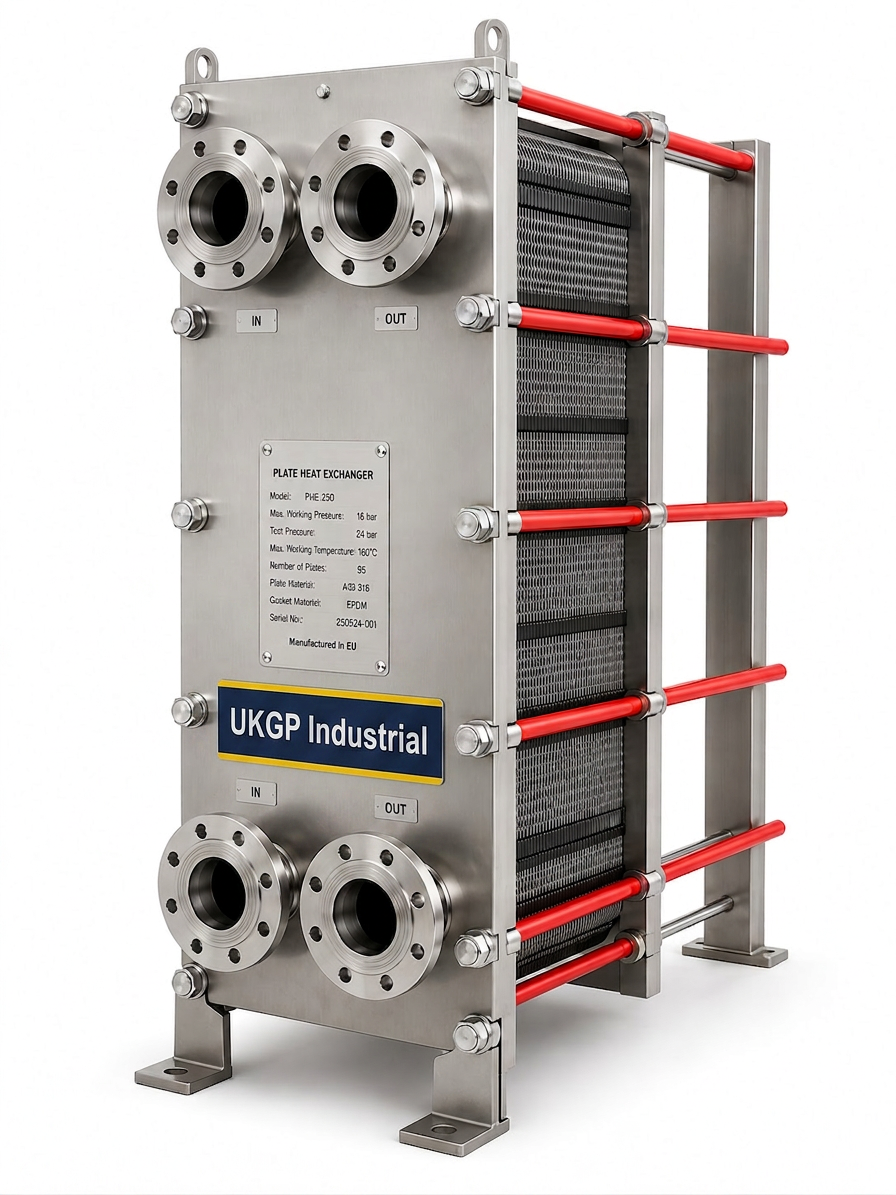
- A plate heat exchanger (PHE) provides total physical separation (e.g., for different pressures or fluids), whereas an LLH allows fluid mixing between the primary and secondary circuits. Use a PHE if the system water quality is poor or if the system pressure exceeds the boiler’s limit.