Pre-Cleaning Assessment and Site Preparation
Before any cleaning procedure begins, a full site survey is essential. For existing systems, this includes a water analysis to identify the specific nature of the contamination—whether it is predominantly magnetite, calcium carbonate scale, or microbiological growth. This data dictates the choice of cleaning chemistry and the duration of the process. In new installations, the focus is on removing installation debris, casting sand, and pipework oils used during fabrication.
Engineers must ensure that the system's hydraulic design allows for the necessary flow rates required for dynamic flushing. If the existing pumps are insufficient to reach the velocities stipulated by BSRIA BG29/21, external temporary pumps must be sized and integrated into the circuit. It is also critical to verify the disposal route for chemically treated water, as local water authority consent is often required before discharging into the foul sewer.
Preparation also involves the installation of temporary bypasses around critical plant. Commercial boilers, particularly those with narrow-channel aluminium or stainless steel heat exchangers, should never be used as a 'bin' for debris during the cleaning process. Failure to bypass these components leads to immediate fouling, reduced heat transfer, and potential localized overheating (kettling).
- Verify system integrity and pressure test to ensure no leaks exist before chemical introduction.
- Isolate sensitive components such as high-limit sensors, control valves, and plate heat exchangers.
- Ensure all bypasses are open and terminal units are isolated where required to prevent debris being pushed into small-bore emitters.
- Confirm availability of high-volume water supply and appropriate drainage points for high-velocity flushing.
Mechanical Cleaning: The Dynamic Flush Stage
Mechanical cleaning is the first physical step in the remediation process. The primary objective is to remove loose debris, swarf, and non-adhered magnetite using the kinetic energy of the water. For a commercial system, this is not a passive drains-down exercise; it requires dynamic flushing where water velocities are high enough to keep particles in suspension until they reach a discharge point or a filtration unit.
According to BSRIA guidelines, a minimum velocity of 0.5 m/s is typically required in the largest pipe diameters to mobilise solids. In many large-scale commercial buildings, this necessitates a sectional approach. By closing off specific zones or risers, the pump's head is concentrated on a smaller section of the pipework, ensuring the local velocity exceeds the threshold for debris transport. This process is repeated across the entire building footprint until the effluent runs clear.
The effectiveness of the dynamic flush is monitored through visual inspections of discharge water and, more accurately, by measuring the suspended solids. If the system cannot be discharged to a drain due to water volume restrictions or environmental concerns, a high-capacity filtration loop must be employed to capture the mobilised debris while the water is recirculated.
- Dynamic flushing at 1.5x design flow rate.
- Systematic zone isolation to ensure high-velocity flow in all branches.
- Monitoring of turbidity levels at discharge points.
- Inspection of strainer baskets and temporary filters.
Chemical Cleaning and Passive Layering
Once the loose debris is removed, chemical cleaning agents are introduced to tackle adhered oxides and scale. The choice of chemical is critical and must be compatible with all materials in the system, particularly if aluminium heat exchangers or EPDM seals are present. Neutral pH cleaners are generally preferred for 'live' systems as they pose less risk of rapid corrosion if not fully flushed, whereas inhibited acid cleaners are more effective for heavily scaled older systems but require meticulous neutralising and rinsing.
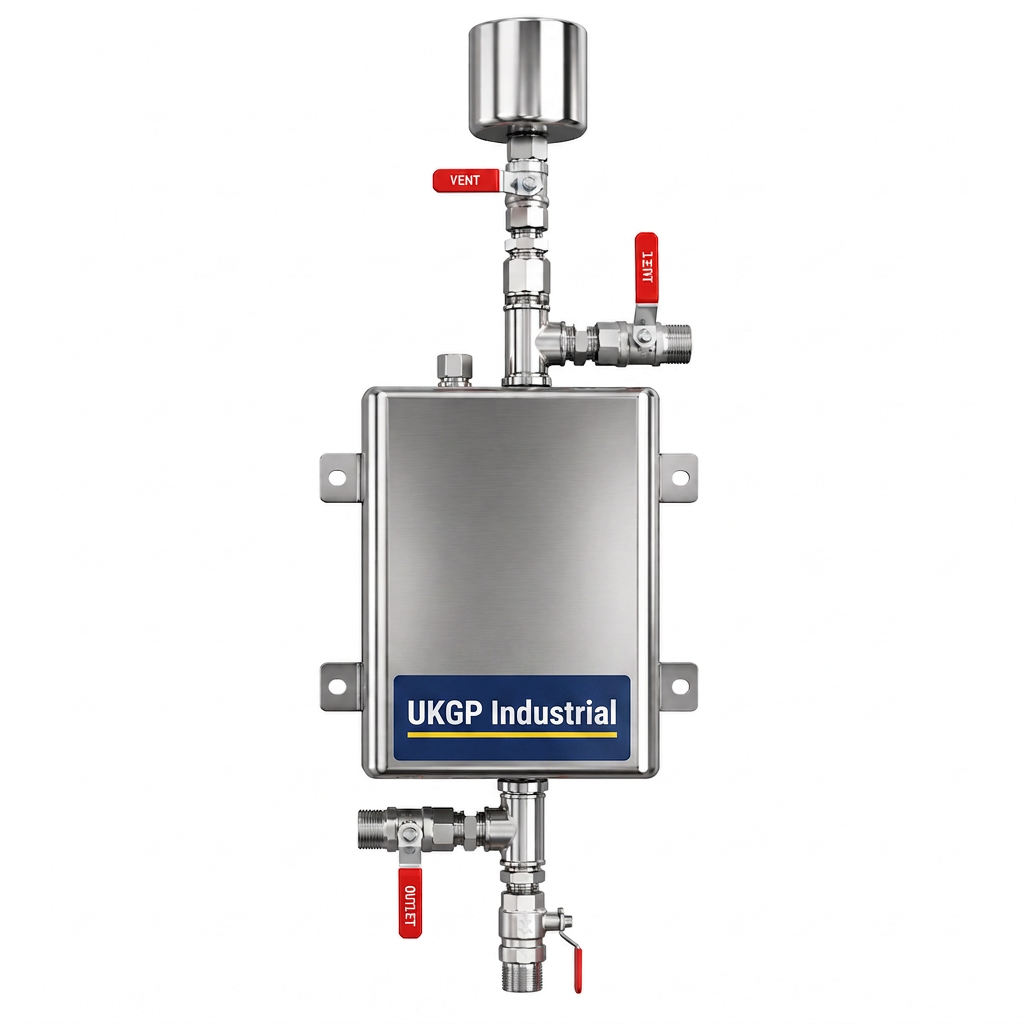
The chemical dosing process is most effectively managed using a dedicated UKGP chemical dosing pot. These units allow for the safe introduction of liquid chemicals into the system without the need to depressurise or shut down the primary pumps. For commercial systems, the dosing pot should be sized relative to the total system volume to ensure that the required concentration of the cleaning agent is achieved in a single application.
During the chemical circulation phase, it is vital to keep the water moving across all parts of the circuit. Motorised valves should be manually overridden to the open position to prevent 'dead legs' where chemicals could stagnate. After the prescribed circulation period, the system must be thoroughly flushed with fresh water until the chemistry is removed, evidenced by the water's conductivity and pH returning to the levels of the incoming mains water supply.
- Selection of inhibited acid or neutral pH cleaners based on system metallurgy.
- Calculation of system volume to ensure correct dosing concentration.
- Circulation timeframes—typically 48 hours to 2 weeks depending on temperature.
- Neutralization of acidic cleaners prior to disposal.
Side Stream Filtration: Ensuring Long-Term Purity
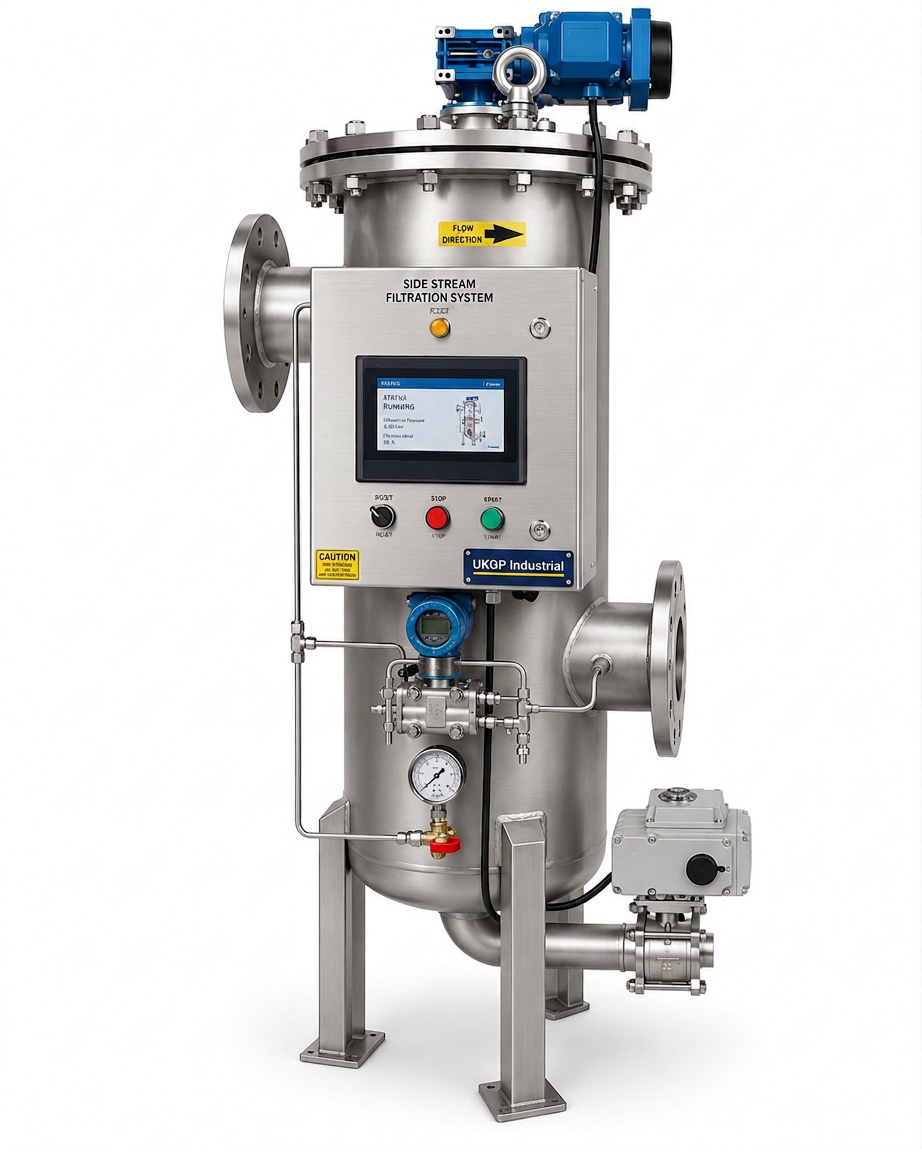
In large-scale commercial heating systems, traditional 'fill and flush' methods often fail to remove 100% of the ultra-fine magnetite particles. These particles, often smaller than 5 microns, can remain in suspension even after a BSRIA-standard flush. Over time, they settle in low-flow areas or are attracted to the magnetic fields within high-efficiency pump motors. The modern solution to this persistent issue is the integration of a UKGP side stream filtration skid. Unlike full-flow filters which can cause significant pressure drops, a side-stream unit continuously diverts a portion of the flow (typically 5-15%) through a high-efficiency filter media and magnetic separator.
Integrating a side-stream filtration skid allows for 'online' cleaning, meaning the system can be remediated while it is fully operational. This is a significant advantage for facilities managers in hospitals or data centres where shutdowns are not an option. The skid serves as a constant police force for the water quality, capturing any new corrosion products or debris that may have been dislodged during seasonal changes in flow and temperature.
Furthermore, the side-stream approach allows for the use of finer filtration media than would be practical in a full-flow application. While a main-line strainer might only capture particles down to 500 microns, a side-stream skid can be fitted with 5-micron bags. This depth of filtration is essential for protecting the plate heat exchangers and control valves found in modern commercial plant rooms, significantly reducing the frequency of emergency maintenance calls.
- Continuous removal of sub-micron particles that standard strainers miss.
- Reduced load on primary boiler heat exchangers and valves.
- Ability to clean the system 'online' without operational downtime.
- Simple maintenance via bag or cartridge replacement.
The Role of Air and Dirt Separators
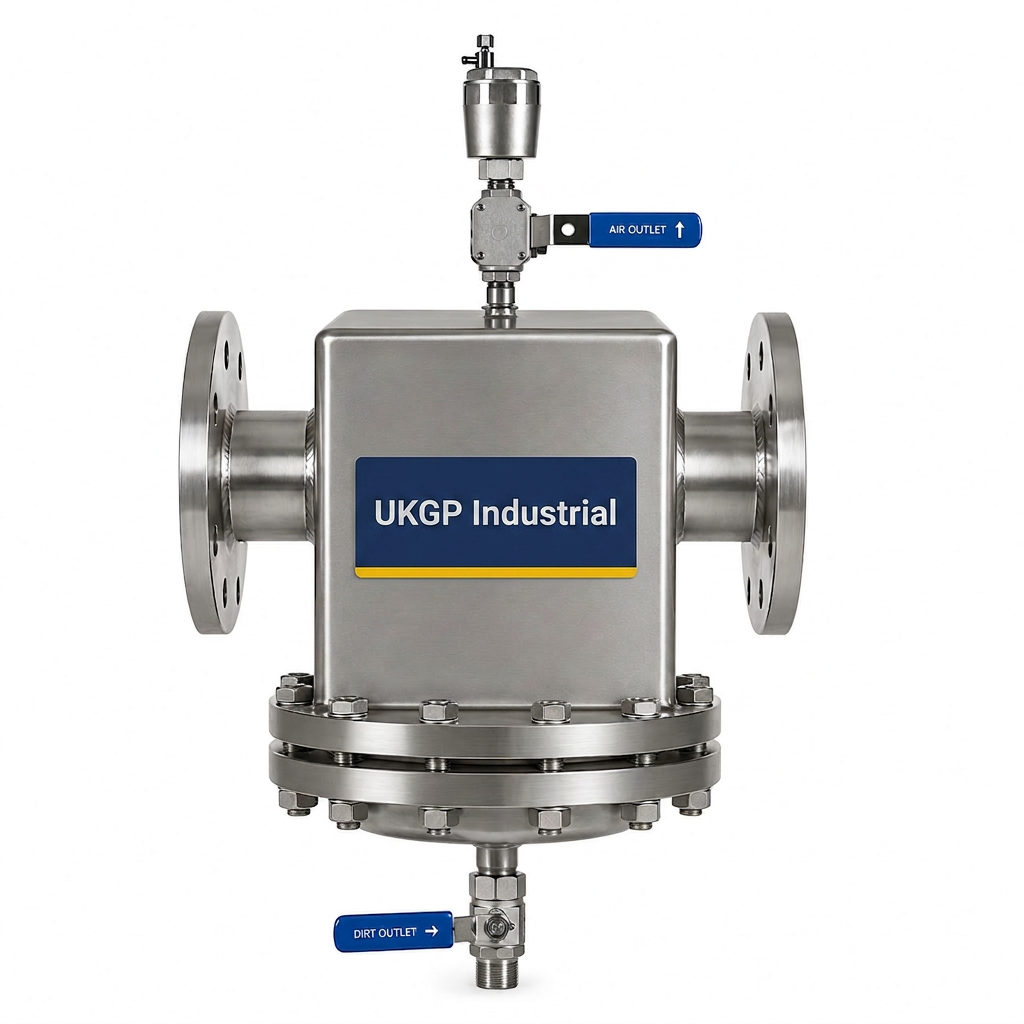
While flushing and filtration remove existing debris, air and dirt separators are critical for preventing the formation of new contaminants. Oxygen is the primary driver of corrosion in any sealed heating system. If air is not effectively removed, it reacts with ferrous components to form black iron oxide (magnetite). Standard automatic air vents (AAVs) are often insufficient for the volume of micro-bubbles generated in high-temperature commercial circuits.
The installation of UKGP air & dirt separators at the point of lowest solubility—typically the warmest point in the system on the flow pipework—is a technical necessity. These units use a coalescence medium to slow down the water velocity, allowing micro-bubbles to rise and be vented, while simultaneously allowing dirt particles to fall into a collection chamber at the base of the unit. This dual-action protection ensures that the water remains de-aerated, which is a fundamental requirement of BSRIA BG50 for 'low-corrosion' environments.
By combining active separation with high-velocity flushing, the engineer creates a robust defence against the two biggest threats to system efficiency: air and magnetite. For larger commercial systems, these separators should be sized based on the maximum flow rate to ensure the internal velocity within the vessel stays below the threshold for effective coalescence. Blow-down valves on the dirt separator allow for the easy removal of collected sludge without interrupting system operation.
- Removal of air to prevent oxidative corrosion.
- Collection of micro-bubbles and heavy dirt particles in a single vessel.
- Protection of the circulation pump against cavitation.
- Reduction in system noise and improved heat transfer.
Verification of Cleanliness and Post-Flush Inhibition
The cleaning process is only complete when it can be verified through documented water analysis. A visual check of a 'cloudy' sample is insufficient for handover in a commercial contract. BSRIA BG29/21 specifies strict limits for suspended solids and iron content. Once the final flush is complete, a water sample should be taken and sent to a UKAS-accredited laboratory for analysis. This provides the M&E contractor with a 'birth certificate' for the system, proving it was clean at the point of commissioning.
Immediately following the verification of cleanliness, the system must be treated with a high-quality corrosion inhibitor. Leaving a freshly cleaned system filled with plain water, even for a few days, can lead to 'flash rusting' on the internal surfaces of steel pipework. The inhibitor works by forming a microscopic protective film over the metal surfaces, preventing the electrochemical process of corrosion.
In commercial buildings with significant water volumes, the inhibitor must be dosed accurately. Under-dosing is a common failure point that leads to localised corrosion. Proportional dosing systems or regular manual checks using the UKGP chemical dosing pot ensure that inhibitor levels remain within the effective range. This chemical balance must then be monitored at least annually as part of the planned preventative maintenance (PPM) schedule.
- Conductivity: Measures the total dissolved solids (TDS).
- pH Levels: Should typically be between 8.0 and 10.0 for steel systems.
- Iron and Copper content: Indicates active corrosion within the pipework.
- Inhibitor Levels: Must be maintained at the manufacturer's recommended ppm.
Hydraulic Separation and Plate Heat Exchangers
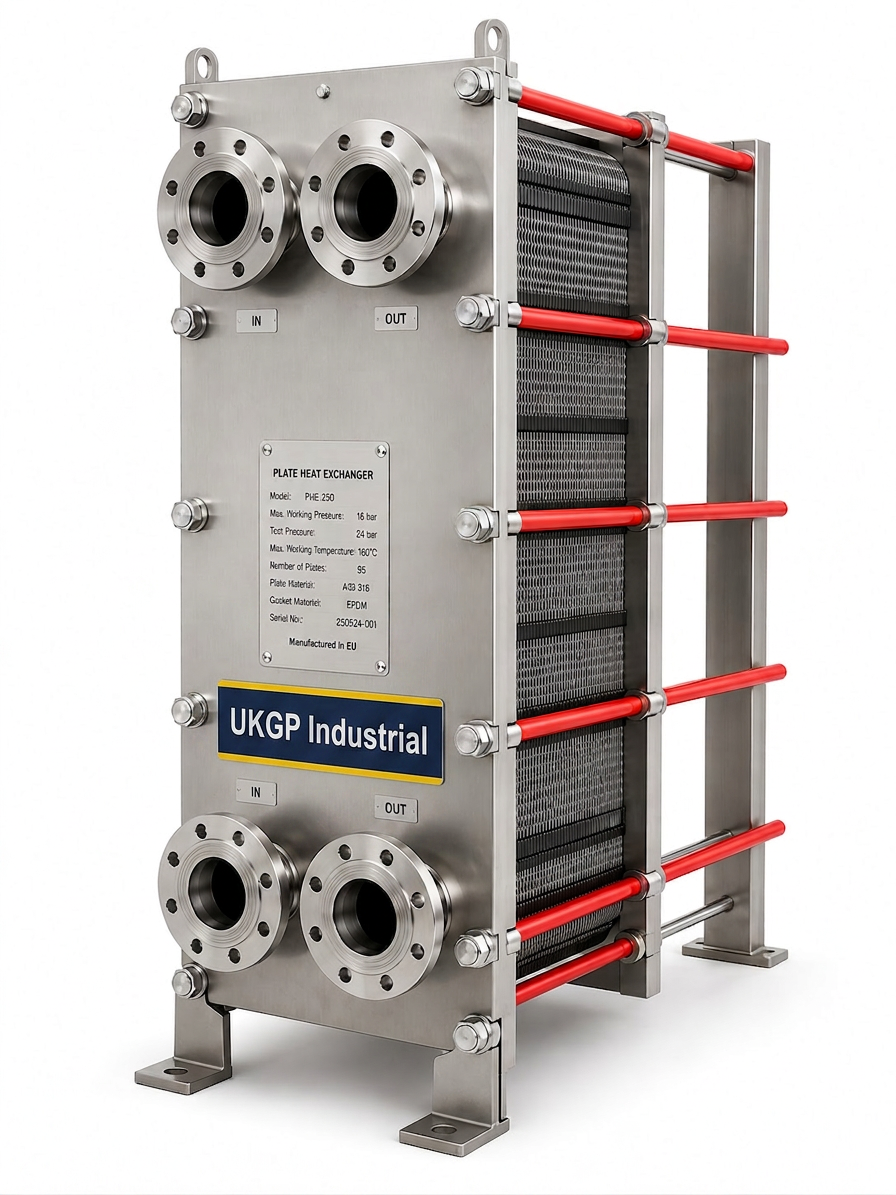
In many retrofit projects where a new commercial boiler is being connected to an old heating circuit, a UKGP plate heat exchanger (PHE) is used for hydraulic separation. This is a strategic move to prevent contaminants in the old pipework from entering the new, sensitive boiler plant. While the building side of the system is being cleaned, the PHE acts as a barrier, ensuring that the new boilers are never exposed to the flushing water.
However, the plate heat exchanger itself must be protected. The narrow channels between the plates are highly susceptible to blocking if the secondary circuit is not properly cleaned. If a PHE becomes fouled, the temperature differential (Delta T) across the primary and secondary sides will increase, and the boilers will likely short-cycle or fail to meet the building's heat demand. Therefore, cleaning the secondary circuit to a high standard is just as important as protecting the primary circuit.
During the cleaning of a system equipped with a PHE, it is common practice to bypass the heat exchanger initially to remove the bulk of the debris. Once the coarse particles are cleared, the PHE can be reintroduced for the final chemical cleaning and fine filtration phases. Regular monitoring of the pressure drop across the PHE is a reliable way to gauge the cleanliness of the circulating water over time.
- Physical separation of the primary (boiler) and secondary (building) circuits.
- Protection of expensive boiler plant from contaminated legacy pipework.
- Efficient heat transfer with low approach temperatures.
- Ease of cleaning compared to internal boiler heat exchangers.
Long-term Maintenance and BG50 Compliance
Cleaning a system is not a one-time event but the start of an ongoing water quality management regime. BSRIA BG50 'Water Treatment for Closed Heating and Cooling Systems' provides the framework for this. For commercial facility managers, the goal is to maintain the water in a 'non-corrosive' state, which requires consistent monitoring of pH, inhibitor levels, and microbial activity. Poorly maintained water will eventually lead to the failure of circulators, control valves, and heat emitters, regardless of how well the initial clean was performed.
A robust maintenance log is essential for compliance and for upholding equipment warranties. This log should record all water test results, maintenance tasks performed on side-stream filters or separators, and any incidents of system depressurisation or significant water loss. Frequent 'topping up' with fresh, aerated water is a leading cause of corrosion, as it introduces new oxygen and dilutes the inhibitor concentration. Any leaks should be repaired immediately to maintain system chemistry.
In summary, cleaning a commercial heating system requires a transition from 'brute force' flushing to sophisticated filtration and chemical management. By following the BSRIA standards and utilising high-quality equipment such as side-stream filtration skids and de-aeration units, engineers can ensure that the systems they design, install, and maintain operate at maximum efficiency for their intended lifespan.
- Monthly water samples for the first six months post-cleaning.
- Quarterly checks of sediment levels in dirt separators.
- Annual laboratory analysis to BG50 standards.
- Logging all chemical additions and filter replacements.
Frequently asked questions
What is the difference between mechanical and chemical cleaning?
- Mechanical cleaning via flushing and filtration addresses particulates, whereas chemical cleaning handles bio-fouling and mineral scale. For older systems, BSRIA BG50 recommends a combined approach focusing on continuous side-stream filtration to keep the system 'clean' post-commissioning.
What is the required velocity for dynamic flushing?
- Dynamic flushing velocities should be at least 1.5 times the design flow rate, or a minimum of 0.5 m/s in the largest pipework sections, to ensure suspended solids are successfully mobilised to the flushing point.
How does BSRIA BG29/21 differ from BG50?
- While BSRIA BG29/21 focuses on pre-commission cleaning of new systems, BG50 addresses the ongoing water quality management for systems in operation. Both are critical for preventing corrosion and maintain efficiency in commercial boiler rooms.
Can I clean a system through a plate heat exchanger?
- Plate heat exchangers act as debris traps due to their narrow channels. If a system is cleaned without bypassing these, or without adequate filtration, the PHE will likely block, causing immediate pressure drops and temperature transfer failure.