The Critical Timing of Initial Dosing
The most critical point for dosing corrosion inhibitor is immediately following the pre-commission cleaning (PCC) process. According to BSRIA BG29/21, once a system has been flushed and cleaned to remove mill scale, grease, and construction debris, the 'naked' metal surfaces are highly susceptible to rapid flash rusting. Dosing must occur within hours, not days, of the final flush to ensure a protective film is established across all internal surfaces.
In existing systems, re-dosing is required whenever the system has been breached for maintenance. It is a common error in the UK FM sector to assume that the initial dose remains effective indefinitely. In reality, every time a pump is replaced or a section of pipework is drained, the concentration of active molybdate or nitrite-based inhibitors is diluted. Engineers must verify concentrations post-maintenance to ensure the system remains within the protective window.
- Following BSRIA BG29 pre-commission cleaning.
- Immediately after any system modification or extension.
- When laboratory analysis reports levels below the manufacturer’s minimum ppm.
- After significant water loss or system drainage for repairs.
Monitoring and The Role of BSRIA BG50
BSRIA BG50 (Water Treatment for Closed Heating and Cooling Systems) provides the framework for ongoing maintenance. It emphasises that chemical dosing is not a 'fit and forget' exercise. For commercial plant rooms, regular water analysis is mandatory to monitor pH, conductivity, and inhibitor reserves. If the pH shifts outside the typical 8.2 to 10.5 range (depending on metallurgy), the risk of pitting corrosion increases exponentially.
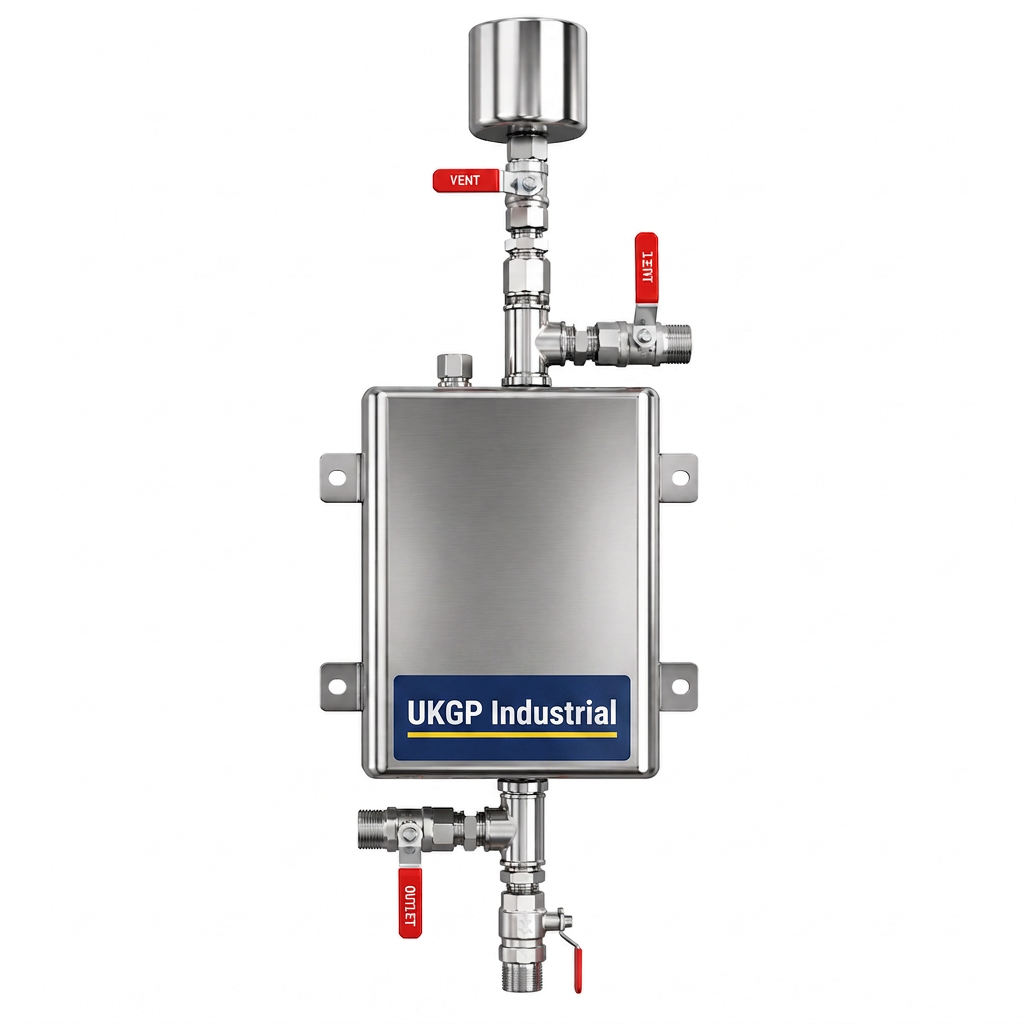
When monitoring reveals a drop in inhibitor levels, engineers must act. A measured top-up via a dosing pot is the standard industry response. This prevents the formation of magnetite (black sludge) and scaling, which are the primary causes of seized valves and blocked heat exchangers. Proactive dosing based on BG50 periodic testing is significantly more cost-effective than reactive power-flushing once circuit circulation has already been compromised.
Frequently asked questions
What is the current UK standard for maintaining water quality?
- BSRIA BG50:2021 provides the industry standard for monitoring and maintaining water quality in closed-loop systems. It details the chemistry required for corrosion and scale control and the frequency of testing.
How often should inhibitor levels be checked?
- Dosing should never be a one-off event. Inhibitor levels must be checked at least bi-annually (or quarterly for critical systems) to account for losses through minor leaks, maintenance work, or natural degradation.
Can biocides be added through a standard dosing pot?
- Yes, but caution is required. While biocides can be dosed via a pot, high-concentration 'slug' dosing is more effective for bio-remediation. Biocides should be used if TVC (Total Viable Count) levels exceed the thresholds defined in BG50.
When should glycol be added during the dosing process?
- A 20% to 25% dilution is typical for frost protection in UK commercial systems. Use a dosing pot for top-ups, but ensure the system is properly circulated immediately to prevent glycol from settling in low-flow areas.