Anatomy of a Chemical Dosing Pot
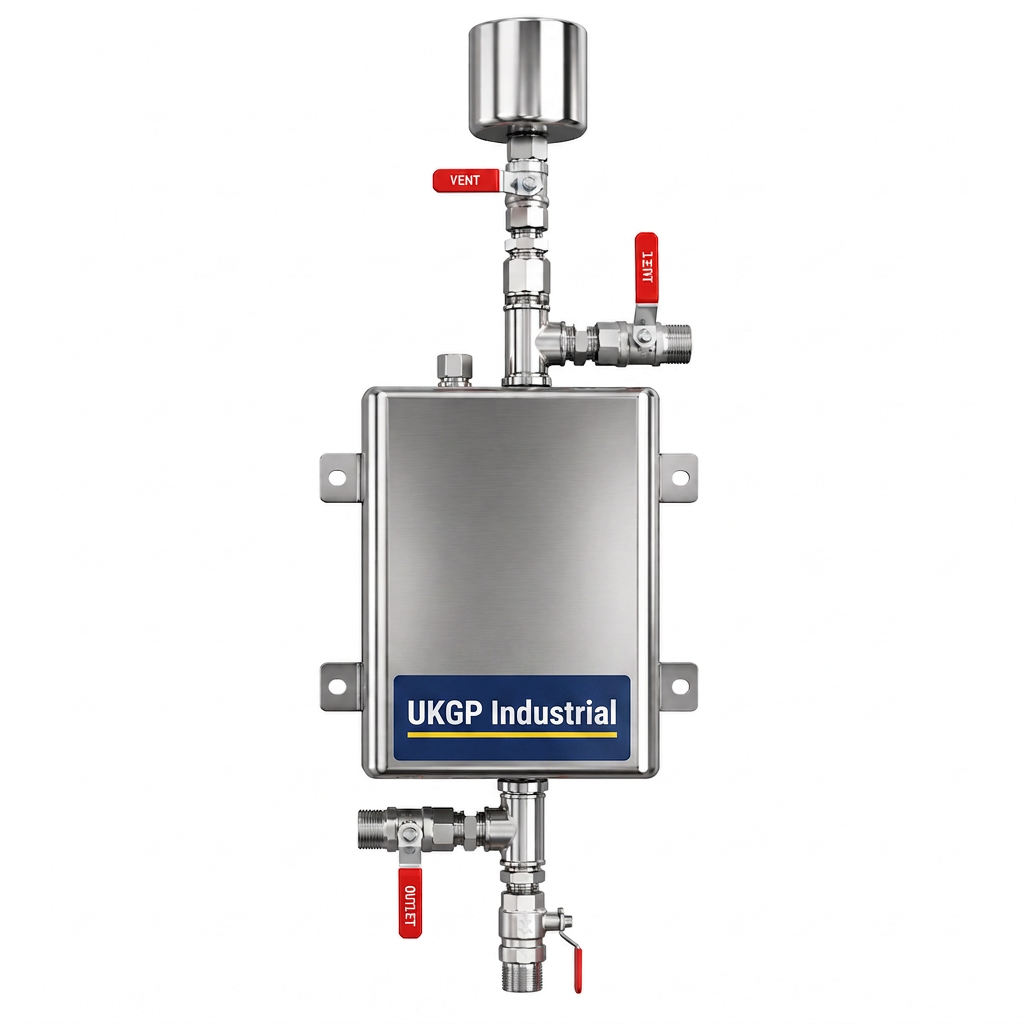
A standard chemical dosing pot is a pressure-rated vessel designed to bridge the gap between the atmosphere and a pressurised hydronic system. In the UK market, these are typically manufactured to PED 2014/68/EU standards. The vessel features a wide-aperture top filling valve, usually 1/2' or 1' BSP, topped with a stainless steel tundish. The tundish is essential for health and safety, providing a secure point to pour chemicals while catching drips that could otherwise damage plant room flooring.
The internal geometry of the pot is critical. Unlike a simple tank, professional dosing pots like those from UKGP Industrial utilise strategically placed inlet and outlet connections. The inlet is usually situated lower than the outlet or incorporates an internal baffle/dip-tube arrangement. This design ensures that when the system valves are opened, the incoming water creates sufficient turbulence to flush the chemical concentrate out into the main flow, rather than leaving a stagnant layer of heavy fluid at the bottom.
Each pot must be equipped with a calibrated pressure gauge and a manual air vent. The vent is the most critical component during the filling process; without it, an air pocket would prevent the pot from being fully charged with chemical, and subsequently, that air would be injected into the system, potentially causing air-locking in terminal units or contributing to oxidative corrosion.
- Stainless steel vessel (usually Grade 304 or 316) rated for system pressure.
- Five-valve configuration: inlet, outlet, fill (top), drain (bottom), and air vent.
- Tundish for spill prevention during the filling process.
- Internal dip tubes to ensure chemical is swept from the bottom of the pot.
Installation and Positioning Strategy
For a dosing pot to function effectively, there must be a pressure differential across its connections. The most common installation method is to pipe the inlet of the pot to the main system flow (higher pressure) and the outlet to the system return (lower pressure) or across a circulator pump. This ΔP (delta-P) drives the water through the pot, sweeping the chemicals into the system circulation. Without this pressure gradient, the chemical will rely purely on diffusion, which is insufficient for large-scale commercial volumes.
Valving is a critical aspect of the installation. Isolation valves must be installed as close to the main system pipework as possible to allow for maintenance of the dosing lines without draining the entire circuit. The dosing pot itself should be located in a well-lit, accessible part of the plant room, ideally near a floor drain or soakaway to handle the discharge from the bottom drain valve during the flush cycle.
Structural support cannot be overlooked. A 6-litre or 10-litre dosing pot, when full of water and chemical, represents a significant static load. Wall-mounted units should be secured using M10 or M12 wedge anchors into concrete or solid masonry. In modern plant rooms with lightweight partitioning, floor-standing models or bespoke secondary steelwork frames are required to prevent stress on the connecting pipework.
- Install across the flow and return headers to utilise the differential pressure.
- Ensure the pot is mounted vertically on a plumb wall or dedicated floor stand.
- Use 15mm or 22mm copper or steel pipework for the bypass connections.
- Position the tundish at a height that allows for safe pouring (between 1.0m and 1.5m).
Step-by-Step Dosing Procedure
The process of dosing must be carried out methodically to ensure operator safety and system integrity. First, ensure all five valves on the pot are closed. Open the drain valve and the air vent to empty the water currently held within the vessel. This water may be treated, so ensure it is disposed of in accordance with local water authority regulations. Once empty, close the drain valve but leave the air vent open.
Begin pouring the chemical (inhibitor, biocide, or glycol) into the funnel. As the liquid enters the vessel, air will be displaced through the vent. Continue filling until the liquid is visible at the base of the air vent or until the required dosage volume has been reached. If the pot is only partially filled with chemical, the remaining volume should be topped up with mains water to eliminate any air gap before closing the fill valve and the air vent.
To introduce the chemical into the system, slowly open the inlet valve followed by the outlet valve. The pressure gauge on the pot should equalise with the system pressure. It is recommended to leave these valves open for approximately 15 to 30 minutes. This ensures that the contents of the pot are thoroughly flushed into the main circulation. Once the chemical has been transferred, close both the inlet and outlet valves to isolate the pot until the next dosing interval.
- Isolate the pot from the system flow and return.
- Drain the existing water contents via the bottom drain valve into a waste point.
- Fully open the air vent to break the vacuum.
- Pour the measured chemical into the tundish until the pot is full or the specified dose is reached.
Inhibitors, Biocides, and Glycol Concentrations
Closed-loop systems are susceptible to three main threats: corrosion, scale, and microbiological growth. Under BSRIA BG50 guidelines, maintaining the correct chemical balance is a continuous requirement, not a one-time event. Nitrite-based or film-forming inhibitors must be kept at specific concentrations (standard 2000ppm for many nitrite products) to provide a protective layer on metallic surfaces. Using a dosing pot allows for the precise 'top-up' of these levels as water is lost through minor leaks or maintenance.
In chilled water (CHW) systems or systems utilising air-source heat pumps (ASHPs), the addition of mono-ethylene or mono-propylene glycol is necessary for frost protection. Glycol dosing is often substantial, and for large volumes, a dosing pot may be used for minor adjustments. However, it is primarily used for the introduction of biocides. Because CHW systems operate at temperatures conducive to bacterial growth (Pseudomonas etc.), regular 'shock dosing' of non-oxidising biocides through the pot is a standard maintenance task.
When using a dosing pot for biocides, engineers must be mindful of the 'system volume to pot volume' ratio. For example, if a 20,000-litre system requires a 500ppm biocide dose, 10 litres of chemical are needed. With a 3.5-litre dosing pot, this will require three separate cycles. Attempting to rush this by leaving valves open during the fill process is a violation of safety protocols and can lead to chemical backflow into the filling loop.
- BSRIA BG50 recommends regular testing to maintain inhibitor residuals.
- Over-dosing with glycol can increase pump head and reduce heat transfer efficiency.
- Biocides are required in low-temperature systems (CHW and Heat Pumps) to prevent biofilm.
- Inadequate dosing leads to 'black water' (magnetite) and premature component failure.
Maintenance and Longevity of the Vessel
Although chemical dosing pots are relatively simple mechanical devices, they require routine maintenance to ensure they do not become a point of failure. The most common issue is the 'seizing' of ball valves due to infrequent use or the buildup of chemical residue. High-quality UKGP Industrial dosing pots utilise robust valves, but engineers should still 'exercise' these valves monthly to ensure they remain operable in an emergency.
The internal surfaces of the pot can occasionally accumulate sludge if the system water is heavily contaminated. Following the guidelines in BSRIA BG29/21 for pre-commission cleaning will mitigate this, but for older systems, the dosing pot should be treated as a secondary dirt trap. Periodically, the pot should be flushed through with the drain valve fully open to remove any settled solids that could obstruct the outlet.
The seals on the top fill valve and the air vent are subject to wear, especially if aggressive chemicals are handled. If a leak is detected at the top of the pot, it often indicates that chemical crystallization has damaged the valve seat. Replacing these valves is a straightforward task, but it should only be performed when the system is isolated. A well-maintained dosing pot should have a service life exceeding 15 years, matching the lifecycle of the main plant.
- Always flush the pot with clean water after using biocides or glycol.
- Check the integrity of the tundish seal and the valve glands annually.
- Ensure the pressure gauge returns to zero when the pot is depressurised.
- Maintain a dosing log-book as per BG50 requirements.
Integration with Side-Stream Filtration
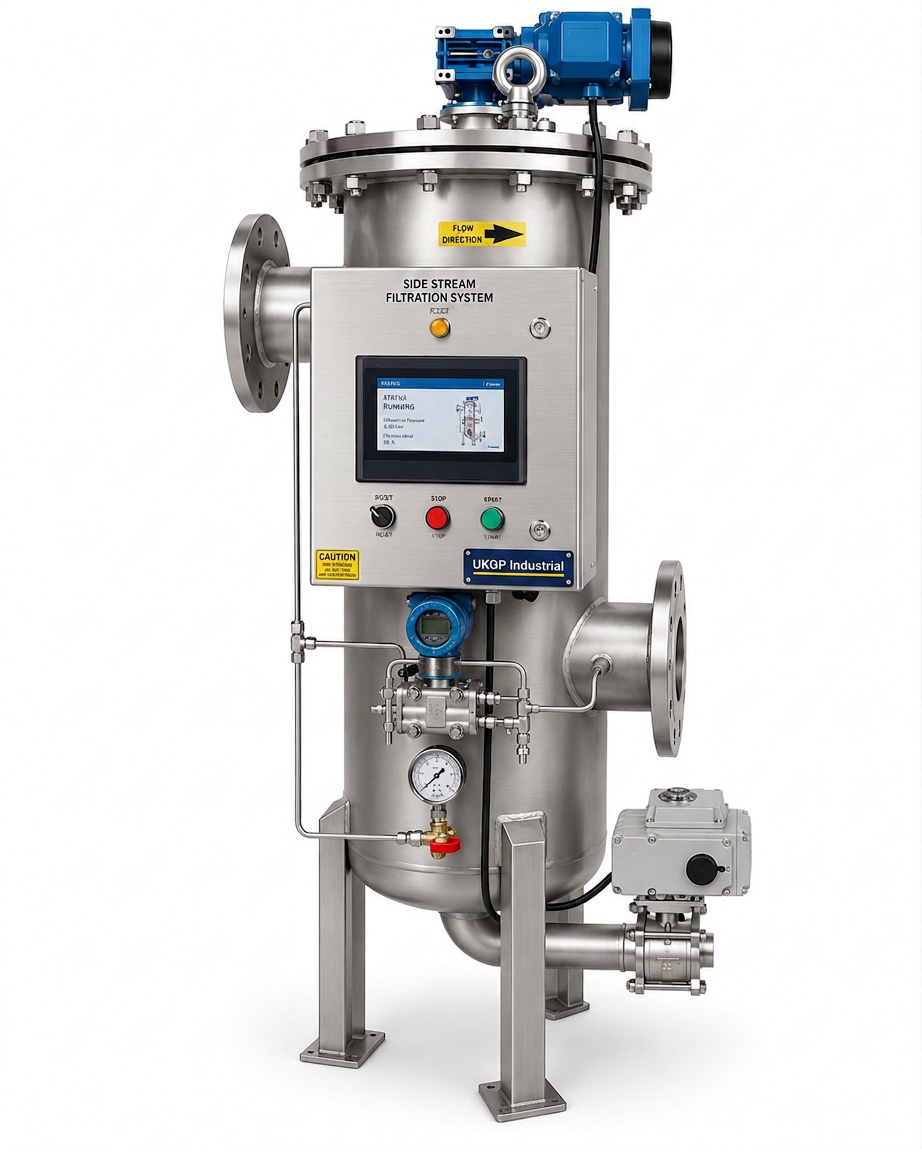
While use of a dosing pot ensures the chemical side of water treatment is handled, it does not address the physical contaminants within the loop. BSRIA BG50 strongly recommends the use of side-stream filtration alongside chemical treatment. While the dosing pot adds inhibitors to prevent corrosion, the side-stream filter removes the magnetite and debris that may already exist or be produced as part of the passivation process.
In many modern plant room designs, the dosing pot and side-stream filter are installed in the same bypass loop. This is an efficient use of space and pipework, but it requires careful sequencing. When dosing chemicals, the side-stream filter should ideally be bypassed for a short period if it contains active carbon or certain media that might strip the chemical from the water before it circulates through the main system. However, for standard bag or magnetic filters, they can usually remain in operation.
The synergy between these two components is vital for the protection of high-efficiency heat exchangers and variable speed pumps. Fine tolerances in modern boilers and chillers mean that even small amounts of suspended solids can lead to erosion or blockage. Utilizing a UKGP Industrial dosing pot to maintain inhibitor levels ensures that the oxide layers remain stable, while the side-stream filter captures any stray particles, providing a dual-layered defence.
- Dosing pots introduce chemicals but do not remove contaminants.
- Side-stream filtration (SSF) is required to remove suspended solids and magnetite.
- Combine both technologies to meet BSRIA BG50 water quality standards.
- Regularly clean filter bags or cartridges in the SSF to maintain flow.
Common Pitfalls and Engineering Best Practices
The most frequent error in the operation of a dosing pot is the introduction of air into the system. If an engineer fails to vent the pot properly before opening it to the system, a 'slug' of air is pushed into the main return. This can lead to pump cavitation, localized overheating in boiler primary circuits, and noise complaints in terminal units. The air vent must be kept open until water (or chemical) begins to weep from it during the filling stage.
Another oversight is the failure to account for gravity. In systems with very low flow rates or low pressure differentials, a dosing pot may not empty effectively. In these instances, engineers should look to install the pot across the main system pump, where the pressure difference between the suction and discharge sides is greatest. This guarantees a positive flow through the vessel, regardless of the wider system's hydraulic state.
Finally, the 'compatibility' of chemicals must be considered. Never mix different types of inhibitors or biocides within the pot itself. If the system is switching from one chemical regime to another, the pot must be thoroughly flushed with demineralized or mains water to prevent an exothermic reaction or the formation of a precipitate (sludge) that could block the dosing lines. Safety Data Sheets (SDS) should always be consulted prior to the introduction of any new substance.
- Manual air venting is the primary defence against air ingress during dosing.
- Check for 'pin-hole' corrosion on the pot if it's not made of high-grade stainless steel.
- Ensure the system pressure does not exceed the pot's rated bar limit.
- Always use a funnel or the built-in tundish to prevent skin contact.
Regulatory Standards and Compliance
In the UK, the management of water quality in closed-loop systems is governed by strict industry standards. BSRIA BG50 is the 'gold standard' for operational buildings, outlining the requirements for monitoring, dosing, and filtration. Using a dosing pot is the recognised method for fulfilling the 'chemical maintenance' portion of a BG50 management plan. It allows for the controlled addition of chemistry that keeps dissolved oxygen in check and prevents the electrochemical process of corrosion.
From a mechanical safety perspective, dosing pots fall under the Pressure Equipment Directive (PED). It is a legal requirement for the manufacturer to provide a Declaration of Conformity and for the pot to be CE or UKCA marked where applicable. For insurance purposes, facility managers must ensure that the dosing pots installed in their plant rooms are rated for the Maximum Allowable Pressure (PS) of the system, typically 10 bar or 14 bar in commercial applications.
Environmental regulations also play a role. The drain-down of a dosing pot involves discharging potentially treated water. Site engineers must ensure that the plant room drainage is connected to the foul sewer (with permission from the local water undertaker) and not to a surface water drain. Following these regulatory frameworks not only ensures the longevity of the building services but also protects the engineer and the environment from legal and physical risks.
- BSRIA BG29/21 (Pre-commission cleaning of pipework).
- BSRIA BG50 (Water treatment for closed heating and cooling systems).
- Pressure Equipment Directive (PED) compliance.
- Water Supply (Water Fittings) Regulations 1999.
Frequently asked questions
How do I size a dosing pot for a large commercial system?
- The size is typically determined by the system volume and the method of dosing. For commercial systems, a 3.5-litre or 6-litre pot is standard. It is better to undersize the pot and perform multiple doses than to install an excessively large pot that is difficult to support structurally.
What safety precautions are required when handling inhibitors?
- Always follow the manufacturer's Safety Data Sheet (SDS). In general, wear nitrile gloves and eye protection. Ensure the pot is fully depressurised and drained before opening the top valve. Never stand directly over the pot when opening the fill valve.
Do I need a pump to use a dosing pot?
- No. Modern dosing pots are designed for gravity-fed or pressure-differential dosing. Motorised dosing pumps are used for continuous proportional dosing, whereas pots are for shot-dosing batches of chemicals.
How often should a dosing pot be inspected?
- Ideally, monthly. Check for leaks, ensure valves operate smoothly, and verify the internal strainer (if fitted) is clear. Ensure the tundish is not blocked and the drain line is free-flowing.