The Role of Dosing Pots in Closed-Loop Systems
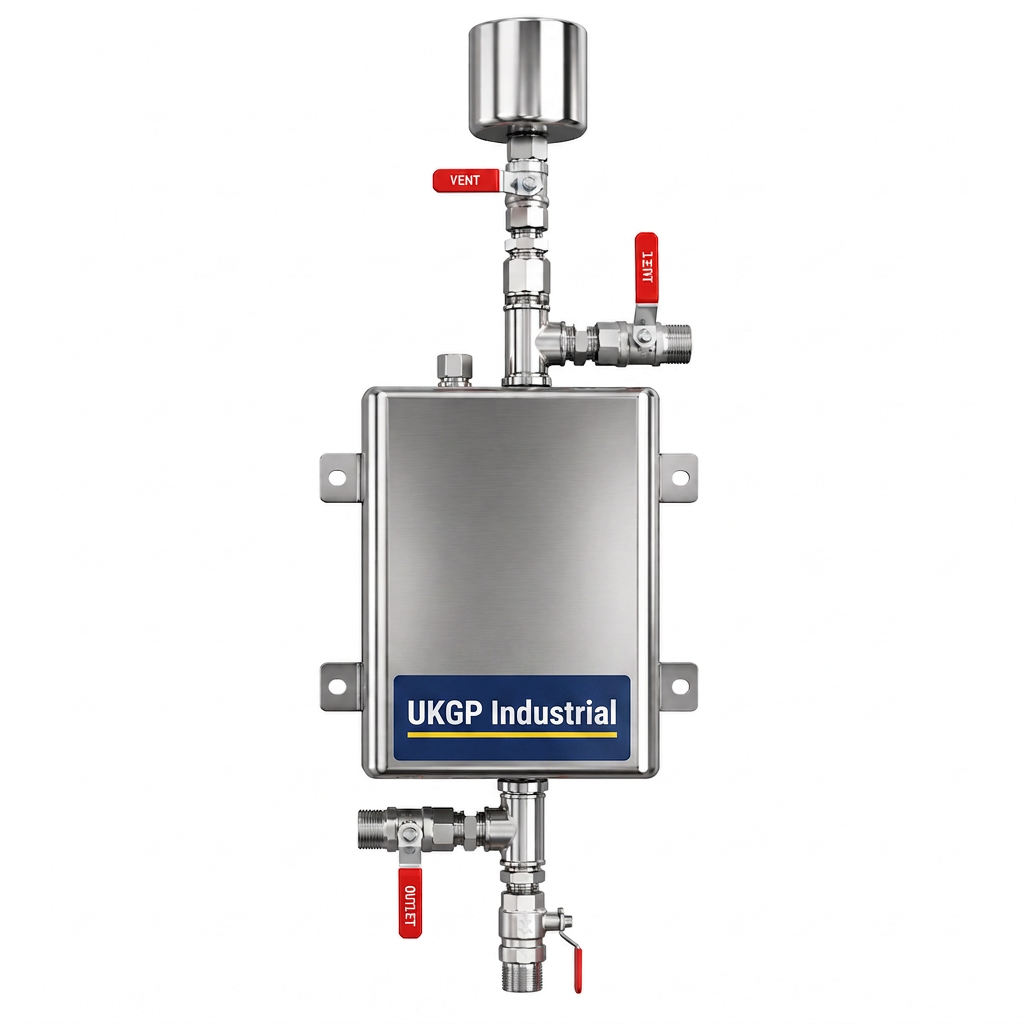
Chemical dosing pots serve as the primary interface for maintaining the chemical integrity of closed-loop LTHW (Low Temperature Hot Water) and CHW (Chilled Water) systems. Unlike automated dosing pumps, which are often reserved for large-scale industrial water treatment, manual dosing pots remain the standard for commercial UK plant rooms due to their reliability and simplicity. Installed across the flow and return headers, they utilize the differential pressure of the system pumps to bypass a specific volume of water through the pot, drawing the chemicals into the main circulation.
The design usually incorporates a funnel for pouring, an air vent, and isolation valves. Because these units are subject to the same design pressures and temperatures as the central boiler or chiller plant, their construction must comply with the Pressure Equipment Directive (PED) 2014/68/EU. Failure to specify the correct material can lead to localized corrosion, compromising the safety of the plant room and the efficacy of the water treatment regime.
- Ease of introducing liquid chemicals without interrupting pump operation.
- Provision for glycol top-ups in chilled water systems.
- Enabling compliance with BSRIA BG29/21 pre-commissioning cleaning protocols.
- Safe handling of concentrated biocides and inhibitors.
Material Analysis: Stainless Steel 304 and 316L
Stainless steel dosing pots, typically manufactured from Grade 304 or 316L, offer the highest level of protection against the corrosive nature of undiluted chemicals. Concentrated inhibitors and biocides can be aggressive before they are fully diluted into the system volume. Stainless steel’s passive chromium oxide layer prevents the pitting and thinning that can occur in carbon steel vessels when they are frequently exposed to high concentrations of chemicals or oxygen ingress during the filling process.
For chilled water applications, stainless steel is the professional choice. These vessels are prone to external sweating (surface condensation). If a carbon steel pot is utilized in a CHW circuit, the external surface will rapidly oxidise behind the insulation, leading to 'corrosion under insulation' (CUI). Stainless steel is immune to this failure mode, ensuring the vessel maintains its pressure rating for the full lifecycle of the building.
- Higher initial capital expenditure (CAPEX).
- Superior resistance to both internal and external corrosion.
- Elimination of magnetic magnetite shedding from the pot body.
- Essential for chilled water systems where condensation occurs.
Frequently asked questions
Are dosing pots mandatory in commercial plant rooms?
- While not strictly required by BS EN 12828, they are the industry-standard method for compliance with BSRIA BG50 requirements for chemical maintenance and inhibitor dosing.
What pressure rating is required for a standard UK plant room?
- A minimum design pressure of 10 bar is standard, but high-rise or high-pressure industrial circuits may require 14 bar or higher. UKGP Industrial units are typically tested to 1.5x working pressure.
When should I specify stainless steel over carbon steel?
- Carbon steel is suitable for standard LTHW systems with correct inhibitor levels. Stainless steel is essential for chilled water, process cooling, or systems where external corrosion (condensation) is a risk.
How often should a dosing pot be used?
- Every 3-6 months as part of the SFG20 maintenance schedule, or whenever water analysis indicates inhibitor levels have dropped below prescribed PPM.