The Fundamentals of Corrosion Inhibition
Corrosion in closed-loop systems is primarily an electrochemical process where metal ions dissolve into the system water at the anode and electrons are consumed at the cathode. For a UK building services engineer, selecting an inhibitor involves identifying which part of this reaction to interrupt. Anodic inhibitors, such as nitrites or orthophosphates, form a protective film on the anodic surfaces, while cathodic inhibitors, like zinc or polyphosphates, limit the oxygen reduction process. Many modern commercial formulations are 'multi-metal' inhibitors, combining both to protect the diverse metallurgy found in contemporary plant rooms.
The choice of inhibitor is often dictated by the system's materials. For instance, aluminium heat exchangers, common in high-efficiency condensing boilers, are highly sensitive to pH levels. An inhibitor that maintains a pH above 8.5 may protect steel but can lead to rapid catastrophic failure of aluminium components through 'pitting'. Therefore, specifying a chemical that provides a stable pH buffer between 7.0 and 8.0 is critical when aluminium is present. Failure to verify the metallurgical compatibility of the chemical package is a leading cause of premature plant failure.
Beyond material compatibility, the ease of monitoring is a practical engineering consideration. BSRIA BG50 emphasizes the importance of regular testing. Molybdate-based inhibitors are frequently specified because concentrations can be easily and accurately measured using a basic field colorimeter or drop-test kit. This allows facilities managers to maintain the 'residual' level required to ensure the protective film remains intact despite minor system losses or fresh water ingress.
- Molybdate-based inhibitors for ease of field testing.
- Nitrite-based formulations for cooling and industrial applications.
- Organic Acid Technology (OAT) for mixed-metal system longevity.
- Phosphate-based buffers for pH stability in steel systems.
Microbiological Control in Chilled and LTHW Systems
Microbiological growth is a significant threat to closed-loop systems, particularly in chilled water circuits or Low-Temperature Hot Water (LTHW) systems operating below 60°C. Bacterial colonies can lead to Microbially Induced Corrosion (MIC), where organisms like Sulphate Reducing Bacteria (SRB) create localised acidic environments that eat through steel pipework. Biofilm formation also increases thermal resistance, significantly reducing the heat transfer efficiency of AHU coils and chilled beams.
Selecting a biocide involves choosing between oxidising and non-oxidising agents. In most closed-loop commercial applications, non-oxidising biocides (such as isothiazolinone or glutaraldehyde) are preferred. These act by disrupting the metabolic pathways of the bacteria. Unlike oxidising biocides (like chlorine), they are less aggressive toward system metals and have better long-term stability in the loop. However, bacteria can develop resistance to a single biocide over time; consequently, many water treatment regimes specify alternating between two different chemical types.
BSRIA BG50 guidelines suggest that biocide dosing should be proactive rather than reactive. Once a thick biofilm has developed, chemical penetration becomes difficult, and mechanical flushing may be required. Dosing chemicals should be introduced via a dedicated point in the plant room to ensure rapid distribution. For systems with low turnover or 'dead legs', the selection of a biocide with high penetrative properties is essential to reach stagnant areas where bacteria thrive.
- Pseudomonas and Nitrifying bacteria risks.
- Sulphate Reducing Bacteria (SRB) and anaerobic corrosion.
- System-specific biocide selection (oxidising vs non-oxidising).
- Dosage frequency and 'shock' dosing protocols.
Applying Chemicals via Dosing Pots
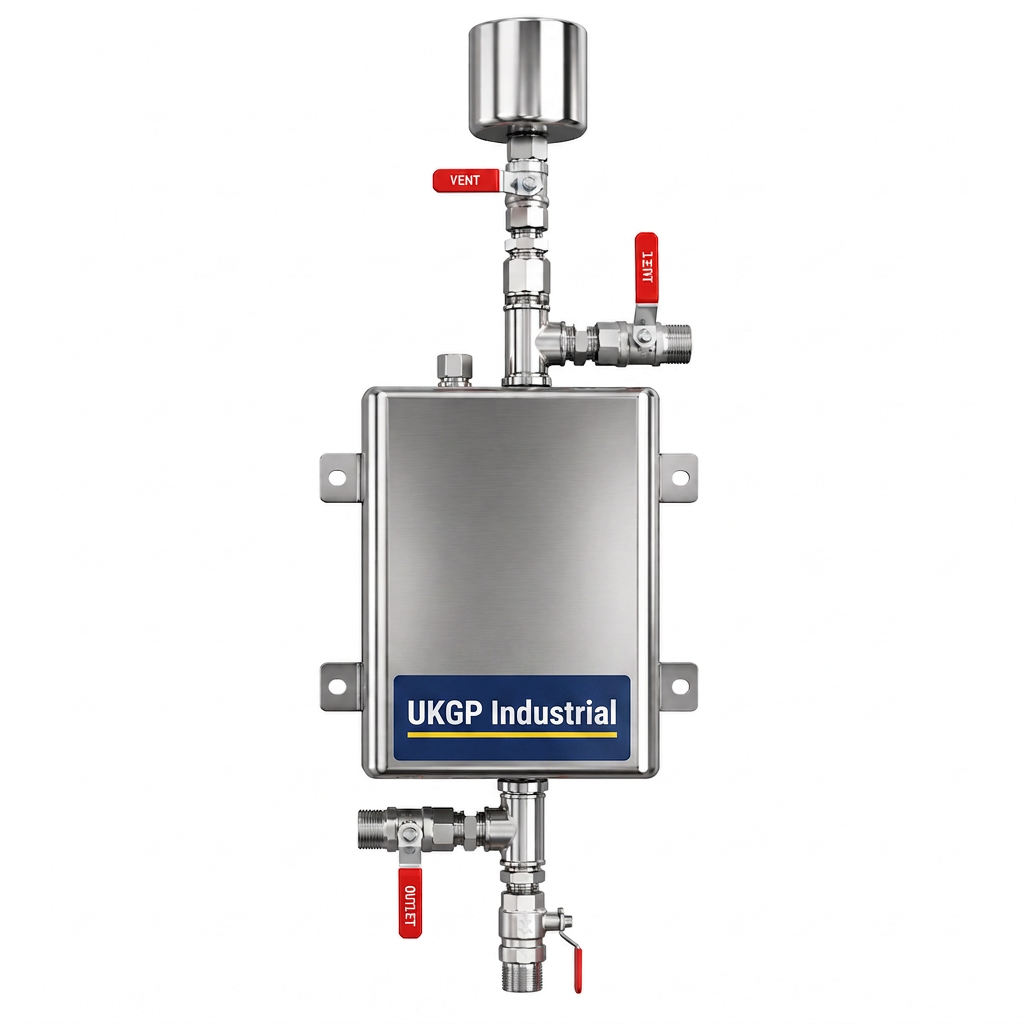
The physical method of introducing chemicals is as important as the chemicals themselves. In the UK, the industry standard for manual chemical intervention is the dosing pot. These pressure vessels allow for the safe introduction of inhibitors and biocides without requiring the system to be drained or the circulating pumps to be stopped. When selecting a dosing pot, engineers must ensure the vessel is rated for the system's maximum operating pressure and temperature, typically 10 bar or 14 bar in high-rise applications.
According to BS EN 12828, dosing points should be situated in an accessible part of the plant room, usually across the main flow and return headers to utilise the differential pressure of the pumps. A well-designed dosing pot setup includes high-quality isolation valves and a non-return valve to prevent backflow during the filling process. For larger commercial systems, the volume of the dosing pot (typically ranging from 3.5 to 25 litres) should be sized to allow the required volume of chemical to be added in a manageable number of 'shots', reducing the risk of air ingress during the process.
While dosing pots are the standard for small-to-medium additions, they also serve a critical role in 'system recovery' if a leak occurs. If an expansion vessel fails and the system loses treated water, the dosing pot is the primary tool for the FM team to quickly restore inhibitor residuals to the concentrations required by the manufacturer's warranty. UKGP Industrial units are designed to meet these rigorous demands, featuring robust stainless steel construction to resist internal corrosion from concentrated chemicals before they are diluted into the system.
- Selection of manual vs. automated dosing points.
- Sizing considerations for system volume and chemical concentration.
- Installation best practices for bypass loops.
- Material specifications (Stainless Steel vs. Carbon Steel).
Glycol Selection for Freeze Protection
In many UK HVAC applications, particularly external air-source heat pumps or roof-mounted chillers, glycol is required to provide freeze protection. The selection between Mono-Ethylene Glycol (MEG) and Mono-Propylene Glycol (MPG) is usually driven by toxicity requirements. MEG is more thermally efficient and has a lower viscosity, but it is toxic. MPG is generally used in food-grade environments or where there is a risk of cross-contamination with domestic hot water systems, as it is non-toxic.
A common error in chemical selection is using 'raw' glycol without an inhibitor package. Glycol naturally degrades over time, especially when exposed to high temperatures, forming organic acids that significantly drop the system's pH and accelerate corrosion. Therefore, engineers should always specify 'inhibited glycol'. This ensures that as the glycol breaks down, the pre-mixed buffers neutralise the acidity, protecting the plant's metallic components.
The concentration of glycol must be carefully calculated. Under-dosing leads to ice crystal formation and potential pipe bursts, while over-dosing unnecessarily increases the viscosity of the fluid, forcing the circulating pumps to work harder and reducing the overall COP of the system. In the UK, a concentration providing freeze protection down to -10°C or -15°C is standard for most regions. Regular testing via a refractometer is essential, as the 'specific gravity' method is often inaccurate due to the presence of other dissolved solids.
- Mono-Ethylene Glycol (MEG) vs. Mono-Propylene Glycol (MPG).
- Determining the required 'burst' and 'freeze' protection levels.
- The role of glycol-specific inhibitors.
- Refractive index monitoring and maintenance.
Pre-Commission Cleaning and Passivation
Before the final 'service' chemicals can be added, a new system must undergo a rigorous cleaning process as defined by BSRIA BG29/21. This involves the use of specialized cleaning chemicals, such as surfactants and dispersants, to remove mill scale, jointing compounds, and grease. If these contaminants are not removed, the final corrosion inhibitor will be unable to form a continuous protective film on the pipe walls, leading to under-deposit corrosion.
The 'passivation' phase is perhaps the most critical step in the chemical selection process for new builds. After flushing, the system is treated with a high-dose passivation chemical that rapidly reacts with the bare metal to form a robust oxide layer. This layer must be established before the system is put into full thermal service. Engineers must ensure that the passivating agent is compatible with the permanent inhibitor that will follow it to avoid chemical clashing or precipitation.
Ideally, the transition from cleaning to inhibited operation should happen within a 24-hour window. Leaving a system filled with raw, untreated water after a flush—even for a few days—invites rapid 'flash rusting'. Therefore, the dosing chemicals should be on-site and ready for application through the dosing pot or a temporary pump arrangement immediately following the final system rinse and fill.
- Standardising system water quality before chemical dosing.
- Removing organic contaminants and manufacturing oils.
- The transition from pre-commission cleaning to long-term inhibition.
- Verifying TSS (Total Suspended Solids) levels.
Enhancing Chemical Performance with Filtration
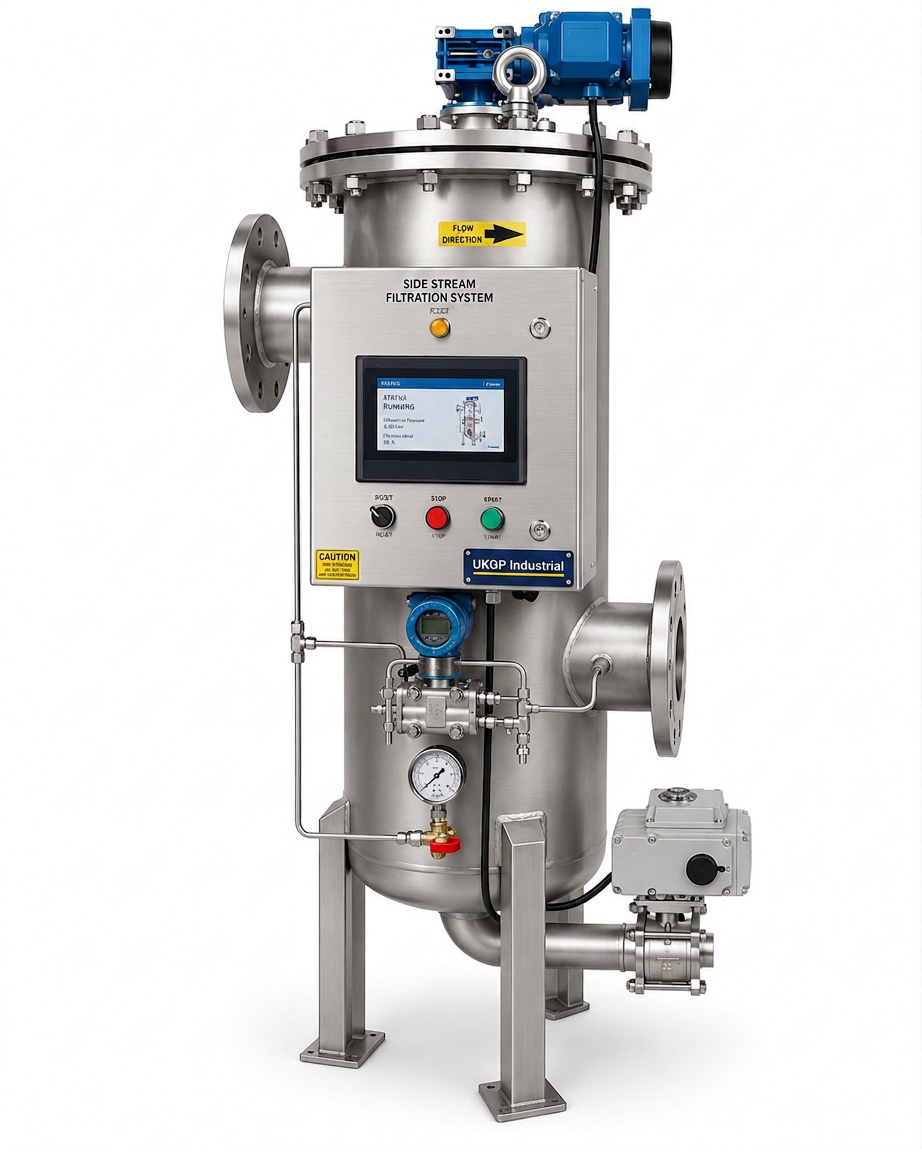
No chemical regime can be 100% effective if the system fluid is heavily contaminated with suspended solids or magnetite. High levels of particulate matter increase the 'chemical demand' of the system, as the inhibitors often bind to the debris rather than the pipe walls. Integrating side-stream filtration alongside chemical dosing is the gold standard for UK building services. By continuously removing debris down to 5 microns, the filtration system ensures that the chemicals can work at their peak efficiency.
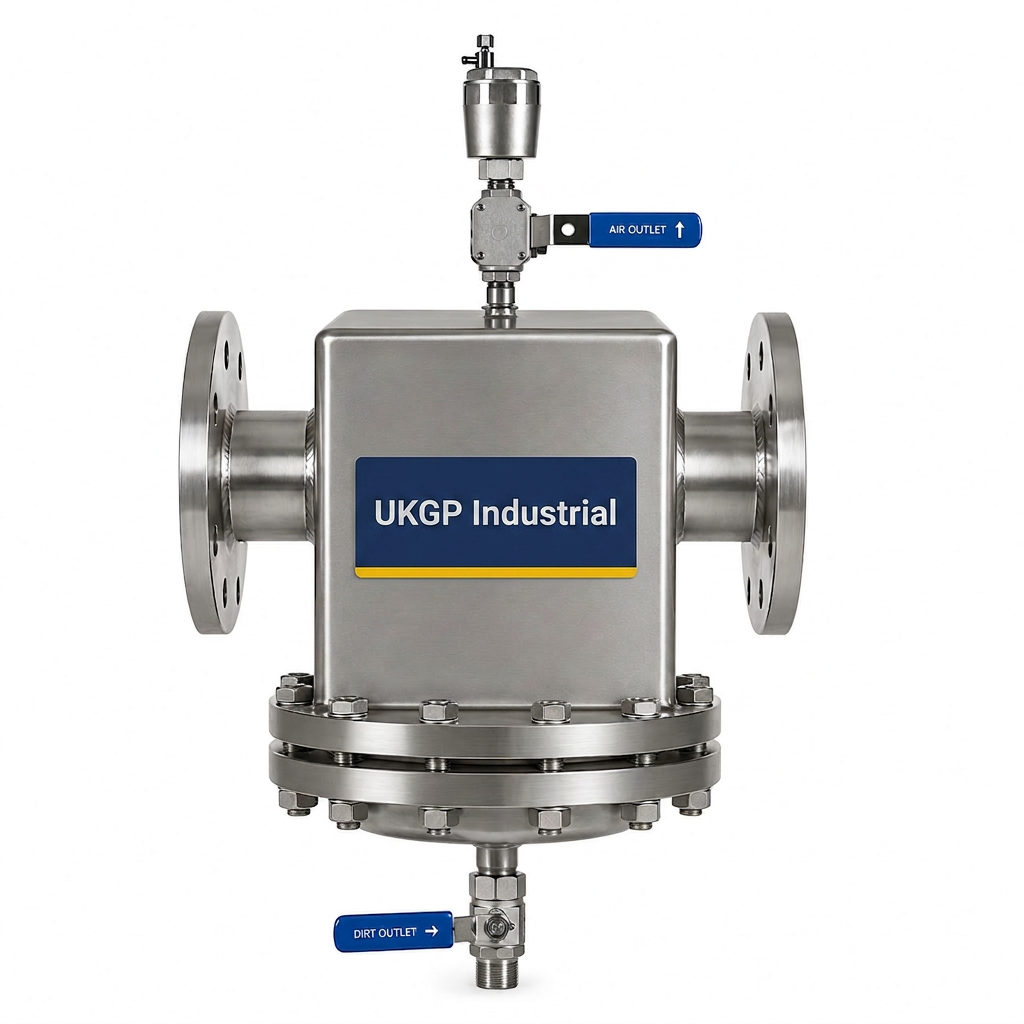
Magnetic filtration is particularly relevant for UK systems, many of which contain large volumes of carbon steel pipework. Magnetite (black iron oxide) is a byproduct of corrosion that is highly abrasive and can damage pump seals and control valves. When chemicals are introduced via a dosing pot into a system with high magnetite levels, the effectiveness of the inhibitor is compromised. A side-stream filter paired with a high-intensity magnet removes these particles, allowing the inhibitor to maintain a clean, passive surface.
Furthermore, filtration helps manage the biological load. Many biocides struggle to penetrate 'sludge' or sediment at the bottom of pipes. By keeping the system clean through mechanical filtration, the biocide can more effectively reach and neutralise free-swimming bacteria. This integrated approach—chemical treatment supported by mechanical filtration—is explicitly recommended in BSRIA BG50 as the best practice for ensuring long-term system health.
- The synergy between side-stream filtration and chemical efficacy.
- Removing magnetic and non-magnetic particulates.
- Extending the life of chemical treatments through clean water.
- Reducing the 'chemical demand' of the system.
Monitoring and Maintaining Chemical Levels
The selection of dosing chemicals is only half the battle; maintaining the correct concentration is the ongoing challenge for facilities managers (FMs). Closed loops are rarely perfectly sealed; minor leaks from pump glands, air vents, or safety valves lead to 'make-up' water being added. This fresh water dilutes the inhibitor and biocide levels. If left unchecked, the system will eventually fall below the 'minimum inhibitory concentration,' leaving it vulnerable to rapid corrosion.
Sophisticated monitoring involves regular laboratory analysis. A standard UK water treatment report will check for iron, copper, and aluminium levels, as well as pH, conductivity, and inhibitor reserves. For engineers, seeing a spike in dissolved iron—even if the inhibitor level looks acceptable—is a clear sign that the current chemical selection or dosage is failing to protect the system. Adjustments must then be made, potentially moving to a more robust chemical formulation or increasing the dosing frequency.
For large industrial sites, manual dosing via a pot might be supplemented by automated dosing systems triggered by a water meter on the make-up line. This ensures that every litre of fresh water added is automatically 'doped' with the correct proportion of inhibitor. However, even with automation, the dosing pot remains an essential manual backup and a point for 'shock' biocide treatments should a contamination event occur. All dosing equipment must comply with the Water Supply (Water Fittings) Regulations 1999 to prevent any possibility of chemicals back-flowing into the mains supply.
- Understanding the risks of over-dosing vs. under-dosing.
- The impact of fresh water make-up on chemical concentrations.
- Automatic dosing systems for large-scale industrial loops.
- Compliance with the Water Supply (Water Fittings) Regulations 1999.
Environmental and Safety Considerations
When selecting dosing chemicals, the engineer must consider the full lifecycle of the product, including its eventual disposal. Many traditional chemicals, such as high-nitrite or chromate-based inhibitors, are subject to strict environmental regulations regarding their disposal. If a system needs to be drained for maintenance, the effluent must be disposed of in accordance with local water authority guidelines. Increasingly, 'green' inhibitors with lower environmental footprints are being specified to meet BREEAM or LEED requirements.
Health and safety is paramount. All chemicals used in a plant room must have comprehensive COSHH (Control of Substances Hazardous to Health) assessments. This includes providing appropriate storage, such as bunded chemical stores, and ensuring that personnel are trained in the safe operation of dosing pots and the handling of concentrated liquids. The selection process should favour chemicals that offer the lowest hazard profile while still meeting the technical performance requirements of the system.
Finally, always consider the impact of chemicals on the wider building environment. For example, some biocides can produce odours if they leak, which might be sensitive in healthcare or high-end office settings. By choosing low-odour, stable formulations and ensuring the dosing infrastructure—like the high-quality stainless steel dosing pots provided by UKGP Industrial—is leak-free, engineers can provide a safe and effective water treatment solution that protects both the building's assets and its occupants.
- Environmental impact of chemical disposal.
- Health and Safety Data Sheets (COSHH) requirements.
- Local water authority constraints on effluent discharge.
- The trend toward 'green' and biodegradable inhibitors.
Frequently asked questions
How often should closed-loop heating systems be sampled for chemical levels?
- For new systems, treat according to BSRIA BG29/21. For existing systems, BG50/2021 recommends a minimum of annual laboratory analysis, though high-pressure or high-volume systems often require quarterly checks to maintain the validity of insurance and warranties.
Are biocides necessary in high-temperature LTHW systems?
- While biocides are standard in chilled water and LTHW systems operating below 60°C, high-temperature systems (above 80°C) are generally self-pasteurising. However, during shutdown or standby periods, temperatures can drop into the microbial growth range, making a secondary 'standby' biocide strategy necessary.
Is it better to use deionised water or mains water for system filling?
- Deionised water is increasingly preferred over 'raw' mains water for initial fills as it removes the mineral content that leads to scaling. However, DI water is aggressive; it must be immediately treated with a robust inhibitor package to prevent rapid pitting corrosion.
What are the key safety considerations when using a dosing pot?
- The UK Chemical Hazards (Designation, Advisory Process and Chemicals List) regulations require that all dosing chemicals are handled with appropriate PPE and stored in bunded areas. When using a dosing pot, always ensure the unit is isolated and drained before opening to prevent chemical splashes.