Physical Media Considerations and Fluid Dynamics
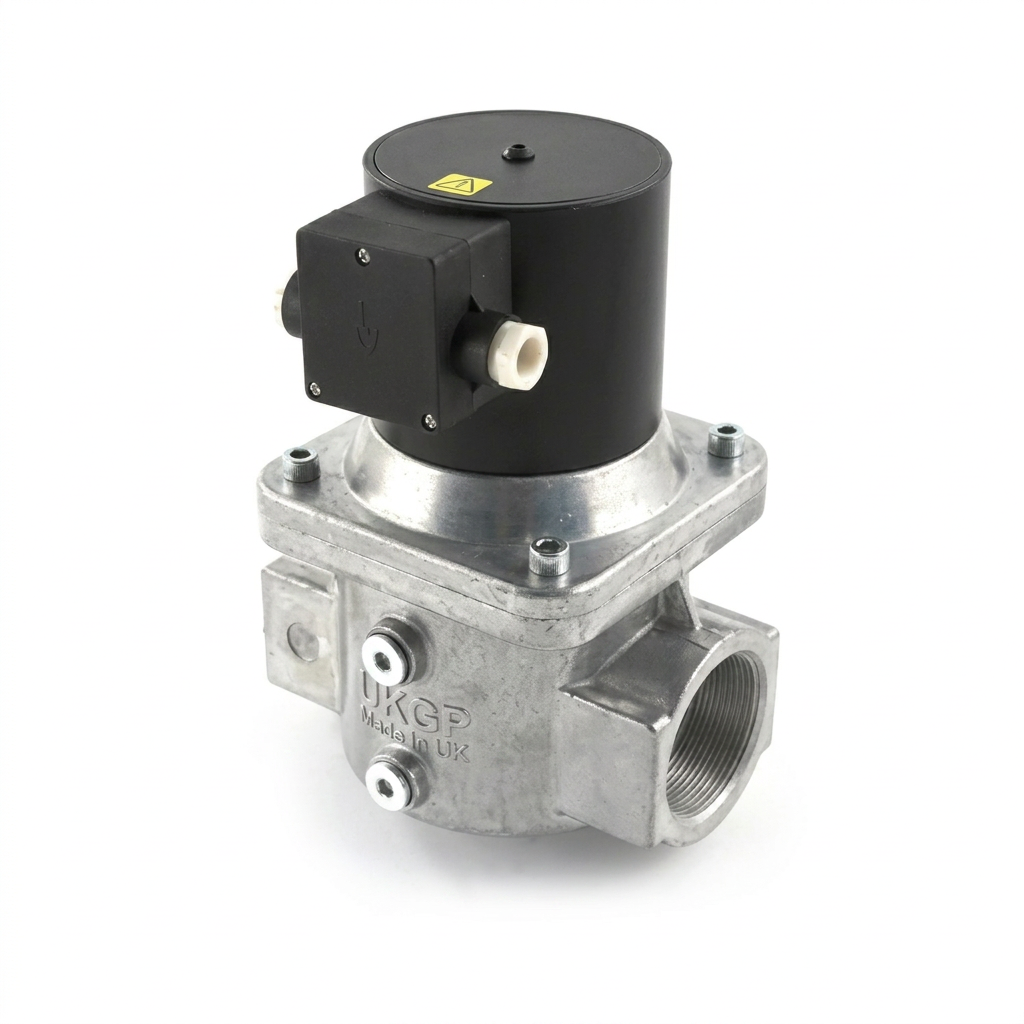
The primary difference between Natural Gas and LPG applications lies in the specific gravity of the media. Natural Gas (predominantly Methane) is lighter than air (SG approx. 0.6), whereas LPG (Propane/Butane) is heavier than air (SG approx. 1.5 to 2.0). This difference impacts the sizing calculations for solenoid valves. Because LPG is more viscous and dense, the pressure drop (Δp) across a standard valve orifice will be higher than that of Natural Gas for a given volume. However, because LPG has a higher calorific value, the required volume flow (m³/h) for a specific kW output is lower.
Engineers must ensure that the valve’s Kv value is sufficient to maintain the required burner pressure, particularly in low-pressure LPG systems where the margin for error is slim. Under IGEM/UP/2, the total allowable pressure drop from the meter to the appliance must be strictly managed; choosing a valve with an undersized orifice for an LPG line can lead to flame instability or nuisance shutdowns during peak demand.
- Density: LPG (Propane/Butane) is significantly denser than Natural Gas, requiring higher force for the same flow rate.
- Calorific Value: LPG provides more energy per cubic metre, often allowing for smaller pipe diameters but requiring precise pressure regulation.
- Phase Transition: Specialist LPG valves must handle potential liquid carryover in high-demand industrial scenarios.
Material Compatibility and EN 161 Compliance
For UK commercial installations, all solenoid valves must comply with EN 161. These are typically categorised by 'Class' and 'Group'. Class A valves, which are the industry standard for plant rooms, provide the highest level of sealing integrity. While aluminium and brass bodies are common for both gas types, the internal elastomers (seals and diaphragms) must be specifically rated. For LPG, NBR (Nitrile) or Viton seals are preferred due to their resistance to the chemical additives and heavier hydrocarbons found in LPG blends.
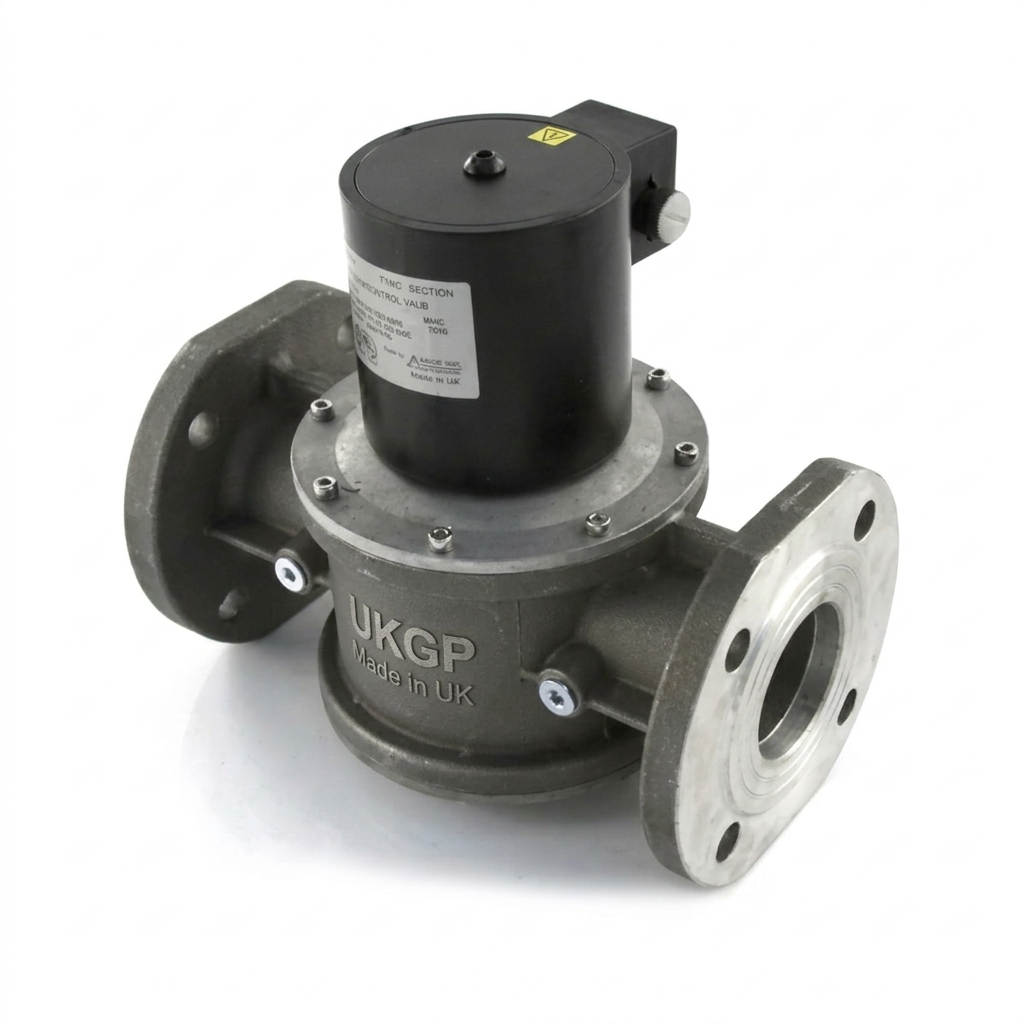
UKGP Industrial products are engineered to meet these rigorous standards, offering robust construction that handles the higher operating pressures often associated with LPG storage tanks. While Natural Gas grid pressures are typically regulated at 21 mbar for domestic or 75-100 mbar for commercial headers, LPG secondary stages may operate at higher pressures (up to 2 bar in industrial process lines) before final regulation. It is imperative that the solenoid valve's Maximum Operating Pressure (MOP) exceeds the relief valve setting of the upstream regulator.
- EN 161: The European standard for automatic shut-off valves for gas burners and appliances.
- Gas Tightness: Class A valves are required for the highest level of shut-off integrity.
- Material Integrity: Resistance to LPG contaminants like pentane and heavy ends.
Interlocking and Safety Protocols
The 'normally-closed' nature of these valves is a non-negotiable safety feature. In the event of a power failure or a signal from the Building Management System (BMS), the valve must close instantaneously to isolate the gas supply. For LPG installations, this is even more critical because, unlike Natural Gas, escaped LPG will pool at floor level or in trenches, creating a persistent explosion risk. Therefore, the solenoid valve must be interlocked with low-level gas detection sensors.
In commercial kitchens, BS 6173 dictates that the gas supply must be interlocked with the ventilation system. If the extract fan fails, the solenoid valve must isolate the gas supply. When using LPG in these environments, engineers must also account for the location of the valve relative to the storage vessel and the internal pipework. The automatic-reset function allows the gas to flow once power is restored, provided the external safety circuit (e.g., the emergency stop button) has been reset.
- BMS Integration: Standard 230V or 24V DC coils for direct PLC control.
- Interlocking: Connection to gas detection panels and fire alarms.
- Automatic Reset: Ensuring the valve remains closed upon power loss (Fail-Safe).
Installation best practices for M&E Contractors
When installing solenoid valves for LPG, contractors must ensure the valve is positioned after the final stage of regulation to avoid exposing the diaphragm to excessive pressure. Although most valves can be mounted on horizontal or vertical pipework, the 'coil-up' orientation is standard to prevent the accumulation of condensation or pipe scale within the actuator housing. For LPG systems, where 'heavy ends' or oily residues can occasionally precipitate out of the gas stream, this orientation is vital for long-term reliability.
Pre-commissioning cleaning, as outlined in BSRIA BG29/21, is often focused on water systems, but gas lines require similar diligence. Debris from threading or welding can lodge in the solenoid seat, preventing a bubble-tight seal. A fine-mesh gas filter should always be installed upstream of the solenoid valve. For LPG, this filter also serves to trap moisture that could freeze within the valve body in sub-zero ambient temperatures common in external bulk tank enclosures.
- Temperature Ratings: LPG vaporisation can lead to low temperatures; valves must be rated for -10°C to +60°C.
- Mounting Orientation: Most EN 161 valves are designed for horizontal runs with the coil upright.
- Filtration: Dust and debris must be removed to prevent damage to the valve seat.
Specifying the Correct Valve: A Summary
Choosing between an LPG and a Natural Gas solenoid valve is less about the 'type' of valve and more about the 'rating' of the valve. A high-quality EN 161 Class A valve from UKGP Industrial is typically suitable for both, provided the operating pressure and seal materials are verified. However, the engineer must perform the calculation for pressure drop based on the specific gravity of the gas in use. For LPG, ensure the MOP is at least 360 mbar or 500 mbar for standard commercial lines, or higher for industrial process applications.
Finally, always consider the environmental conditions. Plant rooms with high ambient temperatures can affect the duty cycle of the solenoid coil. High-quality valves are rated for 100% continuous duty, ensuring that the coil does not burn out during long periods of operation. Whether for a school heating system on Natural Gas or a remote industrial site on LPG, the solenoid valve remains the primary line of defence in the gas safety string.
- Voltage selection: 110V/230V AC or 12V/24V DC for specific panel requirements.
- Size range: Typically 1/2" to 2" BSP threaded or DN65 to DN200 flanged units.
- Visual Indicators: Use of LEDs or position indicators for rapid troubleshooting.
Frequently asked questions
Can I use the same solenoid valve for both LPG and Natural Gas?
- Yes, as long as the valve is certified to EN 161 and the seal material (typically NBR or Viton) is compatible with the higher aromatic content of certain LPG blends. Most UKGP Industrial gas solenoids are dual-rated for Natural Gas and LPG.
Does the gas type affect the orientation of the valve installation?
- LPG is denser than air and settles at low levels, while Natural Gas rises. This dictates the placement of gas detection sensors linked to the valve's BMS interlock, rather than the valve's physical orientation.
Are there specific filtration requirements for LPG versus Natural Gas?
- Standard solenoid valves are for 'clean' gases. If the LPG contains high levels of heavy ends or contaminants, upstream filtration is critical to prevent seat fouling, which is more common in LPG vaporisation stages.
What are the interlocking requirements for commercial kitchens using LPG?
- BS 6173 requires a manual reset or a gas proving system for commercial kitchens. The solenoid valve should be integrated with an emergency stop and, where applicable, the ventilation interlock.