Pre-Commissioning and Installation Checks
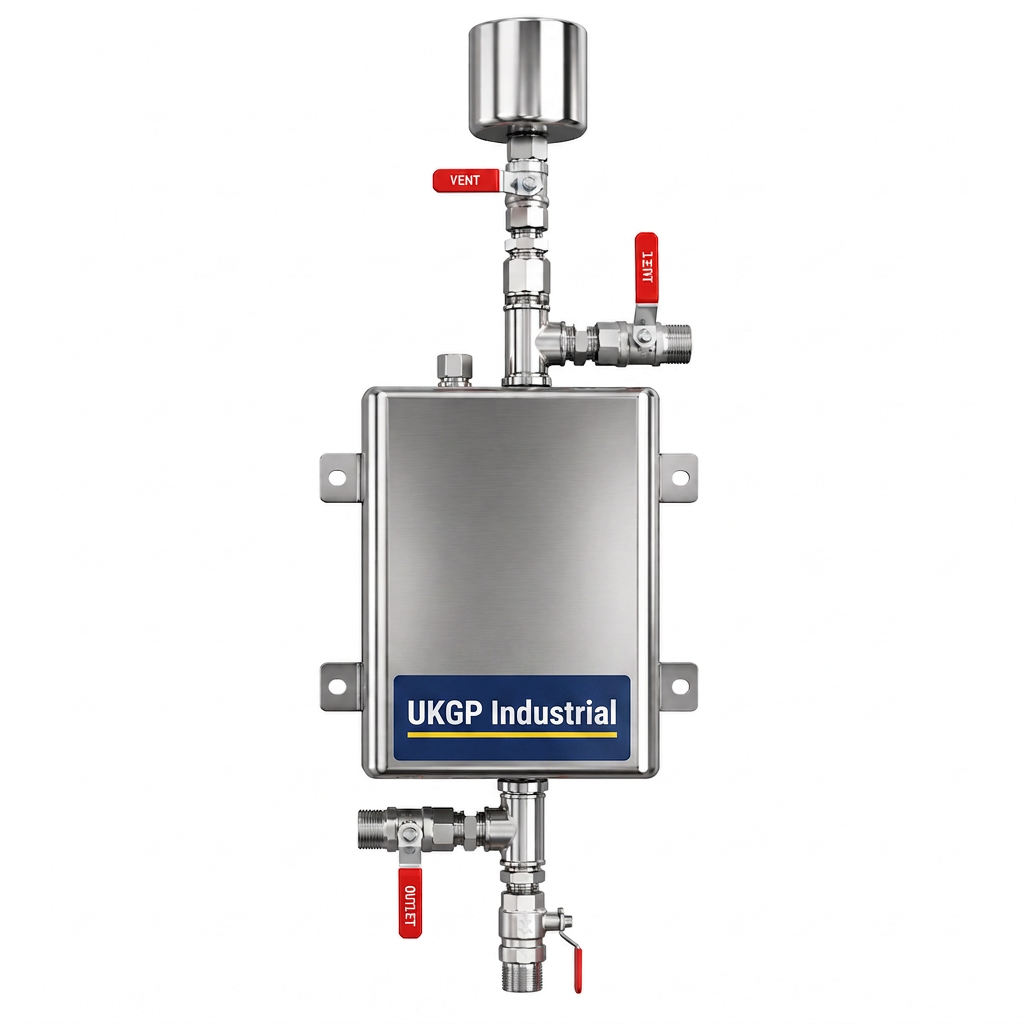
Before any flushing or dosing operation, a physical inspection of the dosing pot assembly is mandatory. In line with BSRIA BG29/21, all components must be checked for debris that may have accumulated during the construction phase. The dosing pot should be installed across the flow and return headers, or across the pump, to ensure a sufficient differential pressure exists To drive flow through the vessel. Proper installation ensures that once the valves are opened, the flow is positive and unidirectional.
UKGP Industrial dosing pots are typically supplied as complete assemblies including a tundish, non-return valve, and required isolation valves. Engineers must ensure the tundish is piped to a suitable foul drain using a high-temperature resistant discharge pipe, particularly on LTHW systems where temperatures may exceed 80°C. If the dosing pot is located in a basement or plant room below the drain level, a small pump-out set may be required to handle the flush-water.
- Verify the integrity of the 1mm stainless steel internal strainer.
- Check the operation of the air vent and safety relief valve (if fitted).
- Ensure all four isolation valves (Inlet, Outlet, Drain, Fill) are fully seated.
- Confirm the vessel is securely mounted and not suspended by its pipework.
Frequently asked questions
What is the maximum pressure rating for a standard dosing pot?
- Standard commercial dosing pots are typically rated to 10 bar or 14 bar. Always verify the PN rating on the vessel’s identification plate against the system's maximum working pressure and safety valve settings.
How often should chemicals be introduced via the dosing pot?
- BSRIA BG50 recommends weekly checks of water chemistry. Dosing frequency depends on these results, but many engineers verify inhibitor levels quarterly or after any significant water loss/make-up event.
Can I use a dosing pot for the initial fill of a 30% glycol system?
- No. For large-scale glycol requirements, a dedicated glycol feed station or pressurisation unit with a mixing tank is required. Dosing pots are for minor top-ups or corrective dosing only.
Is a stainless steel dosing pot necessary for all systems?
- Standard pots are carbon steel with a stainless steel option. If the system fluid is aggressive or if you are working in a highly corrosive environment, 316L stainless steel vessels are recommended to prevent localised pitting.