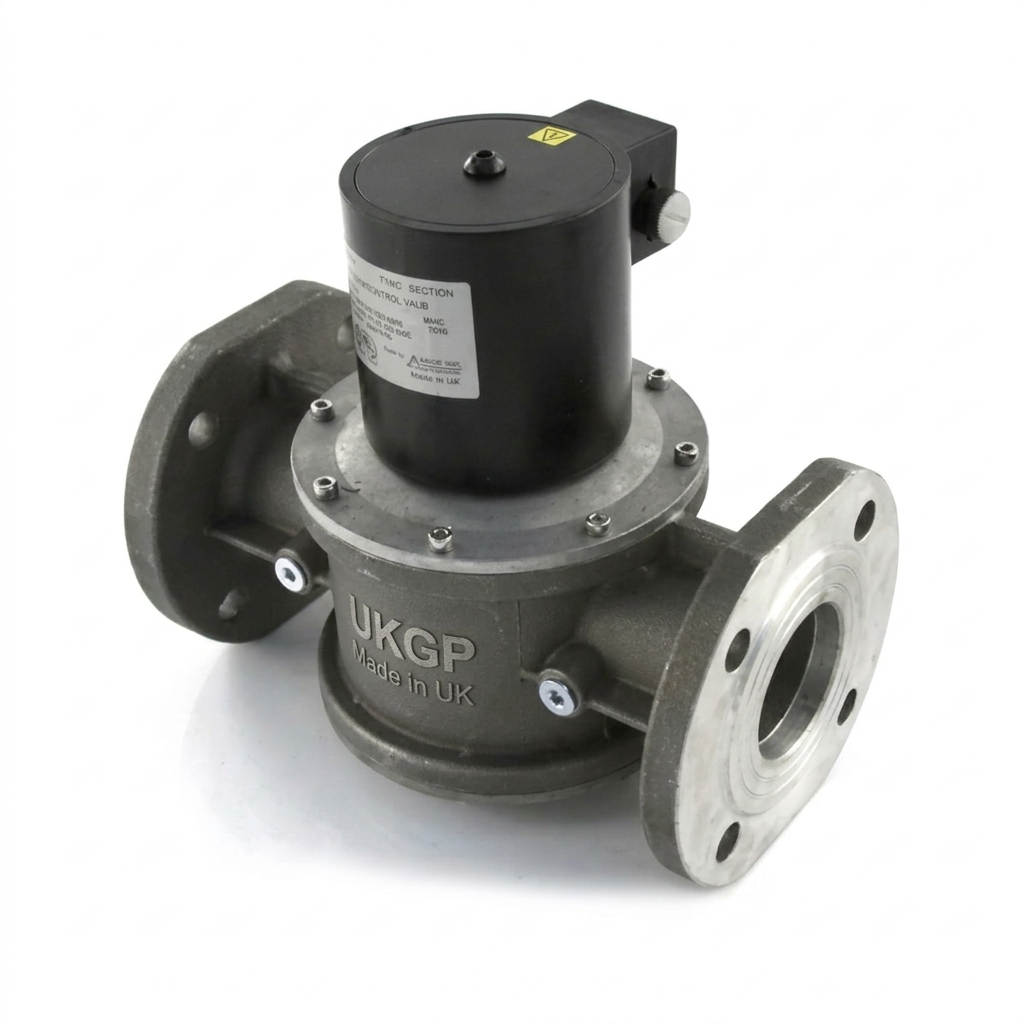
Understanding the Design Parameters
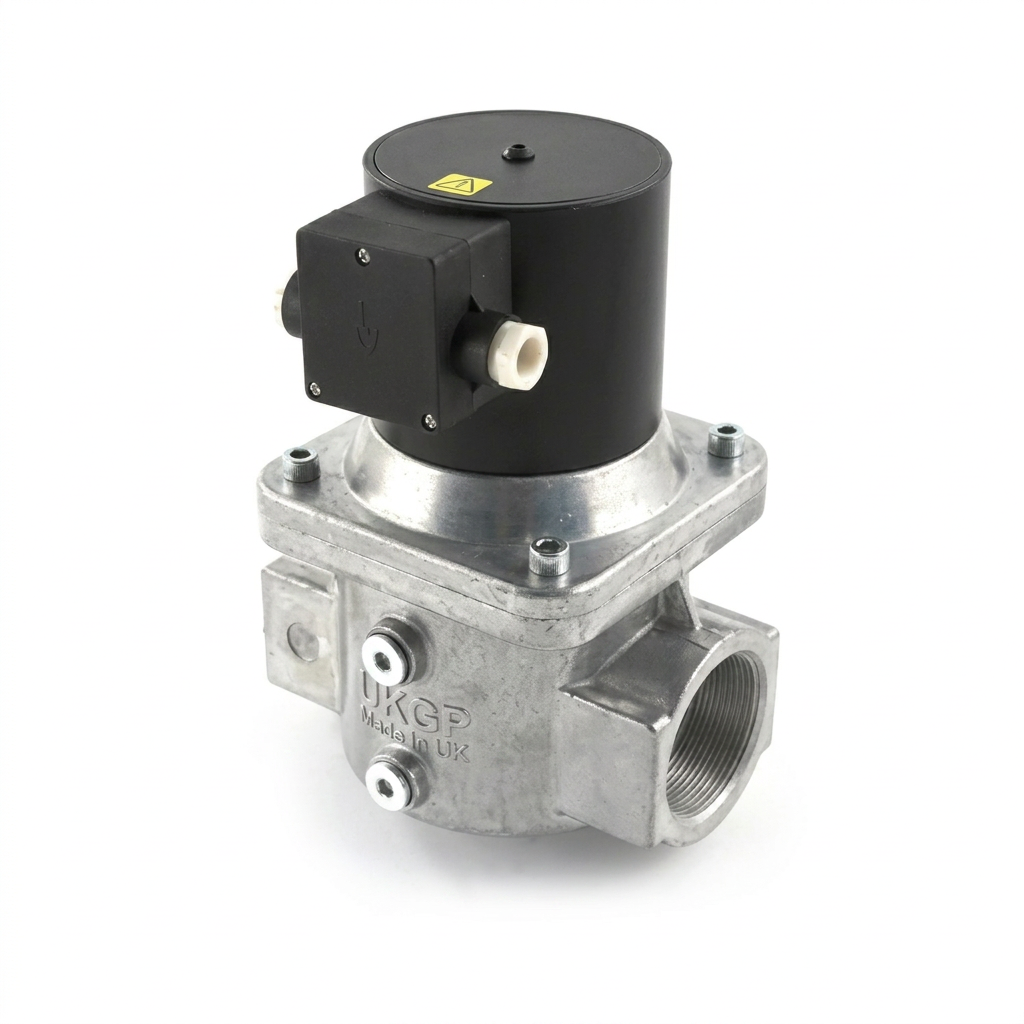
The primary role of an automatic gas shut-off valve (ASV) is to provide a fail-safe isolation of the gas supply. When sizing these components, engineers must first establish the total connected load of all downstream appliances. For commercial heating plants, this is typically calculated in kilowatts (kW) but must be converted to a volumetric flow rate (m³/h) based on the net calorific value of the fuel. For Natural Gas (G20), this is approximately 34.02 MJ/m³, meaning a 100kW load requires roughly 10.5 m³/h of gas.
Beyond the flow rate, the inlet pressure is the most significant variable. In standard UK low-pressure networks, this is often 21 mbar. However, industrial sites may operate at medium pressure (up to 7 bar). The valve must be rated for the maximum supply pressure of the system while maintaining a minimal pressure drop. A valve that is undersized will cause a significant drop in pressure, potentially starving burners of fuel during peak demand and causing 'low gas pressure' faults on the boiler control module.
- Gas type (Natural Gas, LPG, or Town Gas).
- Maximum Gas Flow Rate (m³/h) at peak load.
- Inlet Pressure (mbar).
- Permissible Pressure Drop (ΔP) across the valve.
- Pipe diameter and connection type (Threaded or Flanged).
Pressure Drop and Flow Calculations
To calculate the required flow coefficient (Kv) for a gas solenoid valve, engineers must account for the specific gravity of the gas. The Kv value represents the flow of water in m³/h with a pressure drop of 1 bar. For gas applications, we adjust this for gas density and temperature. As a rule of thumb for commercial plant rooms, the pressure drop (ΔP) across the solenoid valve should ideally not exceed 10% of the inlet pressure or 2 mbar, whichever is lower, to ensure sufficient pressure remains for the appliance regulators.
When using UKGP Industrial products, consult the flow curves provided in the technical data sheets. These curves plot flow rate against pressure drop. If a 2-inch (DN50) valve shows a 5 mbar drop at your required 60 m³/h flow, but your system tolerance only allows for 2 mbar, you must move to a DN65 or DN80 valve. Over-sizing is generally preferable to under-sizing, provided the valve still operates within its minimum flow threshold and the pipework transition is managed correctly.
Compliance with EN 161 and BS 6173
All automatic gas shut-off valves used in the UK must comply with EN 161, which governs the construction and performance of safety shut-off devices. For most commercial installations, a Class A valve is required. These are 'normally-closed' valves, meaning they are held open by an electromagnetic coil and will snap shut in less than one second if the power is cut. This fail-safe mechanism is essential for integration with fire alarms and Emergency Pipework Isolation (EPI).
In commercial catering environments, BS 6173 mandates the use of gas interlock systems. This necessitates the installation of a solenoid valve that is electrically linked to the kitchen ventilation system. If the fans are not moving sufficient air, the solenoid valve cannot be energised, preventing the accumulation of carbon monoxide and combustion by-products. Engineers should ensure that valves are 'high-duty' rated to withstand the heat and continuous energisation typical of these environments.
- Class A: High-security valves with a closing time of <1 second.
- Class B & C: Lower security ratings with longer closing times.
- Group 1: For use on appliances.
- Group 2: For use in gas lines providing safety shut-off.
Integration with BMS and Safety Systems
Modern building management systems (BMS) often require feedback from the gas safety train. While a standard automatic-reset valve will simply open when powered, many specifications require a 'Closed Position Indicator' (CPI) switch. This is a volt-free contact that provides a signal to the BMS confirming the valve is physically closed. This is particularly important in industrial processes or high-occupancy buildings where a gas leak during shutdown could be catastrophic.
Interlocking is governed by IGEM/UP/2, which details the requirements for gas installations in industrial and commercial premises. When a solenoid valve is used as part of a gas proving system, it must be sized to operate in conjunction with a downstream pressure sensor. The system will slightly open the valve to pressurise a section of pipework, then monitor for pressure decay. If sizing is incorrect, the volume of gas released during this 'proving' phase may be insufficient for the sensor to provide an accurate reading, leading to system lockout.
Installation Best Practice and Maintenance
Installation of gas solenoid valves should always follow the guidance in IGEM/UP/1A or UP/2. A critical factor often overlooked is the installation of an upstream gas filter or Y-strainer. Even small particles of swarf or pipe scale can prevent the valve from seating correctly, leading to 'let-by'—where gas continues to flow even when the valve is de-energised. According to BSRIA BG29/21, pre-commissioning cleaning is essential, but a permanent filter is the best long-term protection for the valve's elastomer seals.
Maintenance regimes, as outlined in BSRIA BG50, should include an annual 'let-by' test. This involves pressurising the upstream side of the valve and using a leak detection fluid or a pressure gauge to ensure zero gas passes through the valve in its closed state. If a valve is found to be leaking, the internals or the entire unit must be replaced; cleaning the seals is rarely a permanent or safe solution for safety-critical components. Finally, ensure the electrical supply matches the coil rating—typically 230V AC for UK commercial sites, though 24V DC is common in industrial PLC-controlled environments.
- Y-Strainers: Must be installed upstream to prevent debris from damaging the valve seat (BSRIA BG29/21).
- Orientation: Most valves must be installed horizontally with the coil upright.
- Bypass Lines: Generally prohibited for safety shut-off valves unless specifically designed for maintenance.
- Vibration: Ensure pipework is securely clipped to prevent resonance in the solenoid armature.
Selecting LPG vs Natural Gas Variants
While many solenoid valves are rated for both Natural Gas (Methane) and LPG (Propane/Butane), the sizing calculations differ significantly. LPG is much denser than Natural Gas and has a higher calorific value. Therefore, a lower volumetric flow (m³/h) is required for the same kW output, but the pressure drop across the valve will be higher for the same volume of gas due to the increased density.
When sizing for LPG, engineers must ensure the seal materials (typically NBR or Viton) are compatible with the fuel and any additives. Standard EN 161 valves from UKGP Industrial are generally suitable for both, but the pressure rating must be checked against the LPG storage tank's stage-two regulator output. Always verify that the ambient temperature range of the installation site (especially for outdoor LPG tanks) does not exceed the valve's operating limits, which is usually -15°C to +60°C.
Frequently asked questions
Is a solenoid valve mandatory in a commercial kitchen?
- Yes, BS 6173 requires an automatic gas shut-off system in any commercial kitchen where gas-fired equipment is used in conjunction with mechanical ventilation. The valve must be interlocked with the ventilation system and, in many cases, a gas proving system.
What is the maximum allowable pressure drop across a gas valve?
- Gas solenoid valves are rated by capacity (flow rate) and allowable pressure drop (ΔP). Typical design parameters aim for a pressure drop of no more than 1 to 2 mbar across the valve to ensure adequate burner pressure.
What is the difference between automatic and manual reset valves?
- Normally-closed valves require a constant electrical signal to remain open. In the event of a power failure, fire alarm activation, or gas detection trigger, the valve enters its fail-safe state (closed). Automatic-reset valves reopen once power is restored, whereas manual-reset valves (as per IGEM/UP/1A) require human intervention.
Can I install a gas solenoid valve vertically?
- Vertical installation with the coil at the bottom is generally prohibited as it allows condensate or debris to collect in the armature. Most EN 161 valves should be installed in horizontal pipework with the coil upright, though some models permit a 90-degree tilt. Always refer to the manufacturer's data sheet.