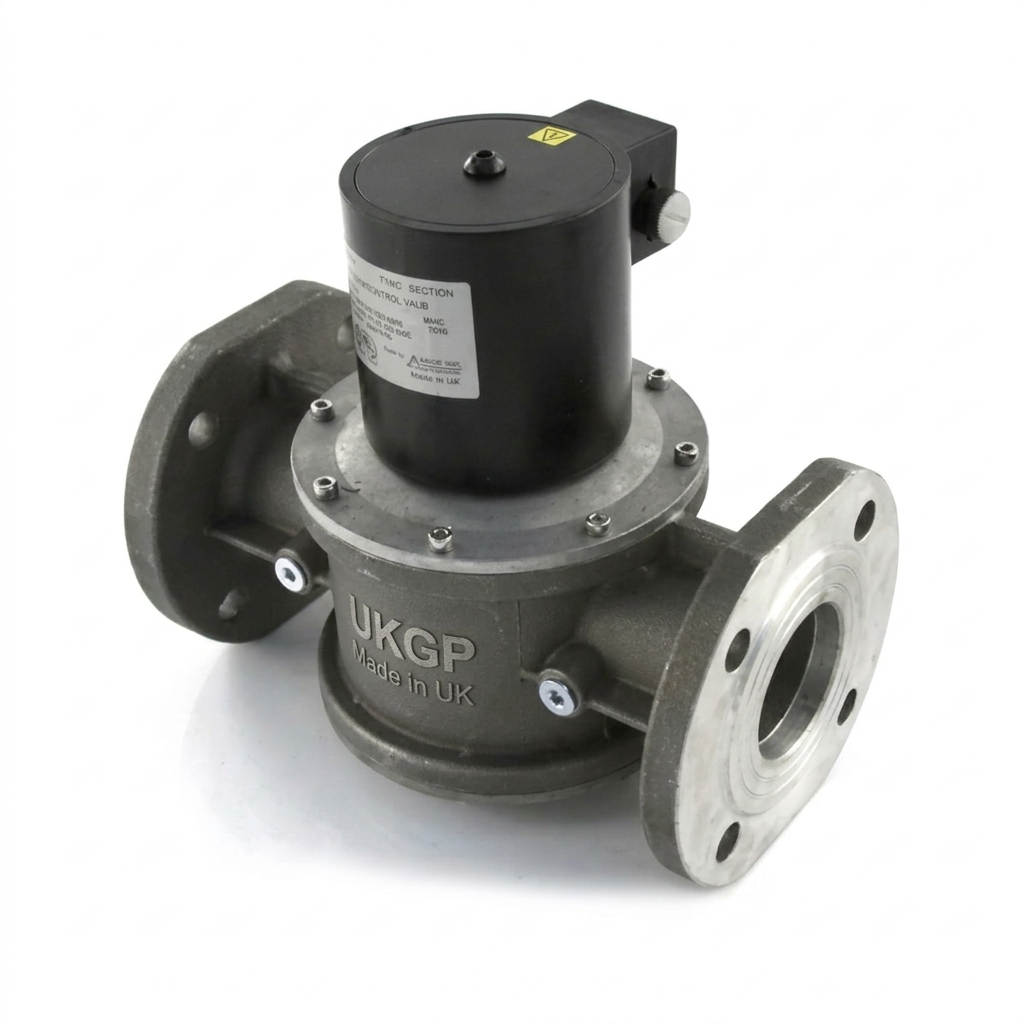
Regulatory Framework and Standards
The maintenance of gas solenoid valves is governed by the Gas Safety (Installation and Use) Regulations 1998 (GSIUR). For building services engineers, compliance isn't merely a recommendation but a statutory requirement. Solenoid valves installed in plant rooms or commercial kitchens must be CE or UKCA marked and certified to EN 161. These valves are categorized by their closing time and sealing force; Class A valves, which close in less than one second, are the standard for UK gas trains.
Inspection intervals are typically determined by the complexity of the site, but at a minimum, an annual safety check is required. In industrial environments or high-demand commercial kitchens, bi-annual inspections are recommended. Failure to document these checks can invalidate insurance and lead to HSE interventions in the event of a gas-related incident. Engineers must ensure the valve’s 'Normally Closed' (NC) function is never compromised by manual overrides or bypassed circuitry.
- IGEM/UP/2 Edition 3: Installation of gas pipework, boosters and compressors.
- BS 6173: Specification for installation and maintenance of gas-fired catering appliances.
- EN 161: Automatic shut-off valves for gas burners and gas appliances.
- BSRIA BG29 & BG50: Guidelines on water treatment and asset maintenance (relevant for indirect systems).
Routine Inspection Protocols
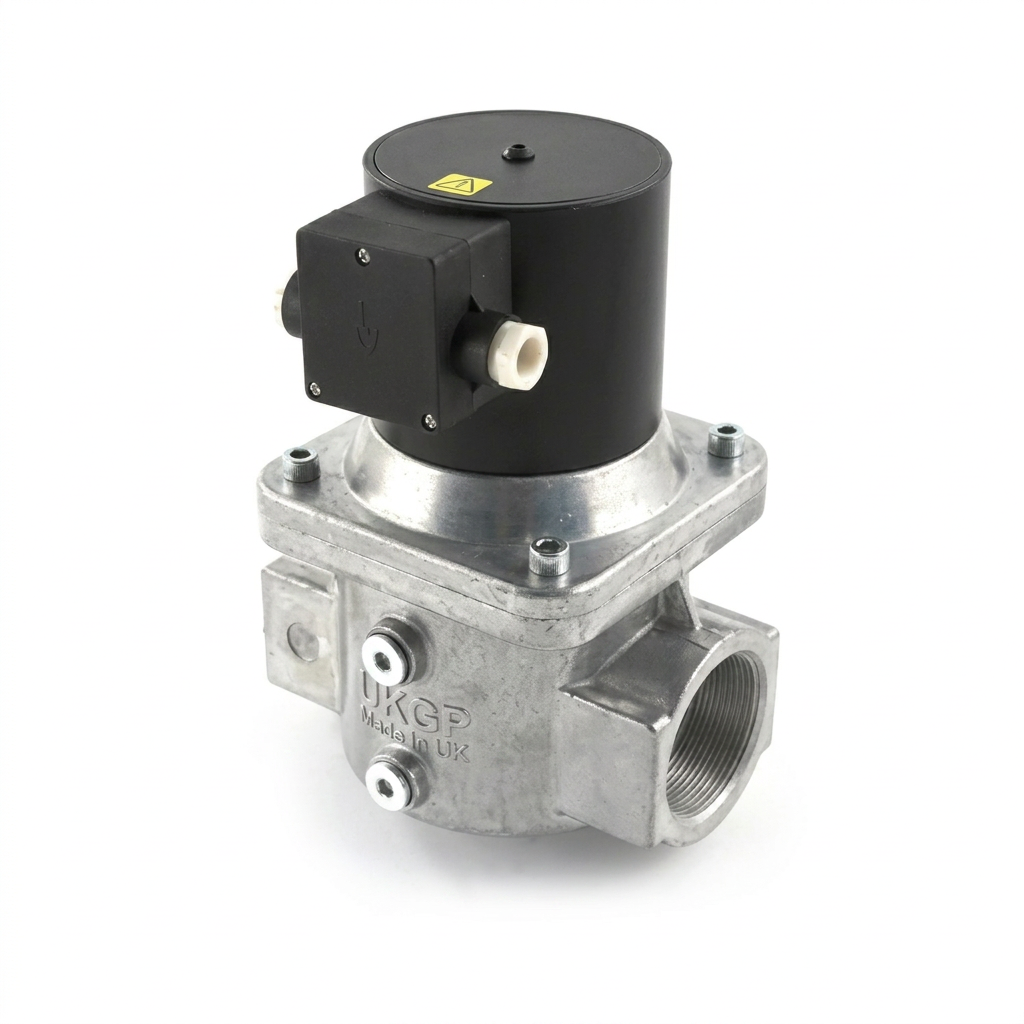
A routine inspection begins with a visual assessment. The valve body (often die-cast aluminium or brass) should be free from oxidation, which can be prevalent in damp plant rooms or kitchens with high humidity. Electrical connections must be checked for tightness; loose terminals are a primary cause of coil burnout due to arcing and increased resistance. Control cables should be screened and separated from high-voltage mains to prevent EMF interference with the BMS logic.
The solenoid coil is the most common failure point. During inspection, use an infrared thermometer to measure the coil surface temperature. While coils are designed to run warm, excessive heat (exceeding 85°C) suggests a voltage fluctuation or an impending insulation breakdown. If the valve is 'humming' or vibrating, this usually indicates debris in the magnetic core or a failing shading ring, necessitating immediate replacement of the actuator or the entire valve assembly.
- Visual check for corrosion on the valve body and electrical housing.
- Verification of the coil voltage (typically 230V AC or 24V DC).
- Inspection of the 'O' rings and seals for signs of thermal degradation.
- Testing the manual reset mechanism (if applicable) or automatic reset function.
The Importance of Gas Filtration
One of the most frequent causes of solenoid valve failure is the ingress of pipe scale, welding slag, or dust. These particulates can lodge between the valve seat and the nitrile rubber seal, preventing a 'bubble-tight' shut-off. This results in 'passing,' where gas leaks downstream even when the valve is de-energised. To prevent this, a gas filter must be installed upstream of the solenoid valve in accordance with IGEM/UP/1.
Maintenance should always include the cleaning of the internal mesh filter. If the system lacks an external gas filter, the technician must inspect the integral fine-mesh filter located at the valve inlet. When replacing seals or cleaning internal components, engineers must use gas-approved grease and ensure that no lint or fibres from cleaning cloths remain inside the valve body, as these can cause micro-leaks.
Functional Testing and Leak Detection
Functional testing must simulate a real-world shutdown. This involves triggering the emergency stop button, the gas detection panel, or the fire alarm interlock to ensure the valve closes immediately. The BMS should receive a 'closed' confirmation signal (if the valve is equipped with a closed-position indicator switch). Engineers must verify that the valve does not automatically reopen when the alarm is cleared unless it is a 'Manual Reset' model, which is often preferred for safety in commercial kitchens.
Internal leak testing (let-by testing) is critical. Significant passing can lead to a build-up of gas in the combustion chamber of boilers or burners, causing an explosion on ignition. Using a digital manometer, the engineer should pressurize the section up to the valve and monitor for pressure decay. Any measurable drop indicates that the internal seat is damaged or fouled. In such cases, the valve should be stripped for cleaning or, more commonly, replaced to ensure site safety.
- Isolation of the downstream pipework to create a 'test volume'.
- Observation of the pressure gauge (manometer) for any drop over a 2-minute period.
- Application of leak detection fluid to all external joints and the valve stem.
- Verification of the 'Let-By' tolerance as defined in IGEM/UP/1B.
Common Failure Modes and Troubleshooting
When a gas solenoid valve fails to open, the first check should be the continuity of the solenoid coil. An open-circuit reading on a multimeter confirms the coil has failed. However, if the coil is energized and the valve remains shut, the internal plunger may be stuck due to gumming from heavy hydrocarbons in the gas supply (more common with LPG). In these instances, cleaning the internal plunger tube is necessary, though for smaller valves, unit replacement is more cost-effective.
Conversely, if a valve 'chatters' or cycles rapidly, it is usually a control issue rather than a mechanical failure. This often stems from a gas pressure switch that is set too close to the operating pressure or a fluctuating signal from the BMS. Rapid cycling will lead to premature failure of the valve seat and the coil. Engineers should check the pressure settings and ensure the BMS has a sufficient hysteresis or time-delay programmed into the gas safety logic.
- The valve remains closed when energized: Suspect a burnt-out coil or insufficient voltage.
- The valve fails to close: Suspect physical debris or a bypassed electrical circuit.
- Rapid cycling (chatter): Often caused by a faulty gas pressure switch or a loose BMS relay.
Spares and Component Replacement
For critical infrastructure, stocking essential spares is vital. Solenoid coils are the most frequently replaced component and are usually interchangeable without breaking the gas seal, allowing for rapid repair without a full gas tightness test. However, if the valve body itself must be opened to replace a diaphragm or spring, a full 'Tightness Test' to IGEM/UP/1 or UP/1B must be performed before the system is commissioned back into service.
When replacing an entire valve, ensure the new unit matches the flow coefficient (Kv) of the original. Installing a valve that is undersized will cause a significant pressure drop, leading to 'no-flame' errors on high-output boilers. UKGP Industrial solenoid valves are designed with high-flow orifices to minimize this risk, but engineers must always verify the flow rate against the appliance's maximum kW rating to ensure optimal performance.
- Replacement of the solenoid coil (plug-and-play on UKGP Industrial models).
- Replacement of the internal spring and plunger assembly.
- Installation of a Closed Position Indicator (CPI) switch for upgraded BMS monitoring.
Frequently asked questions
Can a general maintenance technician service a gas solenoid valve?
- No. Under the Gas Safety (Installation and Use) Regulations 1998, working on a commercial gas train requires a Gas Safe registered engineer with the appropriate 'COCN1' or 'ICPN1' qualification. Maintenance by non-qualified personnel is a breach of HSE regulations.
What is the significance of an EN 161 Class A rating?
- EN 161 Class A valves are mandated for high-integrity applications. They must be able to shut off within 1 second and maintain bubble-tight shut-off against the maximum rated pressure. UKGP Industrial units are typically Class A to ensure full compliance with IGEM/UP/2.
How do I identify a 'passing' gas valve?
- External leaks are usually found at the inlet/outlet flanges or the 1/4" NPT pressure test points. Internal passing (let-by) is more critical and must be confirmed using a pressure drop test or an electronic leak detector at the valve downstream port.
Why do solenoid coils frequently burn out in my installation?
- Standard solenoid valves are not designed for 100% duty cycle for months on end; the coil will eventually overhead and fail open-circuit. If the system is frequently stagnant, consider installing a time-controlled shut-off or ensuring the BMS manages the valve run-time.