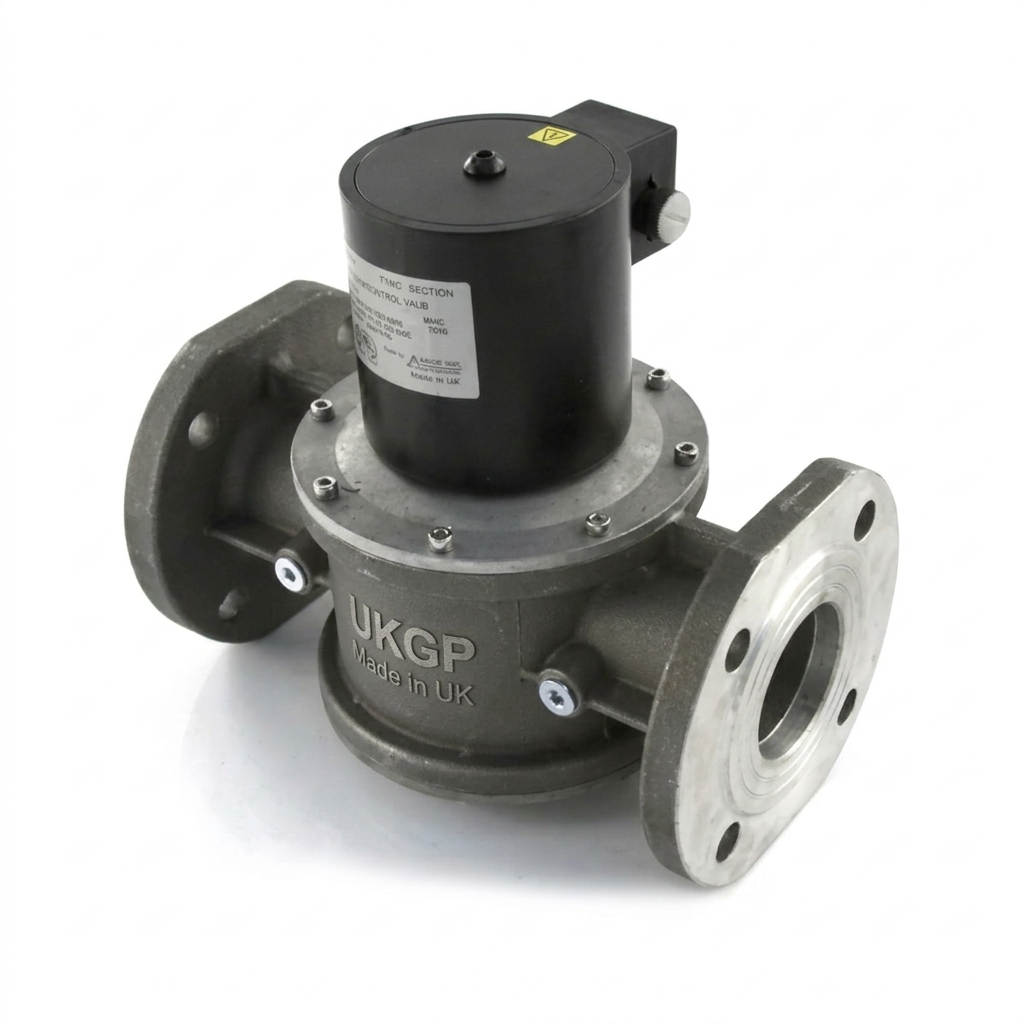
Functional Requirements and Regulatory Compliance
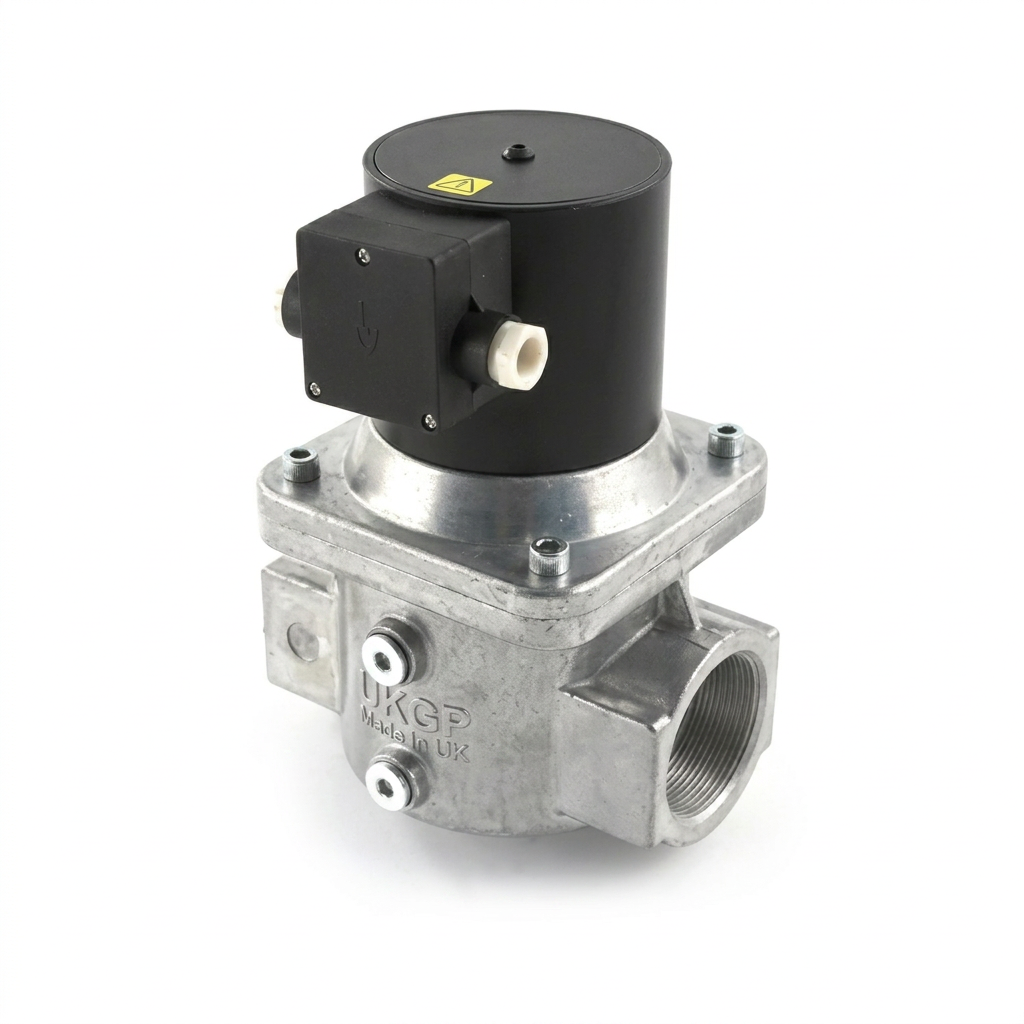
The primary function of an automatic gas shut-off valve is to provide rapid, failsafe isolation of the gas supply. In the UK, the design and application of these valves are governed by several key standards, most notably EN 161. This standard classifies valves based on their closing time and ability to withstand internal pressure. For most commercial boiler room applications, a Class A valve is mandatory, providing the highest level of shut-off integrity.
Beyond EN 161, the Gas Safety (Installation and Use) Regulations 1998 (GSIUR) mandate that gas installations must be safe and maintained in a safe condition. For engineers, this means that any solenoid valve integrated into a burner's safety chain or a building's emergency shutdown system must be robust enough to handle the maximum inlet pressure of the local network without failing or leaking.
Normally-closed (NC) valves are the industry standard because they require a continuous electrical signal to remain open. Should there be a power cut, a tripped circuit, or an intentional break in the circuit via a safety interlock, the magnetic field disappears, and an internal spring forces the valve seat closed. This 'fail-to-safe' logic is fundamental to modern fire safety and gas protection strategies.
- Compliance with EN 161 (Automatic shut-off valves for gas burners and gas appliances).
- Designation as 'Normally Closed' (NC) for fail-safe operation.
- Classification as 'Class A' for high-performance sealing and rapid closure.
- Suitability for varying pressures (typically up to 200mbar or 360mbar for low-pressure systems).
Frequently asked questions
What does 'Normally Closed' mean in the context of gas safety?
- A 'Normally Closed' valve is held shut by spring tension and only opens when the internal coil is energised. In the event of a power failure, fire alarm activation, or gas detection signal, the EMF is lost and the valve closes immediately, ensuring fail-safe isolation of the plant.
Is a solenoid valve mandatory for all boiler rooms?
- Under BS 6173 and IGEM/UP/19, any boiler room featuring equipment that does not have flame supervision (though rare in modern plant) or where there is no mechanical ventilation interlocking requires an automatic isolation valve. It is also standard practice for any plant room where a Gas Detection System is installed.
What is the difference between a Class A and Class B valve?
- Class A valves, as defined by EN 161, are required for the majority of industrial and commercial gas lines. These valves must be able to close in less than one second when power is removed and must meet stringent internal leakage and robustness standards.
Can I use the same solenoid valve for Natural Gas and LPG?
- Yes, but you must ensure the valve is specifically rated for LPG. LPG (Propane/Butane) has different density and chemical properties compared to Natural Gas. UKGP Industrial solenoid valves are typically dual-rated, but always verify the technical datasheet for specific gravity compatibility.
How often should a gas solenoid valve be replaced?
- While the solenoid coil itself can often be replaced if it burns out, the valve body and internal seals should be inspected annually. If the valve fails a leak test or shows signs of mechanical fatigue, the entire unit should be replaced to ensure compliance with Gas Safety (Installation and Use) Regulations.