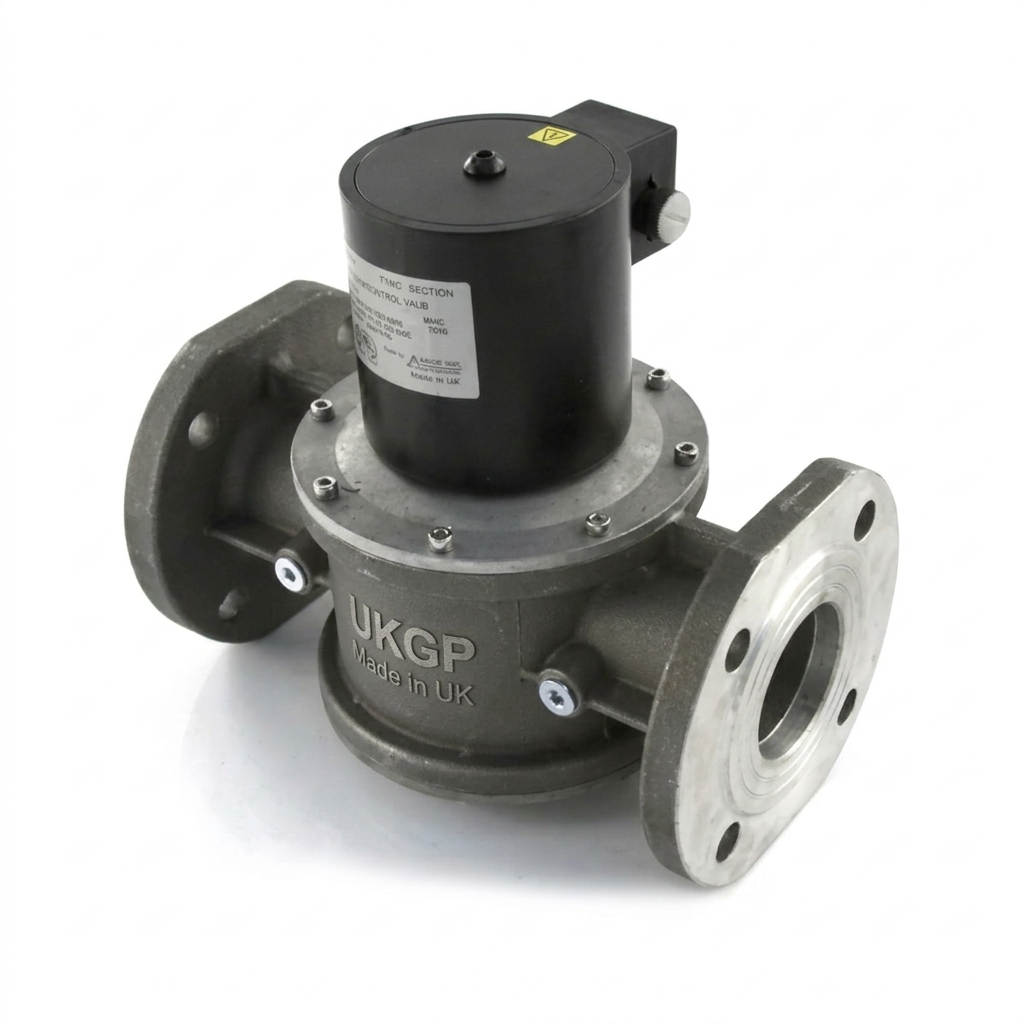
Regulatory Framework and Standards Compliance
The installation of gas shut-off valves in the UK is governed by several key pieces of legislation and industry guidance. Foremost are the Gas Safety (Installation and Use) Regulations 1998, which mandate the provision of an emergency control valve. For commercial catering environments, BS 6173 requires an interlocking system that prevents the gas supply from opening unless the ventilation system is operational. Furthermore, IGEM/UP/2 (Edition 3) provides the technical standard for gas installations in industrial and commercial premises, emphasizing the need for automatic isolation in response to abnormal conditions.
Valves used in these systems must conform to EN 161. This European Standard classifies valves based on their sealing force and closure speed. For emergency shut-off applications, a Class A valve is the industry standard, ensuring the valve can withstand high differential pressures while maintaining a bubble-tight seal. Engineers must verify that the valve selected is rated for the maximum supply pressure (MOP) of the gas train, typically ranging from 200 mbar to 6 bar depending on the service pipework.
- Compliance with EN 161 (Class A) for automatic shut-off.
- Requirement for 'normally closed' operation to ensure fail-safe performance.
- Rapid closure times, typically under one second.
- Compatibility with Natural Gas, LPG, and increasingly, Hydrogen-blend gases.
Emergency Shut-off System (ESS) Integration
A gas solenoid valve does not operate in isolation; it is the actuator for a wider protective network. In modern plant rooms, the valve is typically interlocked with a fire alarm interface or a dedicated Emergency Stop circuit. When a fire signal is received, the 230V or 24V supply to the solenoid coil is interrupted, allowing the internal spring to force the valve closed instantaneously. This 'fail-safe' logic ensures that even in a total power loss, the gas supply is isolated.
Advanced installations often incorporate gas detection panels and oxygen depletion sensors. In these scenarios, the gas solenoid valve acts as the final element of a safety instrumented system. For larger installations, it is best practice to include a Gas Proving System. This system performs a tightness test on the downstream pipework before allowing the solenoid valve to open, ensuring that no open gas taps or leaks exist that could lead to an explosion upon restoration of the supply.
- Interlocking with thermal links and glass-break units.
- Integration with Gas Proving Systems to ensure downstream integrity before reset.
- Detection of carbon monoxide (CO) or combustible gas leaks.
Mechanical Installation and Sizing Requirements
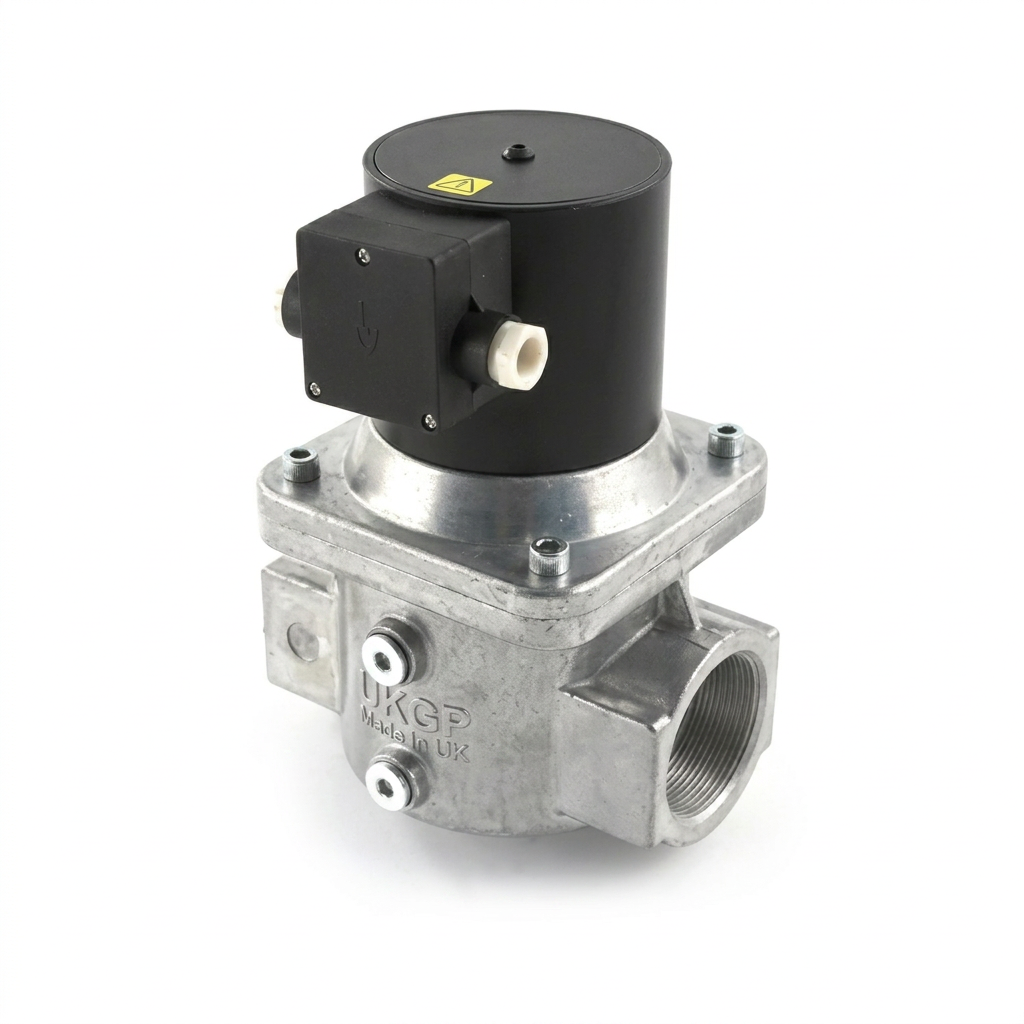
Sizing a gas solenoid valve requires more than simply matching the pipe diameter. Engineers must account for the pressure drop (ΔP) across the valve to ensure sufficient terminal pressure at the burner. UKGP Industrial valves are typically chosen based on flow rate (m³/h) and minimum/maximum operating pressures. An oversized valve can lead to poor control, while an undersized valve will restrict burner output and potentially cause flame instability.
Mounting position is equally critical. While many solenoid valves can be mounted on horizontal or vertical pipework, the coil must never be positioned below the horizontal axis to prevent the accumulation of condensate or debris in the plunger tube. Furthermore, a gas filter should always be installed upstream of the valve (complying with IGEM/UP/2) to protect the elastomer seals from grit and scale, which are the leading causes of valve 'let-by' and failure to seal.
- Upstream filtration to prevent debris-related let-by.
- Correct orientation (typically vertical or horizontal as specified).
- Eliminating the risk of 'water hammer' or pressure surges in gas lines.
Electrical Control and BMS Interfacing
The electrical specification of the solenoid coil must align with the site’s control architecture. While 230V AC is standard for most UK commercial boiler rooms, 24V DC is frequently specified in industrial process environments where SELV (Safety Extra Low Voltage) circuits are preferred. Regardless of voltage, the coil must be rated for 100% continuous duty, as it may remain energized for months at a time during standard operation.
Integration with a Building Management System (BMS) allows for remote monitoring and fault diagnosis. By utilizing valves equipped with closed-position indicator switches (CPI), the BMS can verify if the valve has physically closed following a shut-down command. This feedback loop is essential for high-integrity systems where the 'Safe State' must be confirmed before other plant operations, such as extraction fan shut-down, are initiated.
- BMS monitoring of valve status (Open/Closed).
- Selection of coil voltages: 230VAC for plant rooms, 24VDC for process control.
- Overcoming thermal expansion and coil burnout.
Maintenance, Testing and Operational Longevity
Regular maintenance is a statutory requirement under the Management of Health and Safety at Work Regulations 1999. For gas solenoid valves, this involves both functional and integrity testing. A 'let-by' test should be conducted annually; this involves pressurising the upstream side of the closed valve and using a manometer or leak detection fluid to ensure no gas is passing the seat. If a valve fails this test, the internal seals or the entire unit must be replaced; cleaning the seat is rarely a permanent solution for Class A compliance.
The lifespan of a gas solenoid valve is often determined by the environment and the frequency of operation. In high-temperature plant rooms, coil insulation can degrade over time. Engineers should specify valves with high-grade (Class F or H) insulation for longevity. Furthermore, ensuring the valve is housed in an appropriately rated enclosure (IP65 for damp environments) will prevent ingress-related failures. Documenting these checks in the plant room logbook ensures compliance with BSRIA BG50 guidelines for water and gas system maintenance.
- Annual tightness testing according to IGEM/UP/1 series.
- Visual inspection for external corrosion or heat damage to the coil.
- Operational 'trip' testing during fire alarm drills.
Conclusion: Selecting the Right Valve for the Application
Specifying a gas solenoid valve for an emergency shut-off system is a critical task that bridges mechanical flow requirements and electrical safety logic. By adhering to EN 161 and IGEM/UP/2, and by ensuring robust integration with the building's wider safety systems, engineers can mitigate the risks associated with gas leaks and fire. UKGP Industrial's range of automatic reset valves provides the reliability required for these demanding applications, ensuring that when the system calls for isolation, it happens without fail.
Ultimately, the success of an ESS depends on the quality of its components and the rigour of its installation. Professional building services engineers should always prioritize Class A equipment, ensure adequate upstream filtration, and implement a regular testing regime to protect both the building's occupants and its infrastructure.
- High flow coefficient (Kv) for minimal pressure loss.
- Robust die-cast aluminium or brass construction.
- Rapid response times and high-grade NBR seals.
Frequently asked questions
Is it mandatory to have a gas solenoid valve in a commercial plant room?
- The Gas Safety (Installation and Use) Regulations 1998 require gas supplies to be automatically isolated in specific high-risk scenarios, such as commercial kitchens (BS 6173) or where a plant room exceeds a certain thermal output, often triggered by fire alarms or gas detection systems.
What is a Class A gas solenoid valve?
- Class A valves, as defined by EN 161, are high-safety shut-off valves designed to close in less than one second when power is removed. They must provide a bubble-tight seal against the maximum rated inlet pressure.
Should I specify normally open or normally closed valves?
- Normally closed (NC) is the standard for safety systems. In the event of a power failure or fire alarm activation, the valve loses power and the internal spring force drives the valve closed, ensuring a 'fail-safe' condition. Outdated 'latch-open' manual reset valves are less common in modern BMS-integrated systems where automatic reset is preferred for operational continuity.
How often should gas solenoid valves be serviced?
- BSRIA BG29/21 and BG50 advise that while the valve bodies themselves are robust, upstream filtration is critical. External debris can prevent the valve from seating correctly, leading to 'let-by' which is a significant safety failure. Annual testing for tightness and response time is essential.