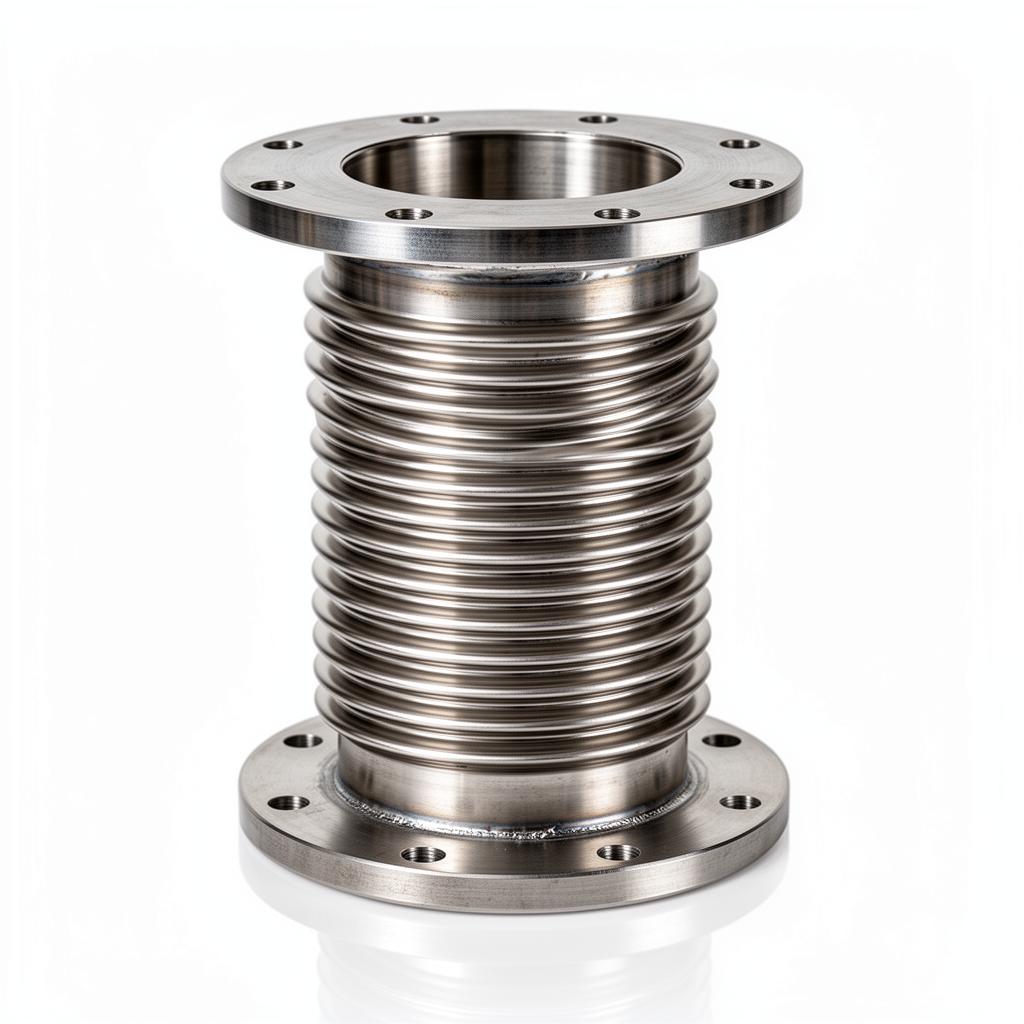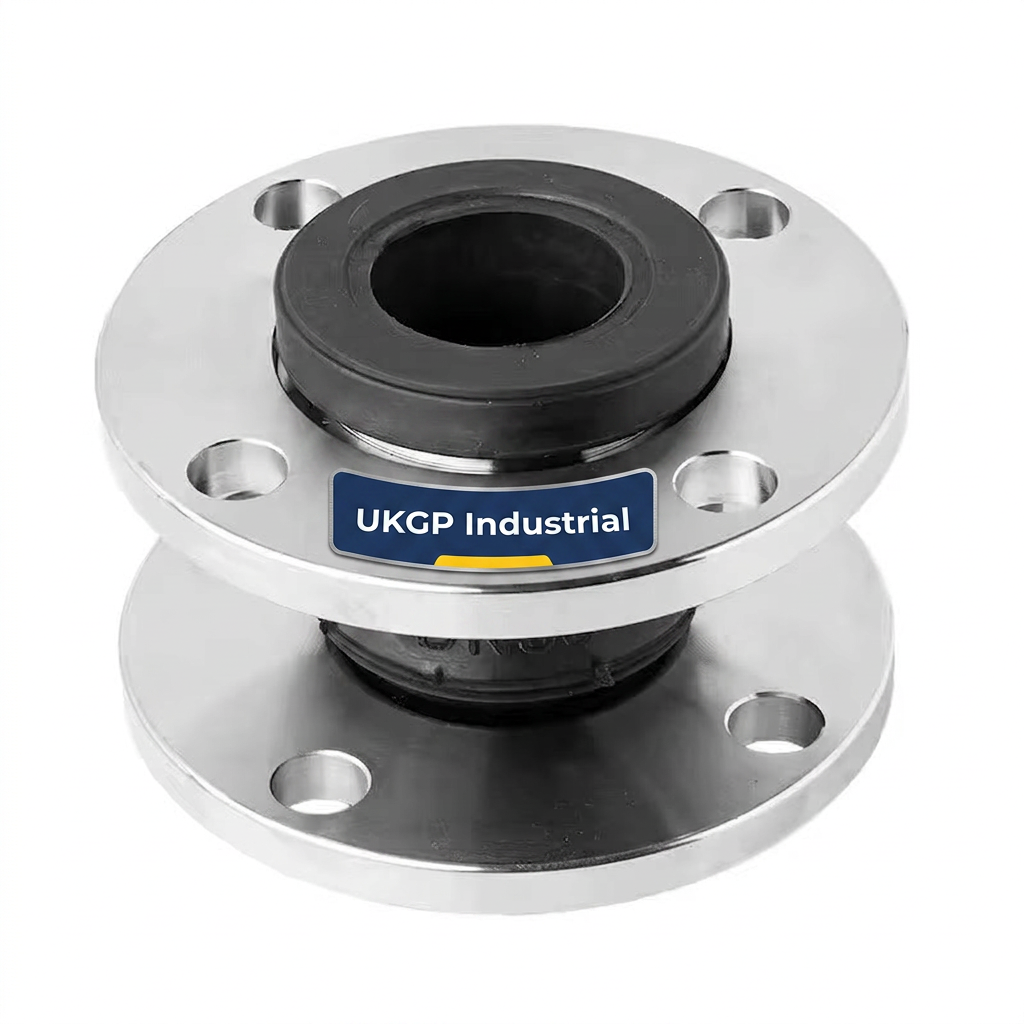
Identifying Convolution Deformation and Squirm
One of the most frequent issues encountered during site inspections is 'squirm'—a gross instability of the bellows convolutions. This typically manifests as a permanent deformation where the bellows appears to buckle or tilt. Under EN 14917 standards, bellows are rated for a specific pressure-to-stability ratio. If the system pressure exceeds the internal stability limit, the convolutions will no longer remain coaxial. This is often a symptom of inadequate guiding; if the pipework is not supported by a minimum of two primary guides on either side of the expansion joint (as per EJMA guidelines), the bellows cannot move in a purely axial fashion.
Deformation is also frequently caused by the failure of main anchors. In a pressurized system, an expansion joint creates a 'pressure thrust' force equal to the internal pressure multiplied by the mean area of the bellows. If a main anchor fails or moves even slightly, this force will drive the bellows to its fully extended position, often tearing the convolutions or bending the tie-bars. When troubleshooting a distorted bellows, the first point of inspection must always be the integrity of the nearest fixed points and the spacing of the intermediate guides.
- Excessive main anchor movement or failure.
- System pressure exceeding the design limit (surge/water hammer).
- Lack of effective guiding, allowing the pipe to 'squirm'.
- Incorrect installation length (pre-stretching or over-compressing beyond design).
Frequently asked questions
Can expansion bellows be used to compensate for poor pipework alignment?
- No. While they can absorb minor misalignments, their primary function is to manage thermal expansion. Using them to bridge significant gaps introduces torsional stress and pre-loading that will lead to premature failure. Piping must be accurately aligned before installation.
How can I tell if a bellows has reached its design limit in situ?
- Check for 'shiny' spots on the convolution peaks, which indicates contact with the internal liner or external shroud. Check the tie-bar nuts; if they are tight against the lugs during operation, the bellows has reached its limit and the pipework is likely under-expanded.
Does chemical flushing affect the lifespan of rubber bellows?
- Under BSRIA BG29/21, chemical cleaning (flushing) is essential. However, high concentrations of biocides or acids can attack EPDM or stainless steel if not correctly neutralised. Always ensure bellows are rated for the flushing velocity and chemical composition.
What causes pinhole leaks in stainless steel bellows?
- Stainless steel bellows are susceptible to Stress Corrosion Cracking (SCC) if chlorides are present in the fluid or the external environment. In coastal areas or certain industrial sites, Grade 316L is preferred over 304, or specialist alloys may be required.