Fundamental Principles of Thermal Expansion
All metallic piping materials expand when heated and contract when cooled. In a typical UK commercial HVAC environment, a 50-metre run of carbon steel pipe operating at 82°C (typical LTHW flow) will expand by approximately 45mm from an ambient installation temperature of 10°C. If this movement is constrained, the resulting compressive stress can exceed the yield strength of the pipe or exert several tonnes of force on connected plant such as chillers or boilers.
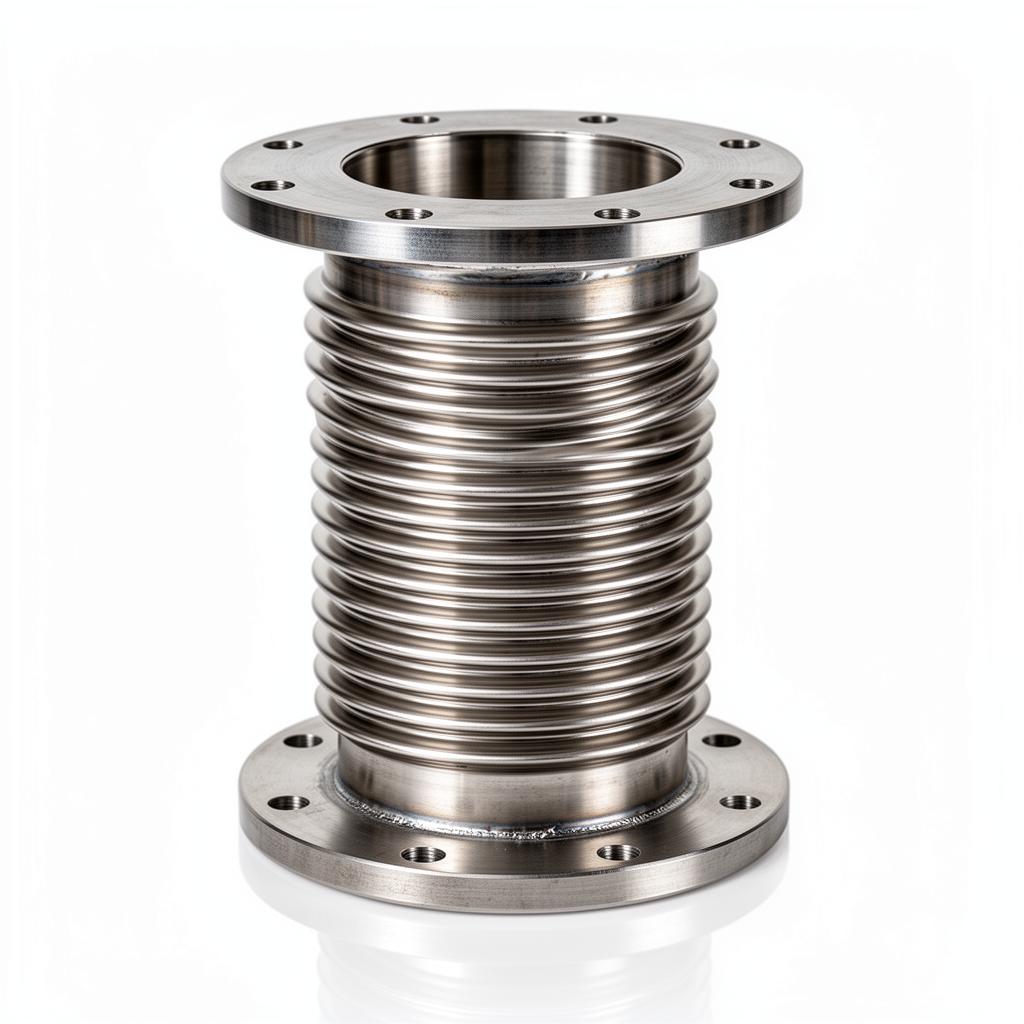
Expansion bellows work by providing a point of lower stiffness in the piping system. The convolutions—the 'concertina' folds of the bellows—are designed to deflect under load while maintaining pressure containment. By calculating the total linear expansion (using the coefficient of linear expansion, the length of the run, and the temperature differential), engineers can determine the required 'strike' or travel of the bellows.
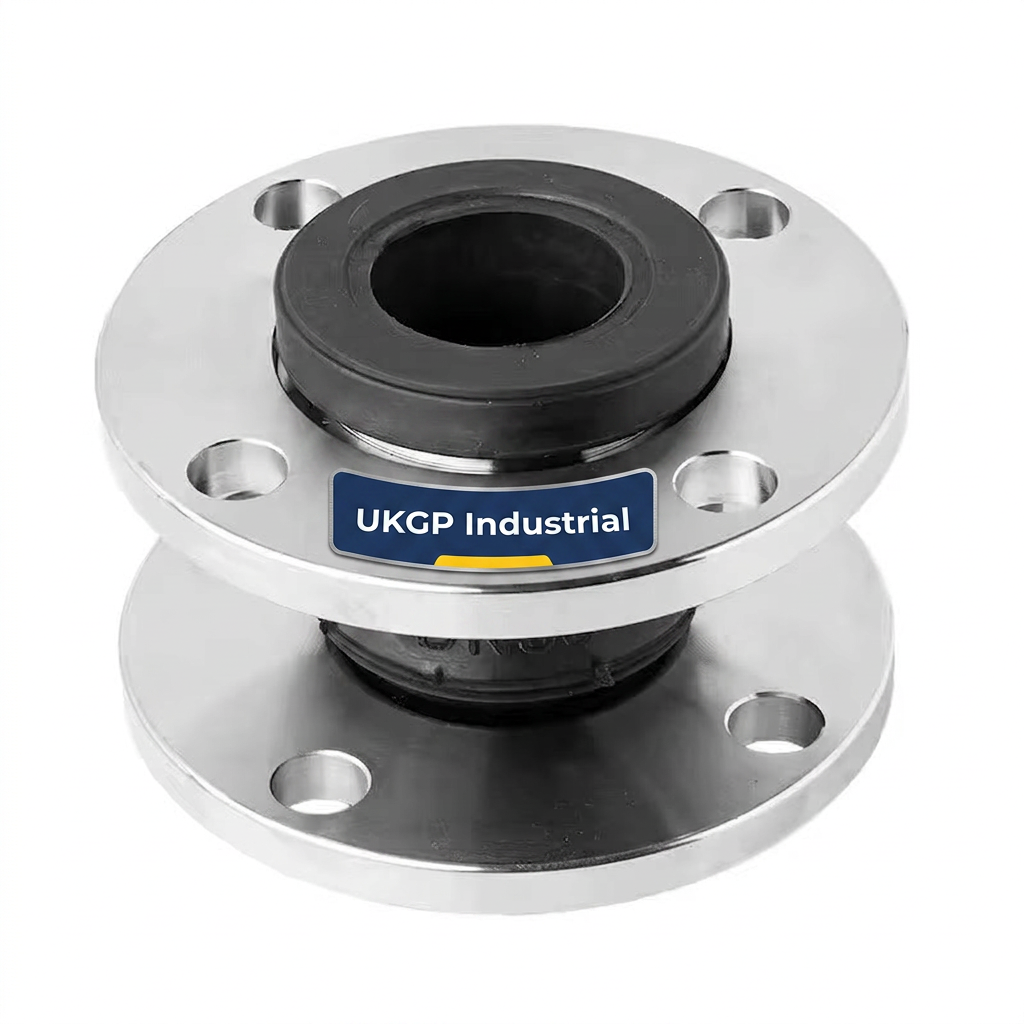
It is critical to distinguish between the two primary materials used in UK building services: rubber (EPDM, Nitrile) and metal (Stainless Steel). While both absorb movement, their pressure-temperature ratings and fatigue life cycles differ significantly, as governed by BS EN 14917 for metal units and relevant polymer standards for rubber.
Axial Movement and Pressure Thrust
Axial movement is the most common application in plant-room risers and long horizontal runs. It involves the compression or extension of the bellows along its longitudinal axis. While seemingly simple, axial bellows introduce a specific force known as 'Pressure Thrust'. This is the product of the internal system pressure and the effective area of the bellows convolutions.
Because a bellows is flexible, the internal pressure tries to push it open like a piston. This force must be managed through the use of 'Main Anchors' at each end of the pipe run. These anchors must be robust enough to withstand the sum of the pressure thrust, the spring rate of the bellows, and any frictional forces from pipe guides. Substantial concrete or steel structural supports are required; failing to account for pressure thrust is the leading cause of bellows 'squirm' or blowout.
To ensure the bellows moves only in a true axial line, 'Pipe Guides' must be installed. Standard UK practice, often following BSRIA guidelines, dictates that the first guide is placed within 4 pipe diameters of the bellows, and the second within 14 diameters. This prevents the pipe from bowing or buckling under compressive load.
Lateral and Angular Deflection Explained
Lateral deflection occurs when the two ends of the bellows move perpendicularly to each other (an offset). This is frequently encountered in bridge crossings or where a pipe run transitions between two buildings with different settlement rates. A single bellows has limited lateral capacity; for larger movements, a 'Double Bolted' or universal arrangement is used, where two bellows are joined by a central spool piece.
Angular movement involves the bending of the bellows axis into an arc. This is typically used in 'hinged' or 'gimbal' expansion joints. By using a pair of hinged joints in a 'Z' or 'L' bend configuration, very large amounts of expansion can be absorbed with relatively low forces on anchors, as the movement is converted from axial growth into angular rotation.
Engineers must also consider 'Combined Movement'. In many real-world scenarios, a bellows may experience a mix of axial, lateral, and angular forces simultaneously. When this occurs, the allowable movement for each plane must be reduced proportionally. Manufacturers provide charts or 'Vector Calculations' to ensure the bellows remains within its safe operating envelope.
Frequently asked questions
What is the maximum temperature for a rubber expansion joint?
- Standard EPDM rubber bellows are typically rated to 100°C or 110°C. For LTHW systems, this is sufficient. However, for steam or high-temperature oil, metal bellows (304 or 316L stainless steel) are required to withstand temperatures exceeding 200°C.
Do I need anchors for axial expansion joints?
- Axial bellows must be installed between two main anchors. These anchors must be designed to withstand the 'Pressure Thrust'—the force generated by the internal pressure acting on the cross-sectional area of the bellows. Failure to anchor correctly will result in the bellows over-extending and failing.
What are the most common causes of bellows failure during installation?
- The bellows must be installed at its 'free length' or neutral position. Mechanical pulling or compressing of the bellows to bridge a gap (cold pulling) should only be done if specifically designed for the movement. Over-tightening of tie-bars can also prevent the unit from functioning.
What is the difference between tied and untied rubber bellows?
- Untied rubber bellows allow for axial, lateral, and angular movement but do not contain pressure thrust. Tied bellows use limit rods to prevent the joint from over-extending and are primarily used to absorb lateral movement in a 'hinged' or 'offset' arrangement.