Pre-Commissioning and Initial Inspection
The maintenance lifecycle of an expansion joint begins before the system is even energised. During the installation phase, it is vital to ensure that the bellows has not been used to compensate for significant field misalignment unless specifically designed as a 'universal' or 'lateral' joint. Axial bellows are particularly sensitive; excessive pre-stretch or compression during installation will rapidly reduce fatigue life. In accordance with BSRIA BG29/21, all pipework should be thoroughly cleaned and flushed before the bellows are subjected to full system pressure.
Consultants must verify that the shipping bolts (usually painted yellow or labelled) have been removed once the anchors are set but before the system is hydrostatically tested. Leaving these in place effectively turns the flexible joint into a solid pipe section, transferring all thermal stresses directly back into the boilers, chillers, or pumps, often with destructive results. Inspection at this stage should also confirm that the flow liners—if fitted—are installed in the correct direction of flow.
- Verification of design vs. actual operating parameters (temperature, pressure, and media).
- Inspection for mechanical damage or 'necking' near the flange.
- Assessment of the anchoring system—a bellows is only as effective as the pipe guides supporting it.
- Compliance check against BS EN 1092-2 (for cast iron) or BS EN 1092-1 (for steel) flange specifications.
Rubber Bellows: Material Integrity and Aging
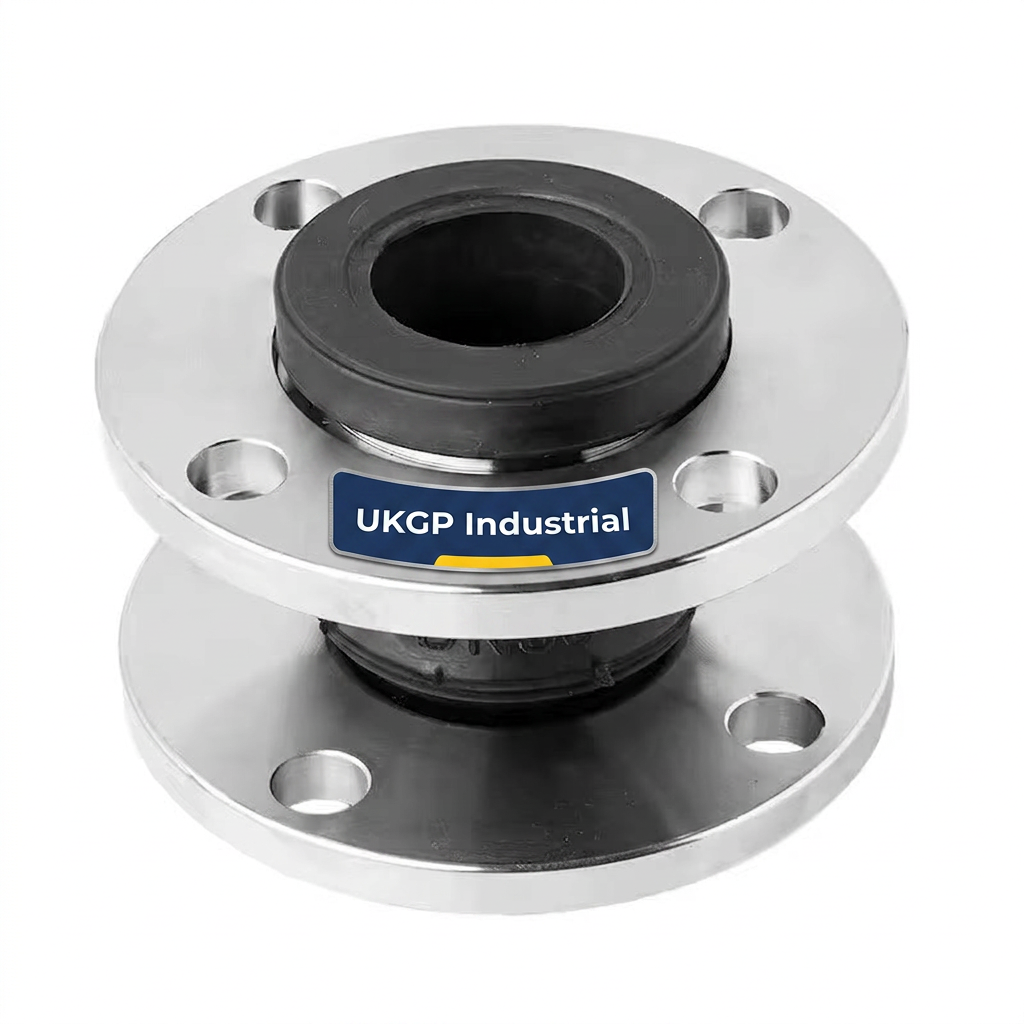
Rubber expansion joints are complex composite structures, typically comprising an inner tube, reinforcing fabric layers (such as nylon or aramid), and an outer cover. In UK plant rooms, the most common failure mode is 'baking'—where the elastomer hardens due to ambient heat or excessive media temperature, losing its ability to flex. This leads to circumferential cracking, which eventually exposes the reinforcement layers to the atmosphere or the system media.
Water chemistry plays a secondary but vital role. In accordance with BSRIA BG50, poorly managed secondary circuits with high oxygen levels or incorrect glycol concentrations can accelerate the degradation of the internal liner. Frequent inspections must look for 'blistering' of the inner tube, which suggests chemical incompatibility. For district heating applications where temperatures exceed 90°C, rubber joints must be carefully specified, as standard EPDM variants may have a significantly reduced lifespan at these elevated levels.
- Surface degradation: Look for 'crazing' or UV damage on European-sourced EPDM or Nitrile covers.
- Deformation: Ballooning indicates internal carcass failure or over-pressurisation.
- Flange integrity: Check for weeping at the seal; rubber bellows often feature integral 'full-face' flanges that require specific torque patterns to prevent pinching.
Metal Bellows: Fatigue and Corrosion Monitoring
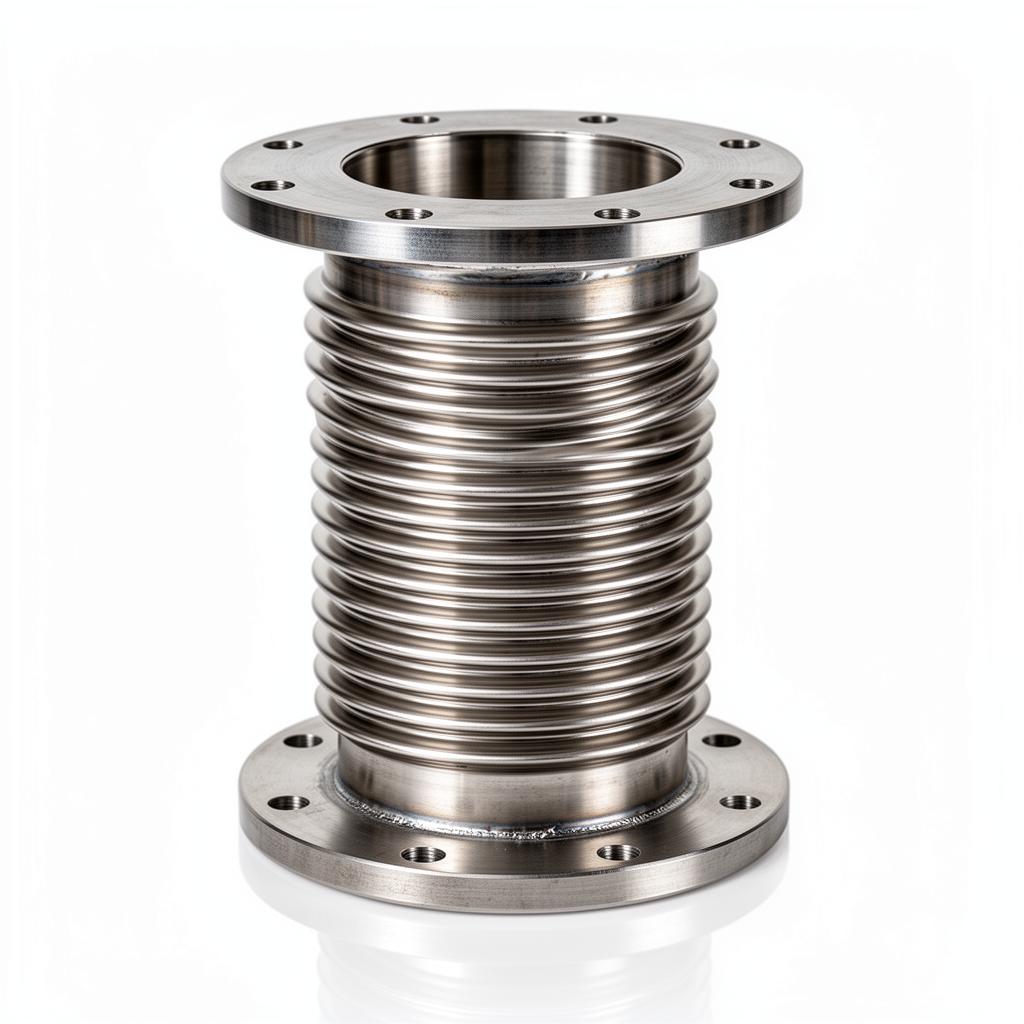
Stainless steel expansion joints, typically manufactured from 304, 316L, or 321 grades, are governed by the EJMA (Expansion Joint Manufacturers Association) standards and EN 14917. Unlike rubber units, metal bellows fail primarily through fatigue or corrosion. Each joint has a rated cycle life—often 1,000 or 10,000 full cycles. In systems with frequent cycling, such as process steam or batch heating, engineers must track the service history to predict when the convolutions will reach their fatigue limit.
Inspection of metal bellows requires a keen eye for 'pitting' or thinning of the convolutions. Because the walls are extremely thin (often less than 1.0mm) to allow for flexibility, even minor external corrosion can lead to pinhole leaks. The presence of 'squirm'—a permanent tilt or distortion of the convolutions—indicates that the pipework anchors have failed or the system has seen a pressure spike beyond its design rating. If squirm is detected, the joint is compromised and requires immediate replacement.
- Chloride-induced stress corrosion cracking (CSCC), common in marine or high-salinity environments.
- Annular deformation or 'squirm' due to internal pressure exceeding the bellows' stability limit.
- Mechanical denting from site activity, which creates a stress concentrator that leads to premature fatigue failure.
Anchorage and Guiding: The Structural Audit
An expansion joint is not a standalone component; it is part of a structural system. The most common cause of bellows failure in the UK is not a defect in the bellows itself, but a failure of the surrounding pipe support regime. During annual maintenance, FMs must inspect the main anchors for signs of movement, shearing bolts, or structural distress. If an anchor moves even a few millimetres, the bellows may be forced to absorb more movement than its design limit, leading to immediate fracture.
Pipe guides are equally critical. They must ensure that the expansion is directed axially into the bellows. If a guide becomes blocked or 'hangs up' due to debris or rust, the pipework may bow, introducing lateral forces into an axial joint. During the walk-around inspection, check for 'shining' spots on the pipework which indicate metal-on-metal rubbing where a guide may be misaligned or overworked. Proper lubrication of slide bearings and ensuring guides are free of obstruction is a core part of the bellows maintenance routine.
- Main Anchors: Must withstand the full pressure thrust plus the force required to deflect the bellows.
- Intermediate Anchors: Used to divide long runs into manageable sections.
- Pipe Guides: The first guide should typically be within 4 pipe diameters (4D) of the bellows, with the second within 14D.
Statutory Requirements and Best Practice
Under the Pressure Systems Safety Regulations 2000 (PSSR), expansion joints are classified as part of the 'relevant fluid' system. For larger installations, these fall under the Written Scheme of Examination. It is the responsibility of the building owner or duty holder to ensure these components are inspected by a competent person. Documentation is key; every expansion joint should be tagged and logged in the site's asset register, noting the date of installation and the specific movement it was designed to accommodate.
When replacing a bellows, never assume the original specification was correct. System modifications—such as the installation of higher-head pumps or changes in operating temperatures—may necessitate a higher rated joint. Always specify UKGP Industrial or equivalent bellows that meet the specific pressure-temperature curve of the current system. Finally, always stock critical spares for high-risk items; the lead time on bespoke multi-ply stainless steel bellows can be several weeks, during which the entire plant room may remain offline.
- Visual Check: Quarterly. Inspect for leaks, surface cracks, and anchor stability.
- Detailed Audit: Annually. Check torque on bolts, inspect for convolution deformation, and verify water treatment records.
- End-of-Life Planning: At 8 years for rubber and 15 years for metal, increase inspection frequency or plan for preventative replacement.
Frequently asked questions
What is the expected service life of a standard expansion joint?
- The typical lifespan is 7–10 years for rubber bellows and 15–20 years for stainless steel, provided they are operated within their design limits and the water chemistry is maintained to BSRIA BG50 standards.
Can I paint expansion bellows to match the pipework?
- No. Painting the bellows element can cause chemical degradation of rubber compounds or restrict the flexibility of metal convolutions. It also hides cracks or fatigue signs, making inspection impossible.
Why are tie bars necessary on lateral and angular bellows?
- Tie bars are essential to prevent the bellows from over-extending under pressure (pressure thrust). They must be adjusted so they are not 'tight' during installation, allowing for the calculated movement while acting as a safety limit.
What are the primary signs of imminent bellows failure?
- Check for 'ballooning' or hardening of the rubber, fatigue cracks in the metal convolutions, leakage at the flange faces, and evidence of 'squirm' (permanent deformation). Ensure the anchors and guides remain structurally sound.