System Components and Material Specifications
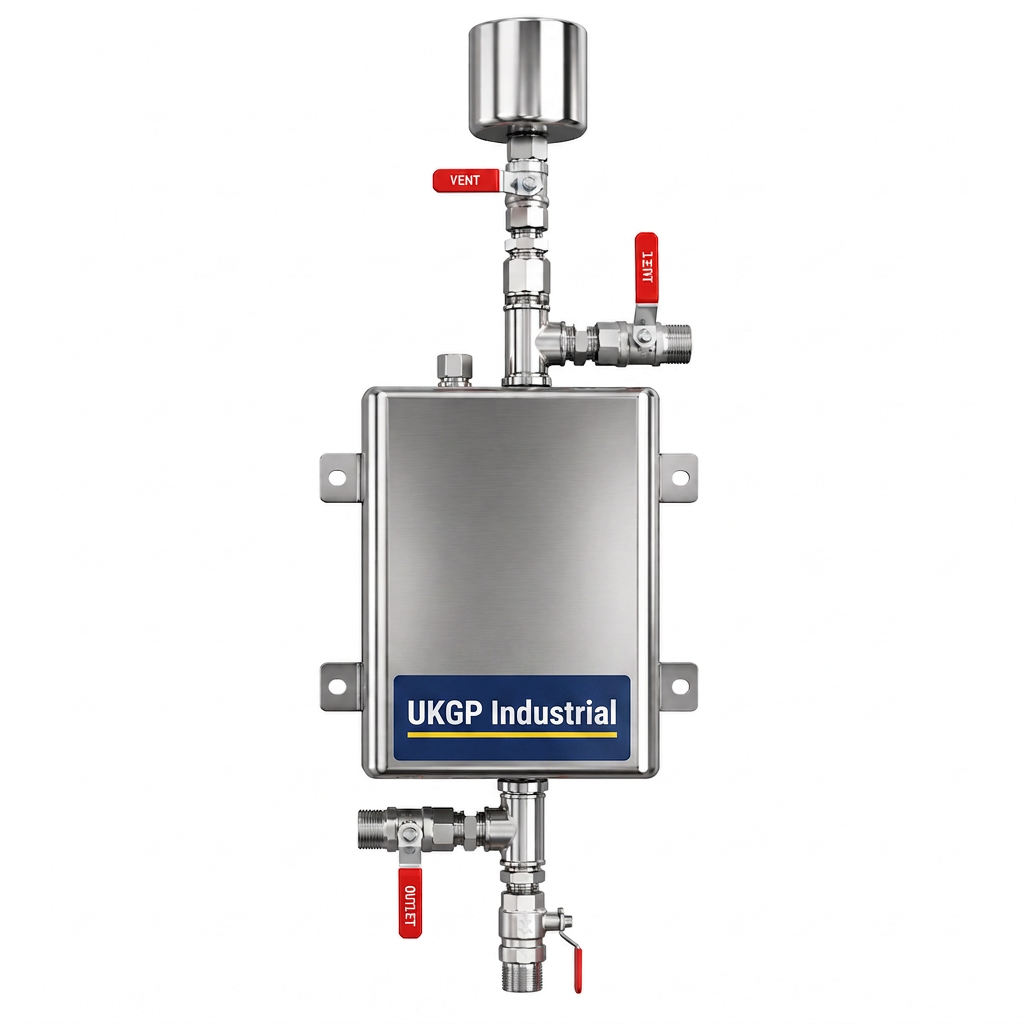
A standard industrial dosing pot is a pressure-rated vessel designed to withstand the operational rigours of a plant room. For UK installations, these units should be manufactured to the requirements of the Pressure Equipment Directive (PED) and should ideally be constructed from stainless steel to prevent internal corrosion within the unit itself. These vessels are typically available in sizes ranging from 3.5 litres to 25 litres, depending on the total system volume and the required concentration of chemicals to be introduced.
The assembly must include high-quality quarter-turn ball valves for isolation and a robust tun-dish for manual filling. Because these units are often installed in high-temperature heating circuits or sub-zero chilled circuits, the pot must be specified with suitable insulation or be accessible for lagging on-site. In accordance with BSRIA BG50, the design should facilitate easy access for chemical handling while ensuring the safety of the operative through secure mounting and clear labelling.
- Stainless steel vessel (AISI 304 or 316).
- Inlet and outlet isolation valves (typically 15mm to 25mm).
- Drain valve at the base for flushing and emptying.
- Filling tun-dish with an integrated non-return valve.
- Air vent/air release valve at the high point.
Hydraulic Positioning: The Differential Pressure Principle
The most common error in dosing pot installation is incorrect pipework configuration. To move chemical from the pot into the main system flow, a pressure differential must be created across the pot’s inlet and outlet. The most efficient way to achieve this in a plant room is by connecting the dosing pot across the main circulation pump. The inlet (top) of the dosing pot must be connected to the discharge (high-pressure) side of the pump, while the outlet (bottom) must be connected to the suction (low-pressure) side.
This configuration utilizes the pump’s 'head' to force water through the vessel. Engineers must ensure the connection points are at least five pipe diameters away from the pump flange to avoid turbulence. If the dosing pot is installed on a branch with negligible differential pressure, the chemical will remain stagnant in the vessel, failing to circulate through the system. This 'bypass' installation method is the industry standard for ensuring rapid and thorough mixing of inhibitors and glycol.
Installation Procedures and Pipework Configuration
Mechanical installation begins with securing the dosing pot to the floor or a wall-mounted bracket. Given that a filled 25-litre pot can weigh upwards of 40kg, the structural integrity of the mounting surface is paramount. Once positioned, the pipework should be connected to the system flow and return (or across the pump) using isolation valves. It is recommended to install a check valve on the inlet line to prevent backflow into the chemical container during the filling process.
The drain valve at the base must be piped to a suitable foul water drainage point, as chemicals used in closed loops—particularly biocides and glycol—are often hazardous and must not be discharged to surface water drains. In accordance with BS 8552, every installation must be pressure tested to 1.5 times the working pressure before commissioning. Leakage at the air vent or the tun-dish non-return valve are common failure points that must be rectified prior to chemical introduction.
- Ensure the vessel is mounted plumb to allow air to rise to the air vent.
- Use 15mm or 22mm copper or steel pipework between the pot and the main headers.
- Check that the filling tun-dish is at a comfortable working height (approx. 1.0m to 1.2m).
- Confirm the non-return valve is correctly oriented toward the vessel.
Integration with Side-Stream Filtration and Air Separation装置
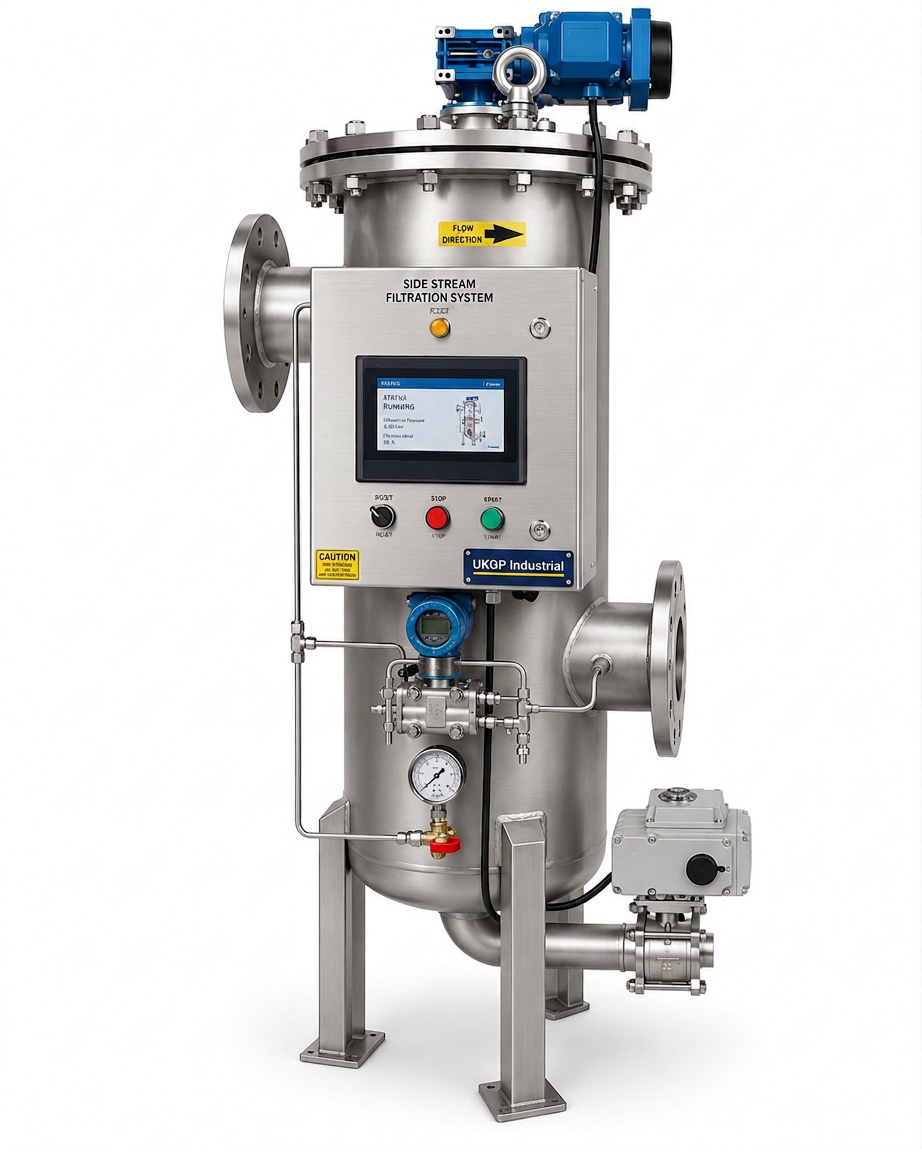
In modern plant rooms, the dosing pot does not operate in isolation. It should be part of a wider water quality strategy that includes air and dirt separation and side-stream filtration. While the dosing pot introduces chemicals, a side-stream filter (complying with BSRIA BG29/21) removes the suspended solids and magnetite that inhibitors are designed to loosen. Placing the dosing pot upstream of a side-stream filter allows chemicals to be monitored and filtered simultaneously.
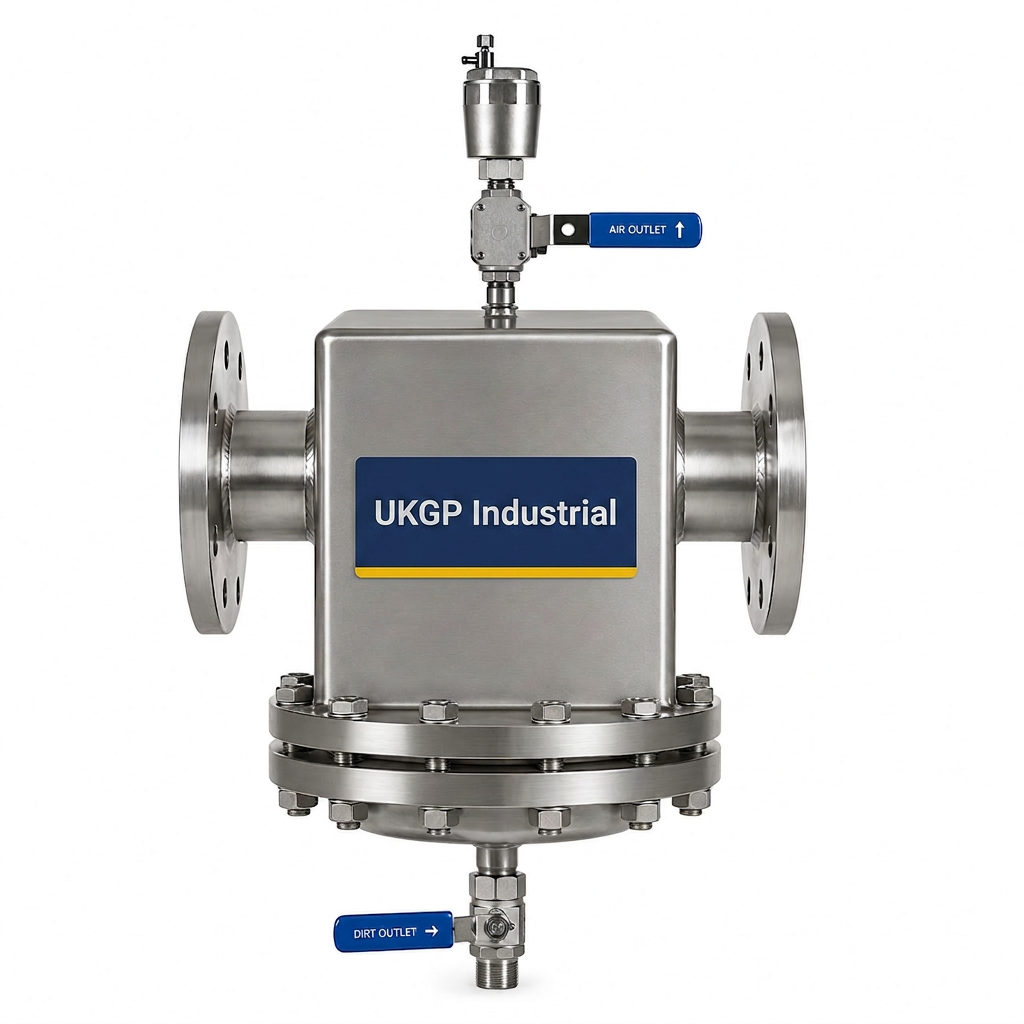
When installing near an air and dirt separator, the dosing pot should ideally be positioned downstream of the separator to ensure that any air introduced during the manual filling process is immediately captured and purged from the circuit. This integrated approach ensures that the system water remains within the parameters defined by BS 7593 for domestic and BSRIA BG50 for commercial systems, preventing the formation of scale and sludge that drastically reduces pump efficiency.
Commissioning and Dosing Procedures
Commissioning the dosing pot involves verifying that the unit can be safely drained and filled without introducing air pockets into the main system. The operative must be trained in the use of PPE, as highlighted in COSHH assessments, especially when handling concentrated biocides for chilled water systems or molybdate-based inhibitors for heating circuits. The non-return valve within the tun-dish assembly must be checked for tight shut-off to prevent 'blow-back' when the filling valve is opened.
Once the chemical has been introduced, the dosing pot should be left in circuit for 24-48 hours to ensure complete dispersion. Following this period, the isolation valves should be closed to prevent the pot from acting as a 'dead leg'—a common cause of localized corrosion and microbiological growth. Regular water analysis, at least quarterly, is required to ensure that inhibitor levels remain at the manufacturer's recommended ppm, with the dosing pot used for periodic reinforcements.
- Isolate all valves on the dosing pot.
- Open the drain valve and the air vent to empty the existing water.
- Close the drain valve.
- Pour the chemical treatment into the tun-dish until the vessel is full.
- Close the air vent and the filling valve.
- Slowly open the inlet and outlet isolation valves to allow system flow through the pot.
Maintenance and BSRIA BG50 Compliance
Ongoing maintenance of the dosing pot is relatively simple but often overlooked. Annual inspections should include checking for valve seat wear and ensuring the tun-dish non-return valve is not seized. If the system is treated with glycol, the concentration should be checked at the dosing pot during every service visit using a refractometer. If the concentration has dropped, the dosing pot provides the easiest point for correction.
Reflecting the guidance in BSRIA BG50, the dosing pot should be clearly labelled with the date of the last treatment and the type of chemical introduced. This prevents the accidental mixing of incompatible chemicals (such as different types of glycol or inhibitors) which can lead to the formation of 'jelly-like' precipitates that clog heat exchangers and pump impellers. Keeping a logbook near the dosing pot is considered best practice for M&E contractors and facility managers.
Frequently asked questions
Why must the dosing pot be installed across the pump?
- Installing across the pump provides the necessary differential pressure to drive fluid through the pot without needing an external pump. The discharge side of the pump is high pressure, and the suction side is lower pressure, creating a natural flow path through the dosing vessel.
What are the pressure limitations of a standard dosing pot?
- While dosing pots are rated for high pressures (often up to 10 or 14 bar), the primary material is typically 304 or 316 stainless steel or carbon steel. If the system pressure exceeds the rating, the vessel may fail. Always check the vessel's PED rating and the system's safety valve settings.
Should the dosing pot valves remain open at all times?
- BSRIA BG50 recommends that dosing pots be kept isolated from the main flow when not in use to prevent stagnant water from becoming a breeding ground for bacteria or causing localized corrosion within the pot itself.
Can I use a dosing pot for permanent glycol top-up?
- No. While a dosing pot can introduced glycol, it is not an automated system. For significant volumes or ongoing leak compensation, a dedicated pressurisation unit with a glycol break tank is required to maintain the correct concentration and system pressure.