Design and Component Specifications
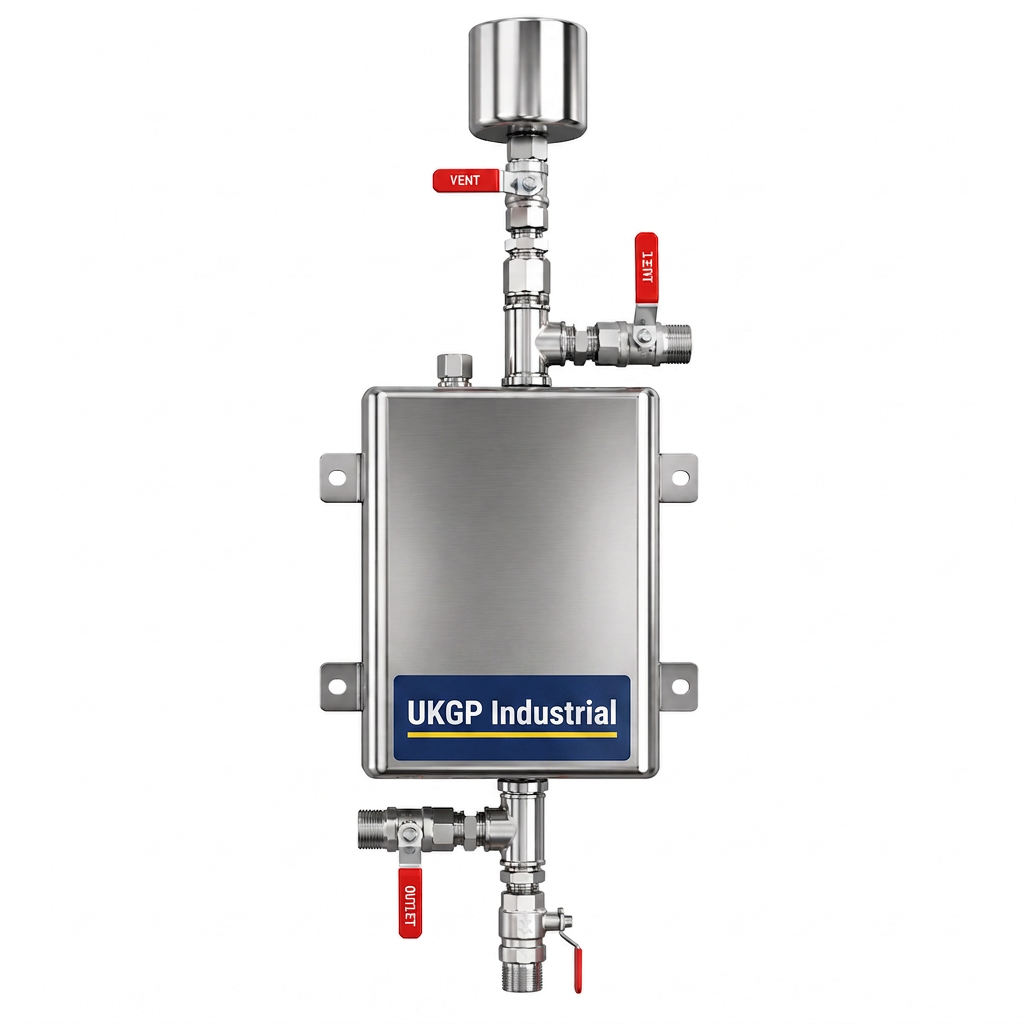
A standard chemical dosing pot is a pressure-vessel bypass feeder designed to withstand the full operating pressure of the system. In the UK market, these are typically manufactured to conform to the Pressure Equipment Directive (PED) and are supplied as a complete assembly including a tundish, air vent, and isolating valves. The mechanical design must facilitate the 'shot-dosing' method, where a concentrated volume of chemical is trapped within the pot and then flushed into the main circuit via differential pressure.
The choice of material is critical. While powder-coated carbon steel is standard for LTHW (Low Temperature Hot Water) systems, stainless steel variants are increasingly specified for chilled water (CHW) and process cooling applications to prevent external corrosion due to condensation. Furthermore, high-pressure systems exceeding 14 bar or those operating at high temperatures require specially rated vessels and valve sets to ensure operative safety during the dosing procedure.
- Carbon steel or stainless steel shell construction, typically rated to 10 bar or 14 bar.
- Five-valve arrangement: inlet, outlet, drain, fill, and air vent.
- Integral tundish for safe chemical introduction and visibility of flow.
- Non-return valves (NRVs) to prevent backflow into the chemical charge.
Implementation of BSRIA BG50 and BG29/21 Standards
BSRIA BG50 (Water Treatment for Closed Heating and Cooling Systems) emphasises that chemical dosing is not a 'one-time' event but a continuous maintenance requirement. The dosing pot provides the physical entry point for molybdate or nitrite-based inhibitors which form a protective film on metal surfaces. For systems prone to 'dead legs' or those operating at low temperatures (below 60°C), the pot is also the primary means of introducing non-oxidising biocides to control Pseudomonas and Sulphate Reducing Bacteria (SRB).
Under BG29/21 (Pre-commission Cleaning of Pipework Systems), the dosing pot is utilised during the final stages of commissioning. After the system has been flushed and cleaned, the pot allows for the introduction of passivating chemicals. Engineers must ensure that the dosing pot itself is included in the flushing protocol to prevent it from becoming a stagnant area where bacteria can proliferate prior to system handover.
Installation and Hydraulic Integration
For a dosing pot to function effectively, it must be installed across a point of high differential pressure. Typically, this is achieved by connecting the inlet of the pot to the pump discharge (high pressure) and the outlet to the pump suction or return header (low pressure). This pressure drop drives the chemical into the system flow without the need for an external injection pump. 15mm or 20mm pipework is standard for these bypass connections, and they should include lockable isolation valves to prevent unauthorised tampering.
Safety and accessibility are paramount for the plant-room operative. The pot should be mounted at a height that allows the tundish to be filled comfortably without the use of ladders, yet high enough to allow for a drain bucket or permanent drain-back to a foul water point. It is essential that the air vent is piped to a safe discharge point, as the venting process can release pressurised water and chemical vapours. Air-locking within the pot is a common cause of dosing failure, so the vent must be checked for functionality during every dosing cycle.
Optimising Water Quality with Side-Stream FiltrationNodes
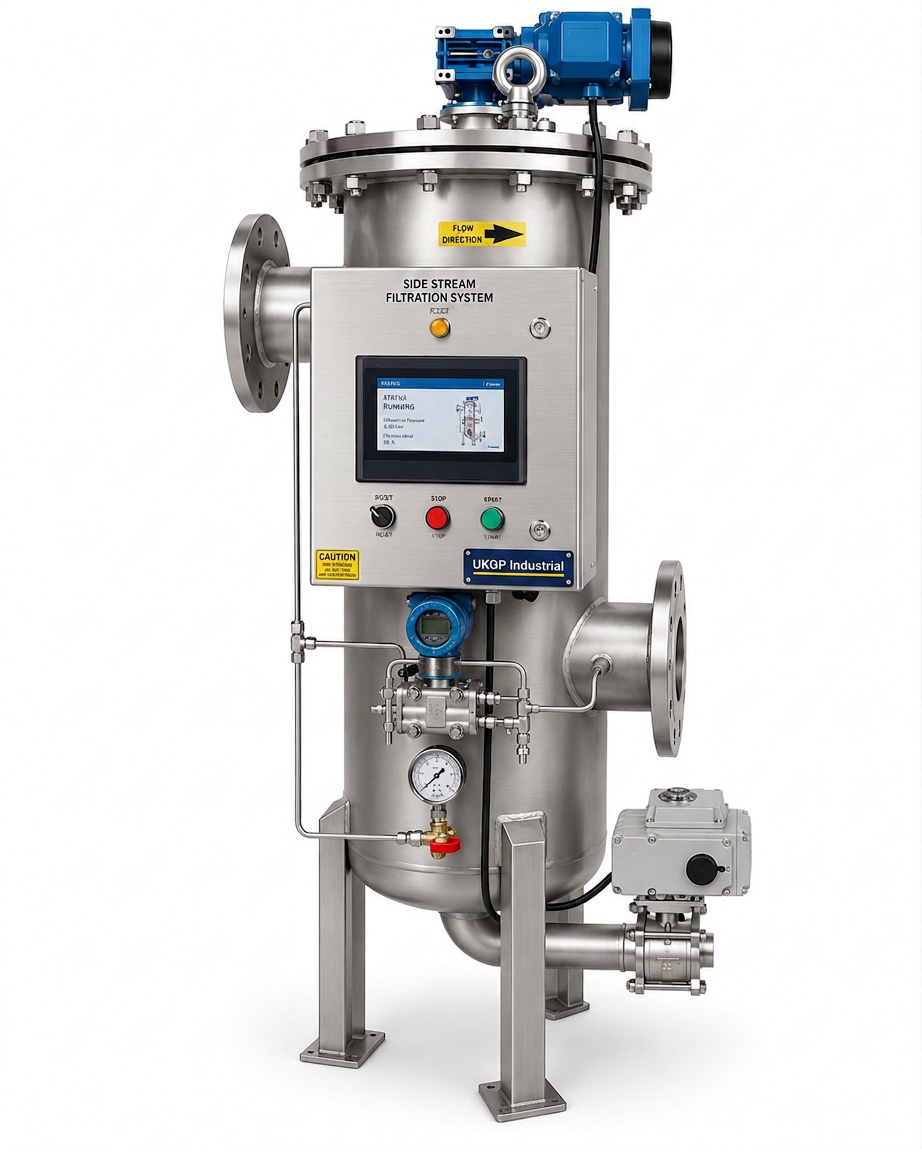
While dosing pots manage the chemical balance, they do not remove existing contaminants. In systems where historical corrosion has occurred, or where 'black water' (magnetite) is present, the chemical dosing pot should be used in conjunction with side-stream filtration. Inhibitors introduced via the dosing pot work more effectively when the water is clear of suspended solids, as debris can 'scavenge' the chemicals, requiring higher dosages to achieve the same level of protection.
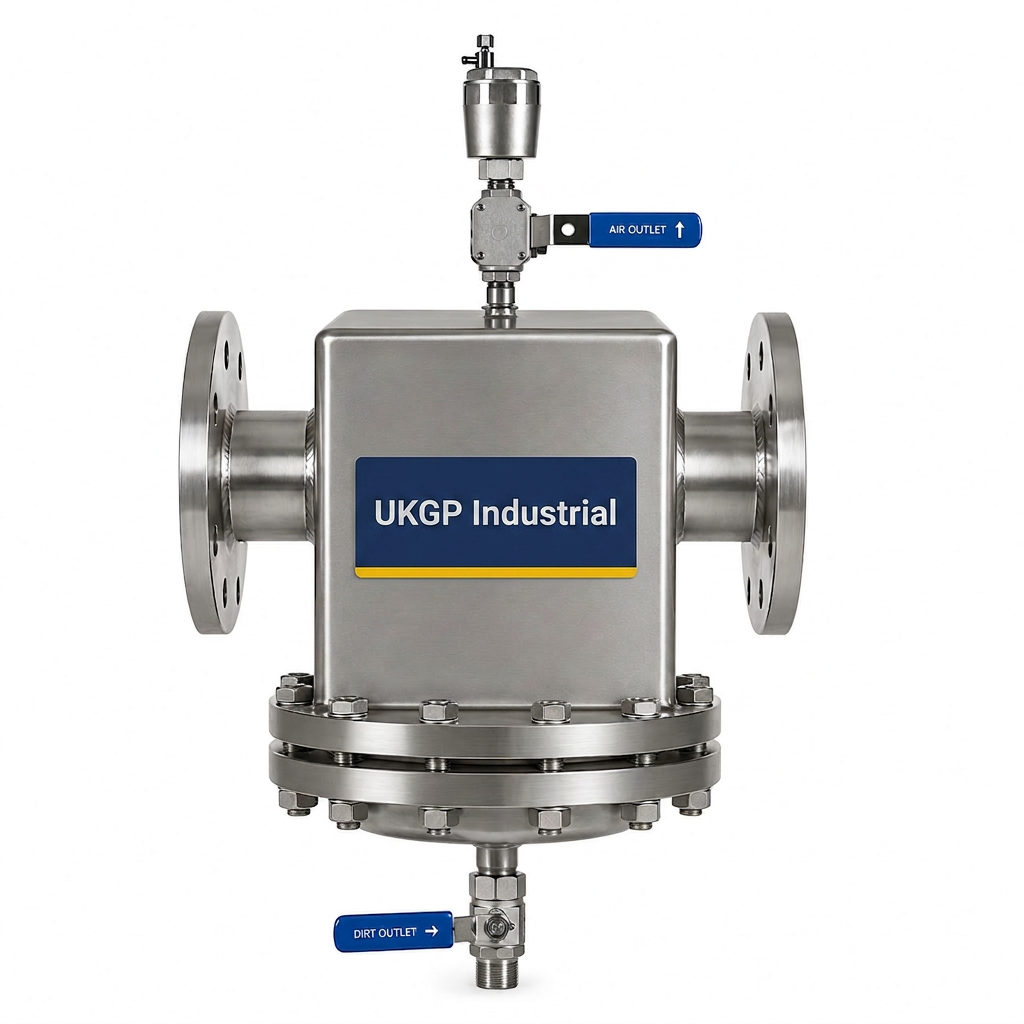
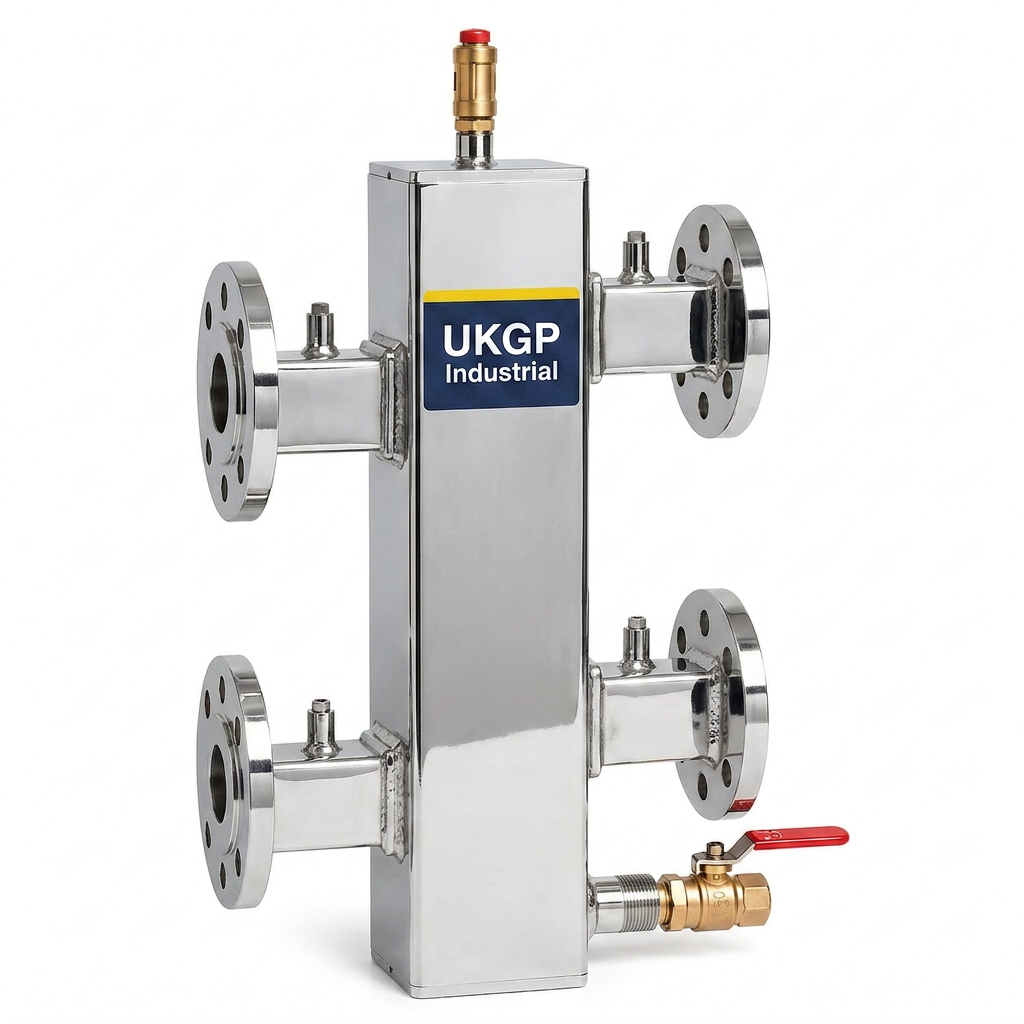
Side-stream filtration systems, often incorporating magnetic separators and fine-mesh filters, should be sized to treat roughly 5% to 15% of the total system volume per hour. By combining a UKGP Industrial dosing pot with a robust filtration strategy, facilities managers can ensure that the protective film formed by inhibitors remains undisturbed by abrasive particles, significantly extending the lifespan of heat exchangers and control valves.
Dosing Procedures and Operative Safety
The physical act of dosing involves a strict sequence of valve operations to ensure the safety of the technician. First, the inlet and outlet valves are closed, and the drain and vent valves are opened to empty the pot into the tundish. Once empty, the drain is closed, and the chemical is poured into the pot. The fill valve is closed, and the inlet valve is opened slightly to purge any air through the vent. Finally, the vent is closed, and both the inlet and outlet valves are fully opened to allow the system pressure to circulate the chemical.
Personal Protective Equipment (PPE) is non-negotiable. Many water treatment chemicals are caustic or acidic and can cause severe skin or eye irritation. The presence of a tundish on the dosing pot provides a 'break' that prevents the system from back-pressurising into the operative's face during the filling process. Engineers must also ensure that the dosing pot is fully labelled with its contents and that the system's Safety Data Sheets (SDS) are kept in the plant room for immediate reference. Fluids containing glycol require specific disposal considerations, as they cannot always be tipped down standard drains through the tundish.
Maintenance and Monitoring Requirements
Maintenance of the dosing pot is often overlooked. Monthly inspections should check for leaks at the valve glands and ensure that the internal NRVs are not seized. Over time, the internal surfaces of the pot can accumulate sludge if the system is not properly filtered, which can block the small-bore 15mm or 20mm connection pipework. A periodic 'flush-through' of the pot during routine maintenance visits is recommended to keep the vessel clear.
Beyond the hardware, the effectiveness of the dosing pot must be verified through water analysis. Sampling should be taken from the system (not directly from the pot) at least 24 hours after dosing to ensure complete mixing. If molybdate levels are consistently falling despite dosing, it indicates an underlying issue such as an undetected leak or high levels of microbiological activity. The dosing pot is a tool for correction; the chemical analysis provides the data for the engineering strategy.
Frequently asked questions
Where is the best location to install a dosing pot?
- Dosing pots should be installed across the flow and return headers, typically bypass-connected to the main circulating pumps where the differential pressure is highest. This ensures rapid dilution of chemicals into the main system flow.
What materials are used for dosing pot construction?
- They are traditionally constructed from carbon steel (often powder-coated) or stainless steel. For high-pressure applications or systems where corrosion is a major concern, stainless steel versions are preferred to prevent the pot itself from becoming a source of debris.
What size dosing pot do I need for a 10,000-litre system?
- A 25-litre pot is standard for most commercial systems, though they range from 3.5 to 35 litres. The size doesn't limit the total chemical volume (as you can perform multiple shots), but it dictates how many 'charges' are needed to reach the target concentration.
Can I use a dosing pot for glycol top-ups?
- While possible for small systems, it is inefficient. For large volumes of glycol, a dedicated Glycol Feed Station or pressurisation unit with a mixing tank is recommended to ensure correct refractive index levels throughout the loop.